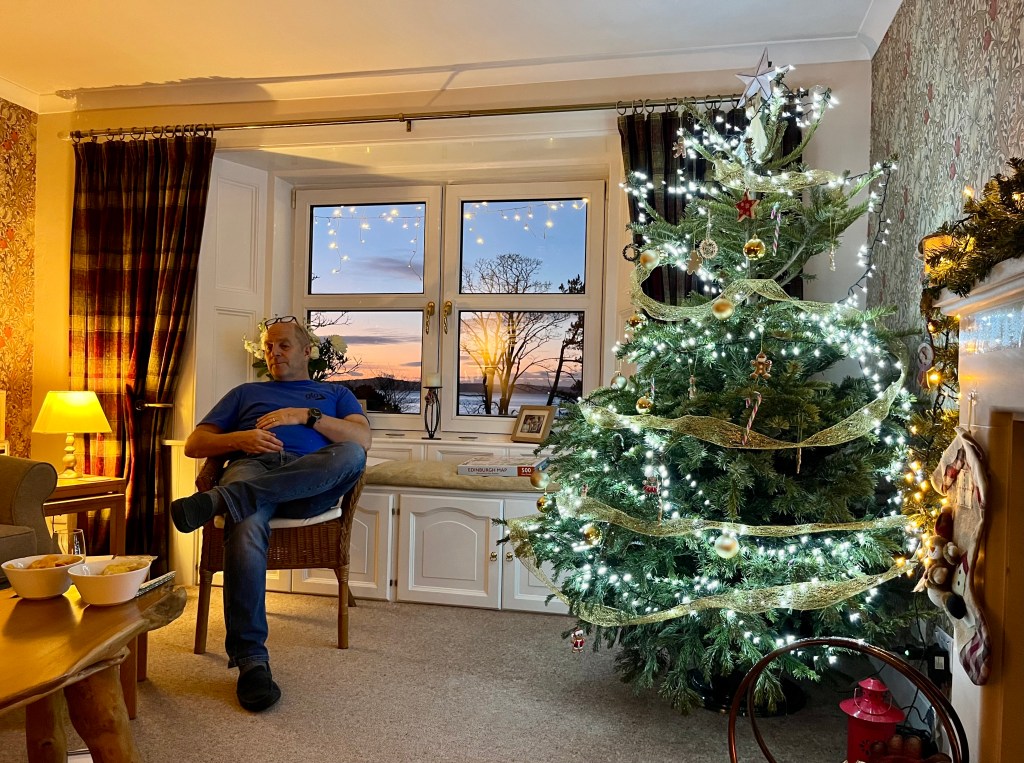
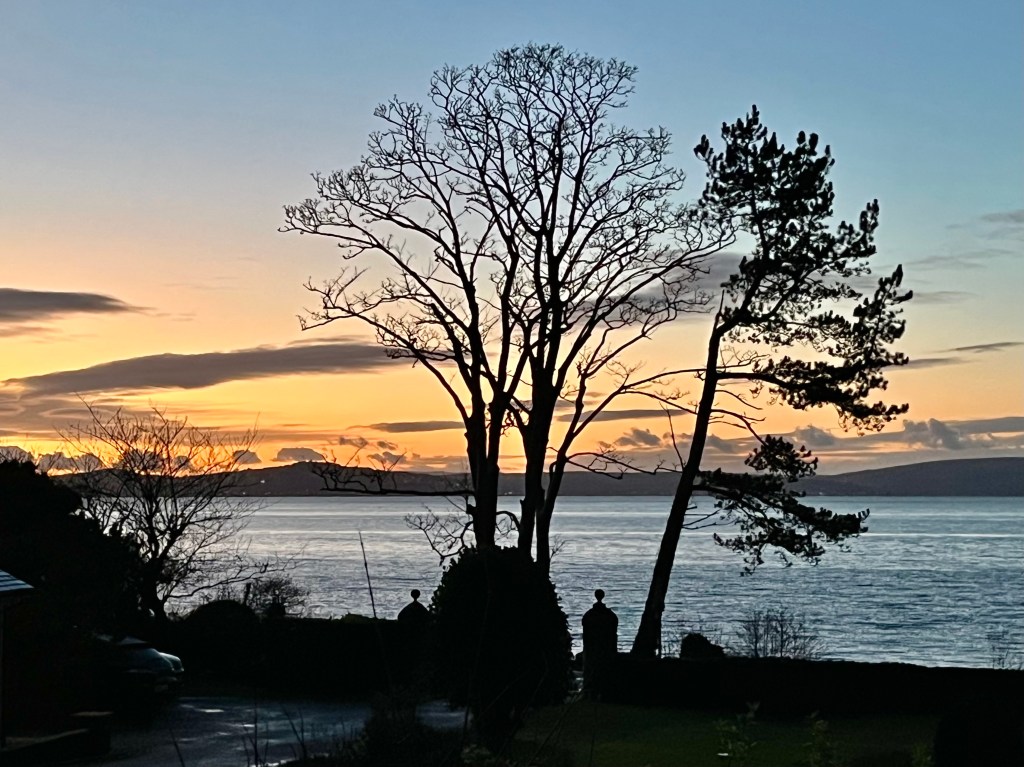
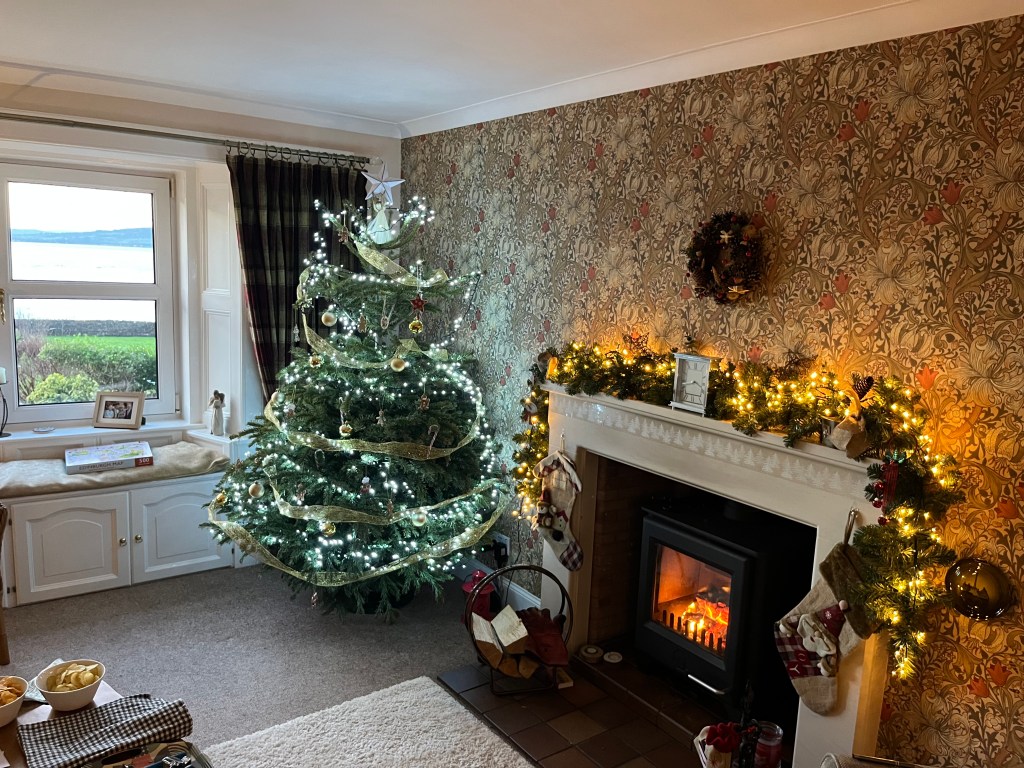
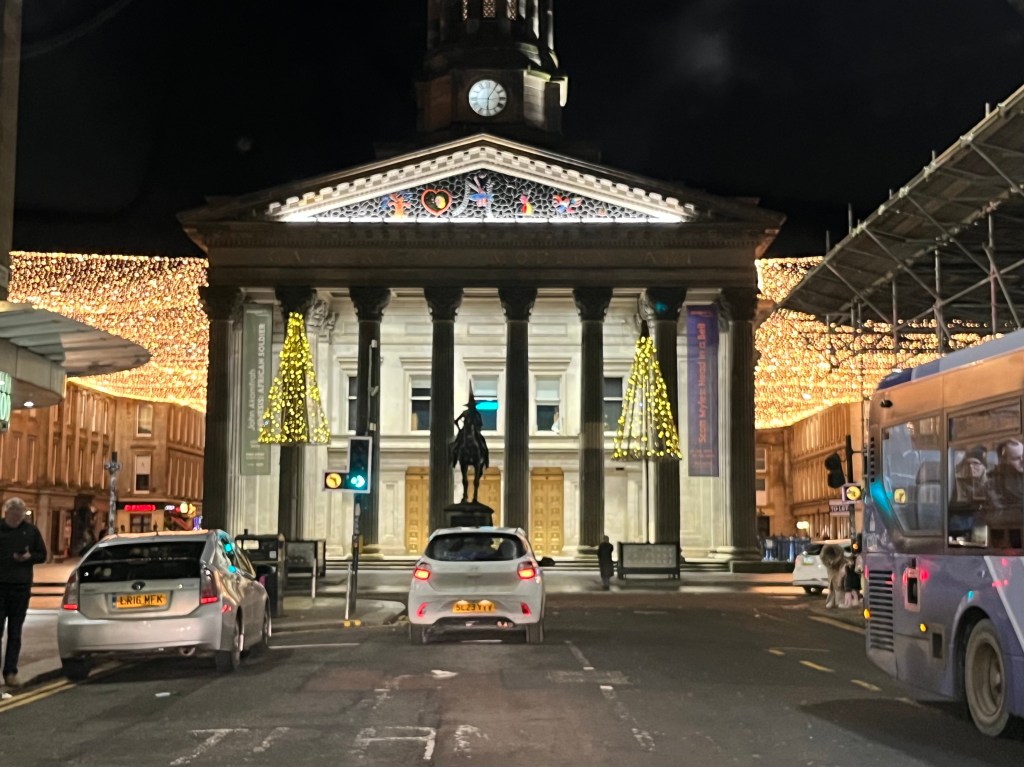
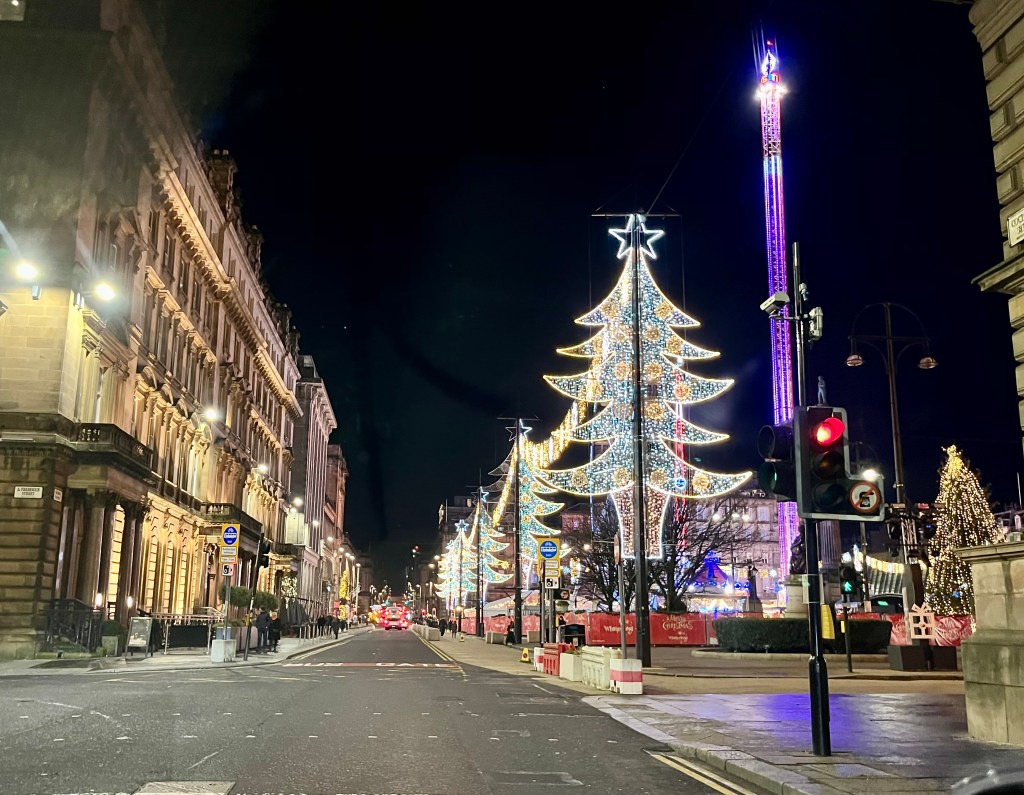
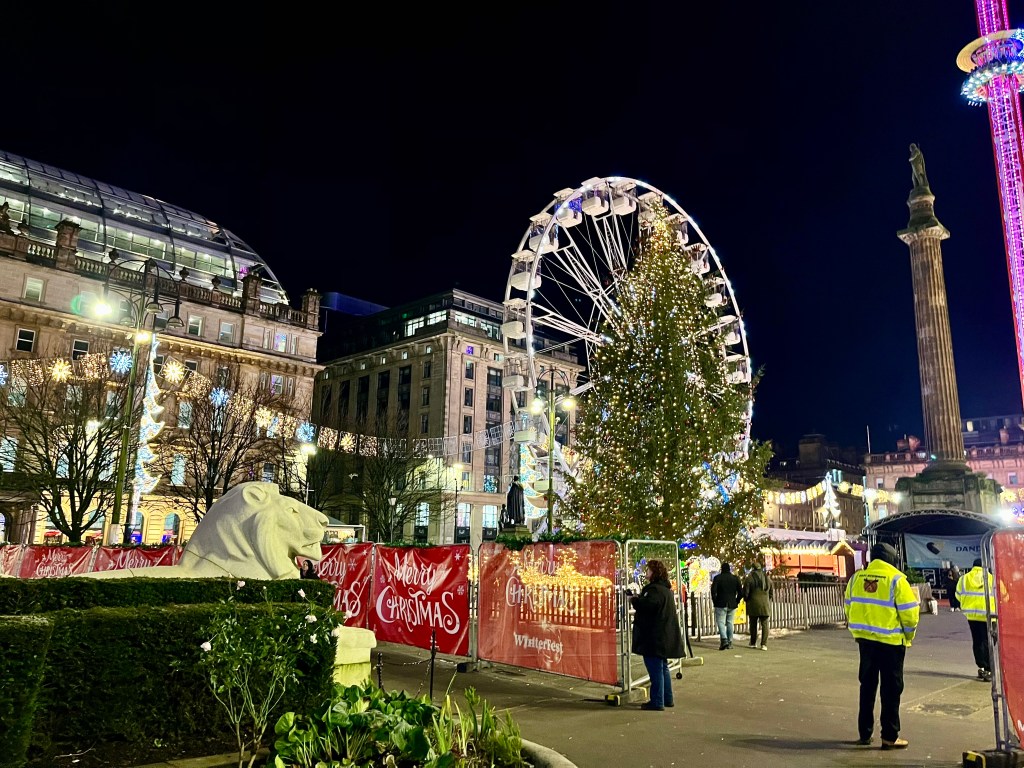
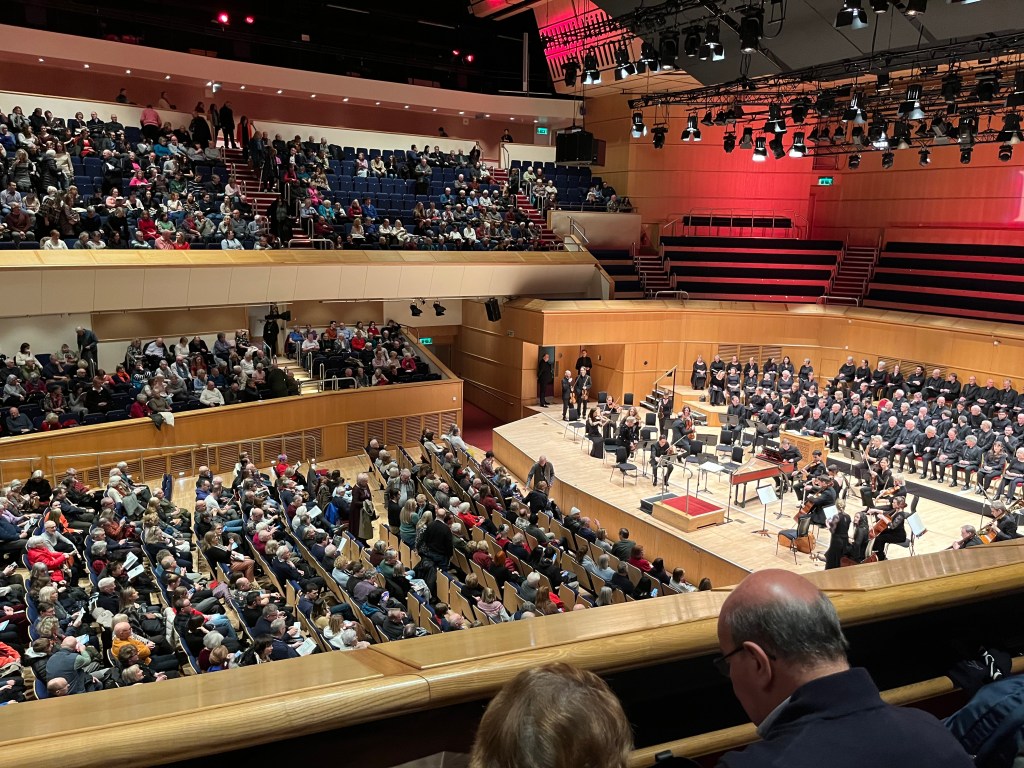
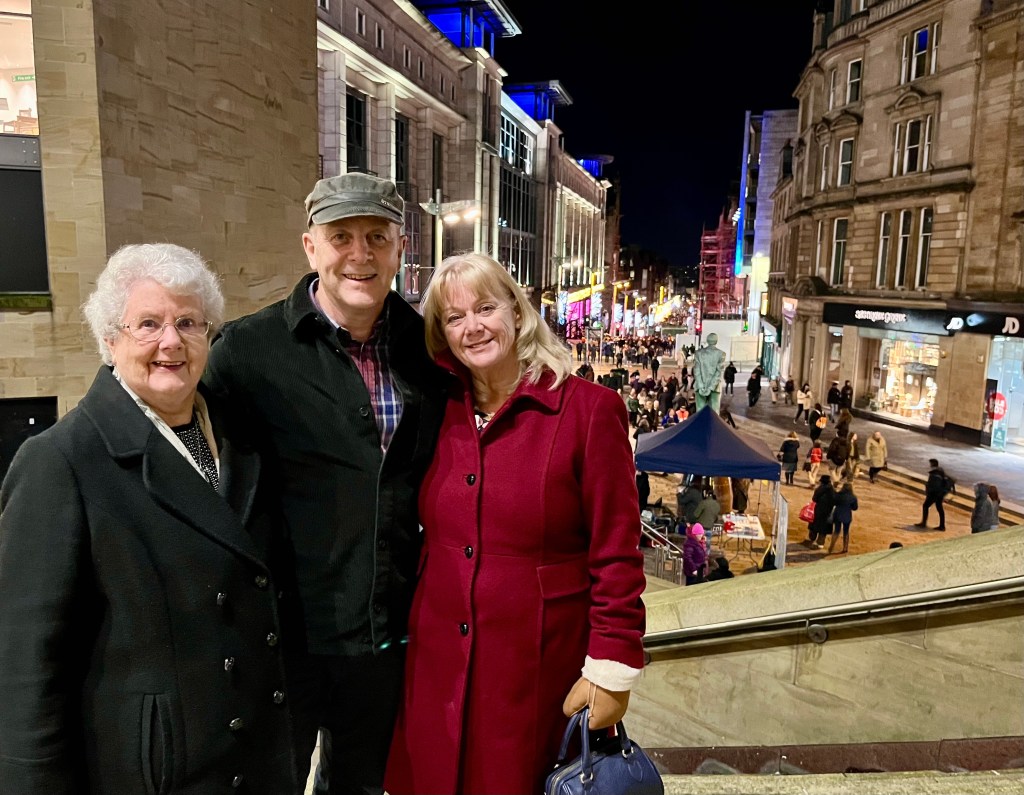
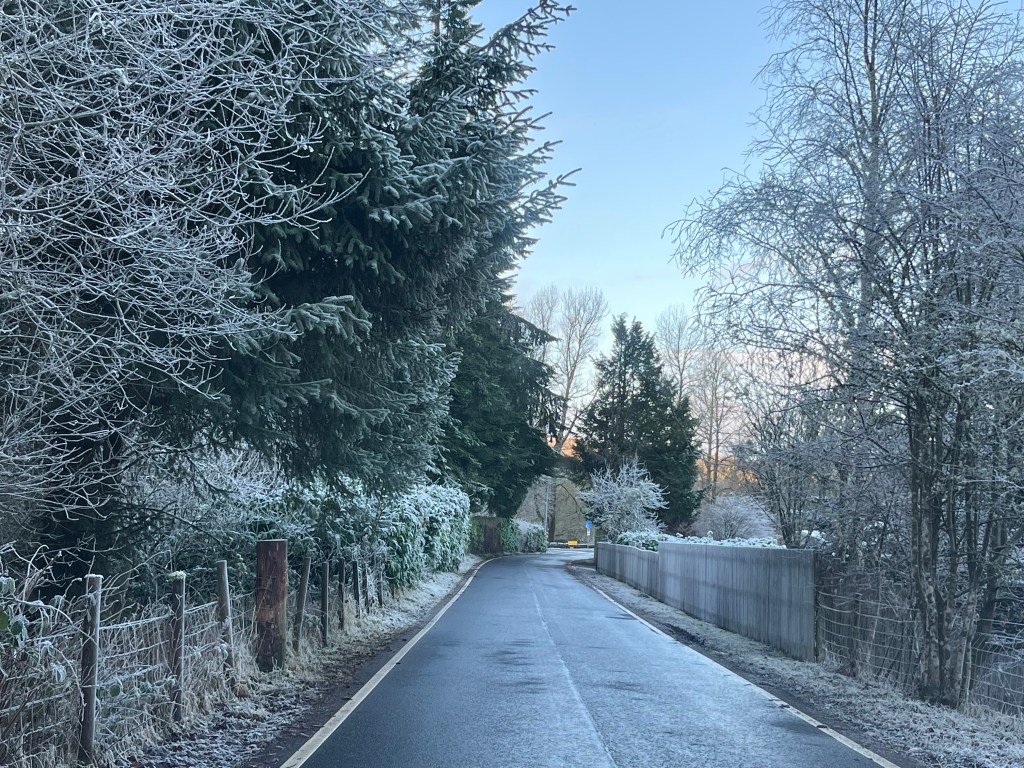
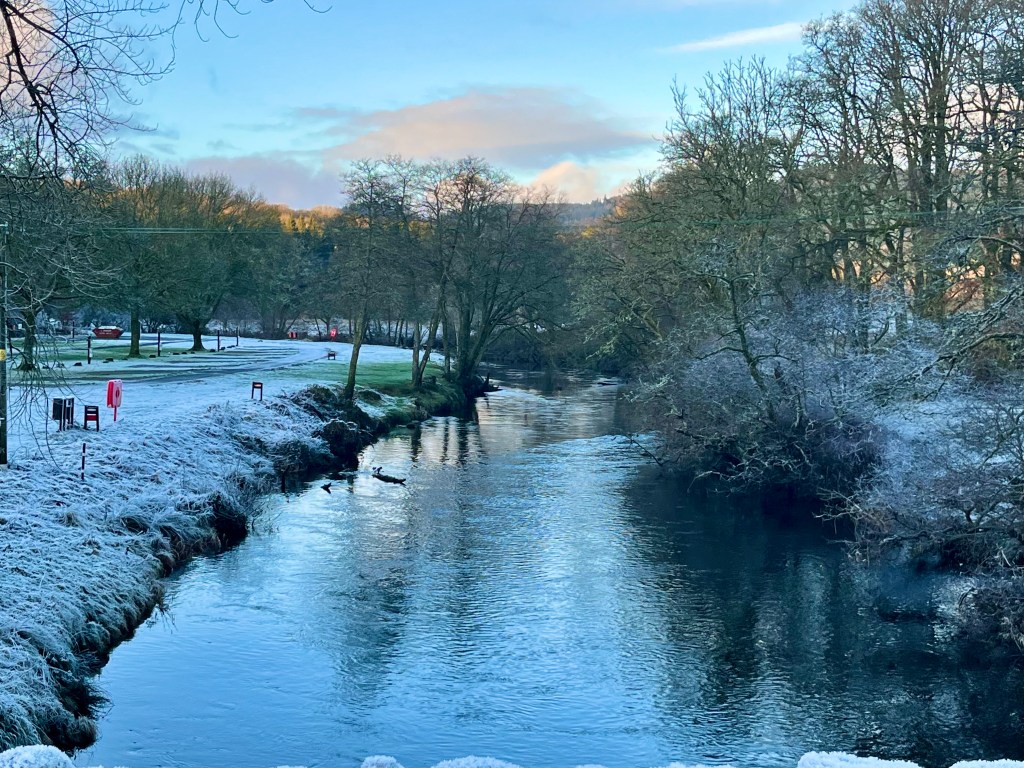
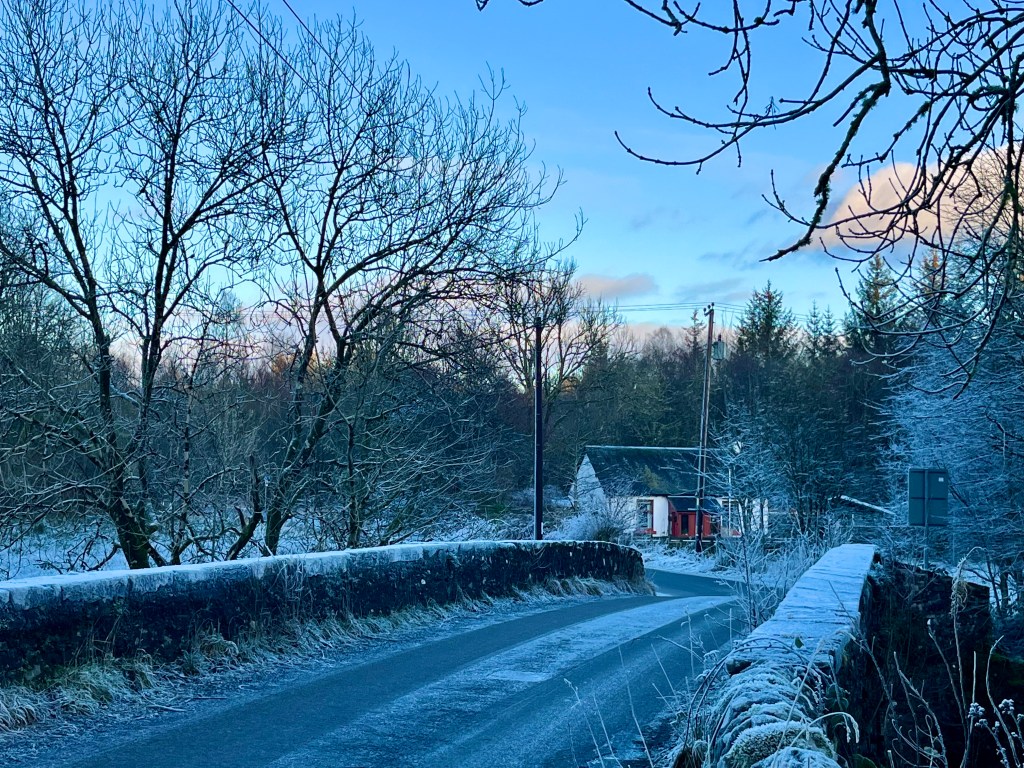
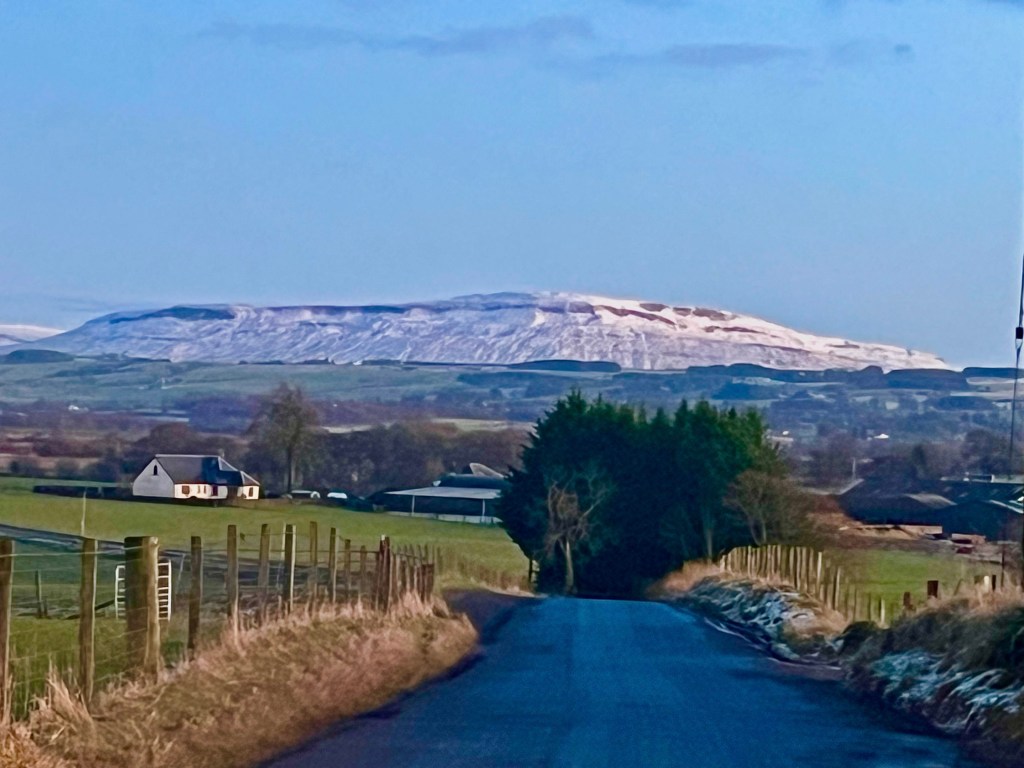
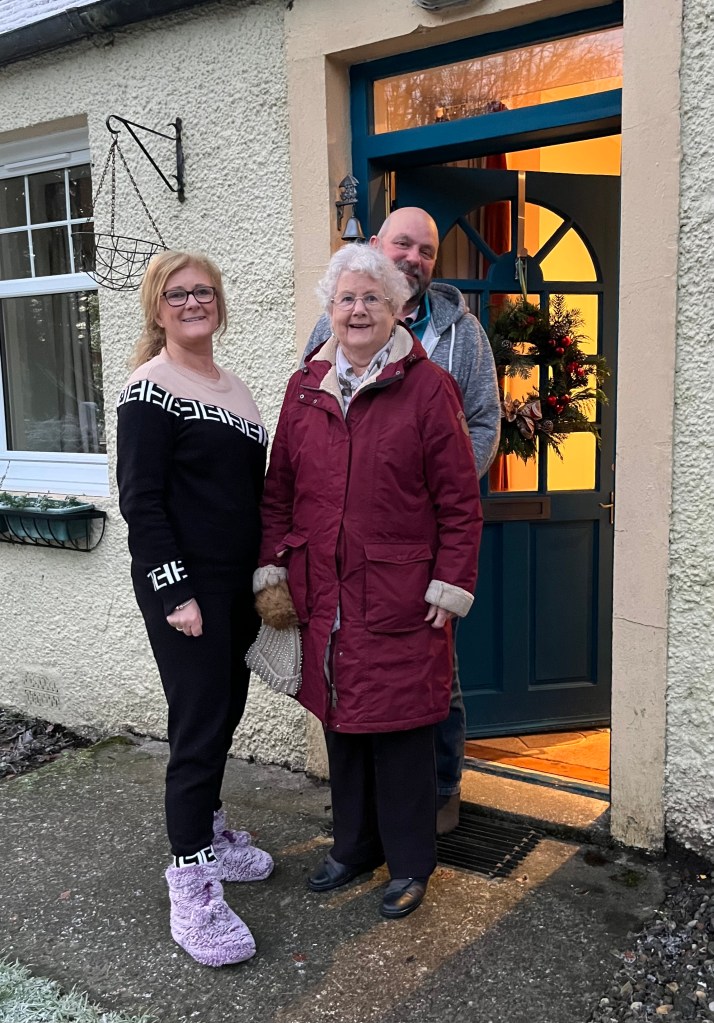
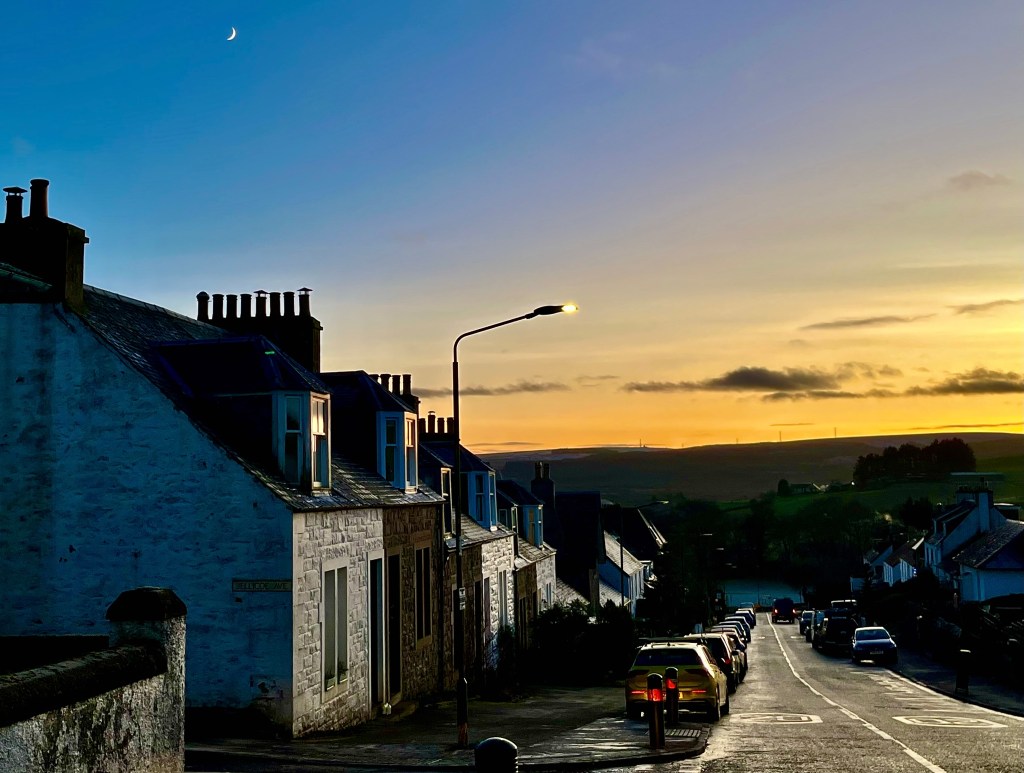
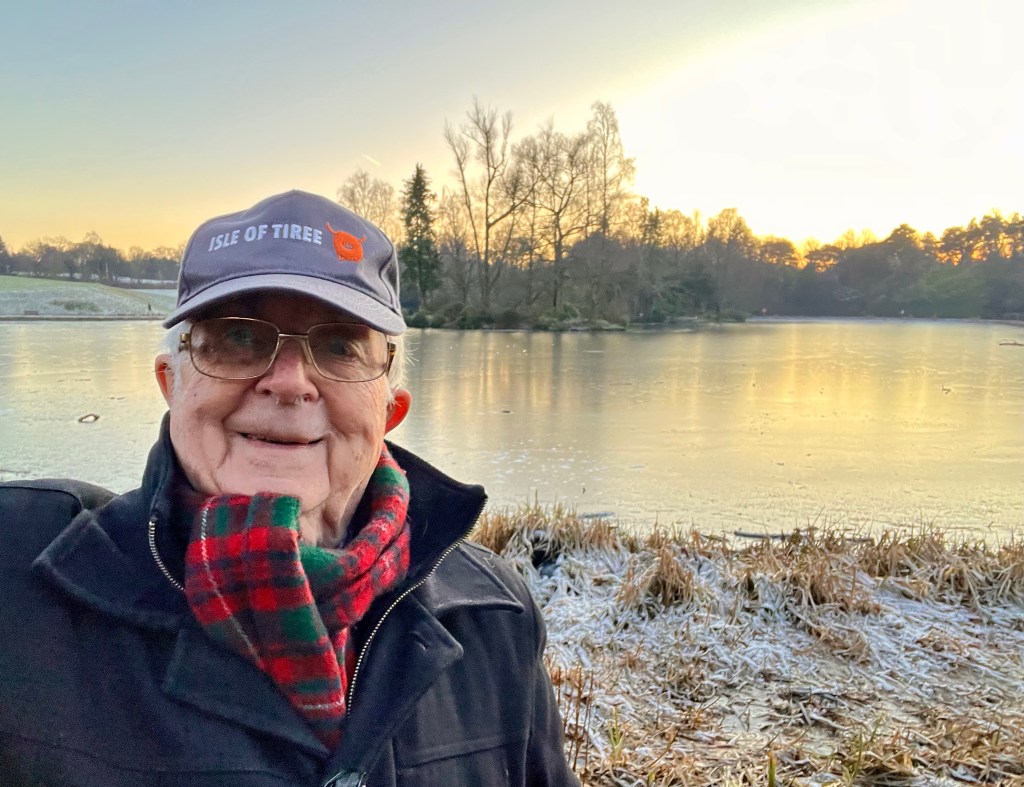
This year we spent the first day of January with family and friends at Skelmorlie on the Clyde coast, at the home of my son Allan and wife Jacqui. The best of cuisine in the best of company. On the second day of January we met again at the Glasgow Royal Concert Hall for ‘The Messiah’ presentation by the Scottish National Orchestra and Chorus – absolutely beautiful and inspiring! To finish the day we had a tour around the centre of Glasgow to see the ‘Christmas lights’ before they were dismantled for another year! The following sunny but frosty day we made a visit to my daughter and son-in-law at Gartmore, and finally at the end of that first week we met with friends for our annual church day of prayer. Whew, yes a busy start! Photos follow.
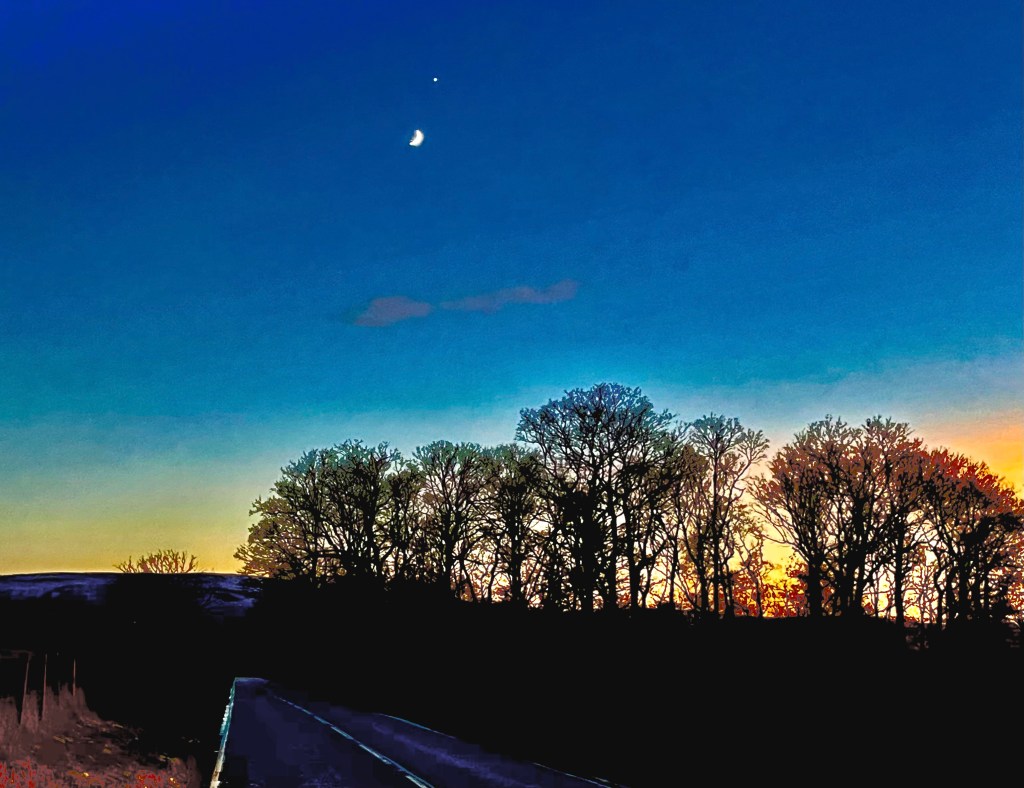
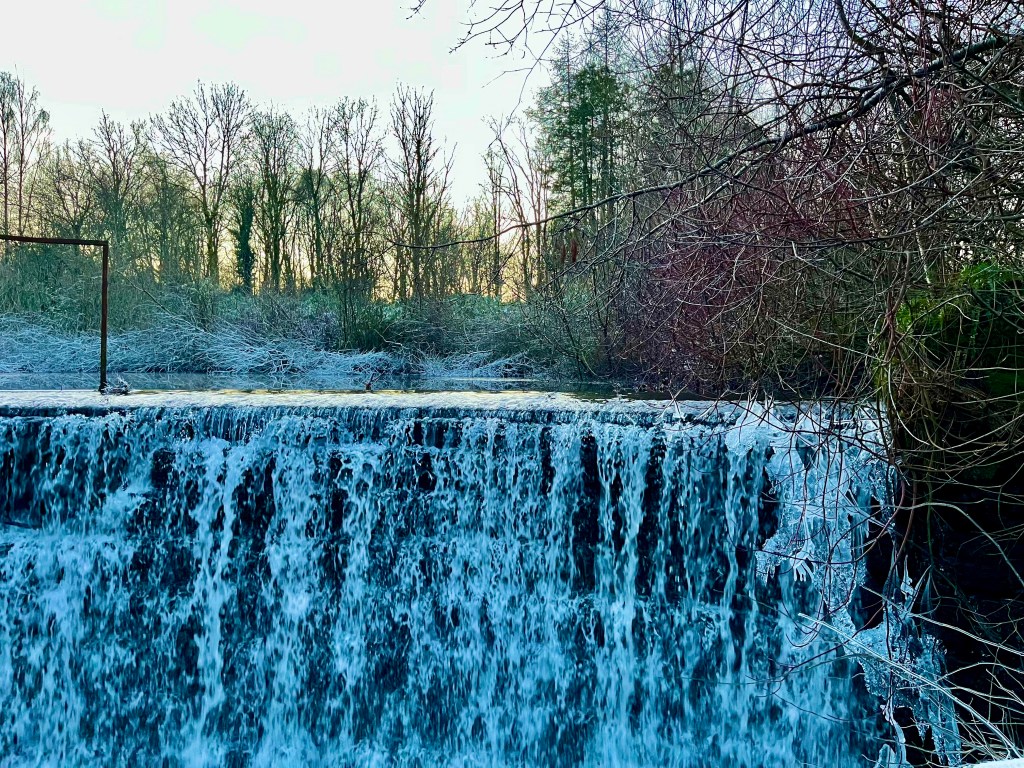
A peaceful New Year;s Day with family and friends.Sunset at SkelmorlieThe log fire< 2nd January – Just time to catch the Christmas lights in Glasgow >Handel’s ‘Messiah’ at Glasgow’s Royal Concert HallTruly inspired at the ‘Messiah’Winter by Robert Burns The wintry west extends his blast, And hail and rain does blow;, the stormy north sends driving forth ..The blinding sleet and snow;Beautiful Gartmoreon a stary starry night!I also managed a very cold walk in the local park.First icicles of the year.
Other special big events so far this year, included a trip to hospital with my wife who was having the first of two cataracts removed from her eyes. Thankfully she is already seeing much clearer and sharper in the one eye as a result. Also, we received news that our grand-daughter Lindsey and husband Jamie had presented us with another new great-grandson named Finn. Mother and child both well and now at home.
On a sadder note we have said our farewells on this earth to a number of our older family members and friends during the last few weeks. But we await with hope a reunion in a day to come in the presence of our risen and exalted Lord Jesus Christ.
A VISIT TO THE ROBERT BURNS MEMORIAL IN ALLOWAY, SCOTLAND
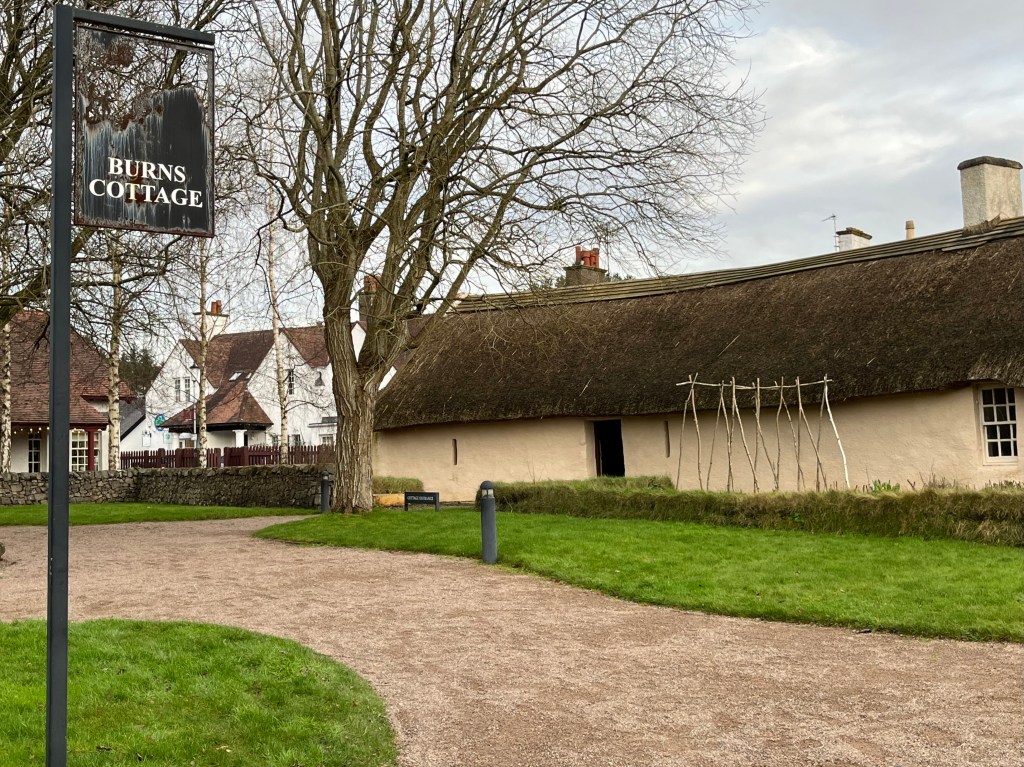
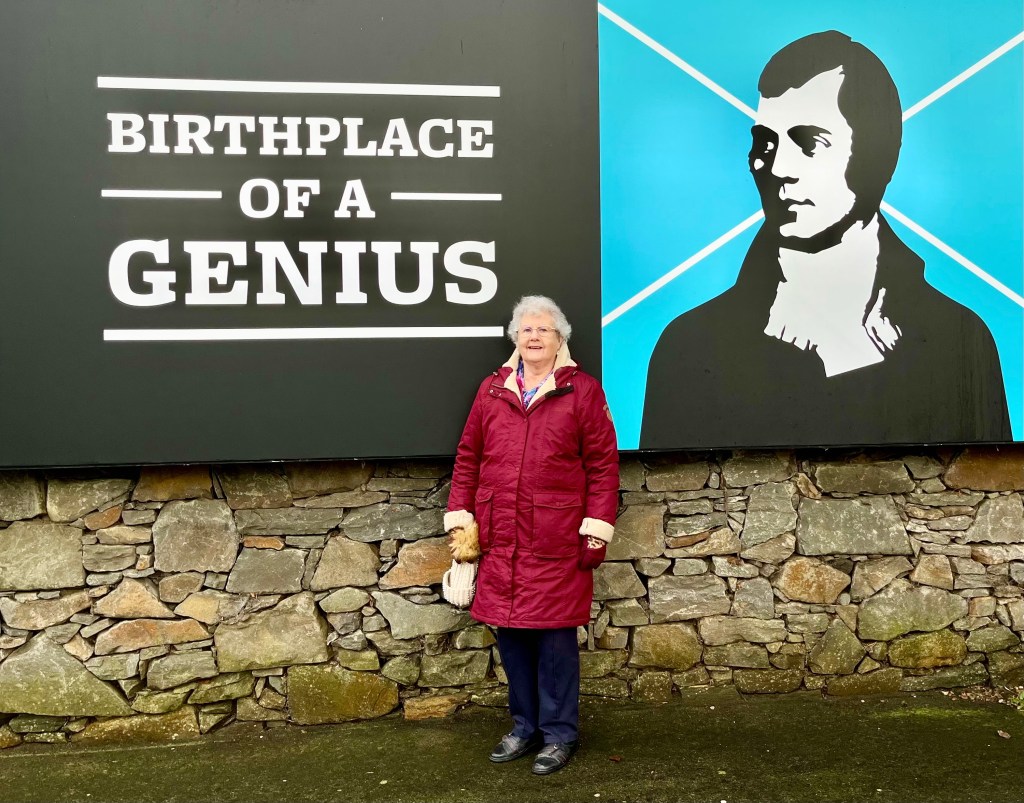
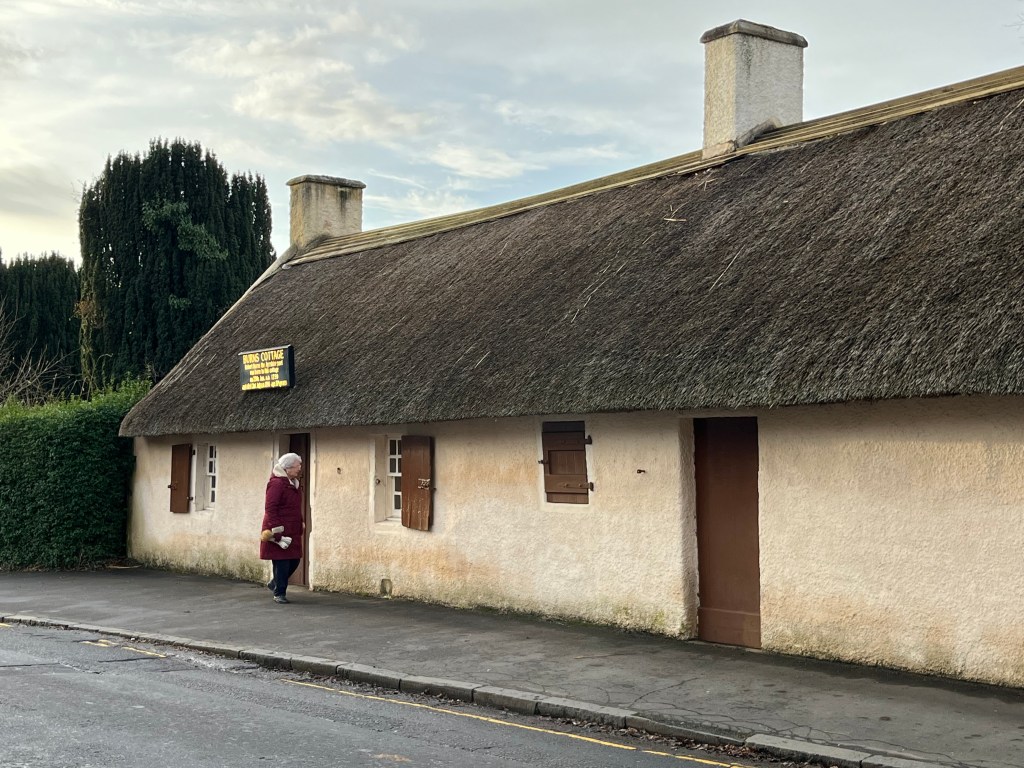
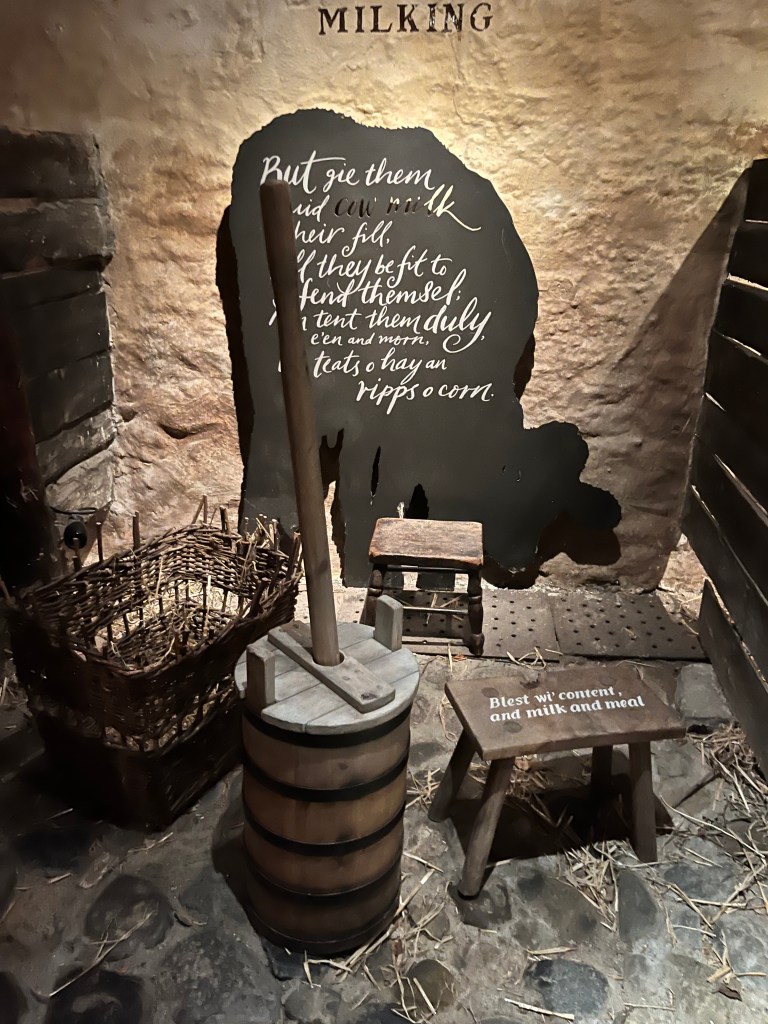
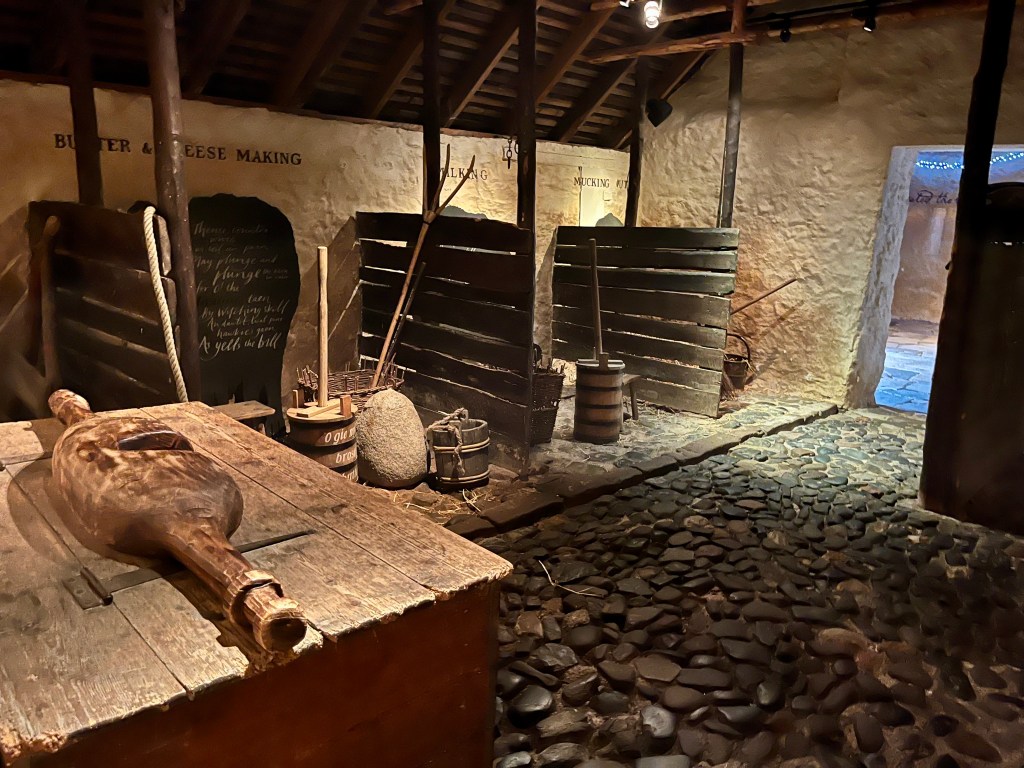
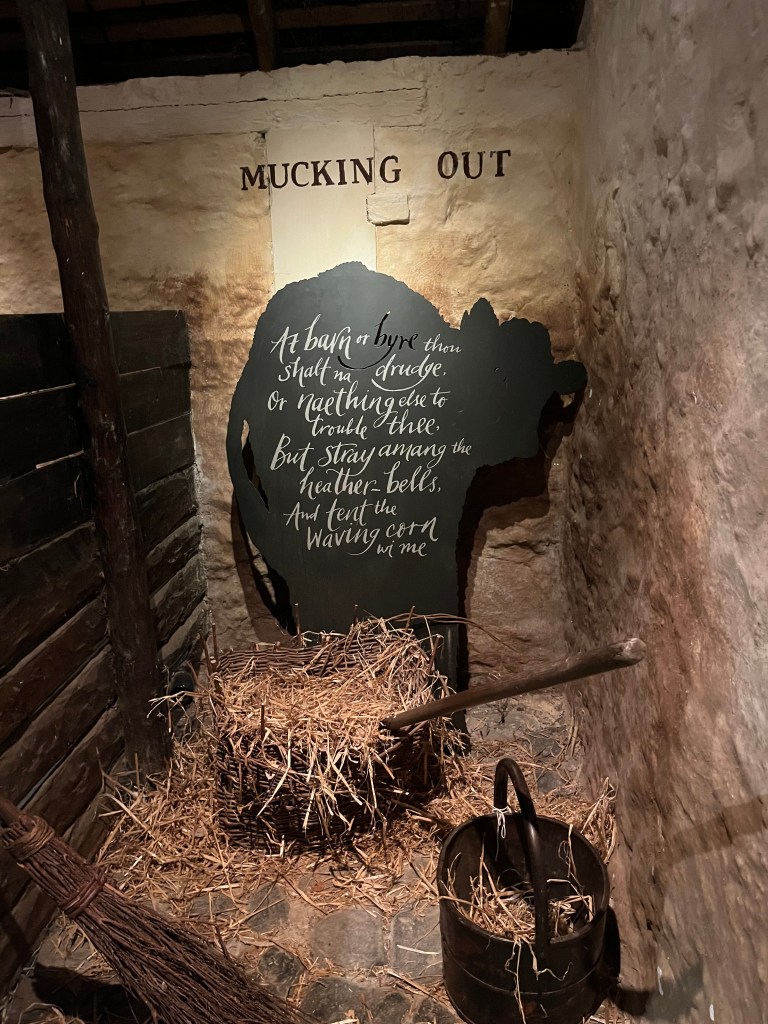
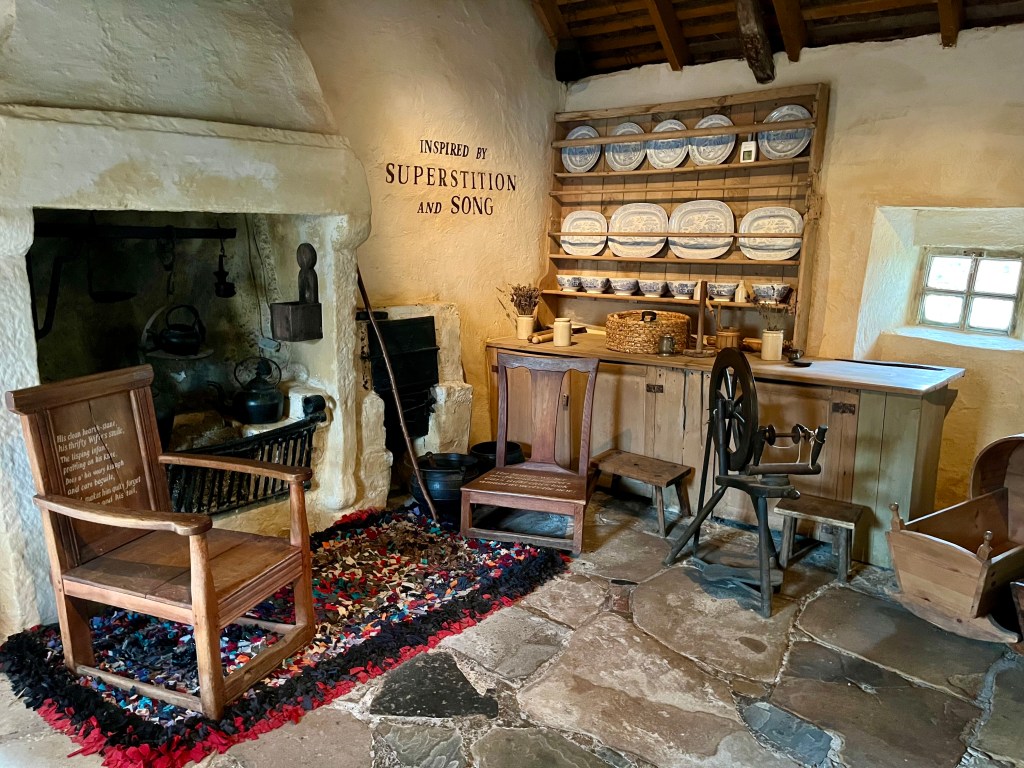
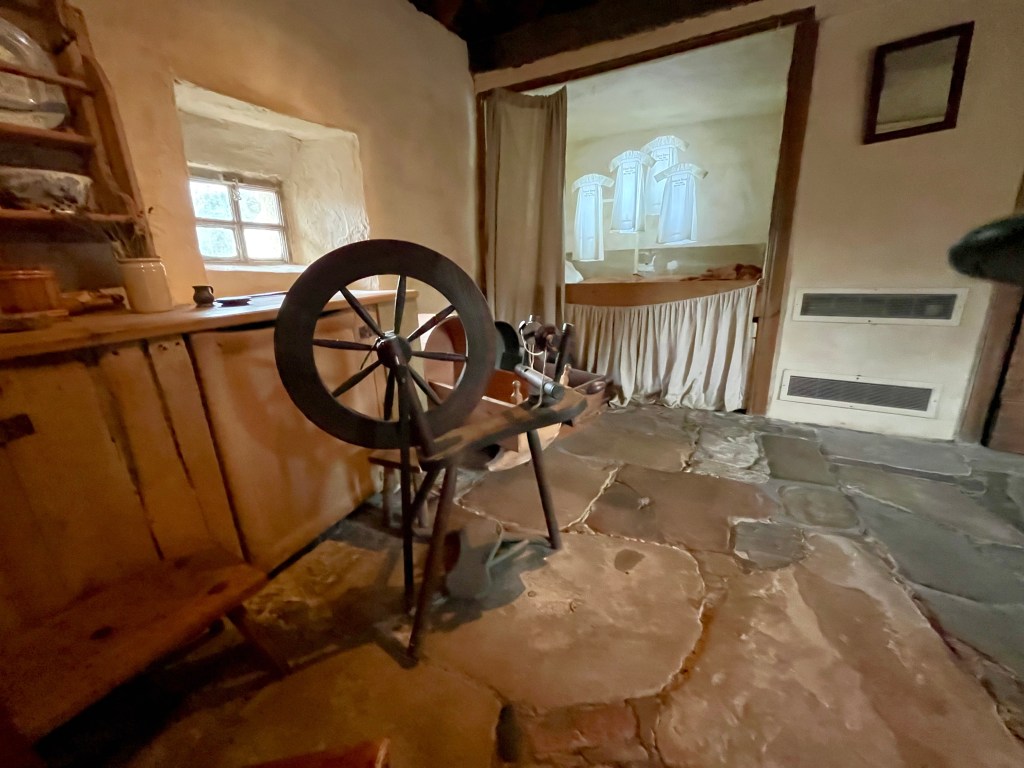
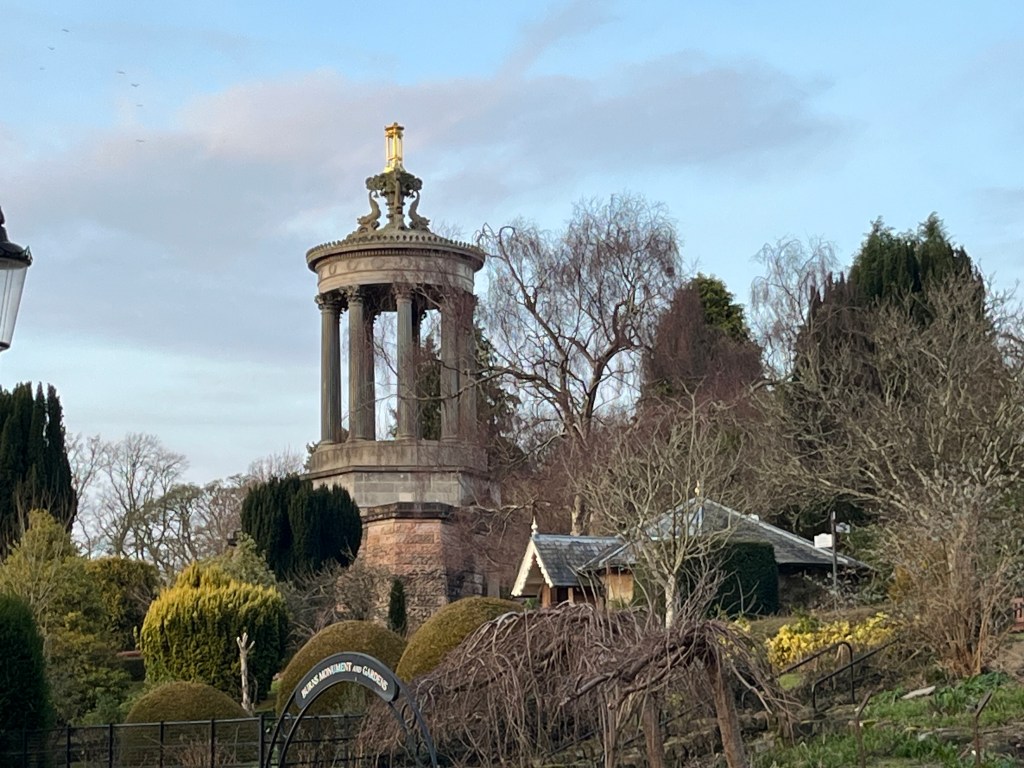
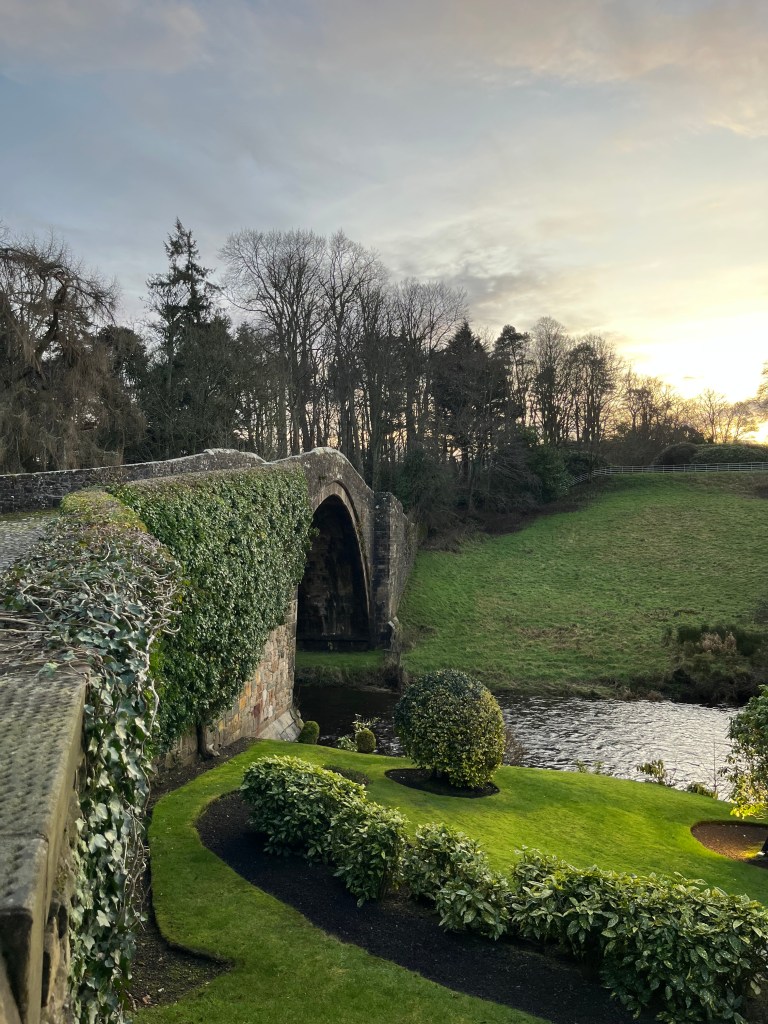
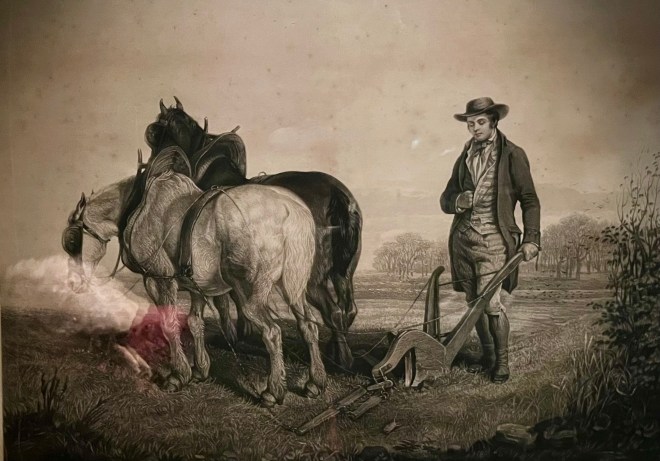
Here in Scotland, just exactly one month after Christmas, on the 25 January we celebrate Scotland’s National Bard, Robert Burns and his amazing poetical works. So since the weather turned a bit milder this week, we used our National Trust Cards to visit the thatched cottage where Robert Burns was born in Alloway, and the nearby Burns Museum and coffee shop. It’s well worth a visit if you haven’t been, or haven’t been for a while. Here are some photos, and a couple of short excerpts from two of his best known poems.
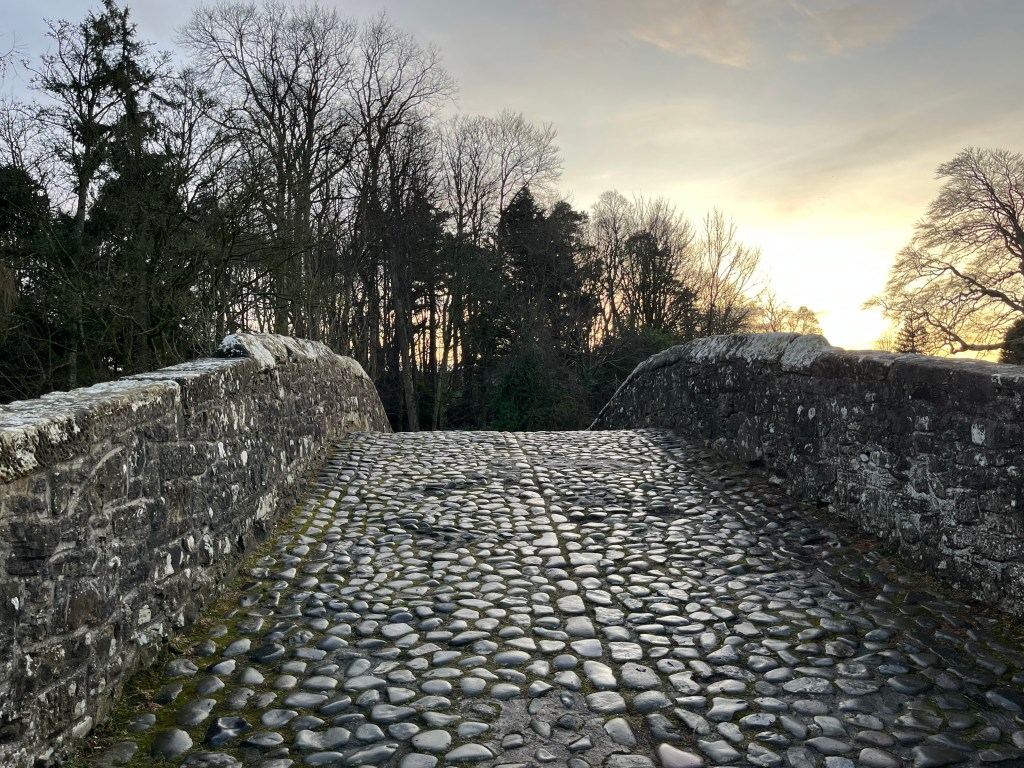
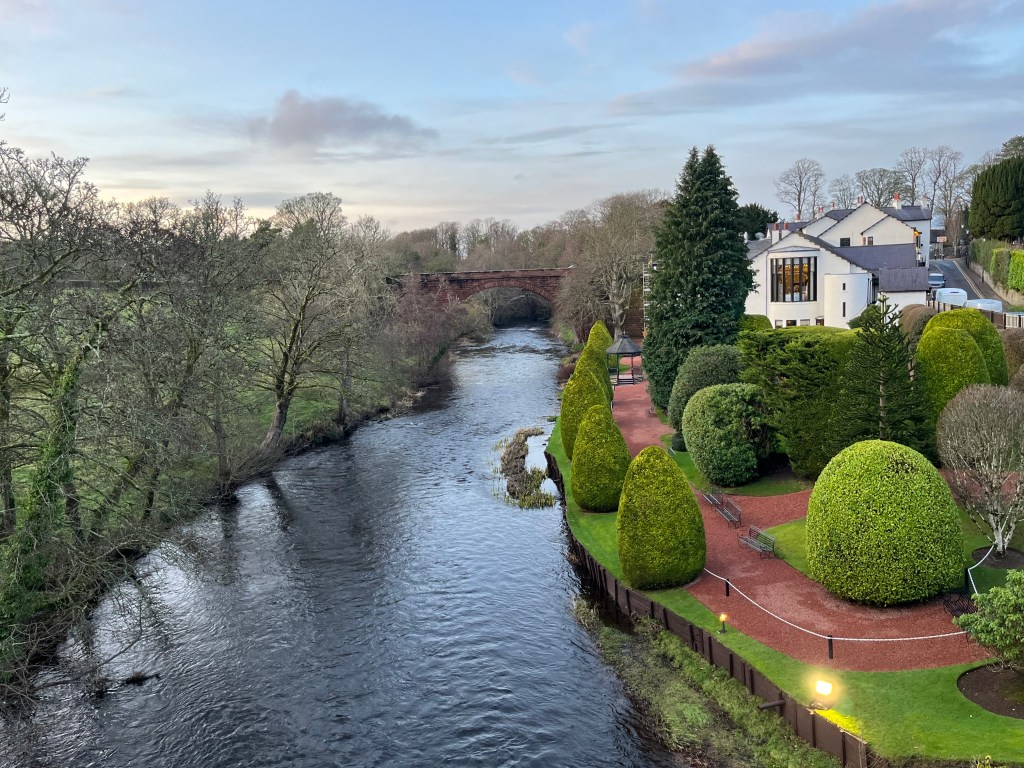
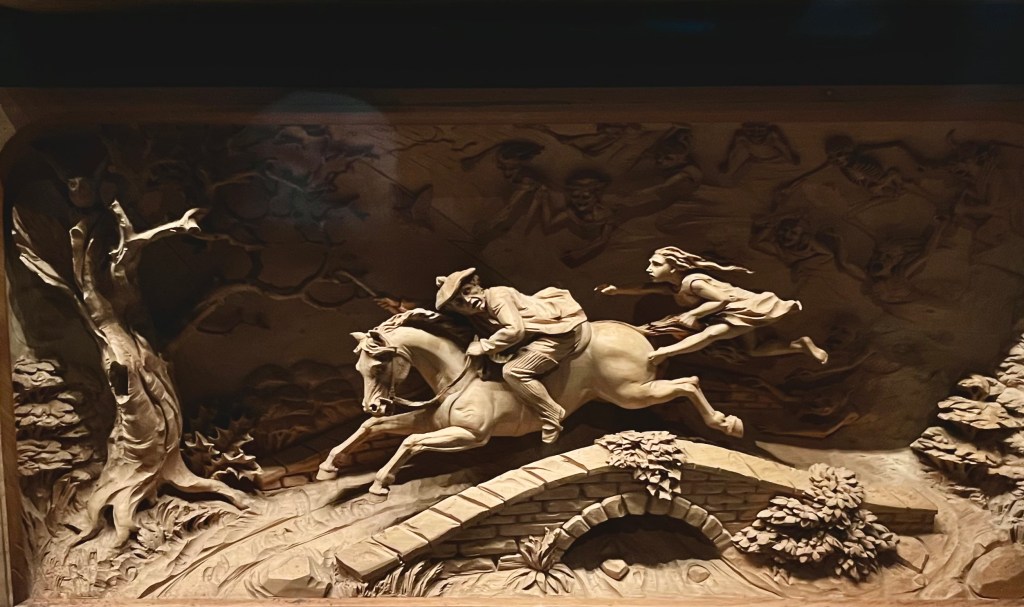
The birth place of Robert BurnsMuseum EntranceBorn 25 January 1759 – died 21 July 1796The combined barn with stallsFamily RoomSpinning wheel and inset bedBurns Memorial< The Brig’ o Doon >
‘Tam o Shanter’ by Robert Burns ‘But pleasures are like poppies spread: You seize the flower, its bloom is shed; Or like the snow fall on the river, A moment white – then melts forever
‘To a Mouse’ by Robert Burns
But Mousie, thou art no thy lane, In proving foresight may be vain: The best-laid schemes o’ mice and men Gang aft a-gley, And lea’e us nought but grief and pain, For promised joy!
I love so many of Burn’s poems and songs, but perhaps my favourite is ‘The Cotters Saturday night‘ which gives such a great picture into family life for many here in Scotland away back in the eighteenth century. I have recorded my recitation of it on You Tube and you can listen to it here if you wish. https://youtu.be/2DJf4xWGZdg?si=huyDHOFIDWMY0lPK
I have seldom if ever, heard anyone quote the words of Robert Burns as he faced death, but in 1781 when that seemed imminent he wrote these words.
O Thou unknown, Almighty Cause of all my hopes and fears, in whose dread presence, ere an hour, Perhaps I must appear. If I have wandered in those paths Of life I aught to shun; As something loudly in my breast Remonstrates I have done.
The last verse says:
Where with intention I have erred, No other plea I have, But thou art good; and goodness still delighteth to forgive.
Sad to read of his uncertainty regarding his final eternal destiny, when it is possible to be sure! When we go on a journey we invariably have everything organised to the last detail, and particularly our final hotel/Guest House accommodation. Yet on our journey through life, thoughts of our final destination are often completely ignored. Our morning Bible reading today was from Matthew 7:13,14. where Jesus says “Enter through the narrow gate. For wide is the gate and broad is the road that leads to destruction, and many enter through it. But small is the gate and narrow the road that leads to life, and only a few find it.’ Jesus is the Gate! (John 10.9) and Jesusis the Way (John 14:6)
So in our current uncertain and unpredictable world where none of us knows what a day may bring, I would ask you, do you know the road you are on? and have you thought of your final destination? In the bible the Apostle John writing to Christians in his first letter says ‘And this is the testimony: God has given us eternal life, and this life is in his Son. Whoever has the Son has life; whoever does not have the Son of God does not have life.’ (1 John 5:11,12)
Time to check it out?
Until next time – I wish you God’s blessing wherever you are.
Last week we visited the birth place of Dr. David Livingstone at Blantyre, which is just 20 miles from our home here in Glasgow, Scotland. There is a beautiful Memorial Museum there which in recent times has been completely refurbished, and faithfully records the life and times of Livingstone.
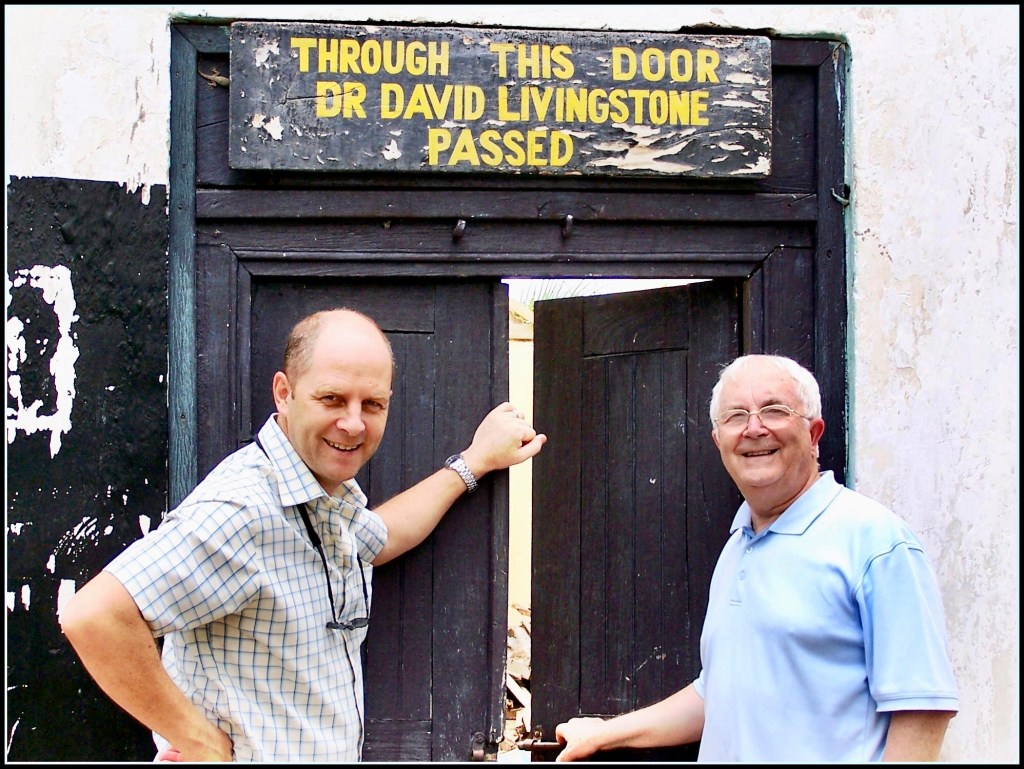
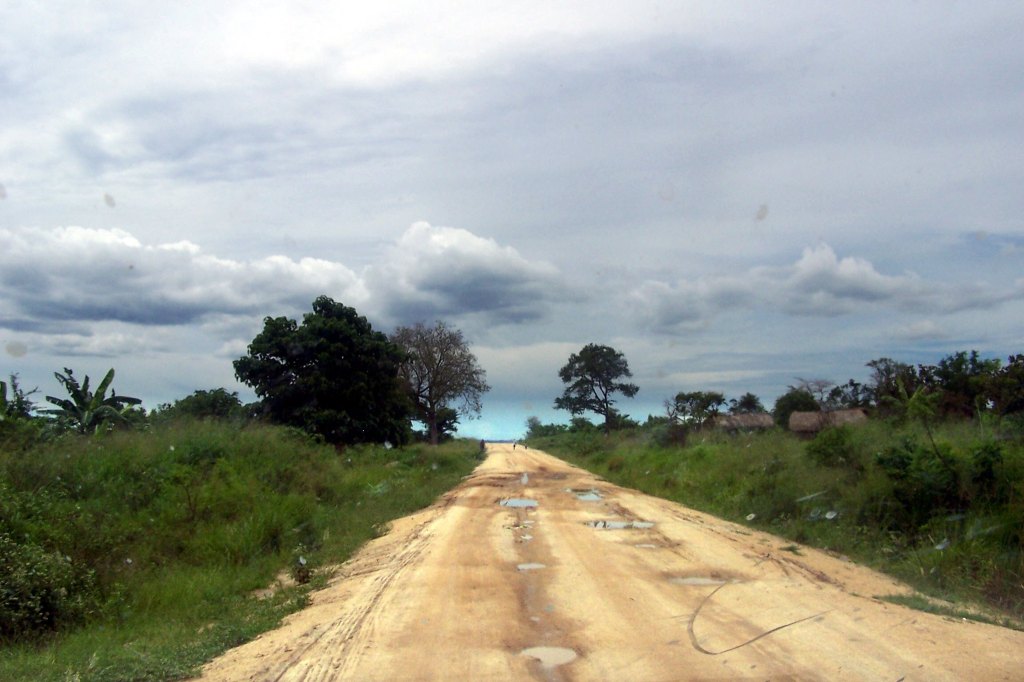
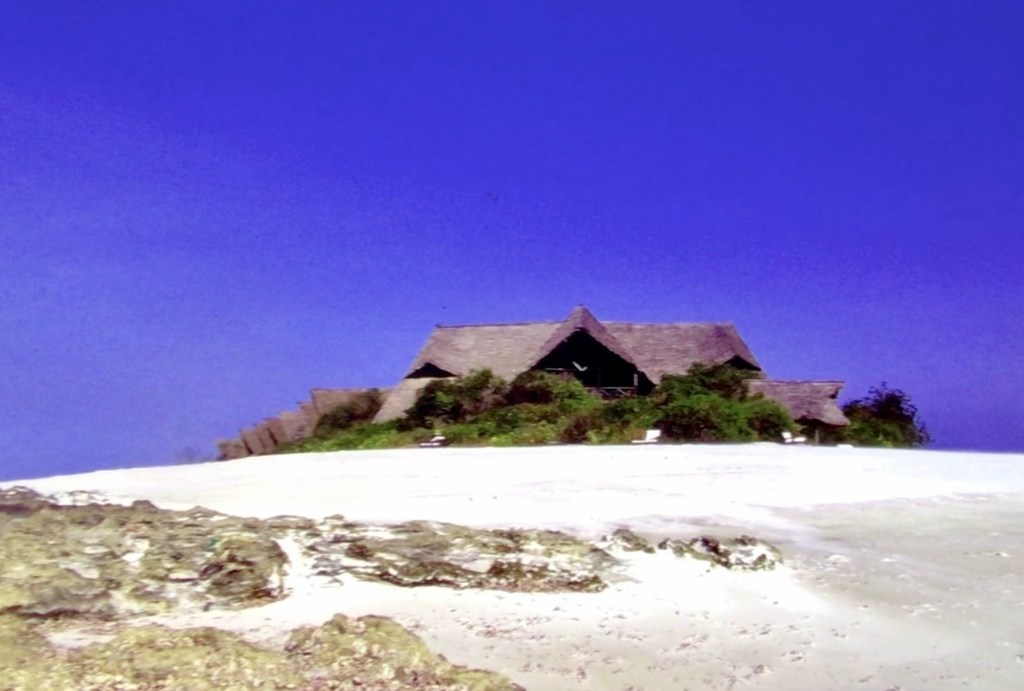
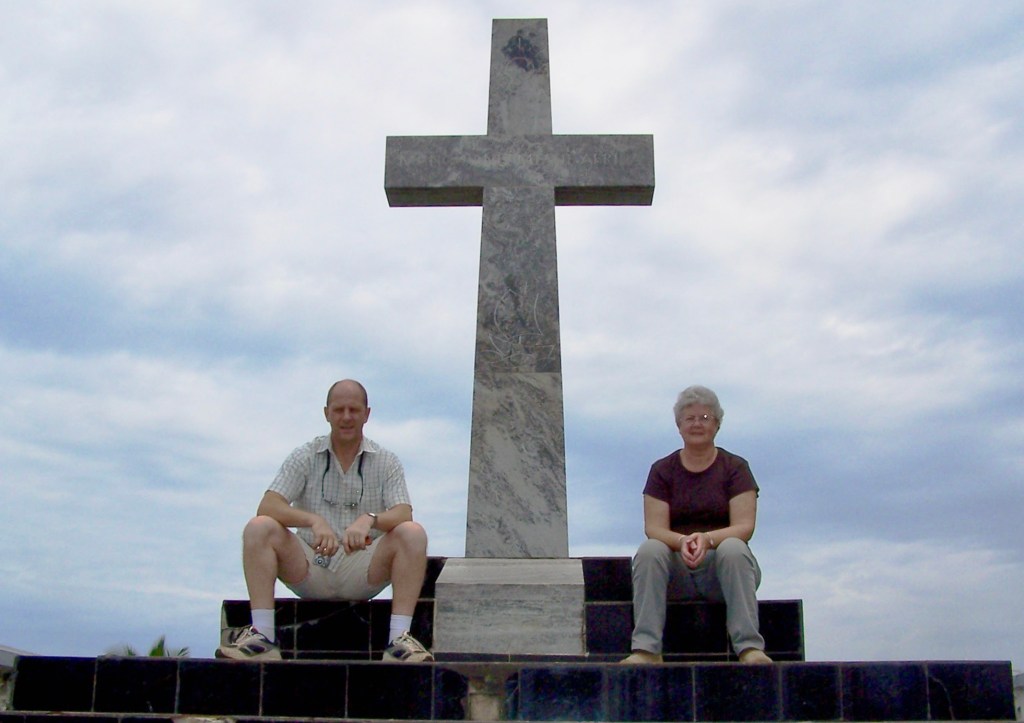
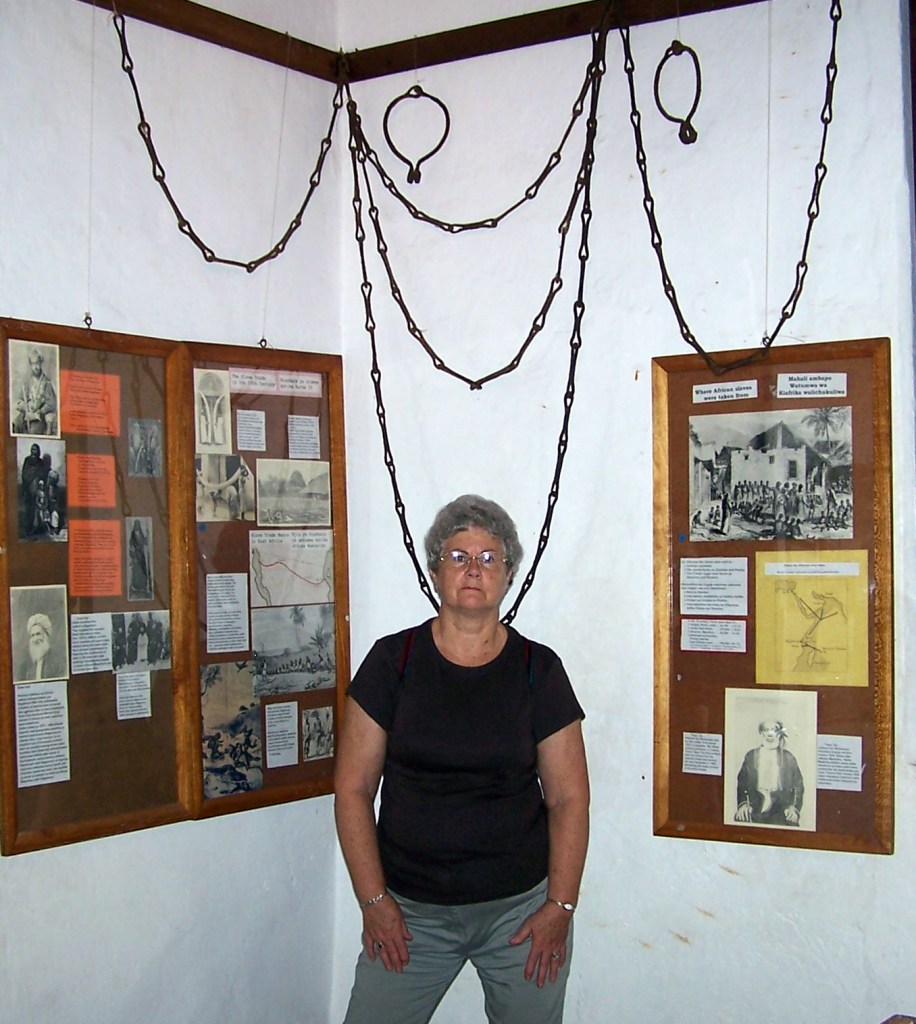
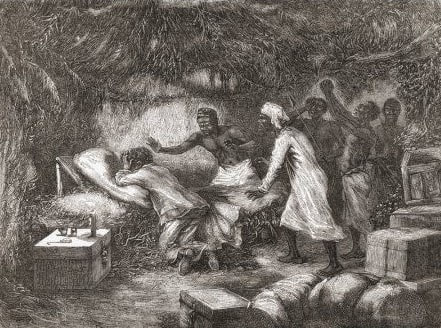
It’s not surprising then that this also brought to my mind a visit we made with my son and daughter in law to Bagamoyo in Tanzania during one of our African travels. So before sharing with you something of the Memorial Museum, there follows a few photographs of our trip to Bagamoyo. This town was once considered to be the capital of Tanzania, a centre of business and commerce, strategically placed on the East African coast. David Livingstone’s body was brought here by his faithfull African friends and companions after his death on the southern shore of Lake Bangweolu on the 1st May 1873, he was aged sixty. They had carried their friend and colleague more than a thousand miles over a period of nine months, so that he could be transported back to his home country for burial in Westminstter Abbey, London.
On the road to BagamoyoThis building has since been refurbished Safari LodgeThe first cross raised in East AfricaVisiting the slave memorial
Sadly this port was used by Arab slave traders who brought caravans of slaves from the interior to be shipped to the slave market in Zanzibar. It is estimated that 50,000 young and old African men and women were shipped from here every year over a number of decades, amounting to an approximately 1.5 million souls, not counting those who died on the way. It was a sobering experience walking around that place.
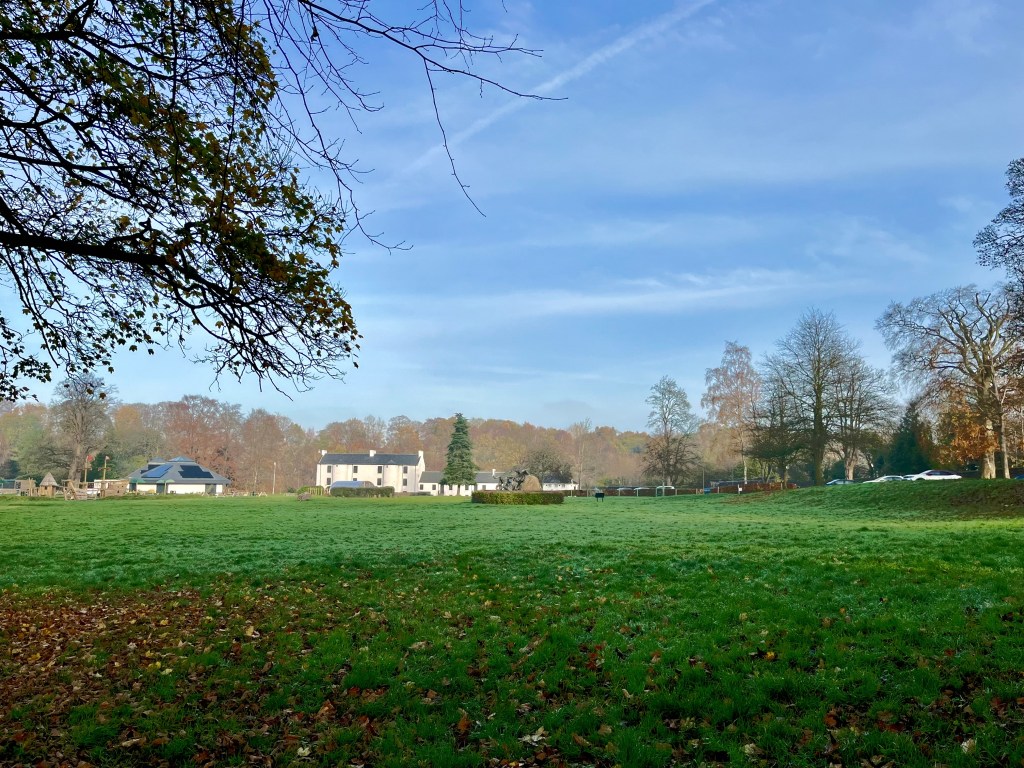
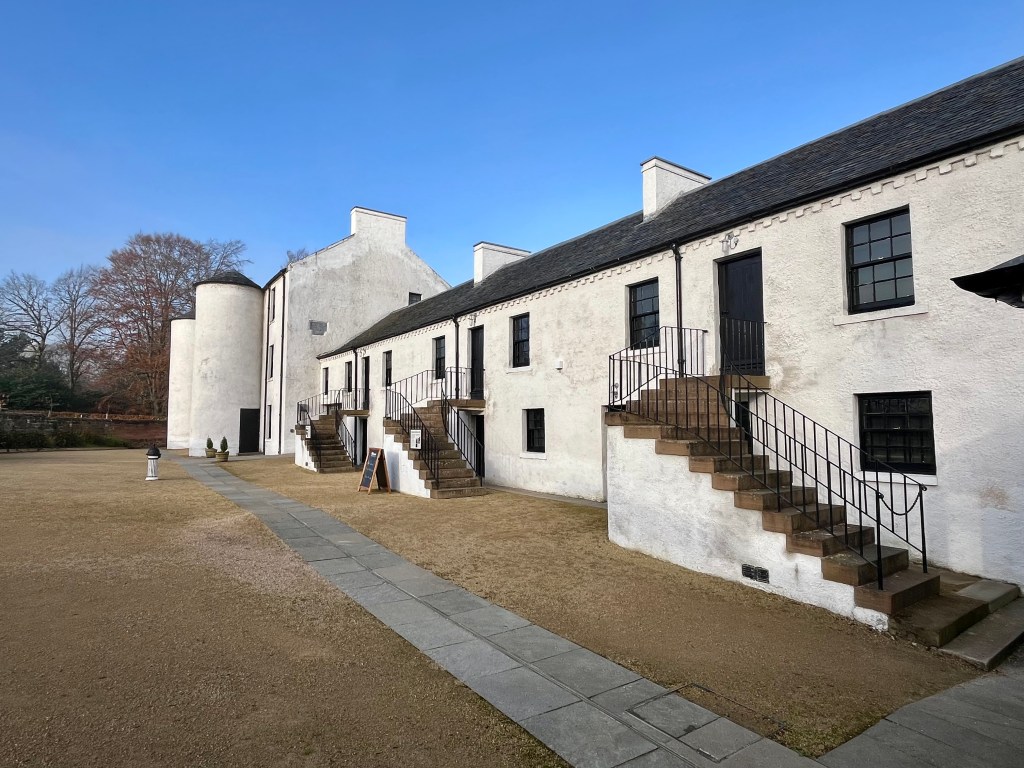
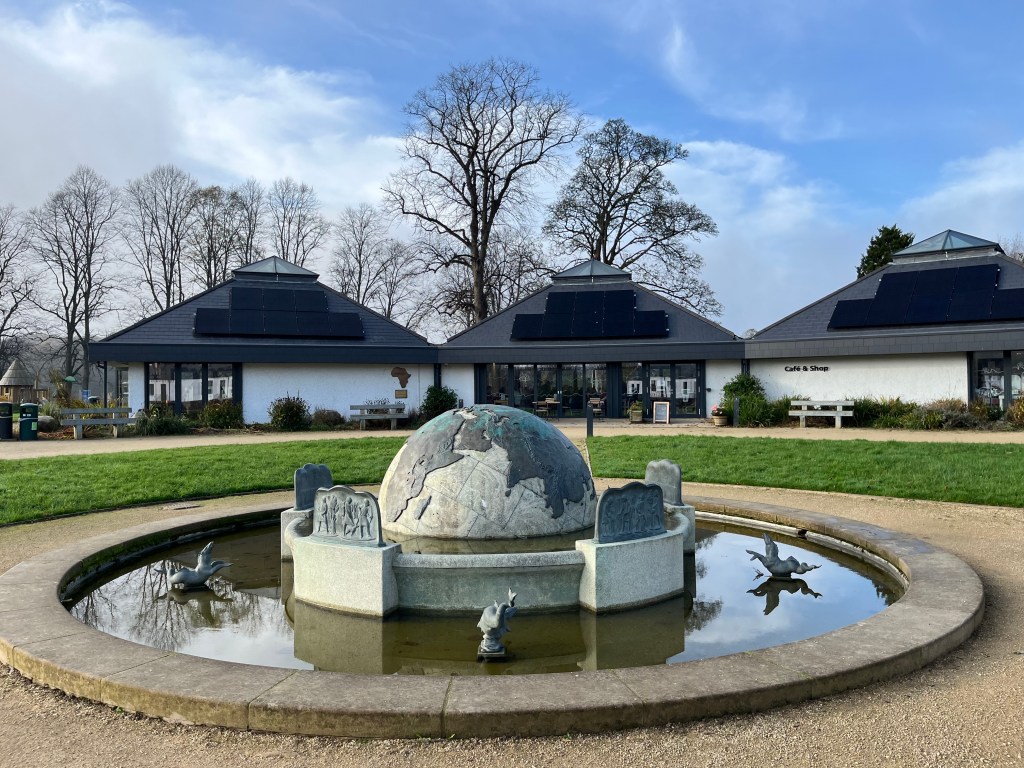
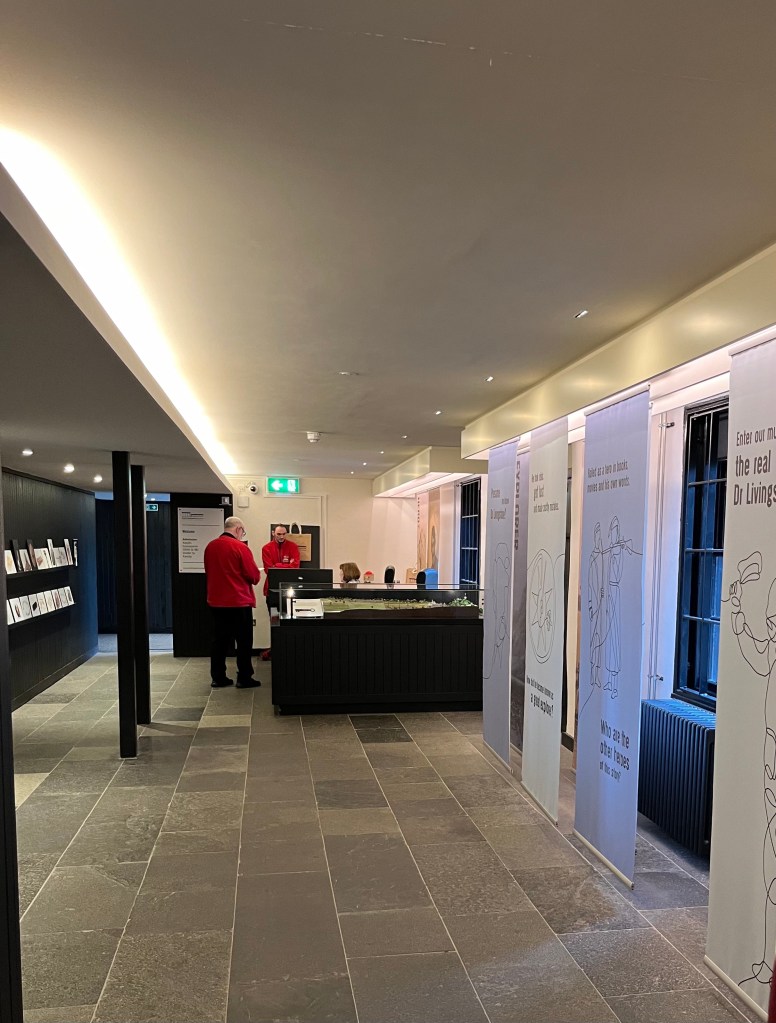
THE BLANTYRE MEMORIAL MUSEUM is set on the banks of the river Clyde, surrounded by open fields, and paths, and the old mill houses have been remarkably well preserved, one end of the row forming the museum on three levels with lift access. There are modern toilet facilities in the museum, and on site, also a shop and restaurant. This place is well worth a visit, with plenty of space for a group outing and for children to play. Entrance prices are very competitive and can be checked on line.
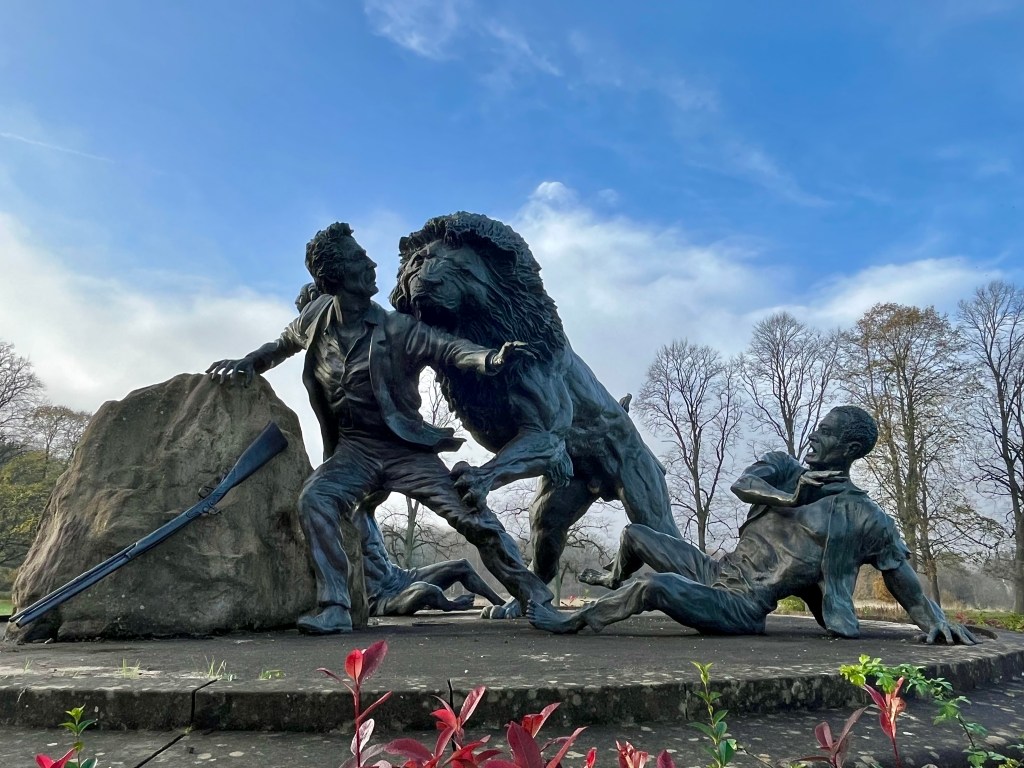
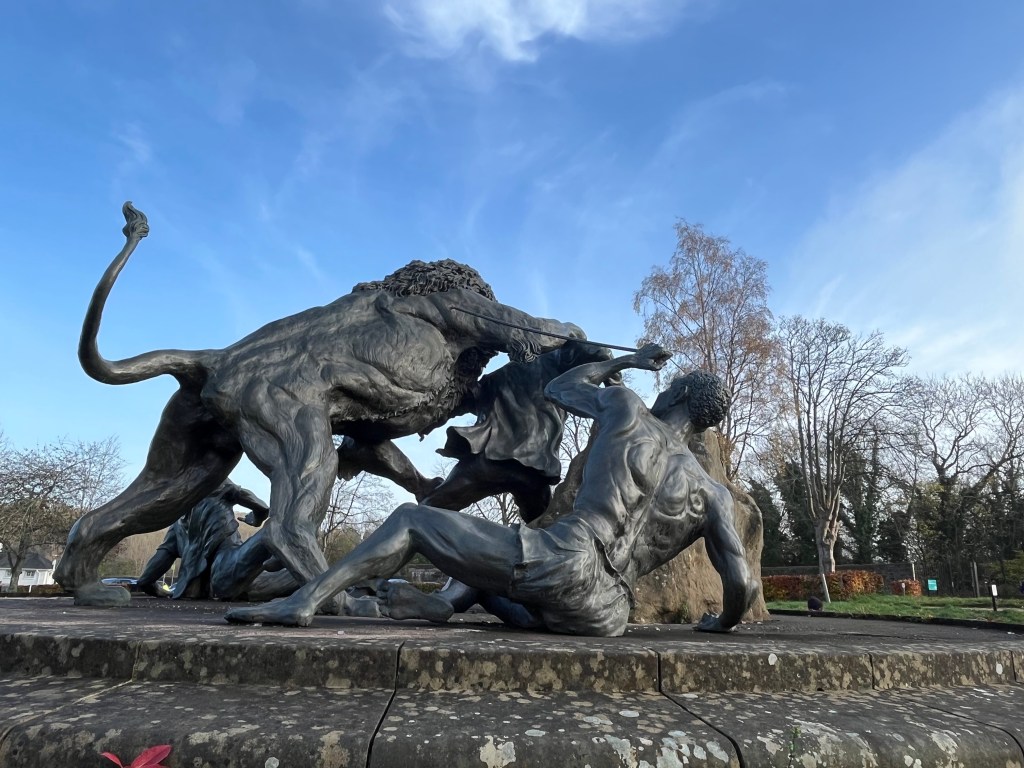
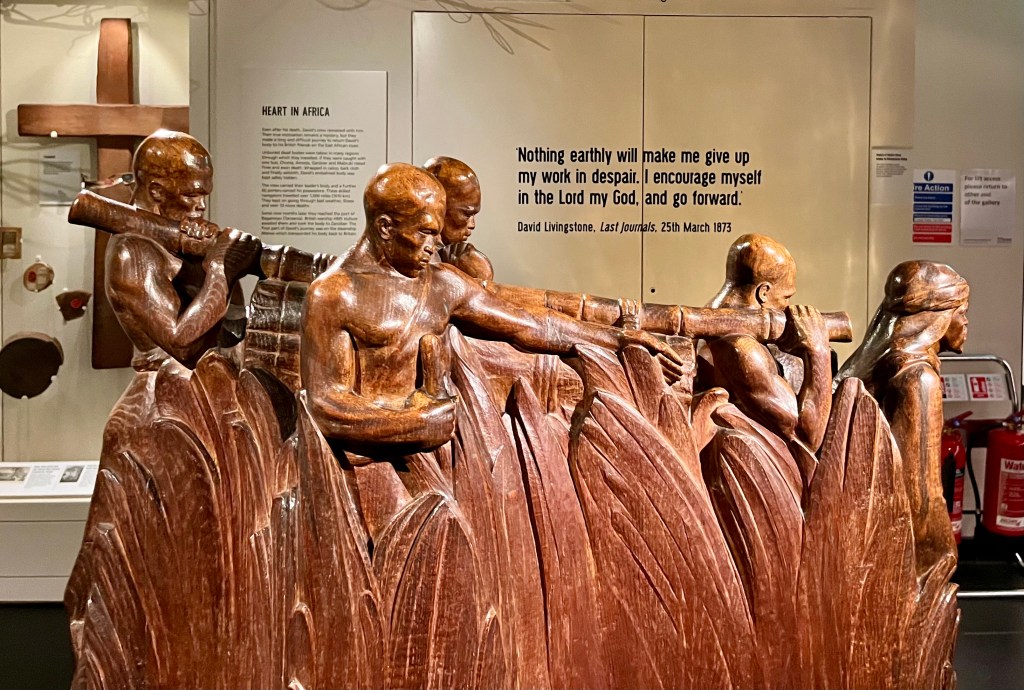
A view of the expansive siteThe old mill house cottegrs and MuseumThe African fountain with shop and restaurant in the backgroundThe large sculpture depicting the incident when they were attacked by a lion
David Livingstone, one of Scotland’s famous sons was the second child of Neil and Agnes Livingstone, and was born on the 19th March 1813. He was of humble birth and had six siblings, but grew up knowing the love and discipline of good Christian parents in a happy home. At the age of ten, he was sent to work at the local cotton mill, first as a piercer and then as a spinner. At the age of twenty he made a personal commitment to Jesus Christ after readng Dick’s “Philosophy of a Future State”. He said ‘I saw the duty and inestimable privilege immediately to accept salvation by Christ‘. This experience determined the course of his life.
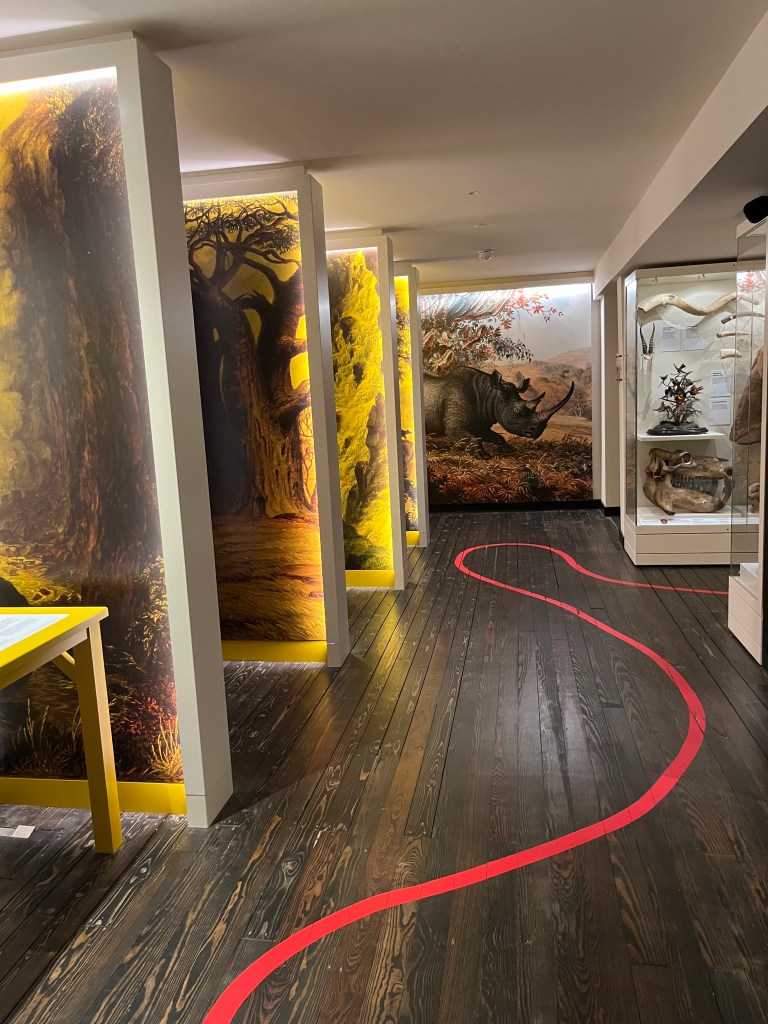
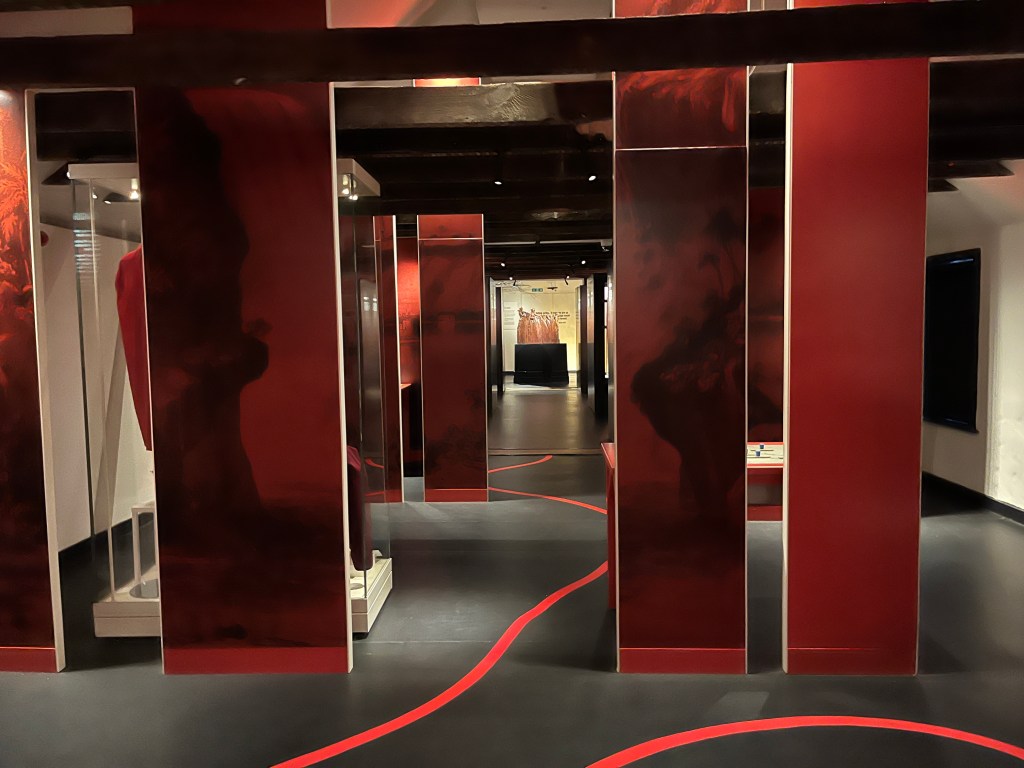
Livingstone had a great love of reading, and this opened up the world to him. He is said to have read all sorts of books that came into his hands, but especially books on travel and missionary enterprise. By the age of 23 years, he was studying theology and medicine at Glasgow University and by September 1838, had been provisionally accepted by the London Missionary Society. After further studies in England, he returned to Glasgow in November 1840, and passed at Glasgow as a licentiate of the faculty of physicians and surgeons. During that same month he was ordained a missionary at Albion Street Chapel, and the following month he set sail for Capetown in South Africa. Here are some photos from within the museum.
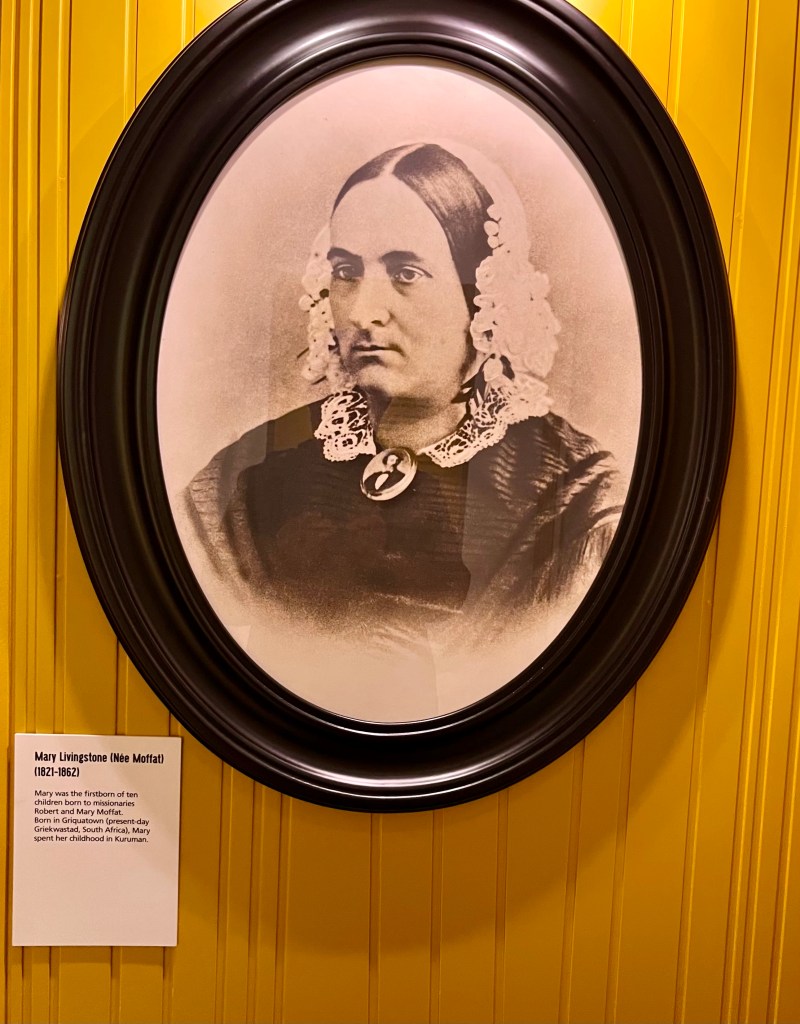
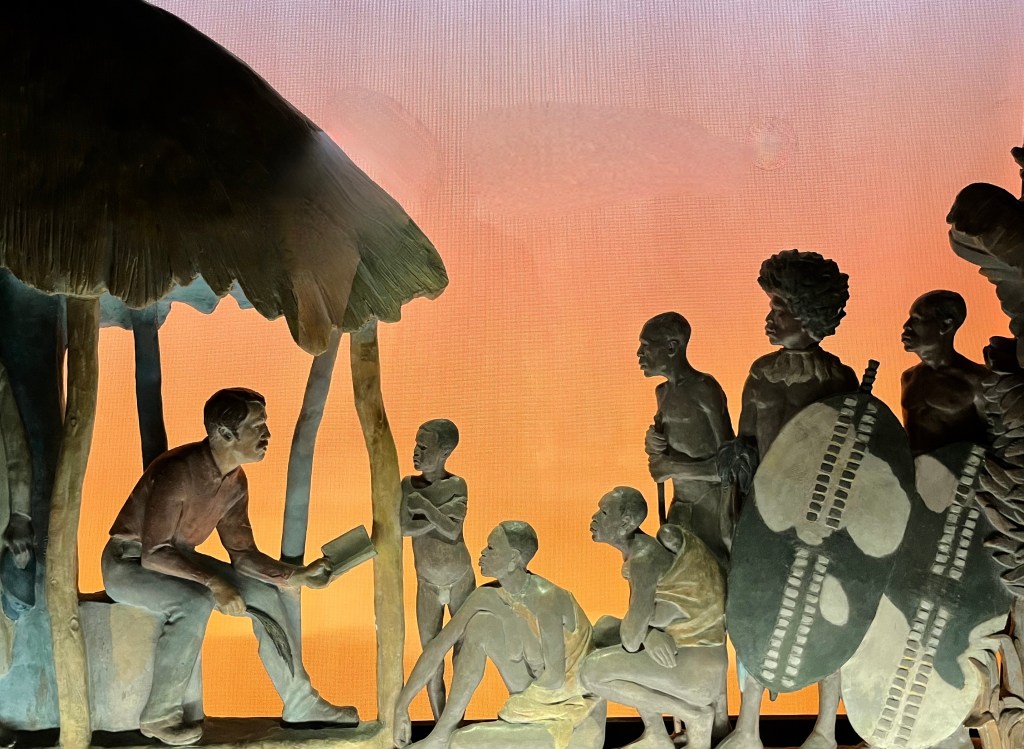
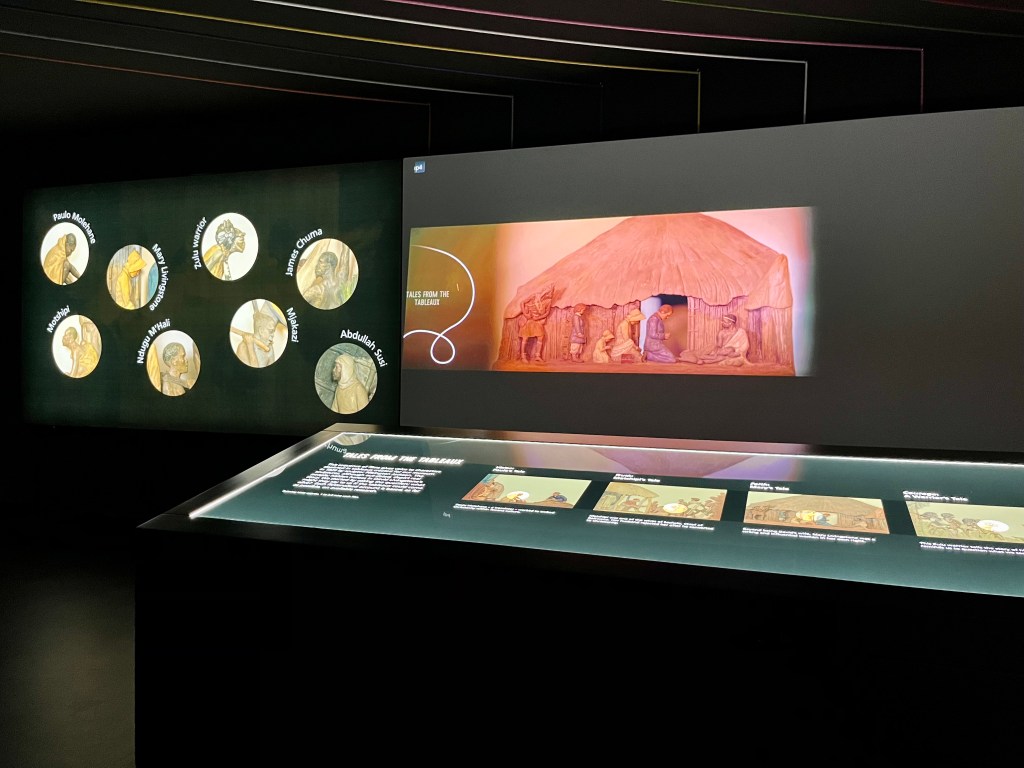
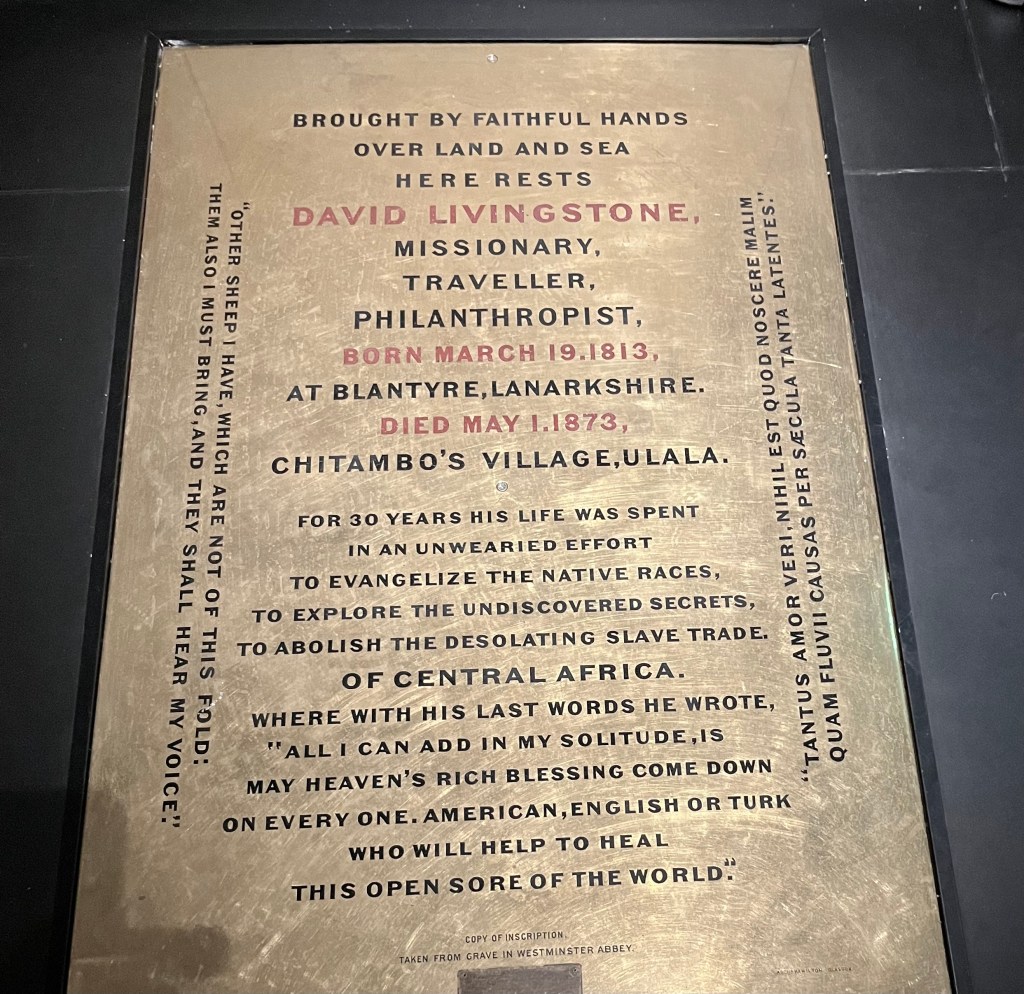
Museum Entrance The familly’s Single room >These panels illustrate and tell his storyDavid’s wife MaryThese panels illustrate and tell his storyOne of a number of many ‘reliefs’ within the museumThe film roomCopy of the Westminster Grave slab.Brave and valliant friends David Livingstone
This Memorial Museum is well worth a visit if you are ever in Scotland,I suggest it be one for your bucket list!
Thirty three years later on his last expedition in search of the source of the river Nile, he penned his last journal entry. This was just a few weeks before his death, he wrote “Nothing earthly will make me give up my work in despair. I encourage myself in the Lord my God, and go forward”. 25 March 1873.
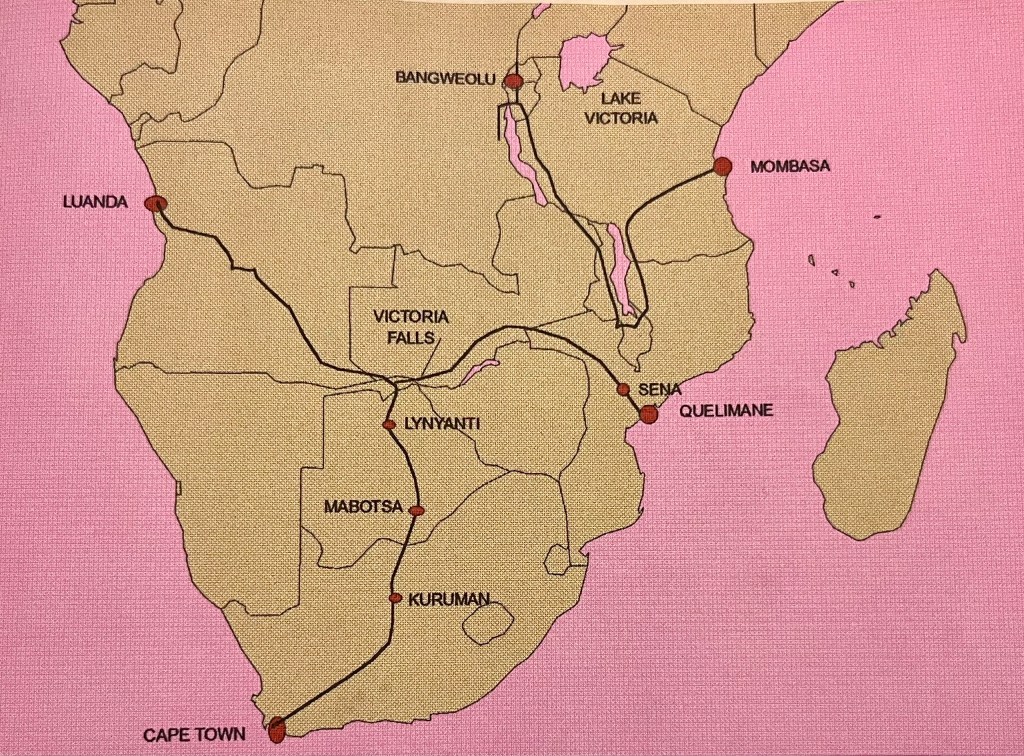
During his 33 years in Africa it is estimated that Livingstone walked 29,000 miles crisscrossing a third of the African continent. The map below shows some of his most famous missionary / explorational expeditions.
Dr. David Livingstone – Expeditions
Journeys of Dr. David Livingstone:
Capetown 1852 – For their safety his family returns to UK. and Livingstone to Lynyanti.
November 1853 he departs on his expedition to Luanda, and arrives 1854.
September 1854 he returns to Lynyanti.
November 1855 Livingstone departs on an expedition to the East Coast, and on route becomes the first European to witness the magnificent Zambezi waterfall, which he named the ‘Victoria Falls’
May 1856 he successfully arrives at Quelimane on the East Coast
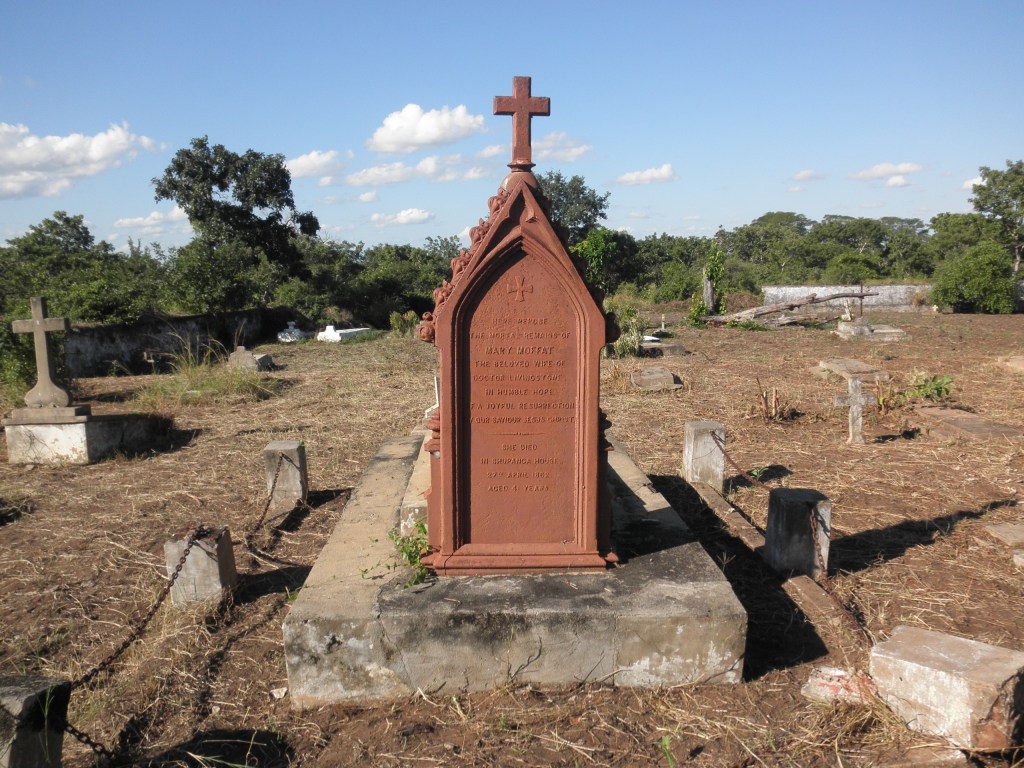
Sadly David’s loving wife and fellow worker Mary (nee Moffat), who had returned to be with her husband in Africa died of malaria on 27 April 1862 aged 41, and was buried at Shupanga.
Between 1866 – 1873 David’s last expedition in search of the source of the Nile, took him around Lake Malawi and Lake Tanganyika. On this journey he had his meeting with Stanley, who on finding him famously said ‘Doctor Livingstone I presume‘.
May 1st 1873, He died on the southern shore of Lake Bangweolu.
Things people have said of him:
Mr Young lecturer at Glasgow said – Livingstone was the best man he ever knew, he had more than any other man of true filial trust in God, more of the Spirit of Christ, more of integrity, purity, and sismplicity of character, and of self denying love for his fellow men”.
Hildebrandt J – ‘Apparently he did not know fear and inspite of periods of gloom, he was generally hopeful and had a quiet humour. He had an indomitable will power which propelled a body often racked by fever. He was skilful in dealing with people and was a keen and accurate observer.’
What he said about himself at Cambridge University in 1857 – ‘…people talk of the sacrifice I have made in spending so much of my life in Africa. Can it be called a sacrifice which is simply paid back as a small part of a great debt owing to our God? ”’ it is emphatically no sacrifice. Say rather it is a privilege.
Others of course have been critical, but it’s relatively easy to be critical with hindsight. Livingstone was not to know of the excesses to which future colonialists would go in their exploitation of Africa.
His writing of papers, his speeches back home, and his book ‘Missionary Travels and Researches in South Africa’ highlighted amongst other things the needs of Africa. Particularly however was his horror of the slave trade. When confronting Arab slave traders in Tanganyika he wrote –‘This is a den of the worst of slave traders … they are the vilest of the vile. It is not a trade, but a system of consecutive murders; they go to plunder and kidnap, and every trading trip is nothing but a foray”. His last recorded words are these – “All I can say in my solitude is this, “May Heaven’s rich blessing come down on everyone – American, English, Turk – who will help to heal this open sore of the world”. Almost within a month of his death the slave market in Zanzibar was closed forever.
When David Livingstone applied to the London Missionary Society he stated at the start of his career his ideas of a Missionary’s work. He wrote “The missionary’s object is to endeavour by every means in his power to make known the Gospel by preaching, exhortation, conversation, instruction of the young; improving so far as is in his power, the temporal condition of those amongst whom he labours, by introducing the arts and sciences of civilisation, and doing everything to commend Christianity to their hearts and consciences. This extraordinary man, by God’s grace and help, and by his inspiration, accomplished through his work and writings nearly all of this to the Glory of God and the blessing of Africa’s peoples.
Mary Livingstone’s Grave at ShupangaDavid Livingstone found dead kneeling at his bedside 1 May 1873
I hope the above photos and paragraphs have been enough to encourage you to visit the Blantyre Memorial if you live in the UK, or are on a visit here. If not you may wish to read one of the many books on Doctor David Livingstone which are readily available . I acknowledge their value here, as I have drawn on some of these invaluable resources when compiling this short blog.
It would be lovely to think of slavery as a thing of the past, but have you ever stopped to consider that slavery is still a problen in almost every country in the world today? Current estimates mention a figure of 50 million worldwide. In the UK a recent government report from the Home Affairs Committee on Human Trafficking was submitted to the government. In that, it mentions that the potential victims of modern slavery has increased substantially. There were 16,938 referrals in 2022, five times as many as the 3,263 referrals in 2015 when the Modern Slavery Act was passed. Nonetheless it has been estimated that there are at least 100,000 victims of modern slavery and human trafficking in the UK.
I felt aghast reading these statistics, just to think of the depth of human misery, exploitation and suffering that these statistics represent, and to think that they almost certainly describe situations happening in the city of Glasgow or even within a short distance from my own doorstep. It is at least heartening to know the government are trying to do something about it. But one thing it surely proves is that the human heart has not basically changed throughout the centuries. We don’t need to start by pointing the fingure at anyone else, we all know our own heart and mind. But hallelujah, there is a Saviour – Jesus, and it’s great to accept His invitation to come to Him in repentence and faith.. Jesus said, “Very truly I tell you, everyone who sins is a slave to sin. Now a slave has no permanent place in the family, but a son belongs to it forever. So if the Son sets you free, you will be free indeed”. John 8:34-36.
Today in Glasgow we had the first snow of the season, so we are endeavouring to keep warm. But wherever you are be blessed, and spread the word. Last night I was listening to people speaking of how Jesus had set them free from sin here in Glasgow. Some amazing stories.
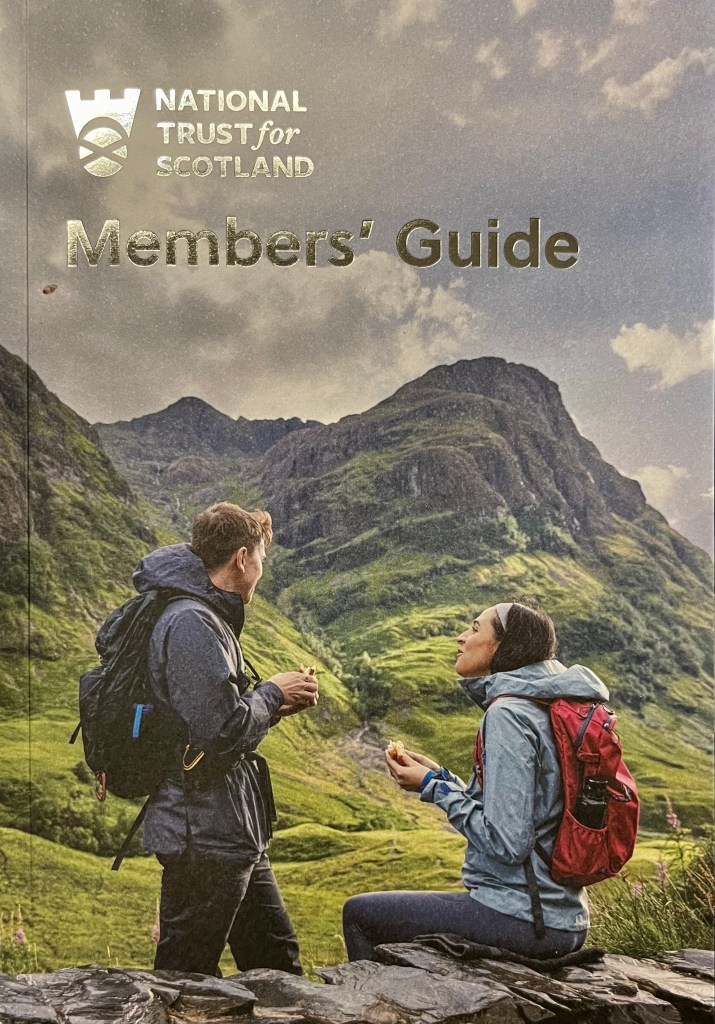
We’ve been looking at houses recently! No, not with a view to moving from our current home, but simply because the postman dropped the ”National Trust for Scotland Members’ Guide’ through our letterbox. We have been members for many years and in the past frequently visited their estates and properties and nature reserves scattered all around Scotland (over 100) which they work hard to preserve for future generations. We are always impressed by the planning and effort that they put into this task.
The 2024/25 Members’ Guide
Recently we visited one or two local NTS properties and another not too far away. We always find their staff to be friendly and helpful, and that proved to be the same on our recent visits shown below. AND …. there is usually a well stocked visitors’ shop and tearoom to be enjoyed on your visit.
The last page of the current guide shows a map of Scotland with all their properties marked, and asks the question ‘How many will you visit? So that got us started again!
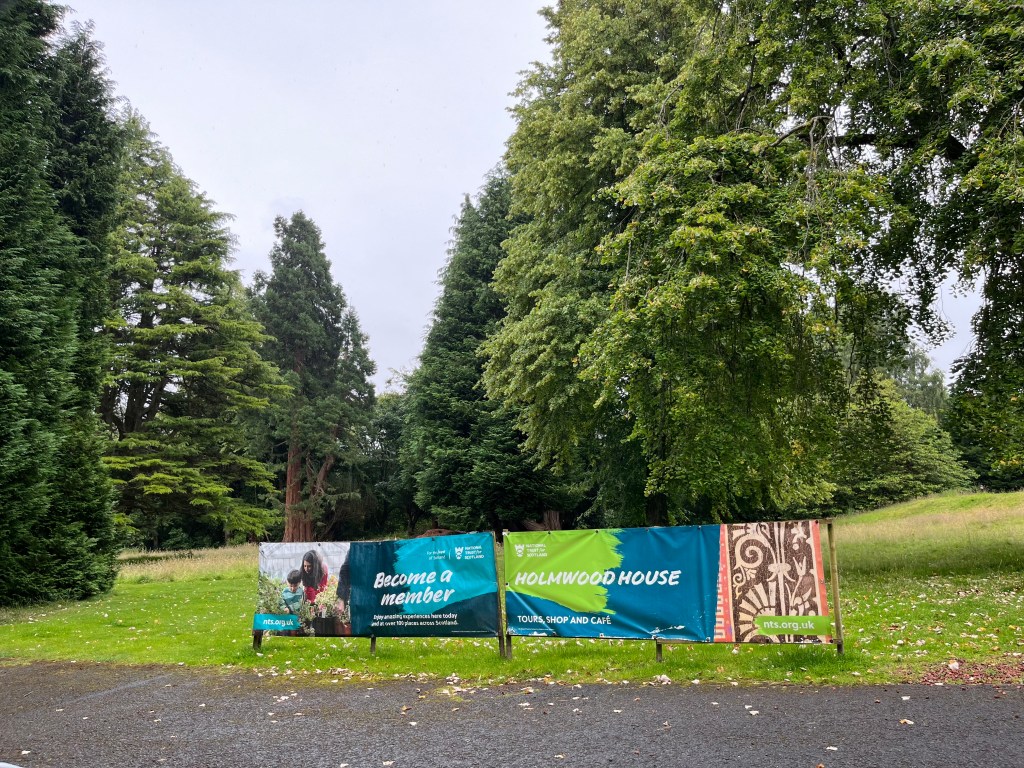
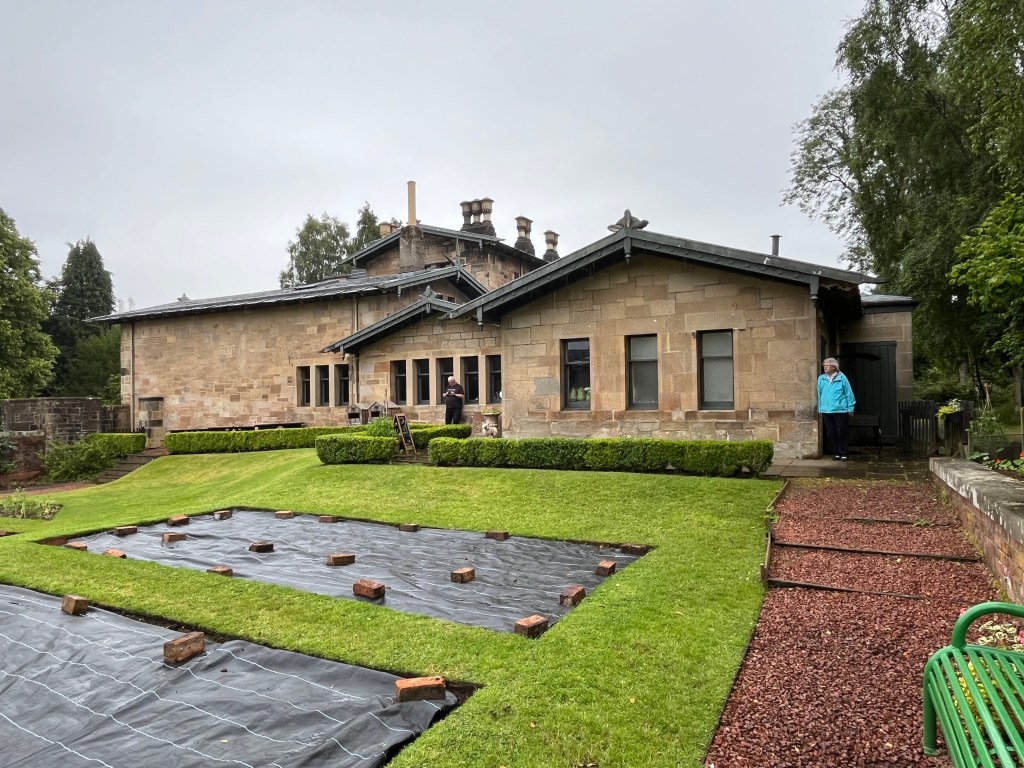
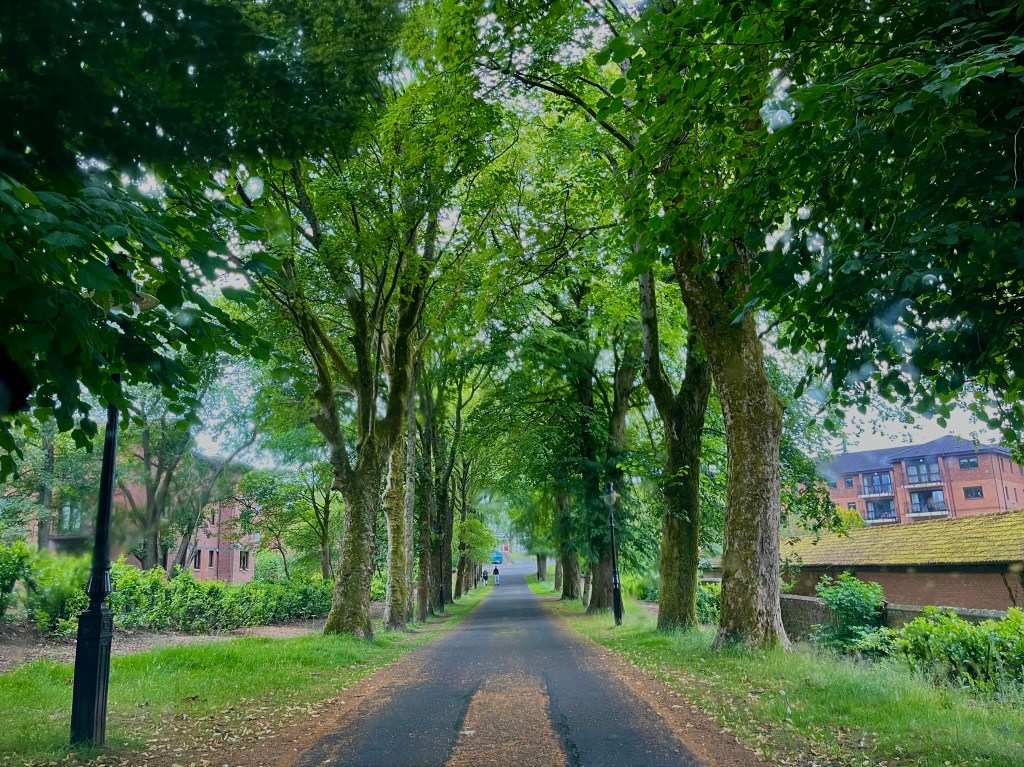
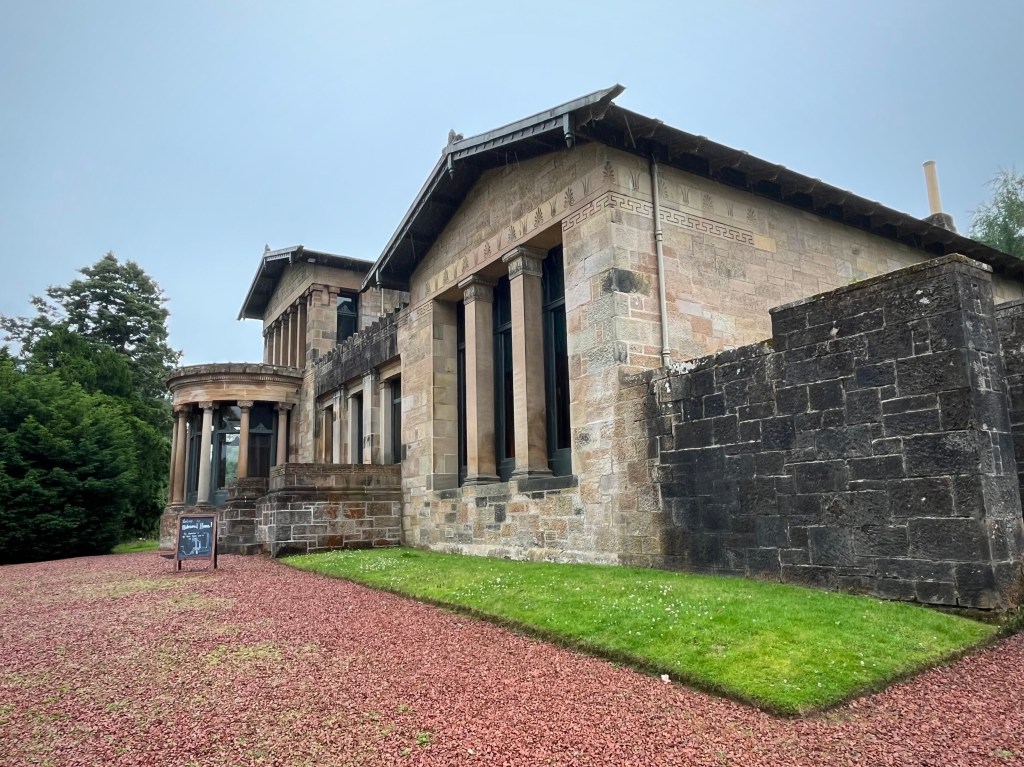
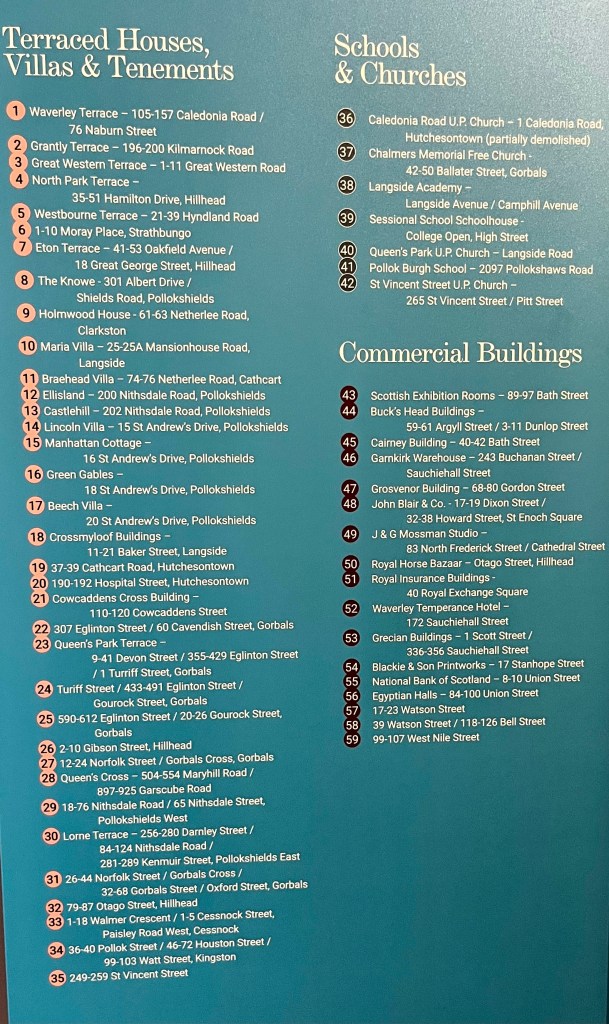
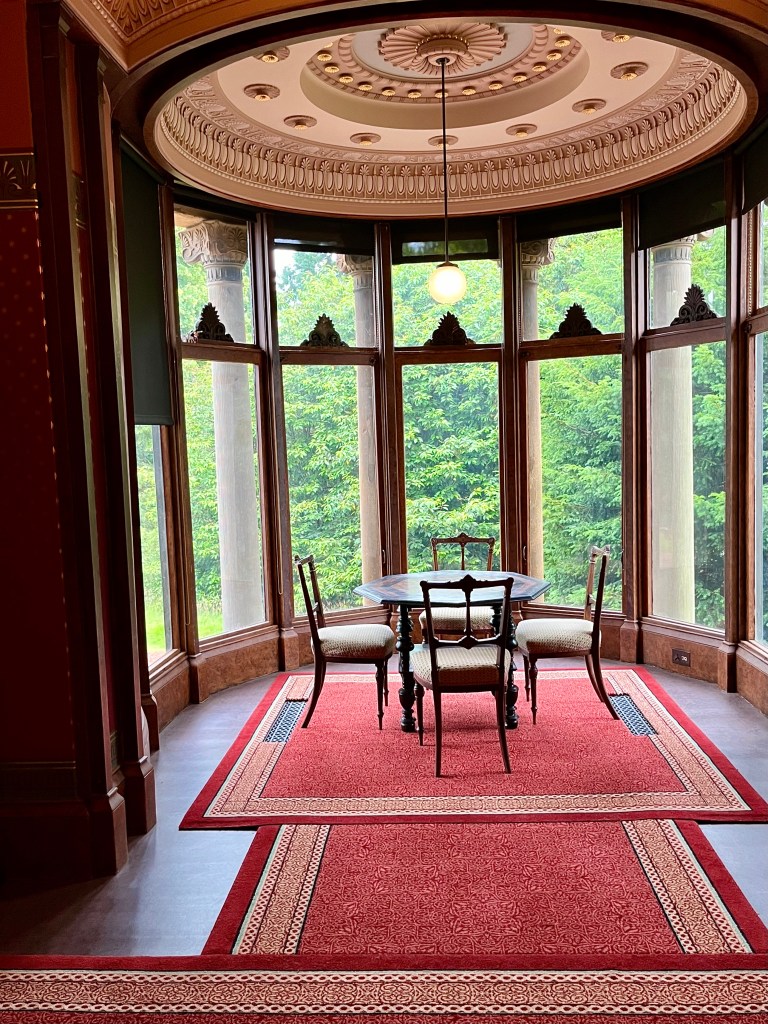
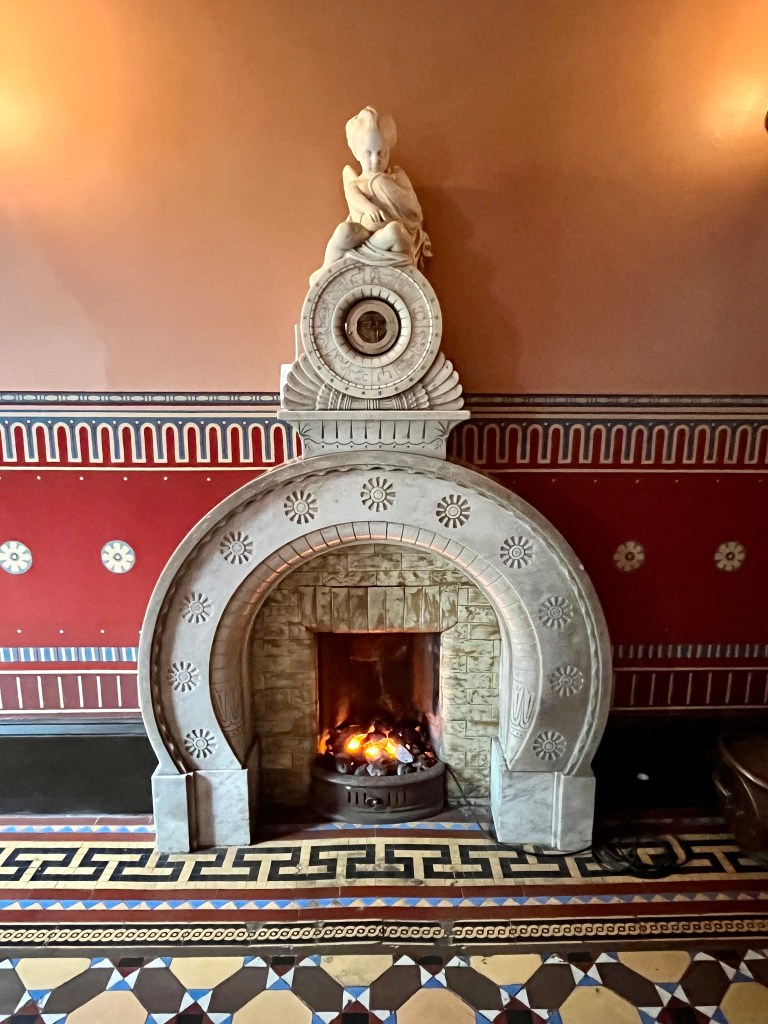
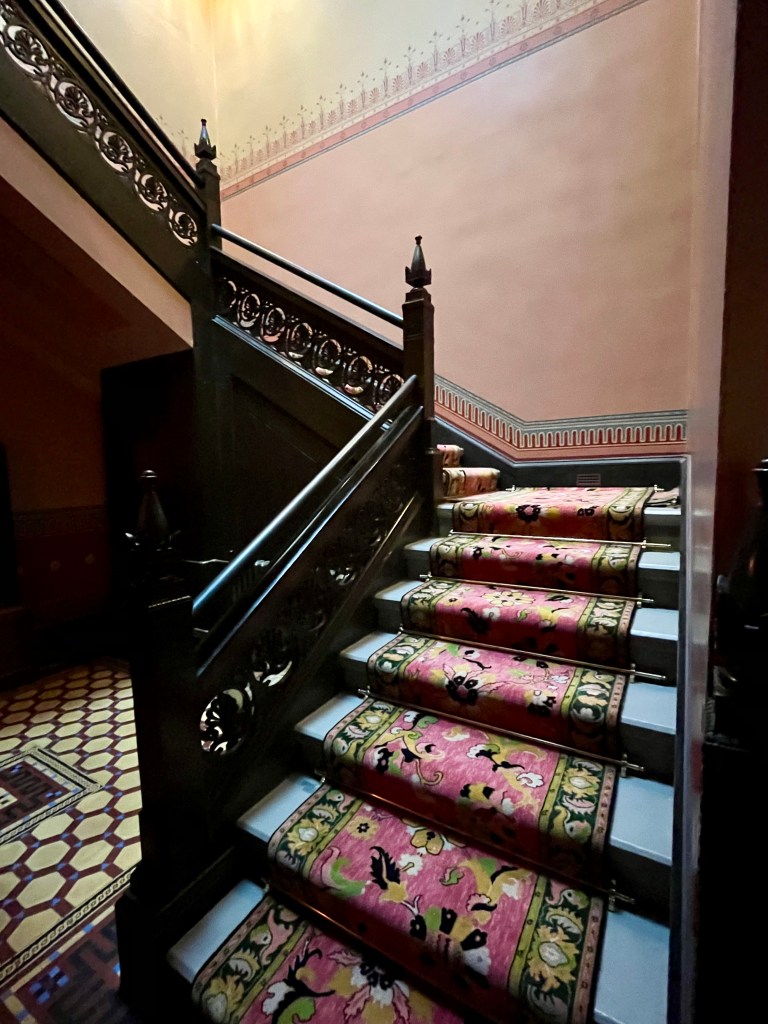
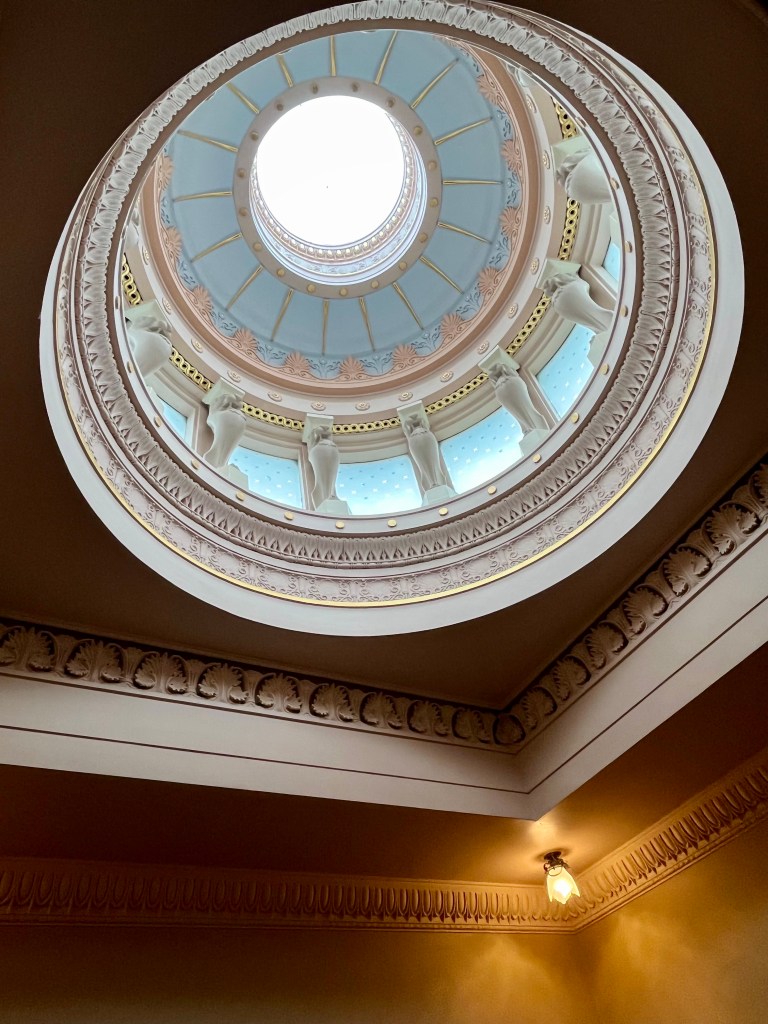
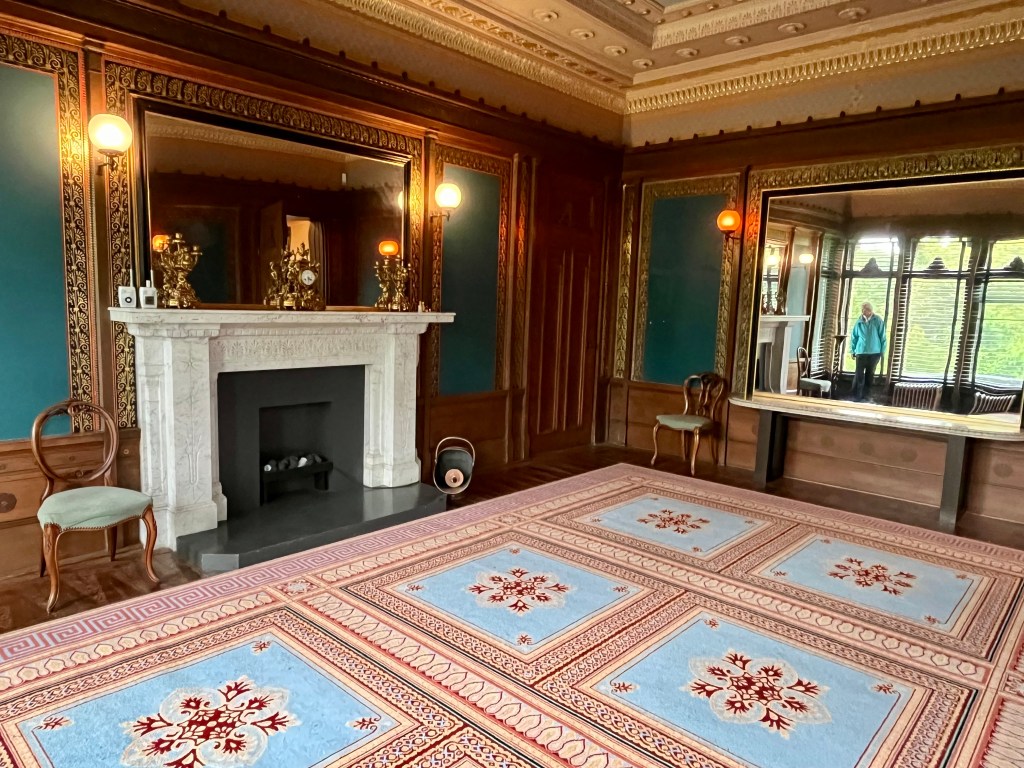
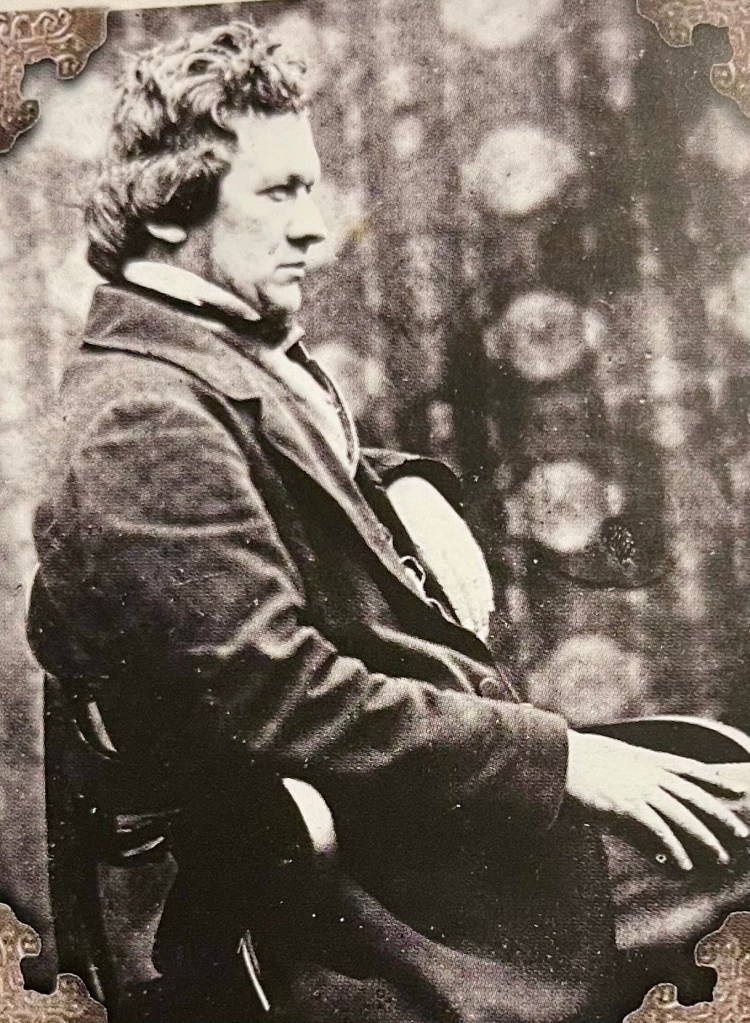
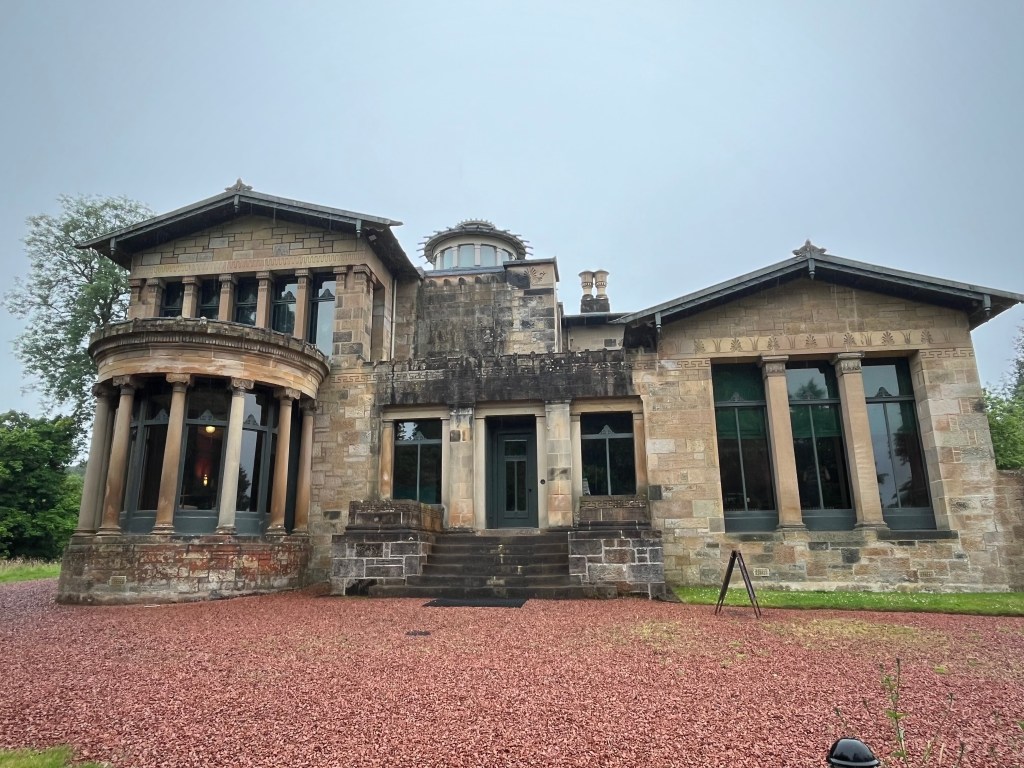
In the southside of Glasgow there is villa called Holmwood House built in 1858, which was designed by architect Alexander ‘Greek’ Thomson (1817-1875) who was reputed world-wide to be one of Scotland’s most talented architects and designers. We recently visited, and were not disappointed. It is beautifully situated on the banks of the White Cart river, amid extensive grounds. Built initially for paper mill owners Robert and James Cooper, whose family occupied it between 1858 – 1909. After this it changed hands many times before it was taken over in 1958 by The Sisters of our Lady of the Mission. The property was used as a chapel and dormitory, and soon the Sisters had established a primary school, and also taught in a local comprehensive school. They were also involved in many other aspects of parish work. By 1994 they had moved to more suitable premises and the building was purchased by NTS, who since then have worked tirelessly to restore its appearance and condition as in 1858. Some very impressive work has been done. Here are some photographs with much more information on-line.
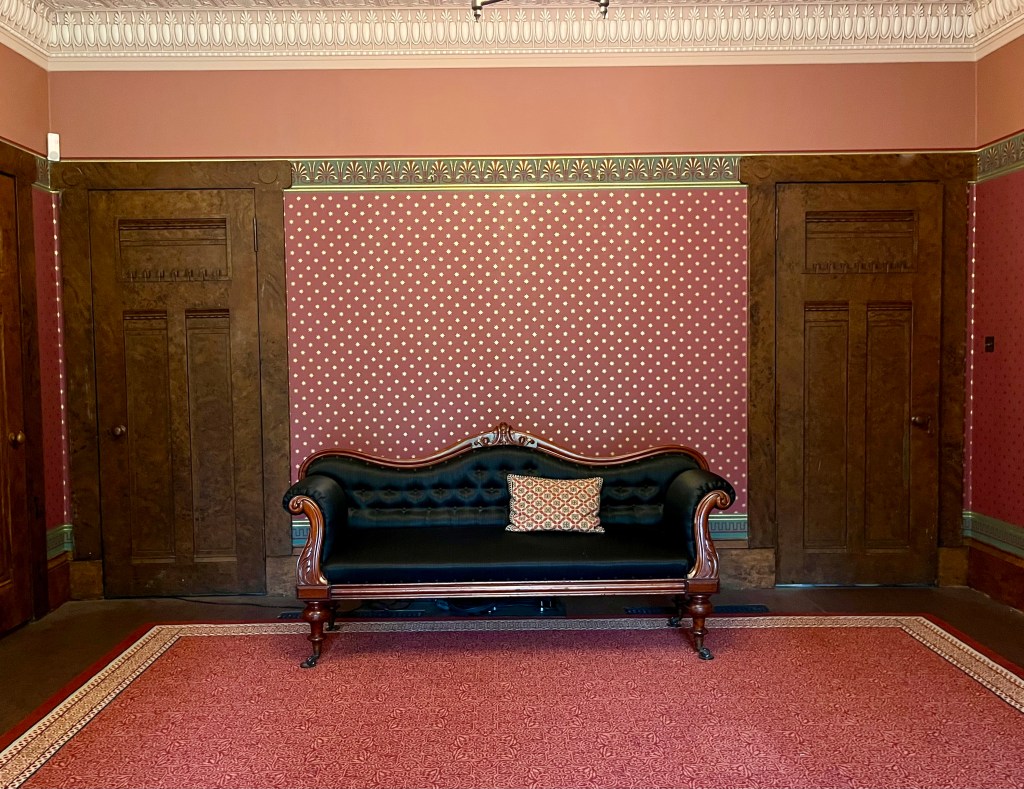
Welcome!House and Vegetable GardenThe DriveThe HouseOther work by Alexander ‘Greek’ ThomsonAlmost circular bay windowMarble Chimney-piece in the HallStaircaseDome above the StaircaseThe Drawing roomAlexander ‘Greek’ ThomsonView of house frontPhotographs of Holmwood House today
We enjoyed our visit to Holmwood and would recommend it to those of you who are near enough to visit.
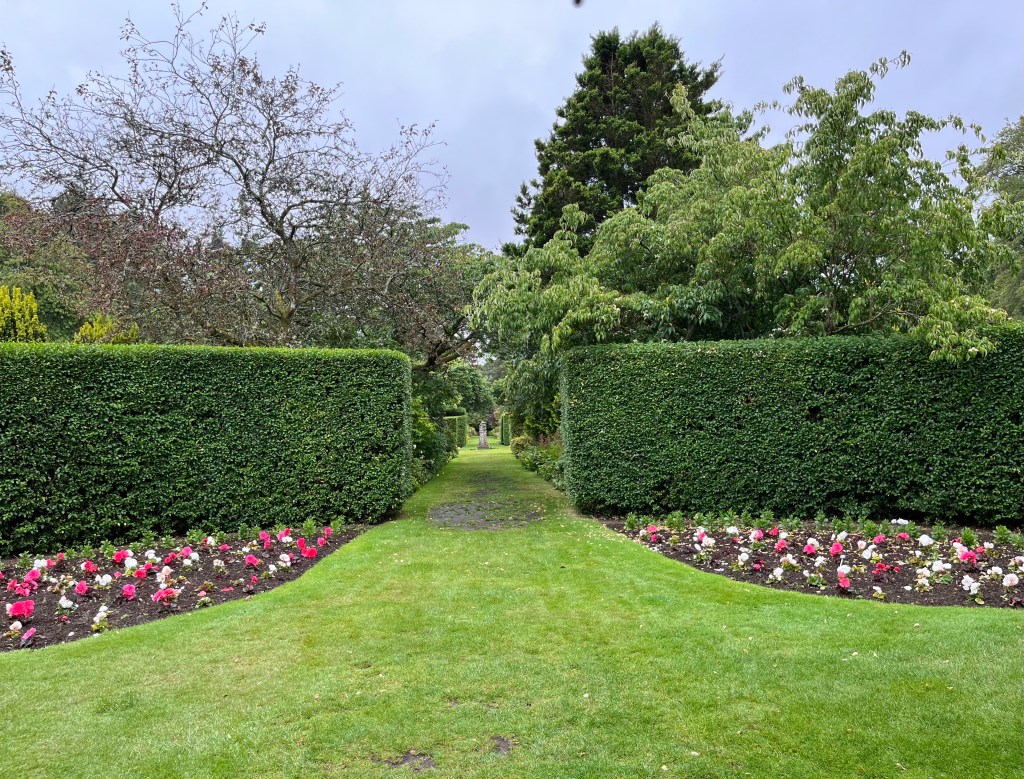
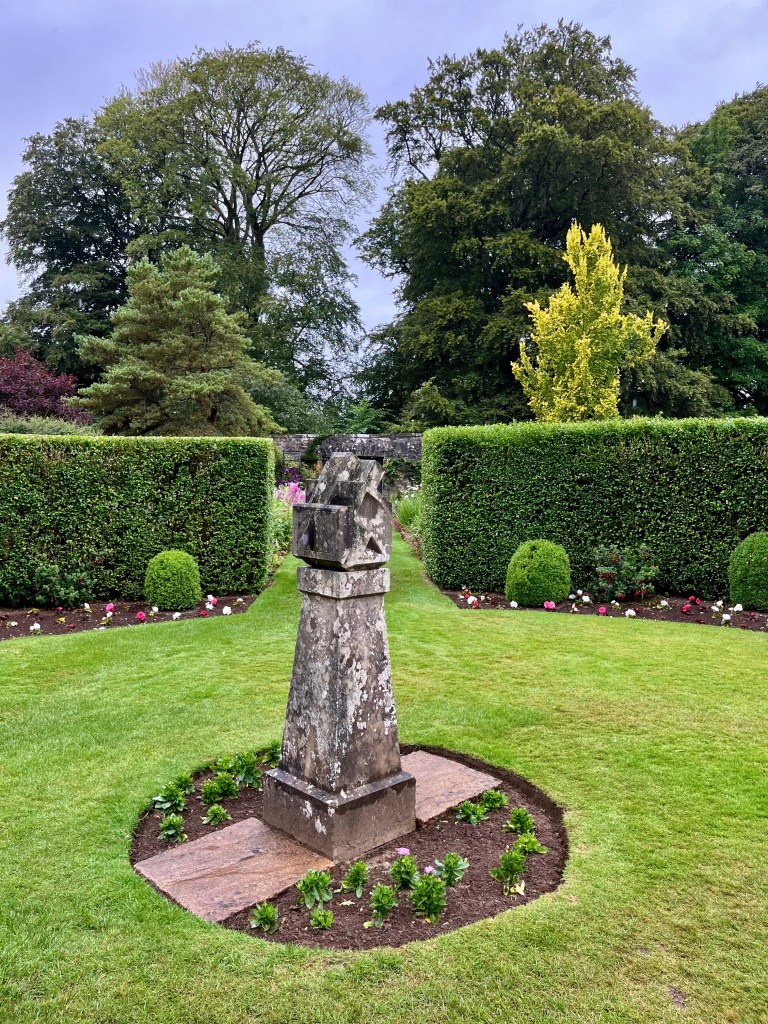
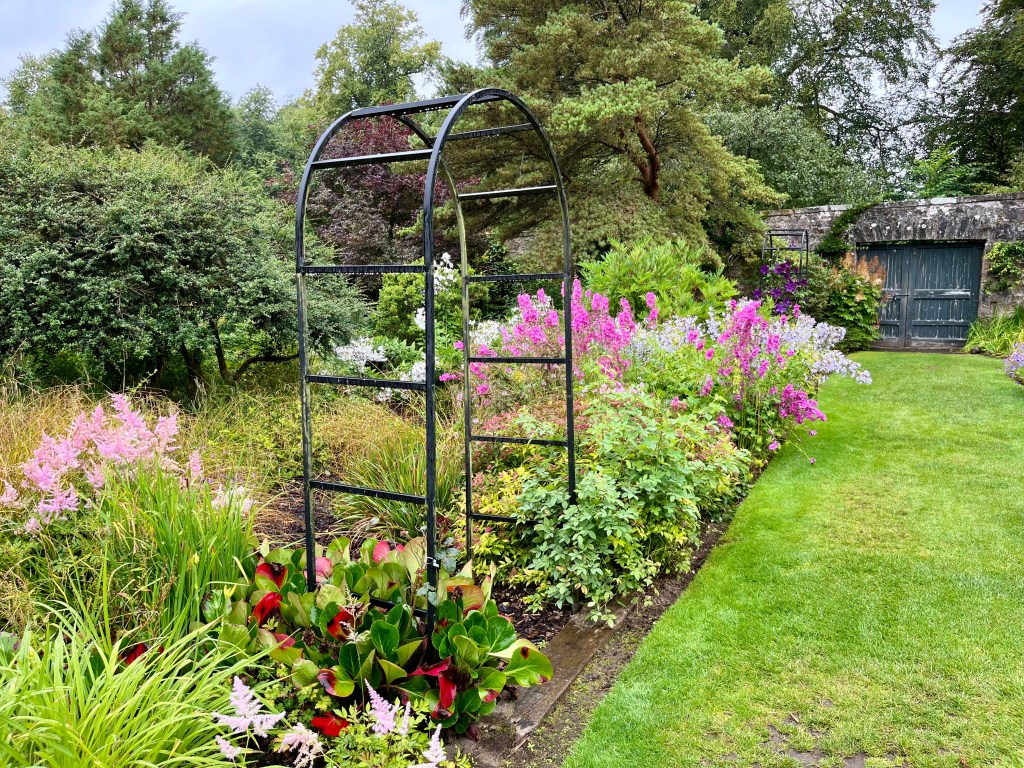
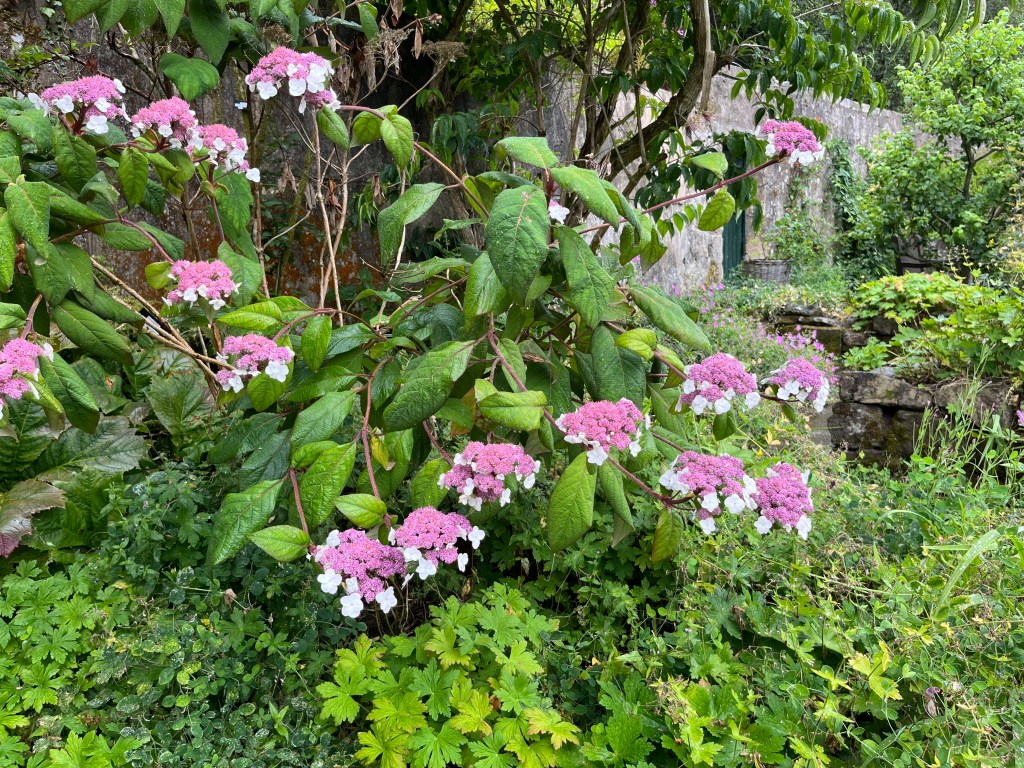
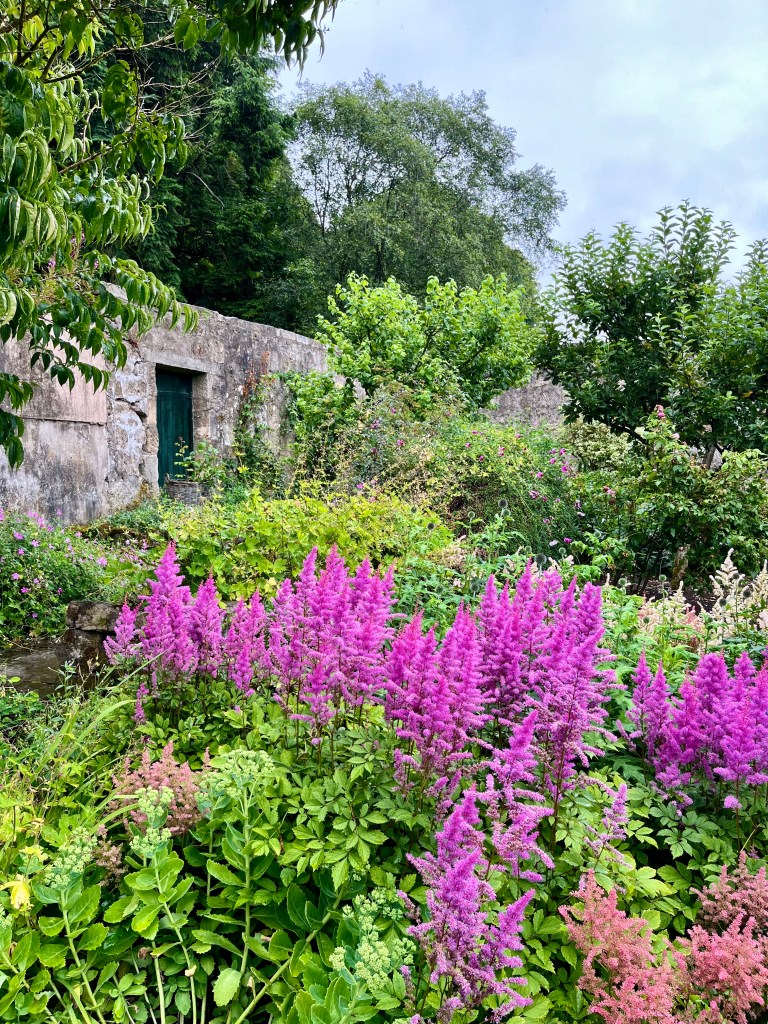
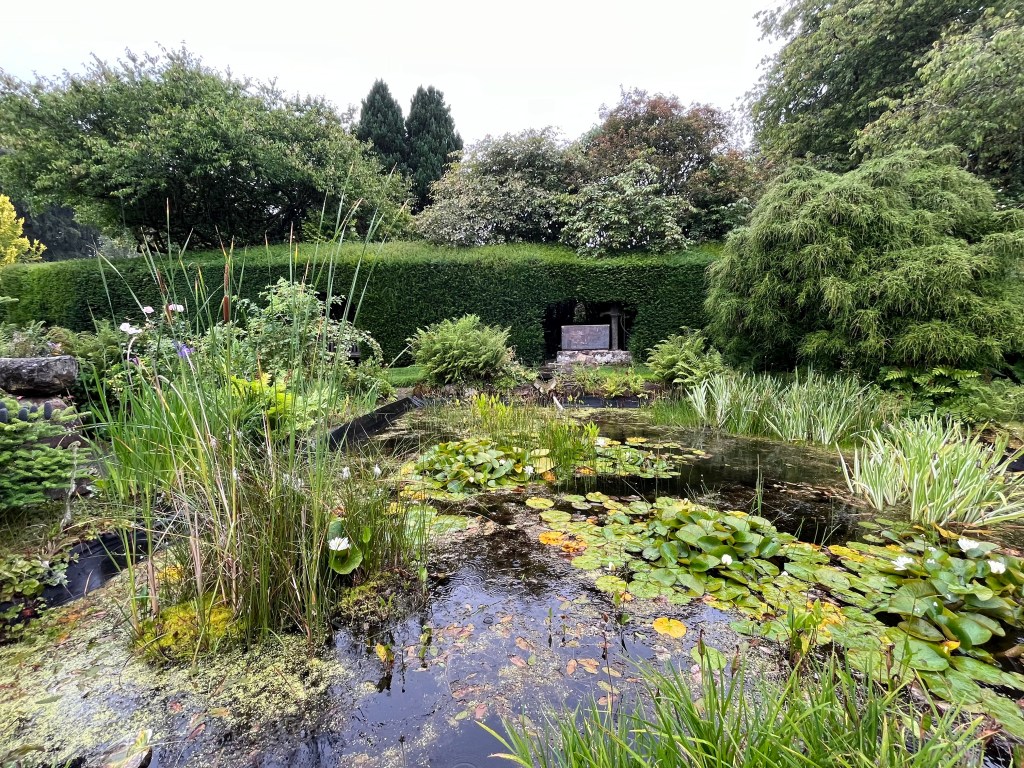
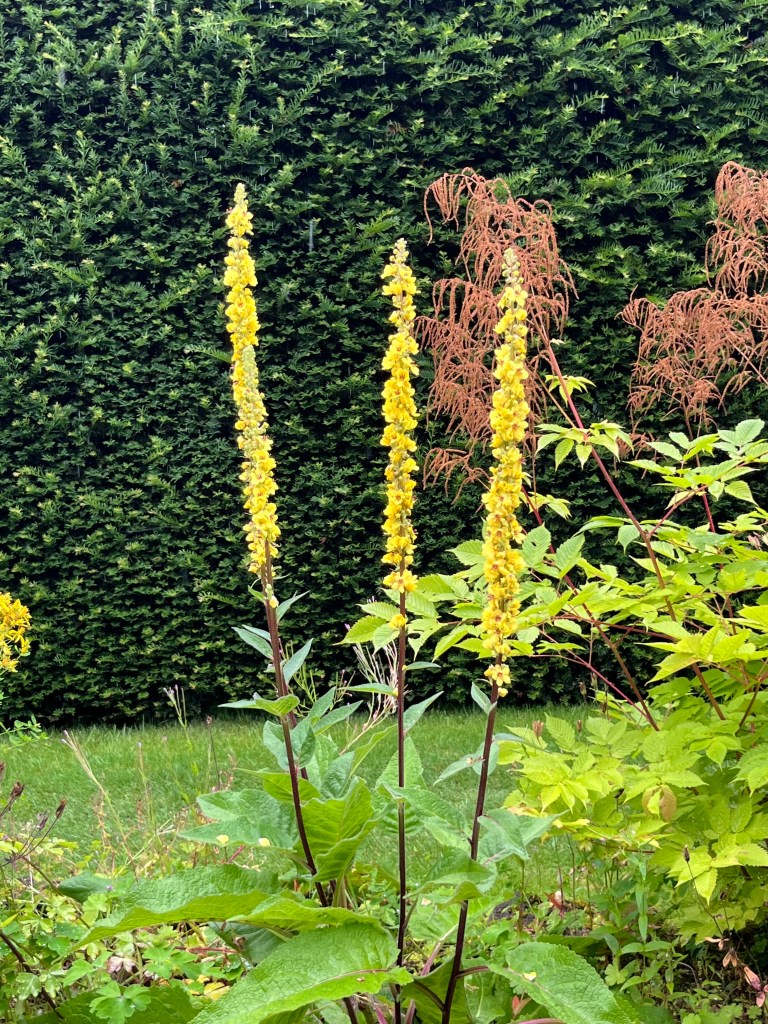
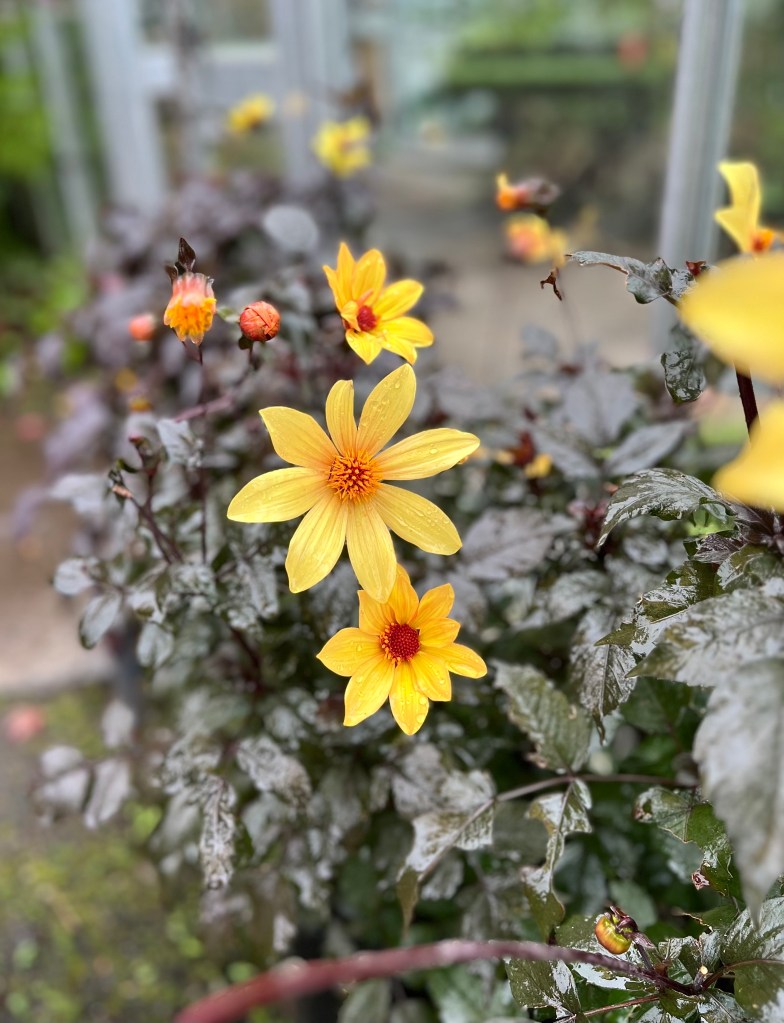
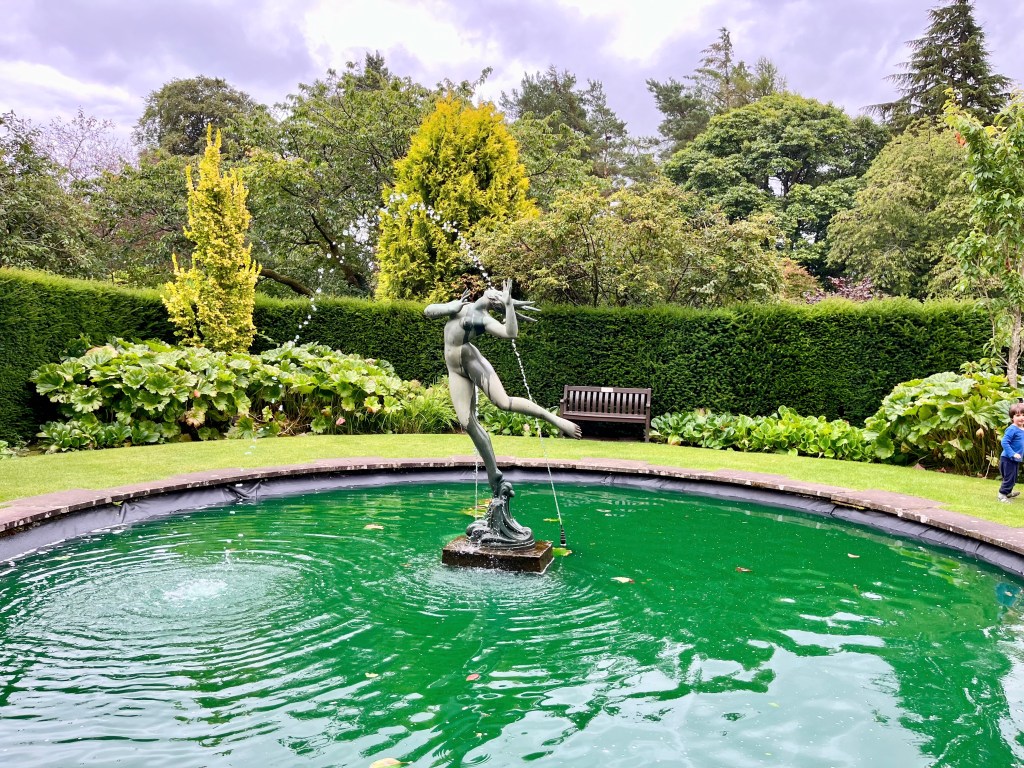
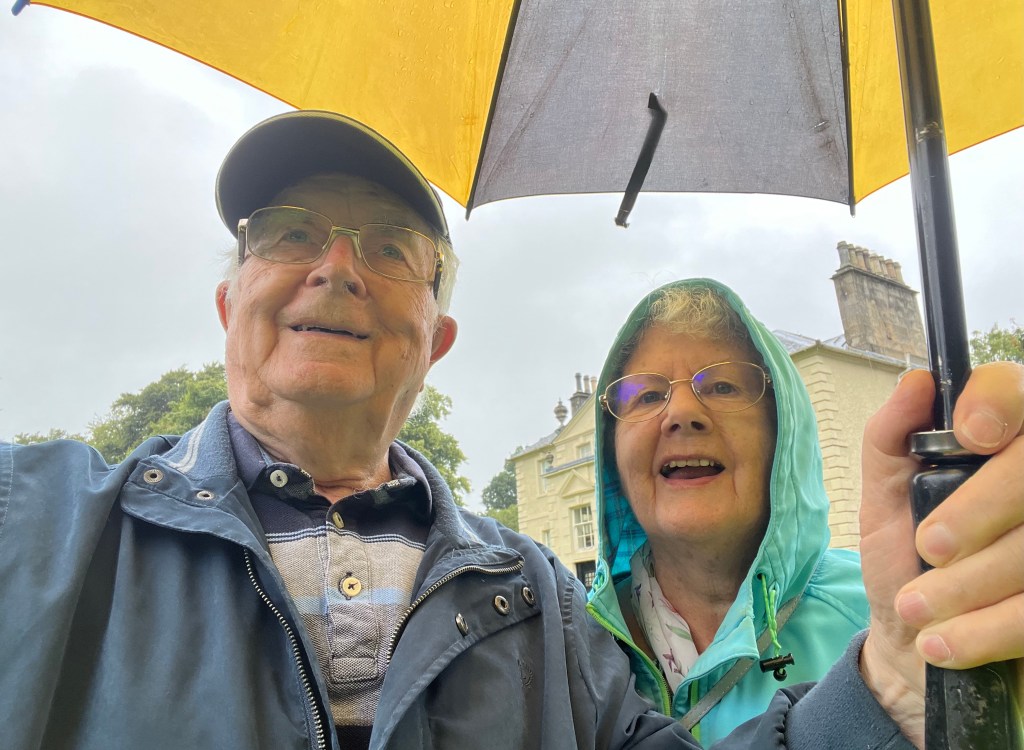
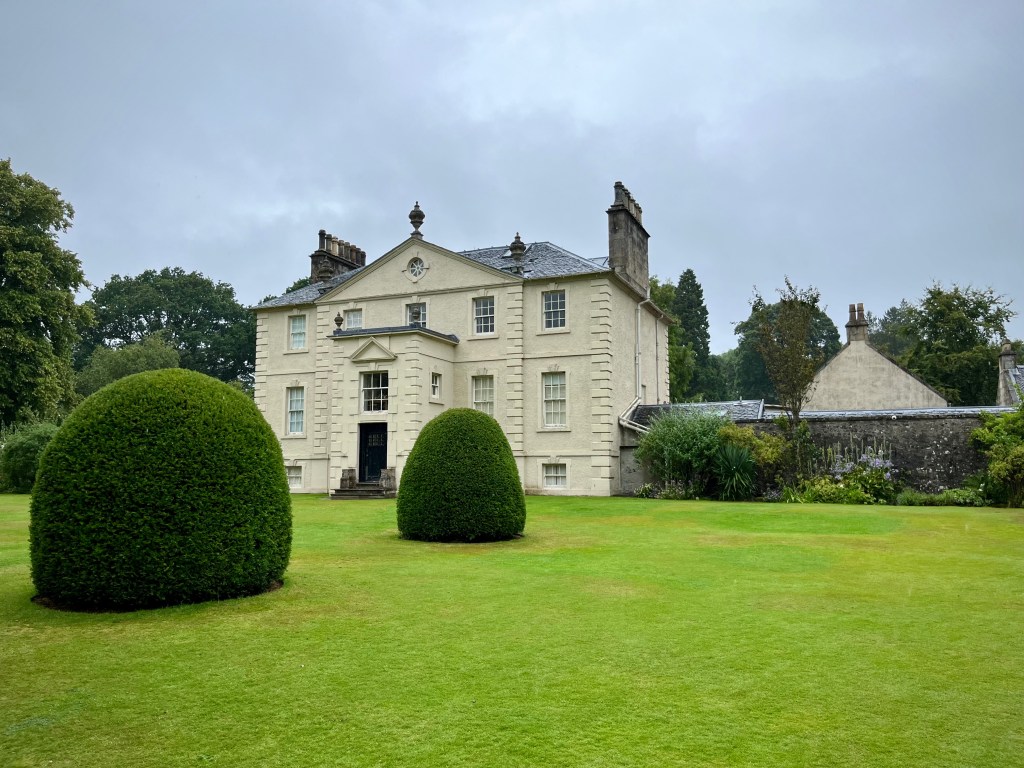
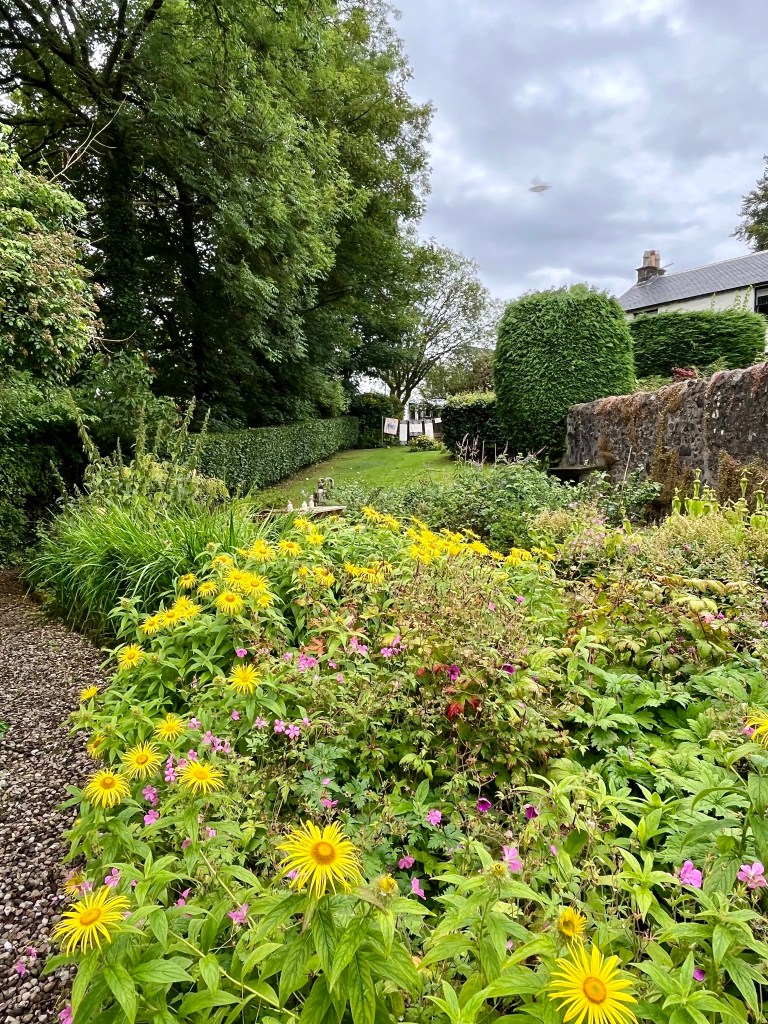
Greenbank Garden is even closer to home and we have visited there many times. On our recent visit the rain came on, so we had an almost empty garden to enjoy. I’ll let the photos speak for themselves this time, but again more information available on line. My photographs :-
Smiling in the rain!Greenbank Garden and House
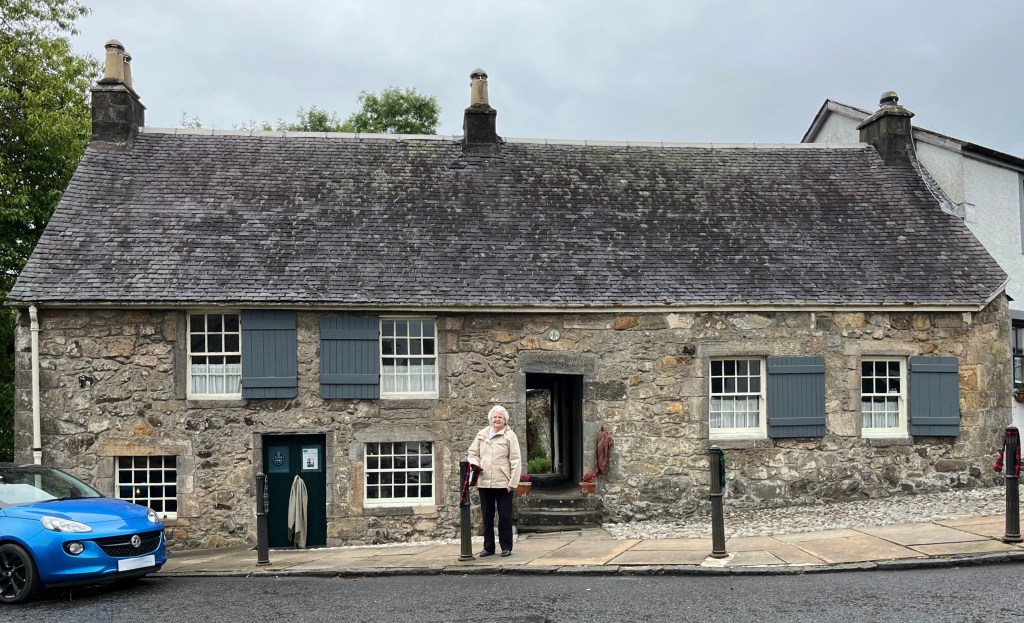
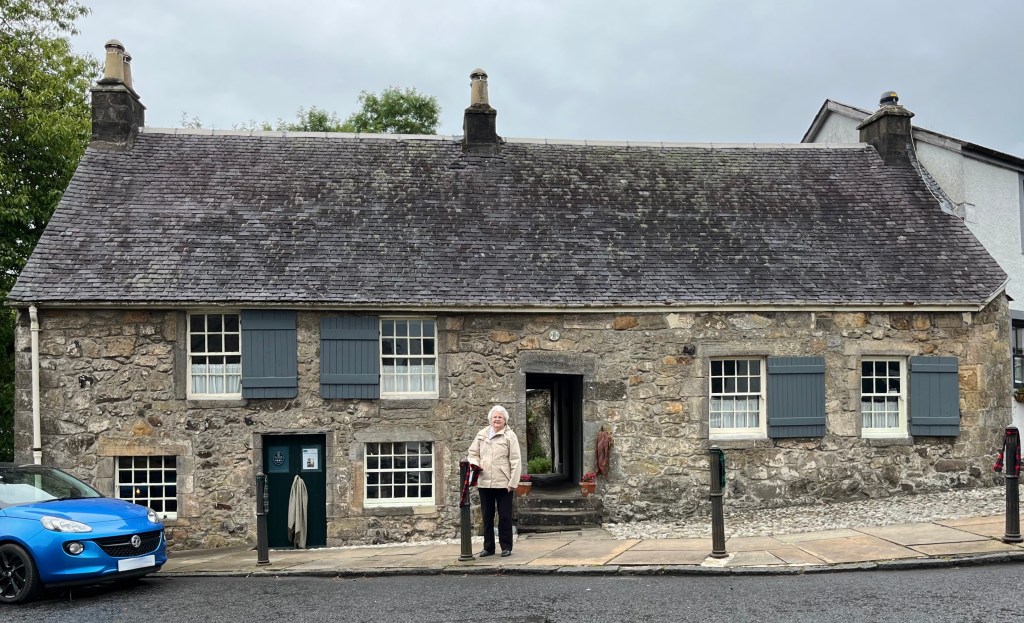
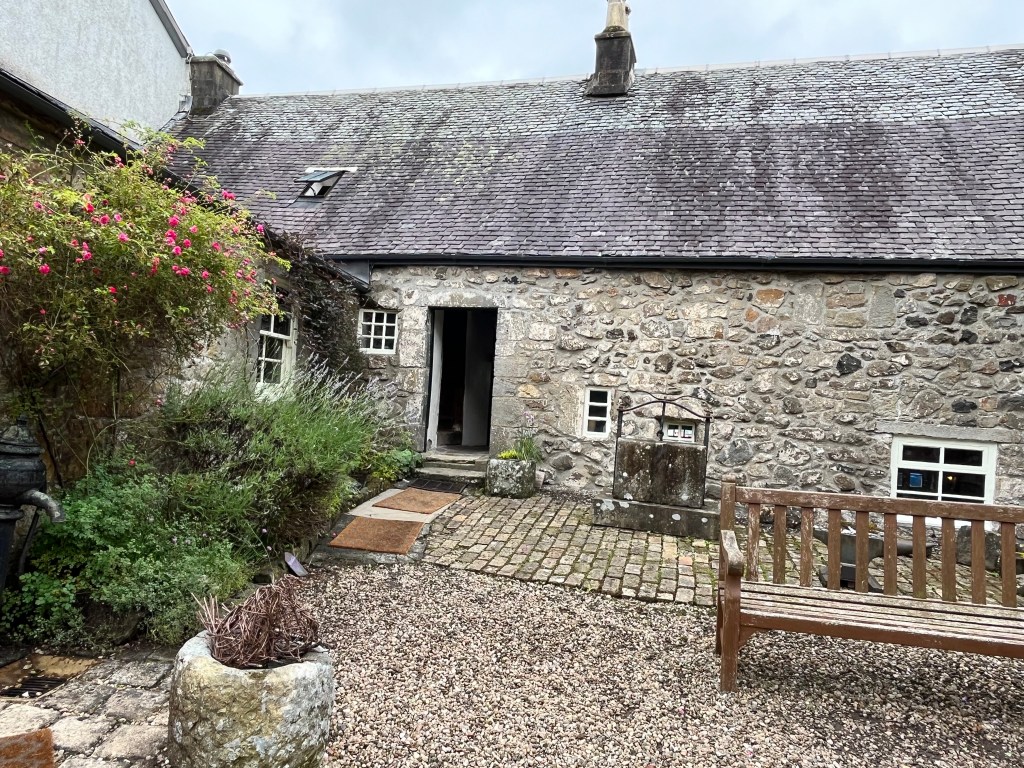
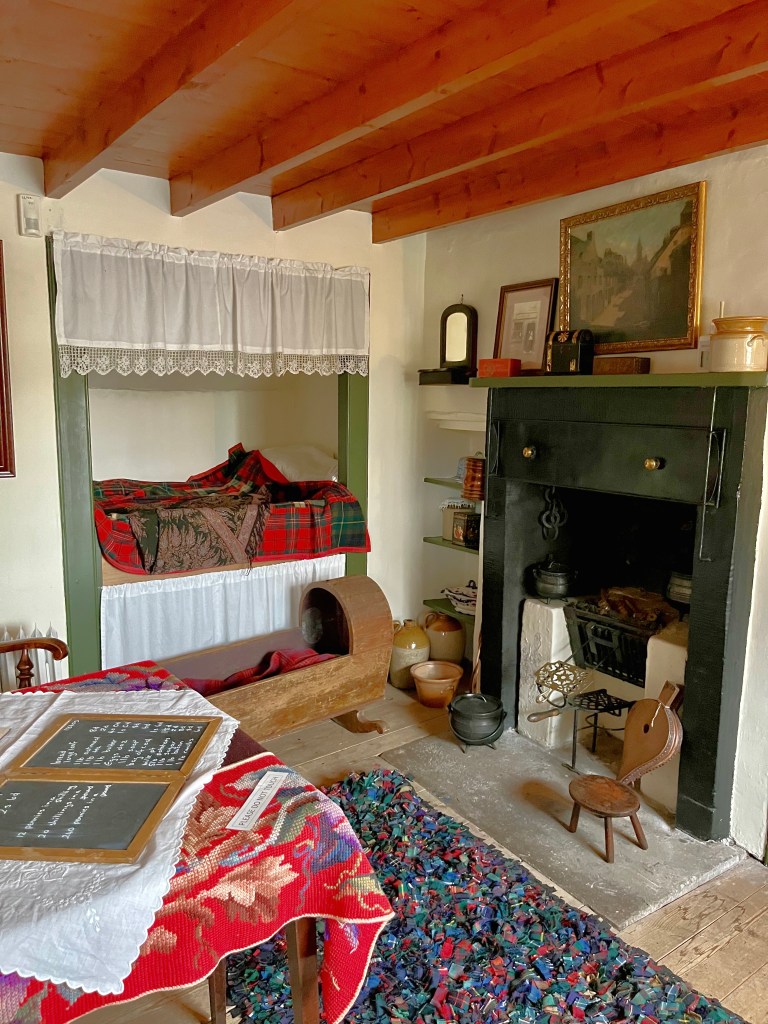
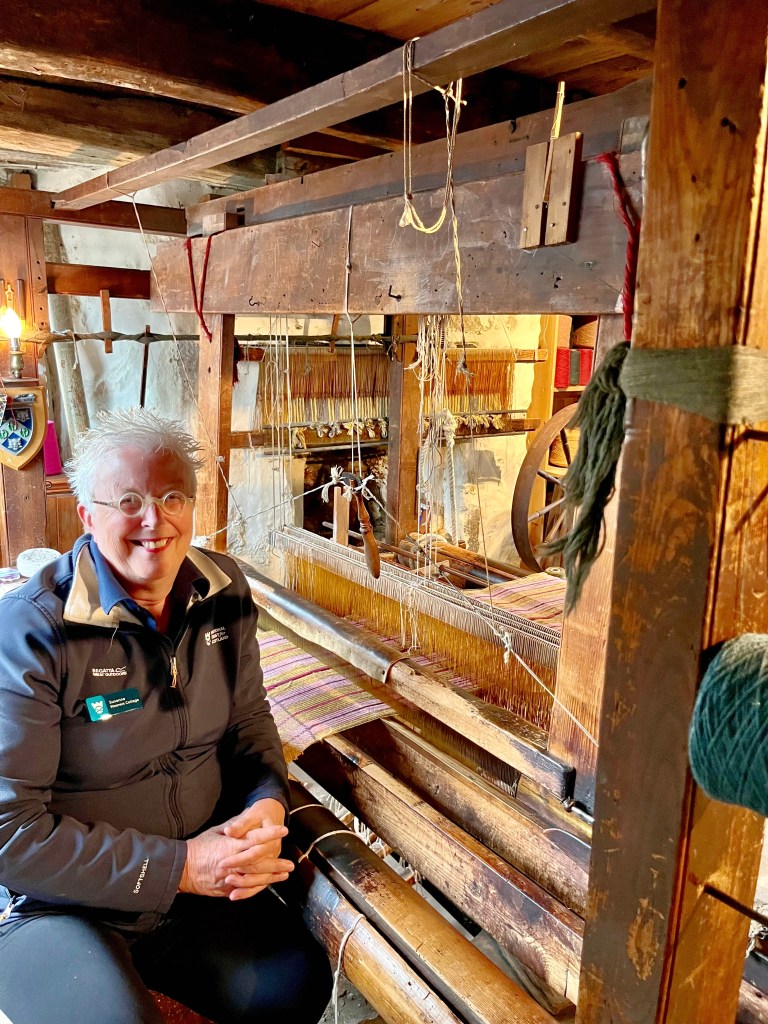
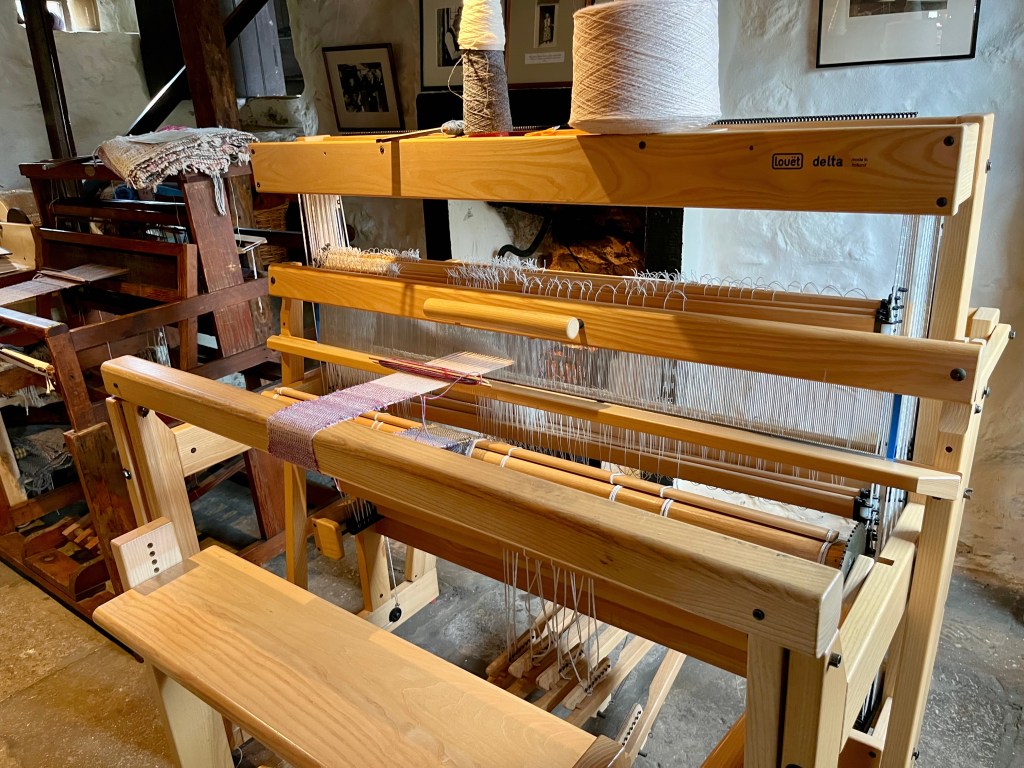
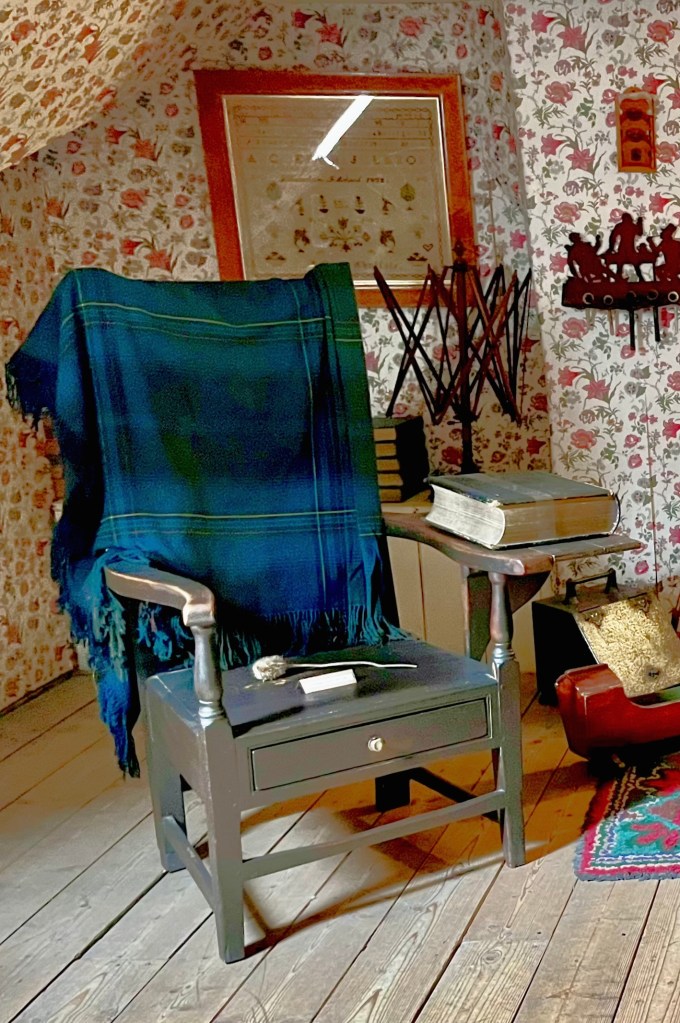
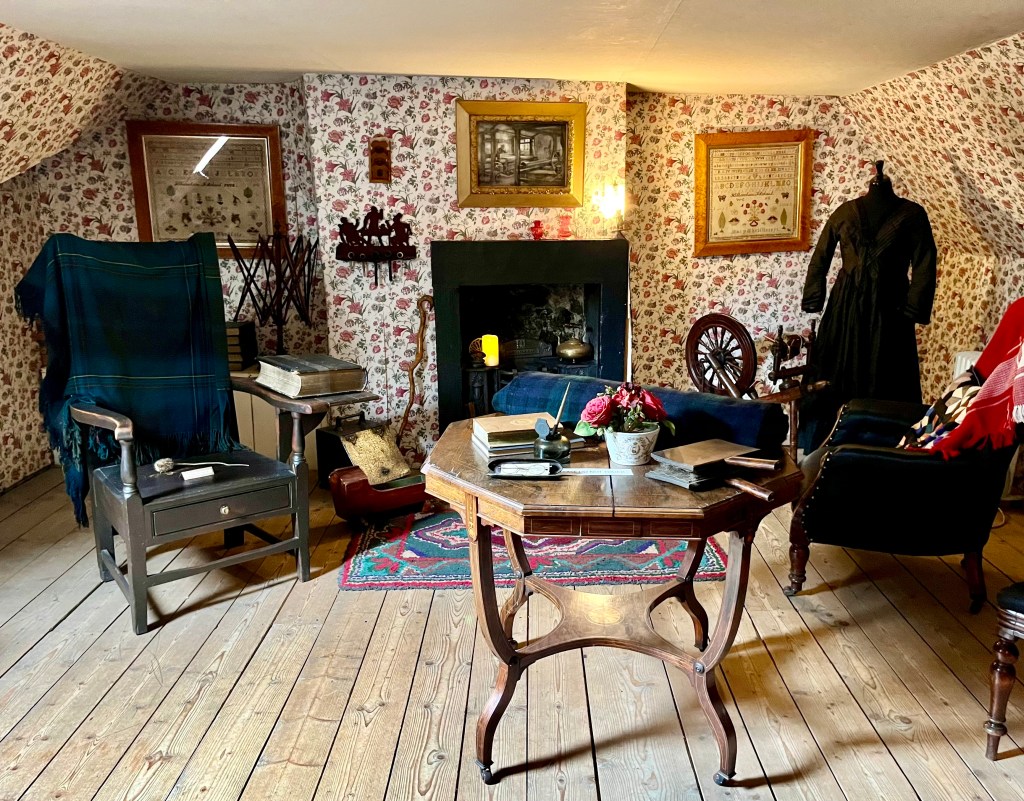
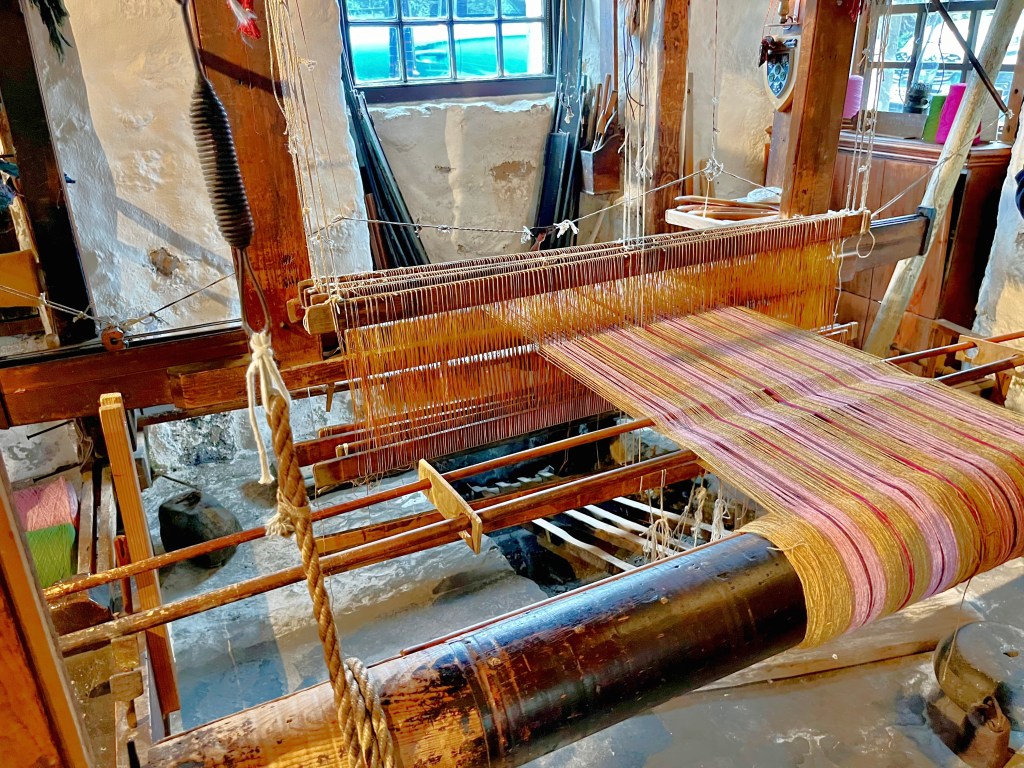
We started our visits last month going to a house built for the rich, and ended it with a visit to a house built for the poor, ‘Weaver’s Cottage’ in Kilbarchan which was built in 1723. Weaving was first recorded in this village in 1695 when there were 30-40 looms. By1838 eight hundred looms were said to be working in the village and local area. My granny was a weaver, so I was fascinated to hear the story of the weaver being recounted and demonstrated by the video being played and by the NTS staff. Everything from the spinning of the yarn to the weaving of a variety of cloths, even intricate clan tartans provided for the Royal Family and others, and to catch something of their life and work away back then.
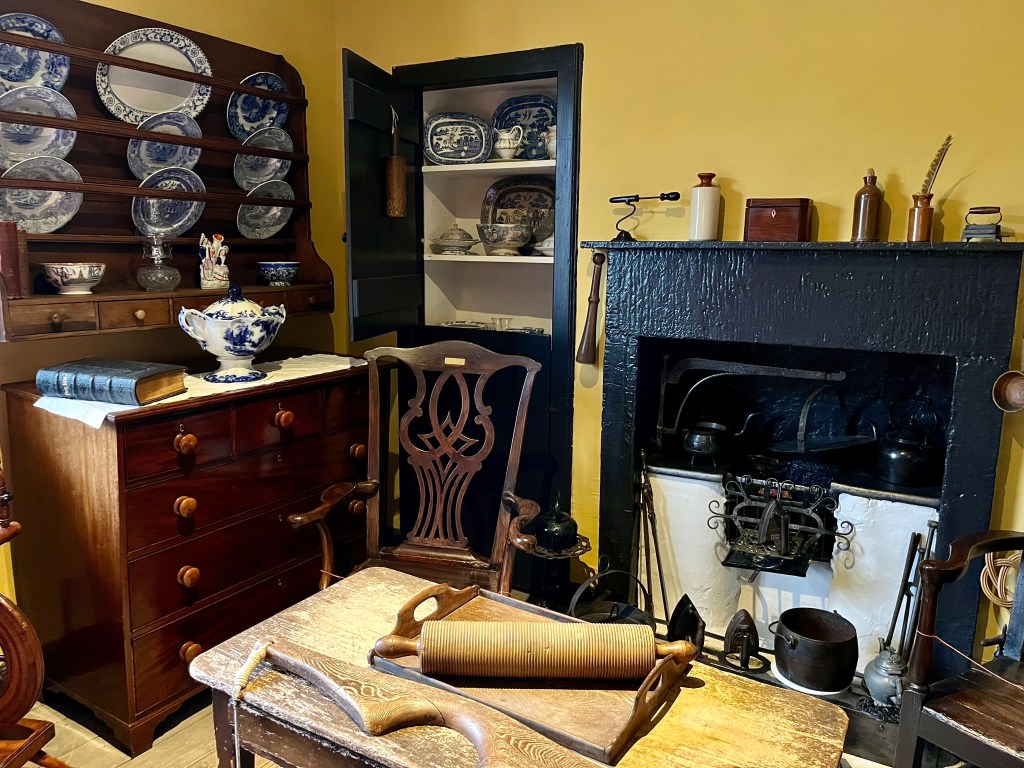
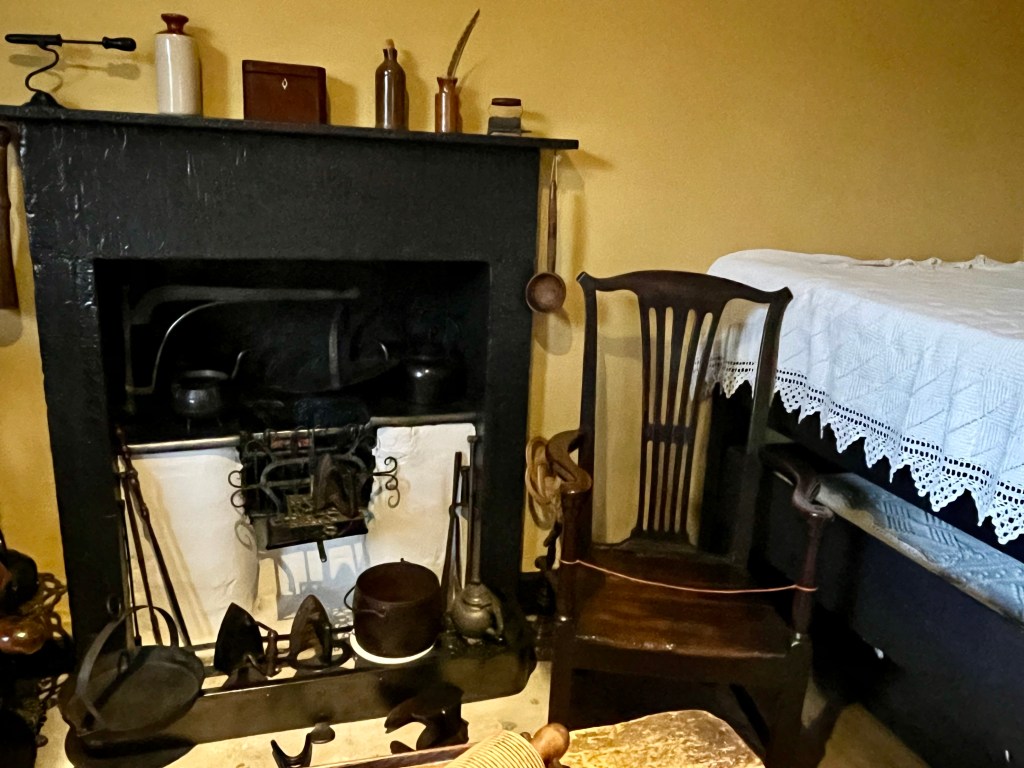
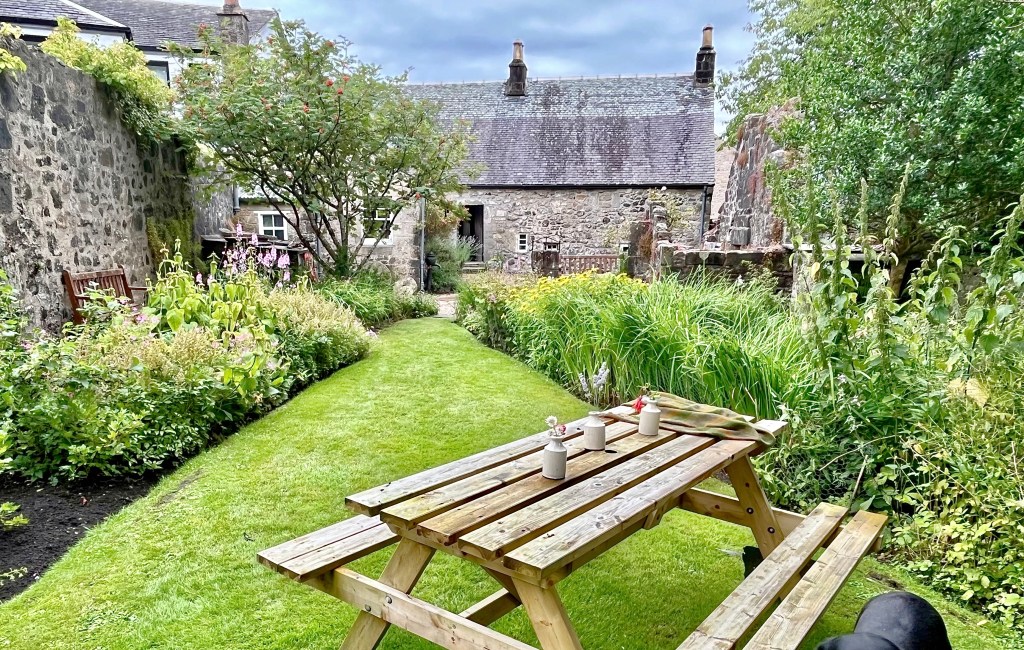
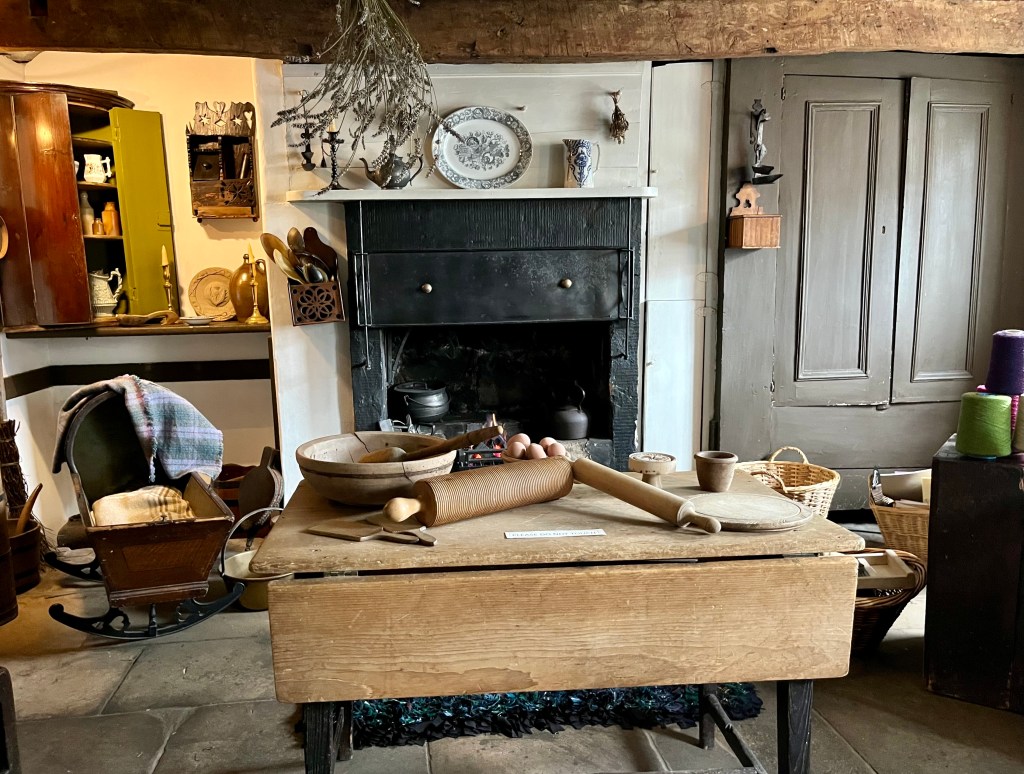
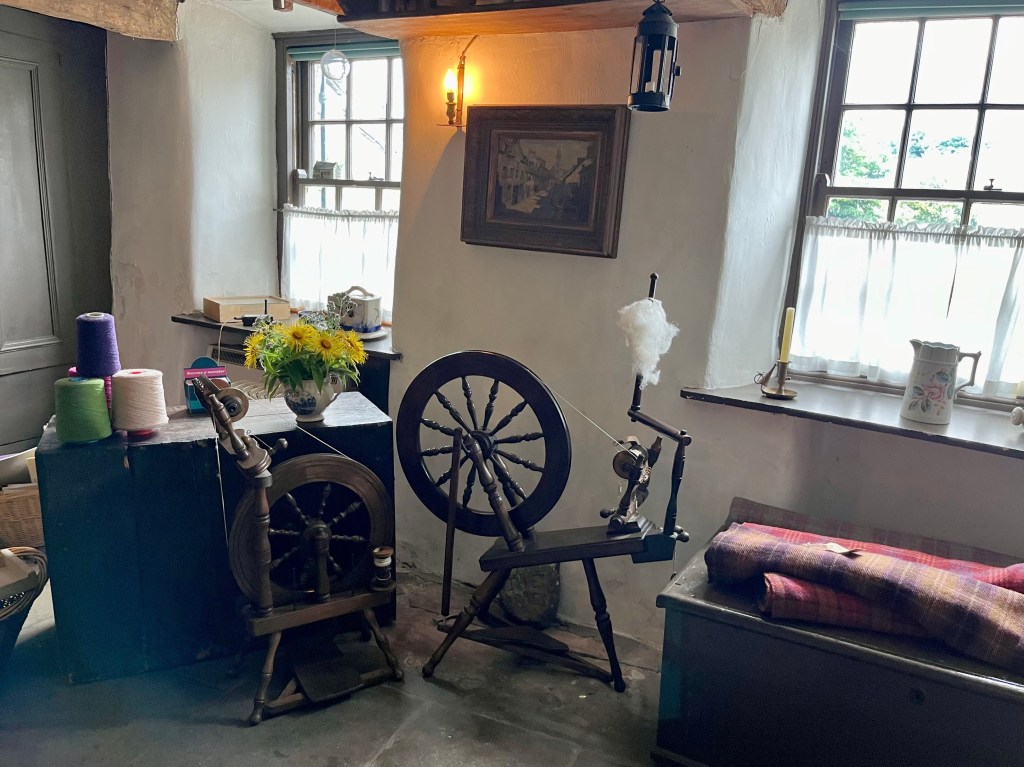
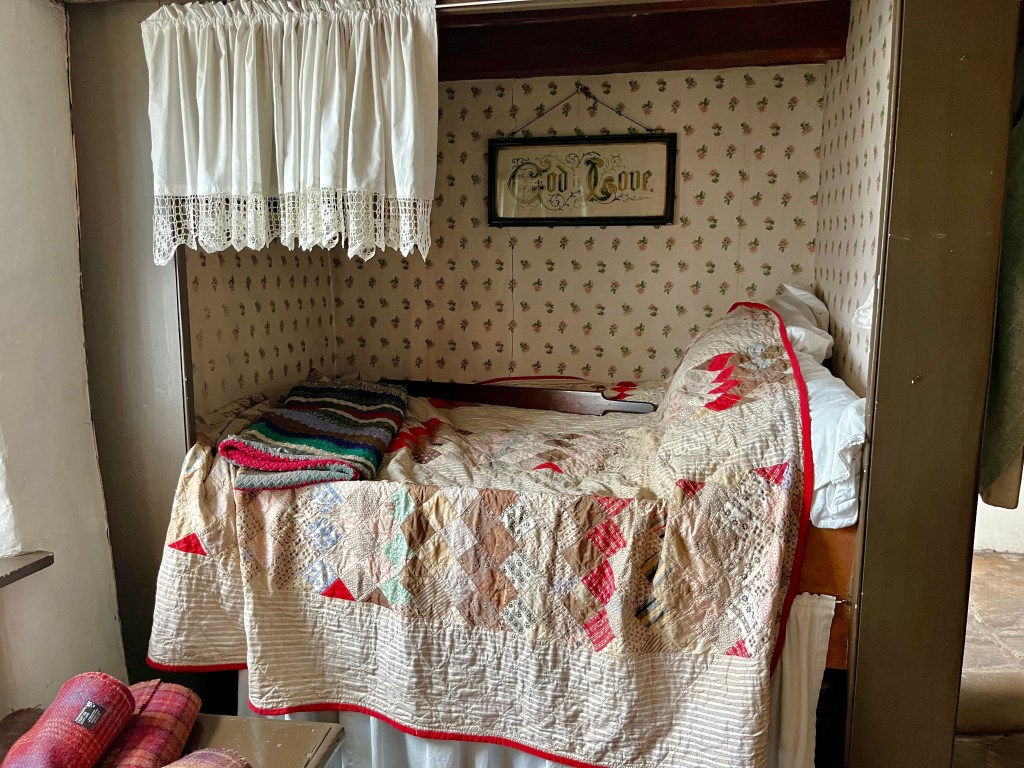
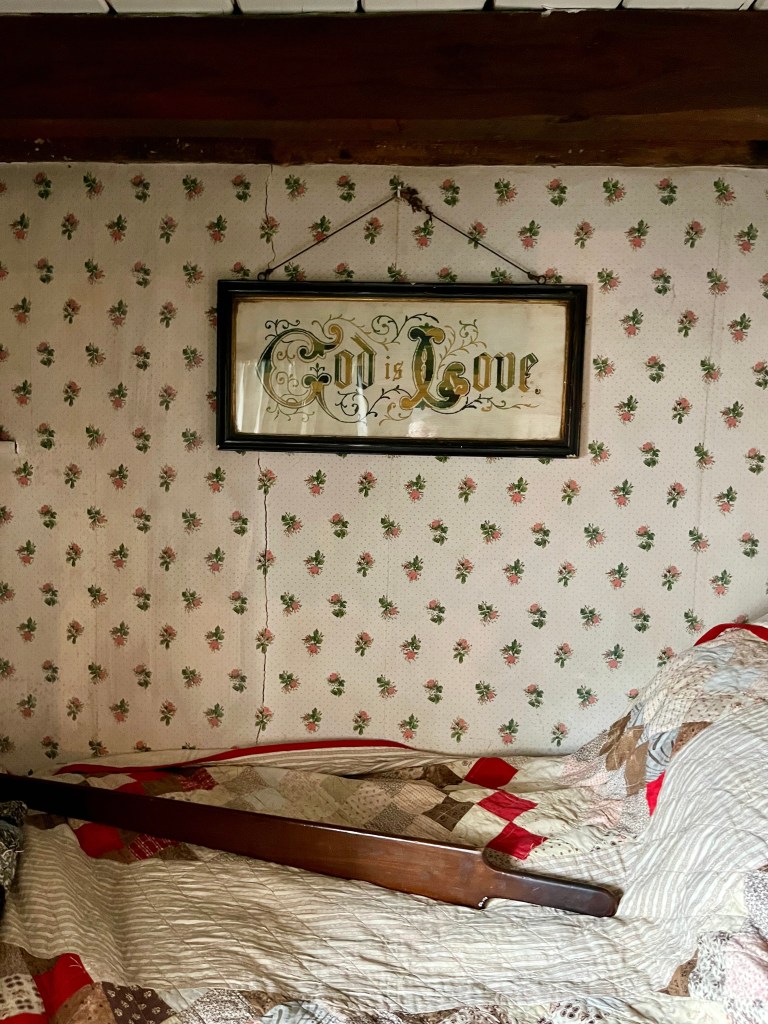
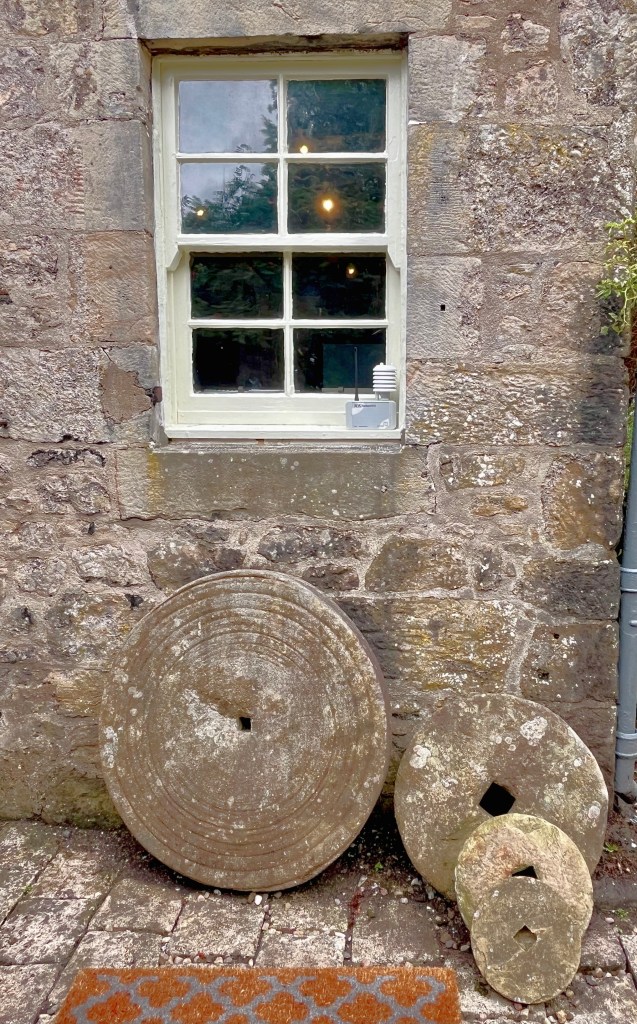
The kitchenSpinning WheelThe ‘inset’ bedAnother ‘inset’ bedthe Loomanother sty;e of loomThe Bible Chair – Bible dated from18th CenturyThe Bible Text above the bedGrinding wheelsBeautiful gardenThe Living RoomA loom typical of those used in the West of Scotland in the eighteenth century
The rooms in the cottage were let out to different families, with varying skills, some relating to the weaving business but others such as shoe making and repairs. It must have been a hive of industry when they were all working. The mechanisation of the weaving business during the Industrial Revolution however, was to bring to an end the huge cottage industry of weaving by hand looms, plus many linked trades, such as spinners, yarn dyers, pirn winders and cloth finishers.
One thing about the Weaver’s Cottage that grabbed our attention was the number of rooms with an ‘inset’ bed. The beds were so short that it would have been impossible for an average adult to lie out on them. This we were told was no problem as the people of the day preferred to sleep in a sitting position! That was the first time I had heard of such a thing.
This blog started with a look at a rich man’s house and has ended with a look at a poor man’s house, the original residents of which have long since passed away. One thing that the visit to the cottage brought home is the brevity of life, for the Bible says ‘my days are swifter than a weavers shuttle” Job 7:5 which we can all relate to. A weaver’s shuttle is incredibly fast, we can vouch for that! It also reminds us that we brought nothing into this world and we can take nothing out! The houses are there, but past resisdents are gone. So we need to weigh up Jesus’ words in Luke’s Gospel
“For whoever wants to save their life will lose it, but whoever loses their life for me will save it. What good is it for someone to gain the whole world, and yet lose or forfeit their very self”?Luke 9:24, 25 or again the words of Jesus – “Those whom I love I rebuke and discipline. So be earnest and repent. Here I am! I stand at the door and knock. If anyone hears my voice and opens the door, I will come in and eat with that person, and they with me”. Revelation 3:19,20
Visits to places like this bring back many memories. As I have said, my granny was a weaver, my mother’s childhood was in a similar small cottage in Fife, not to mention the inset beds, which both our parents would have slept in, tho’ thankfully somewhat larger than those illustrated!
We enjoyed these visits and are grateful for the NTS for the work they do for the nation. These three sites are definitley recommended as places worth a visit. You will find it is cheaper to become a member, as the entrance fee for non members is quite expensive, so after just a few visits as a member you are in credit!
Trust you are well wherever you are, why not take time to consider the words of Jesus? Always glad to hear from you.
 Matthew McKinnon's Blog