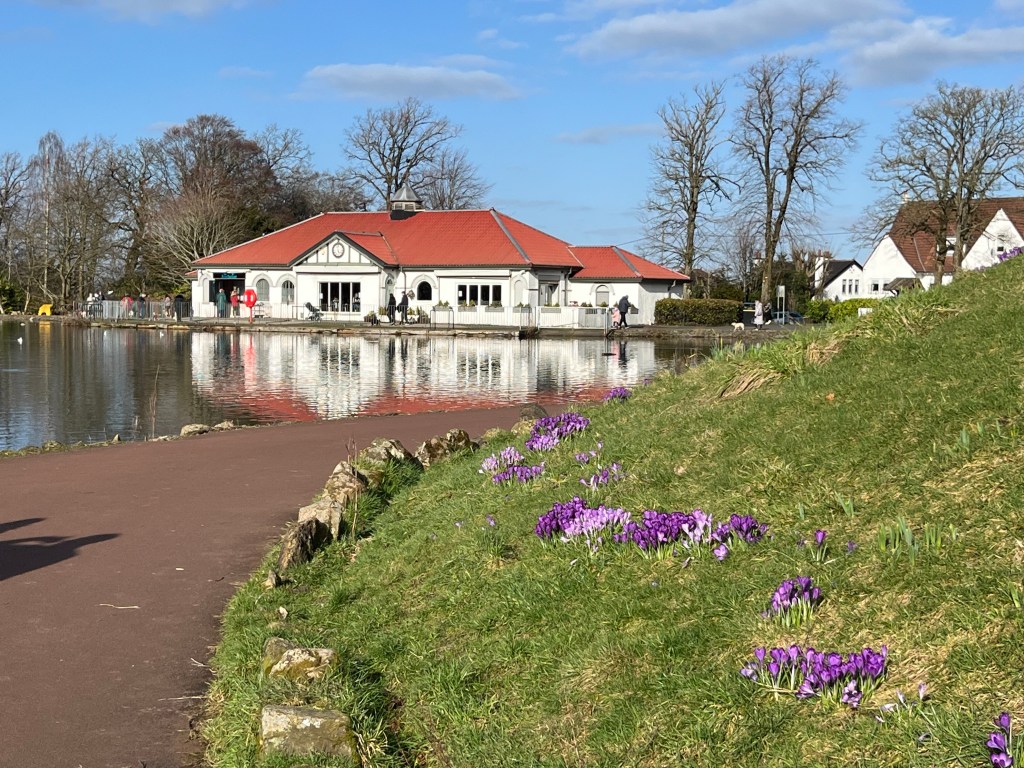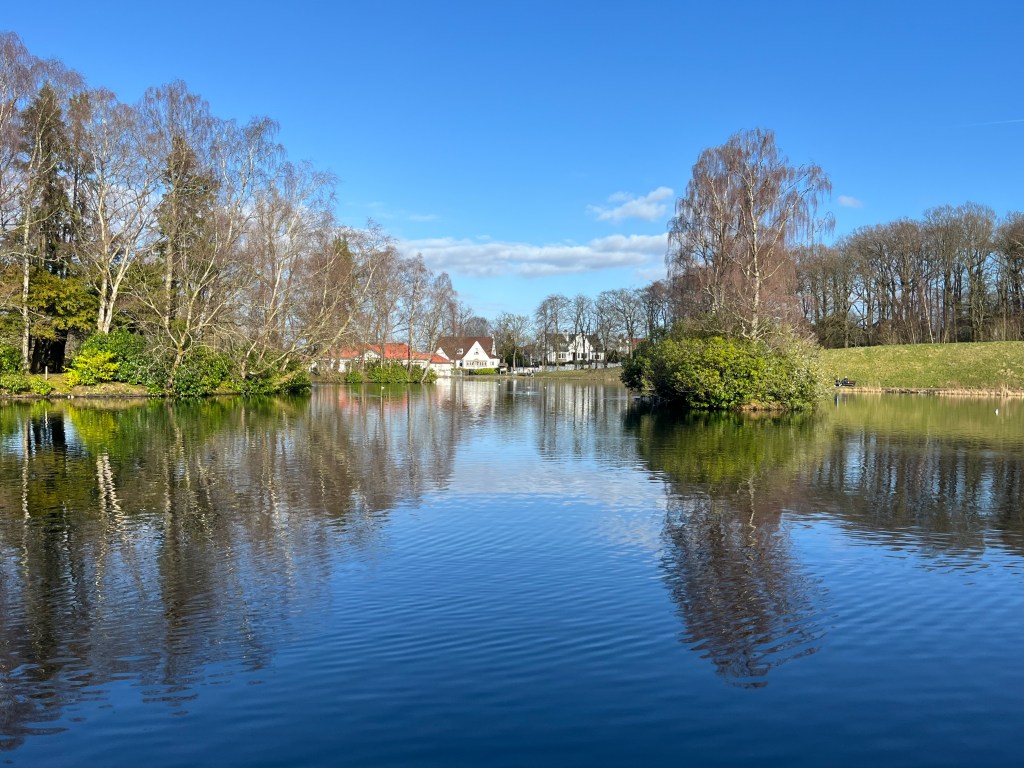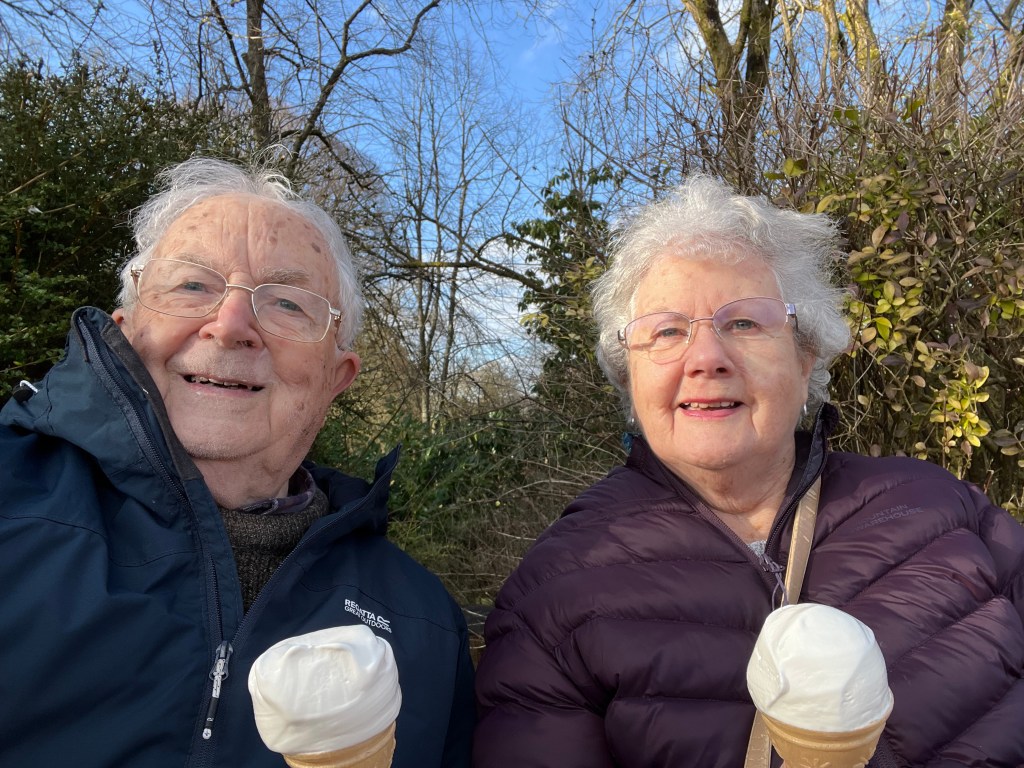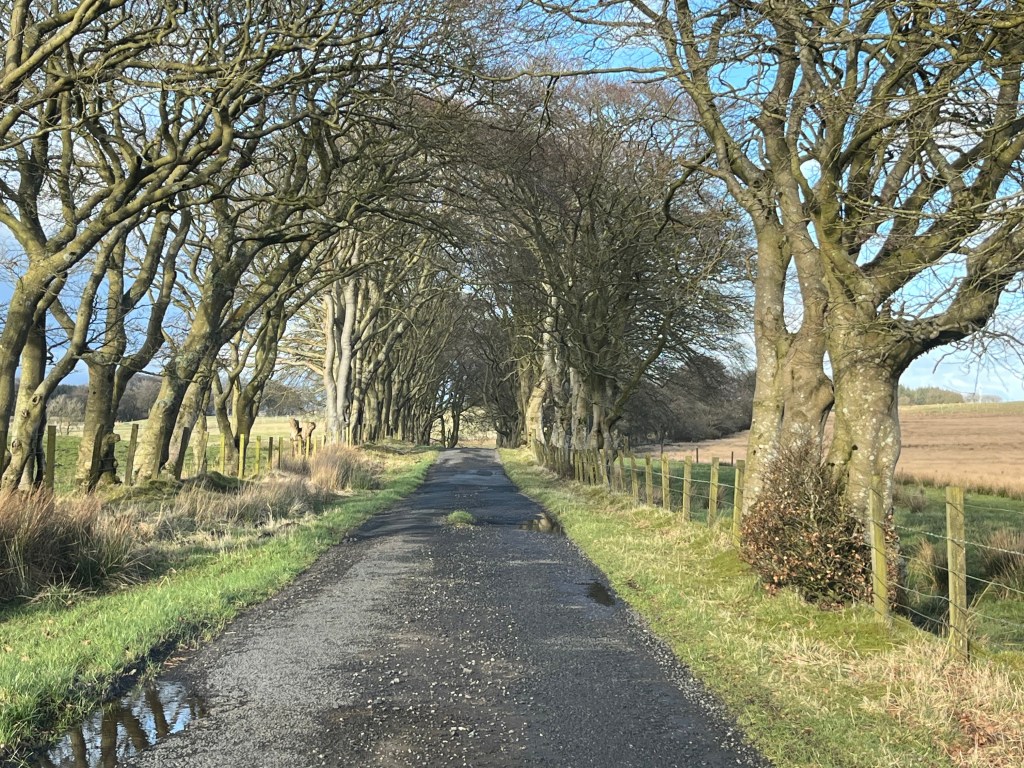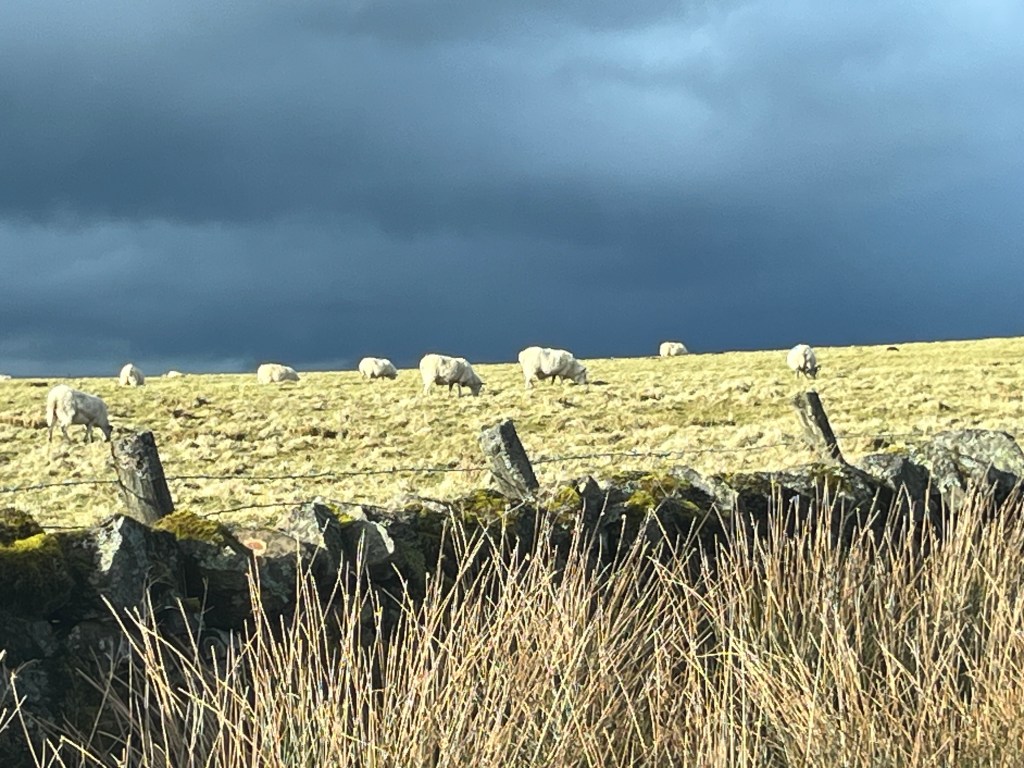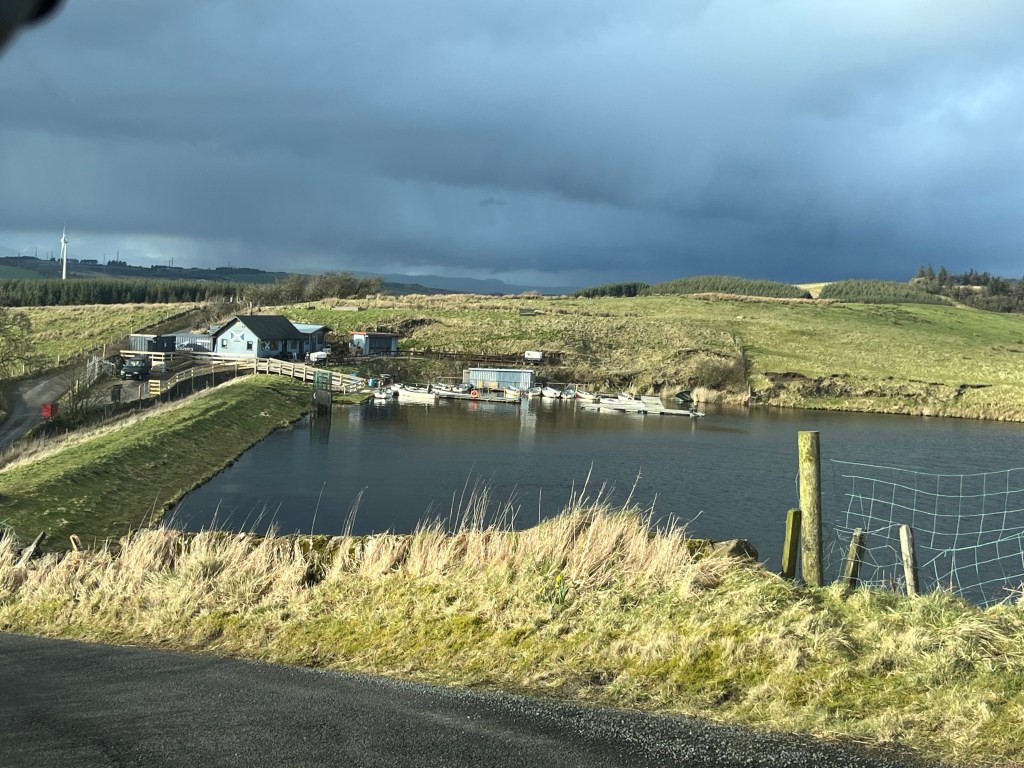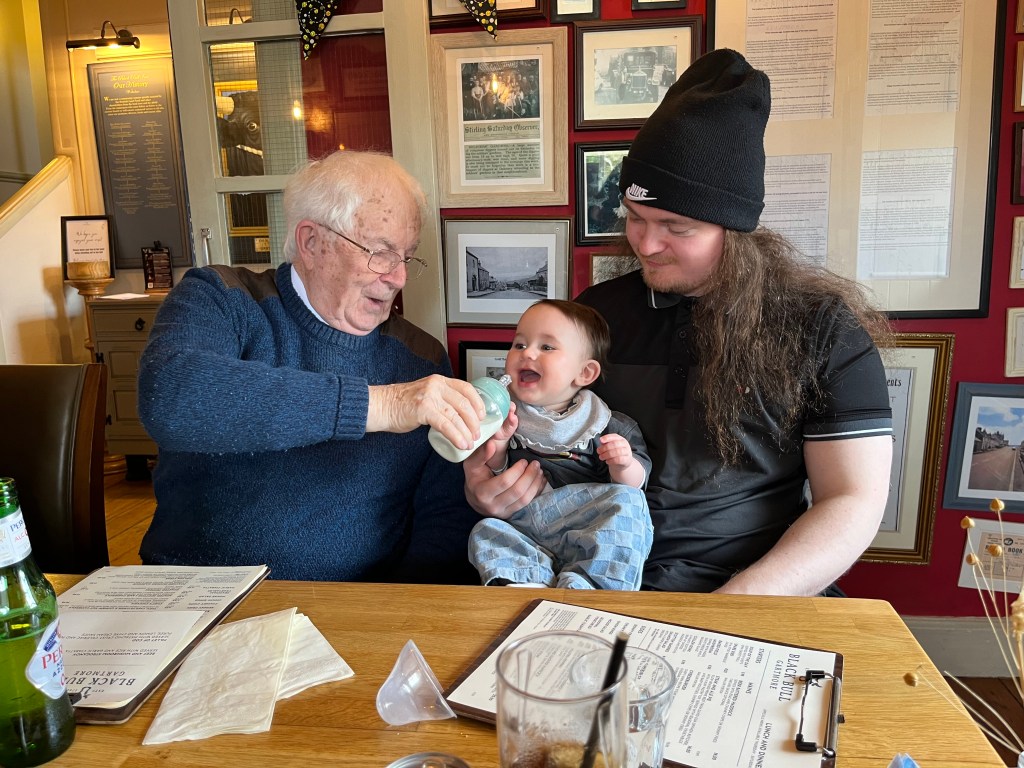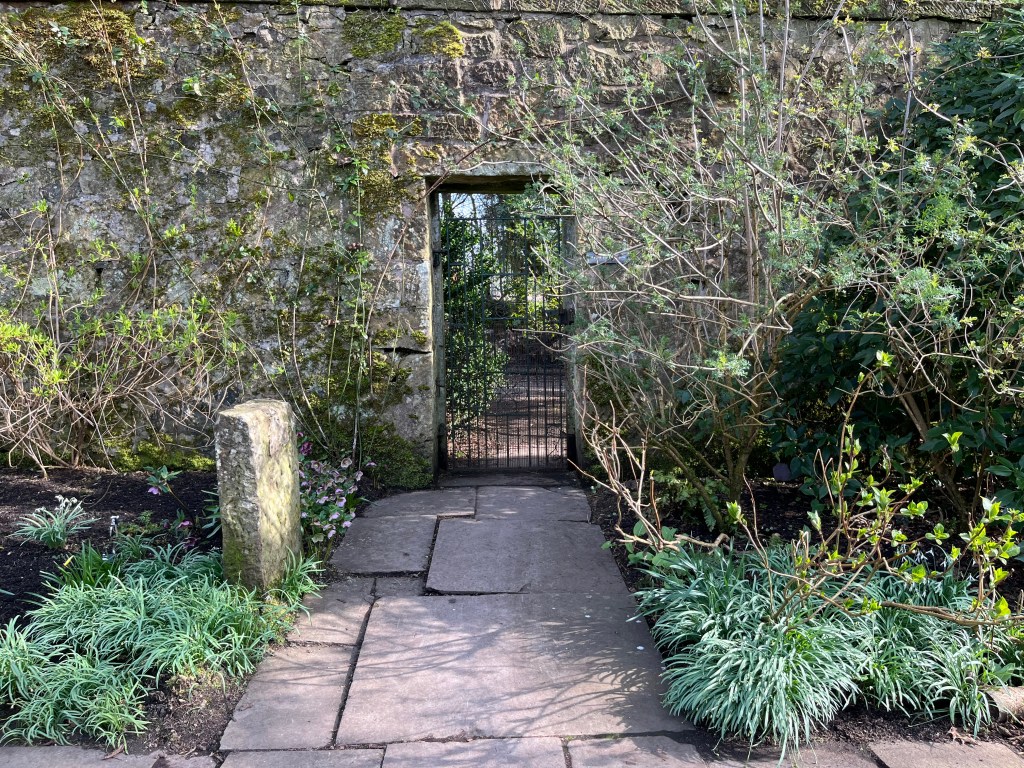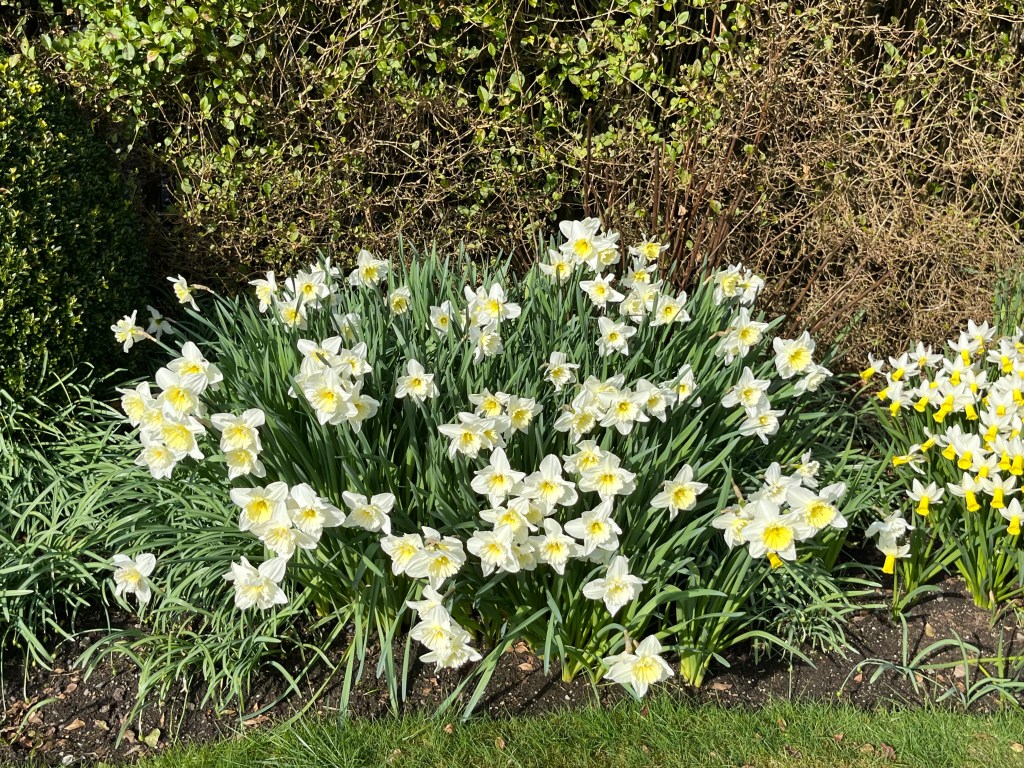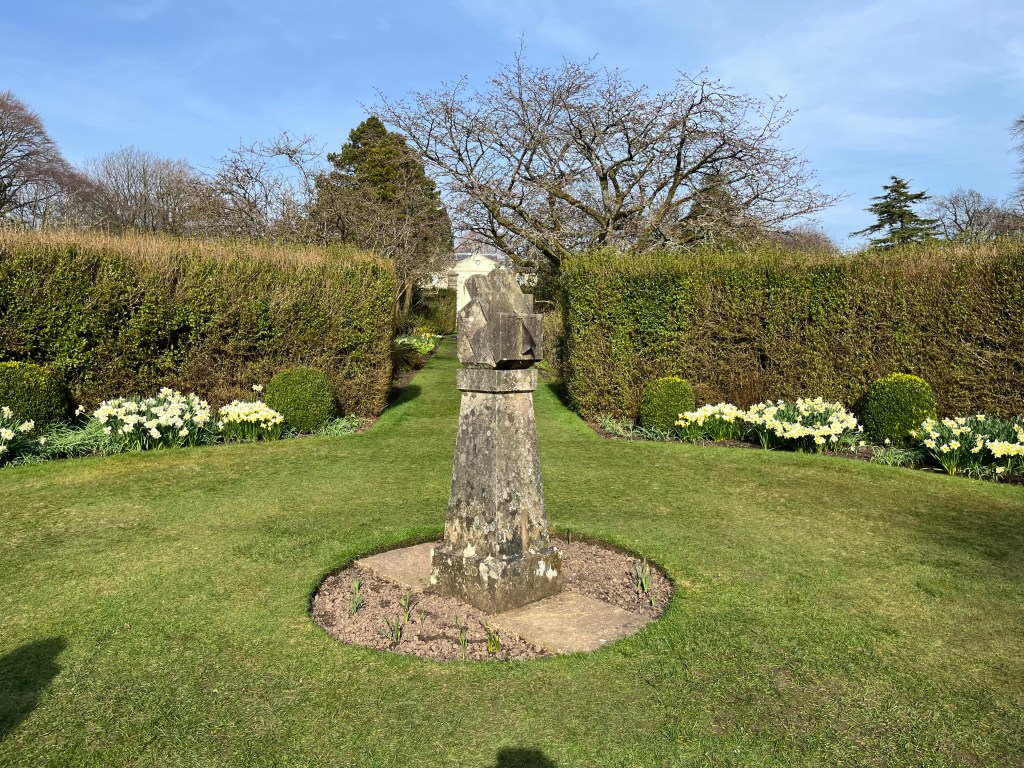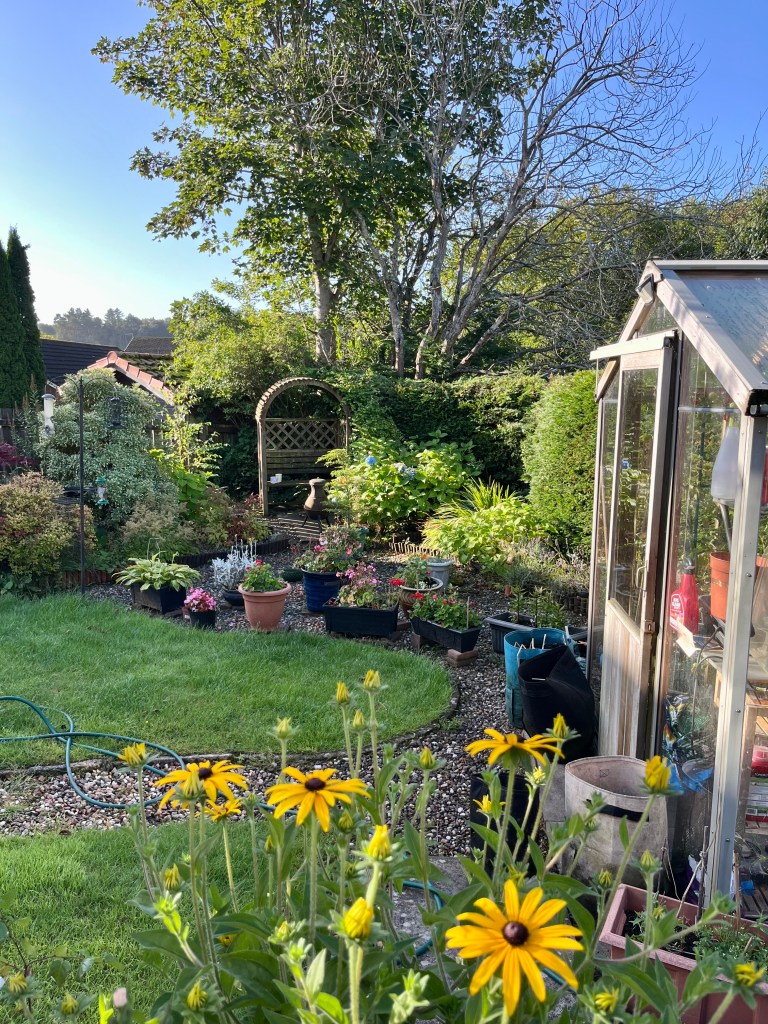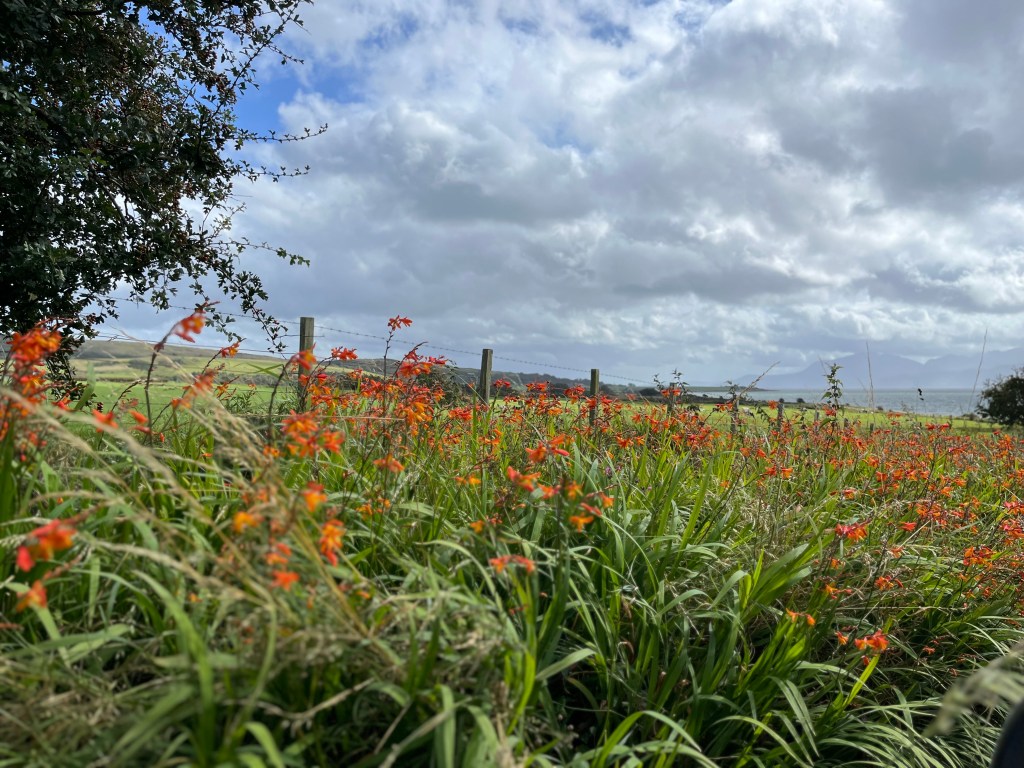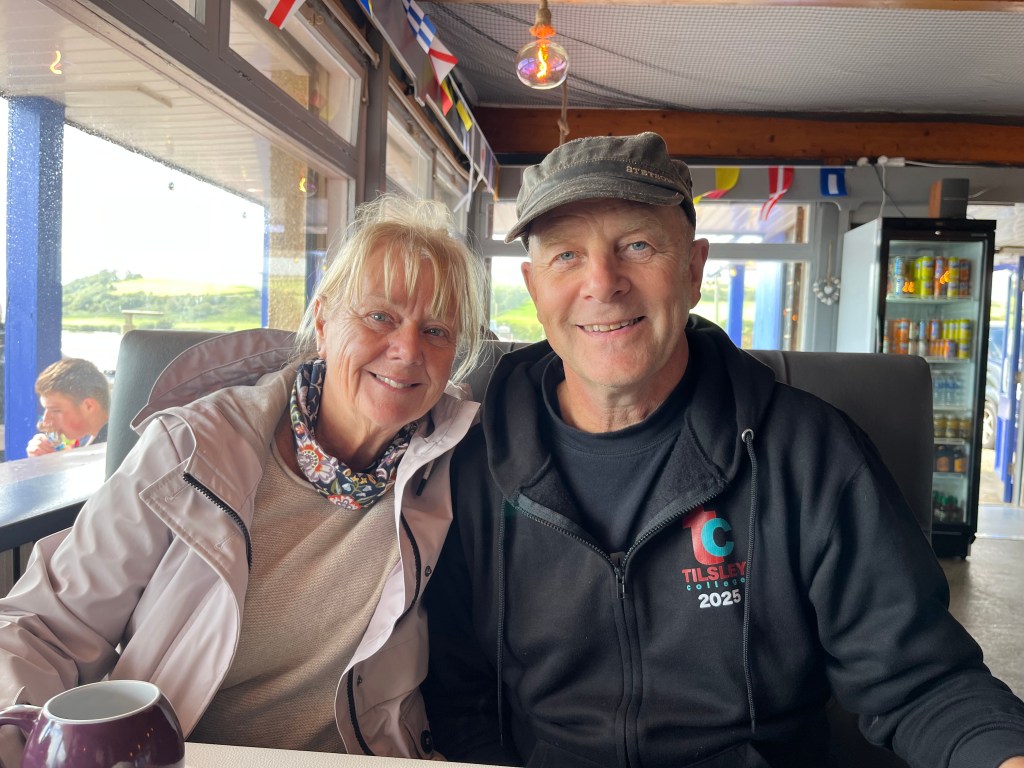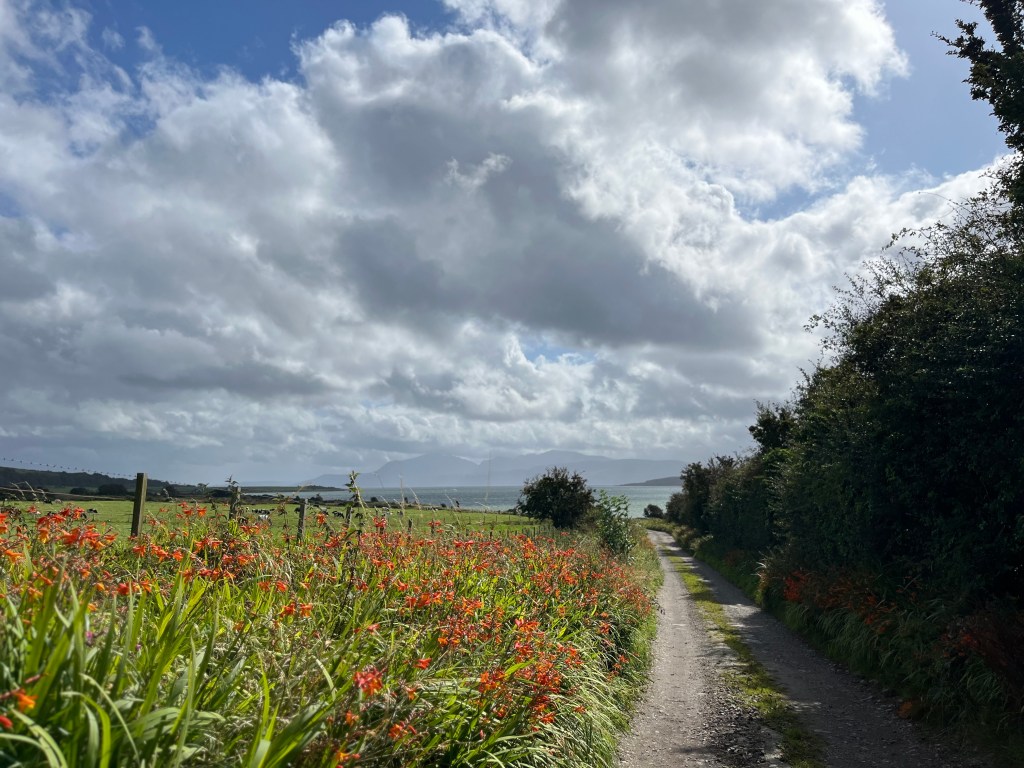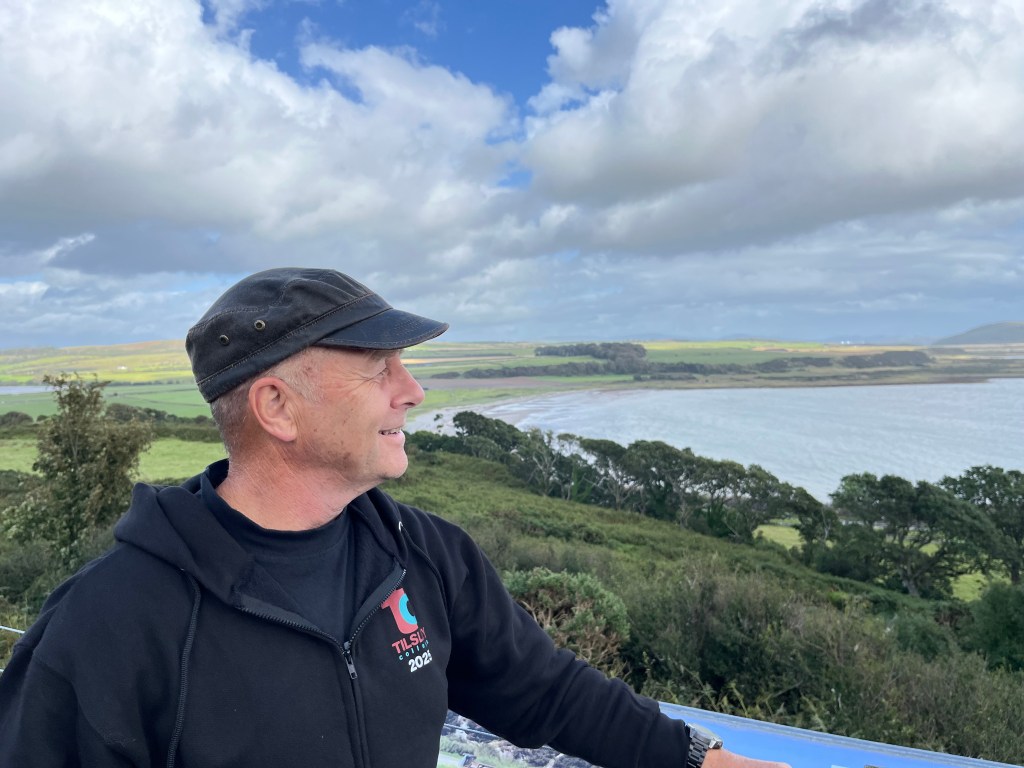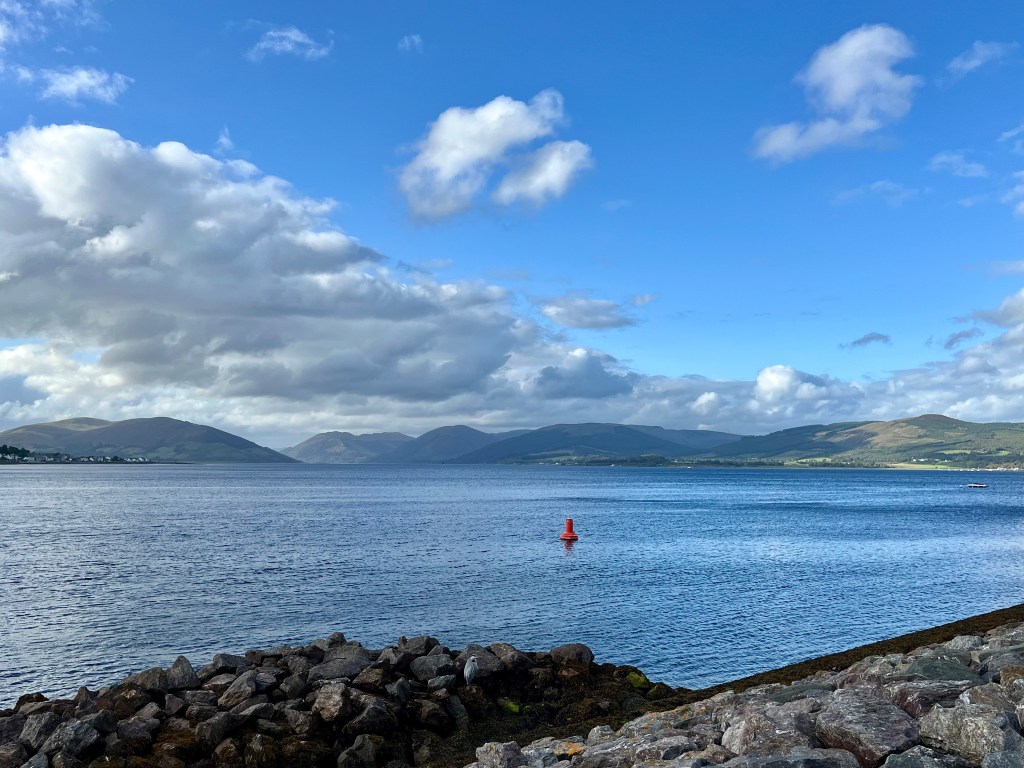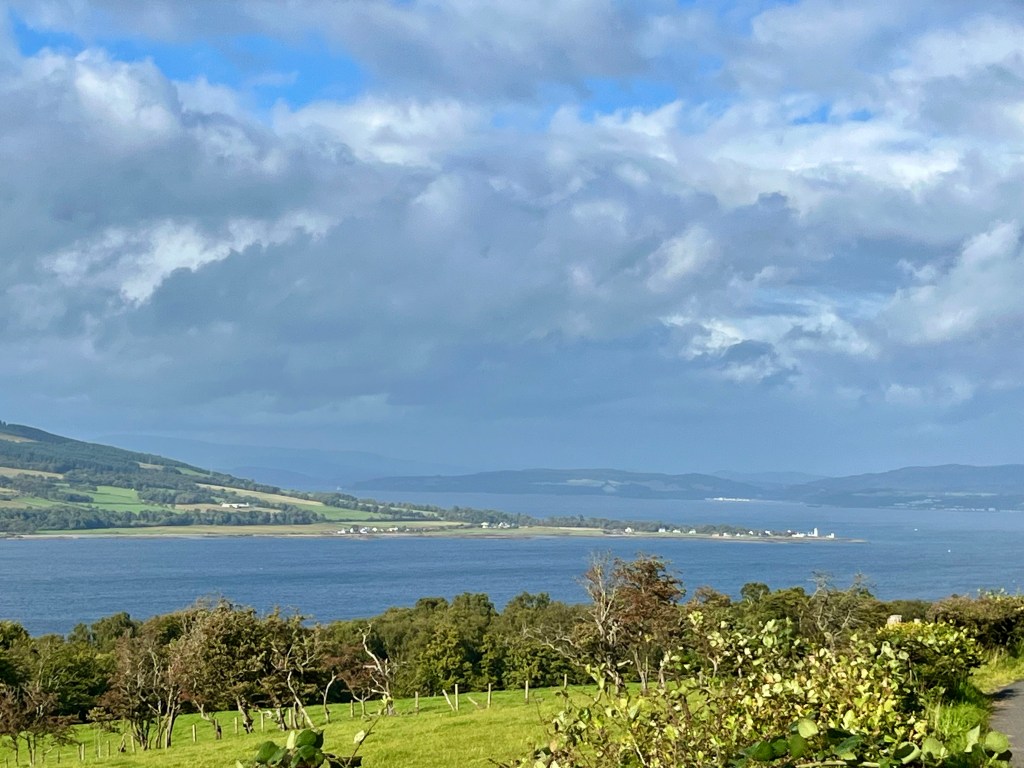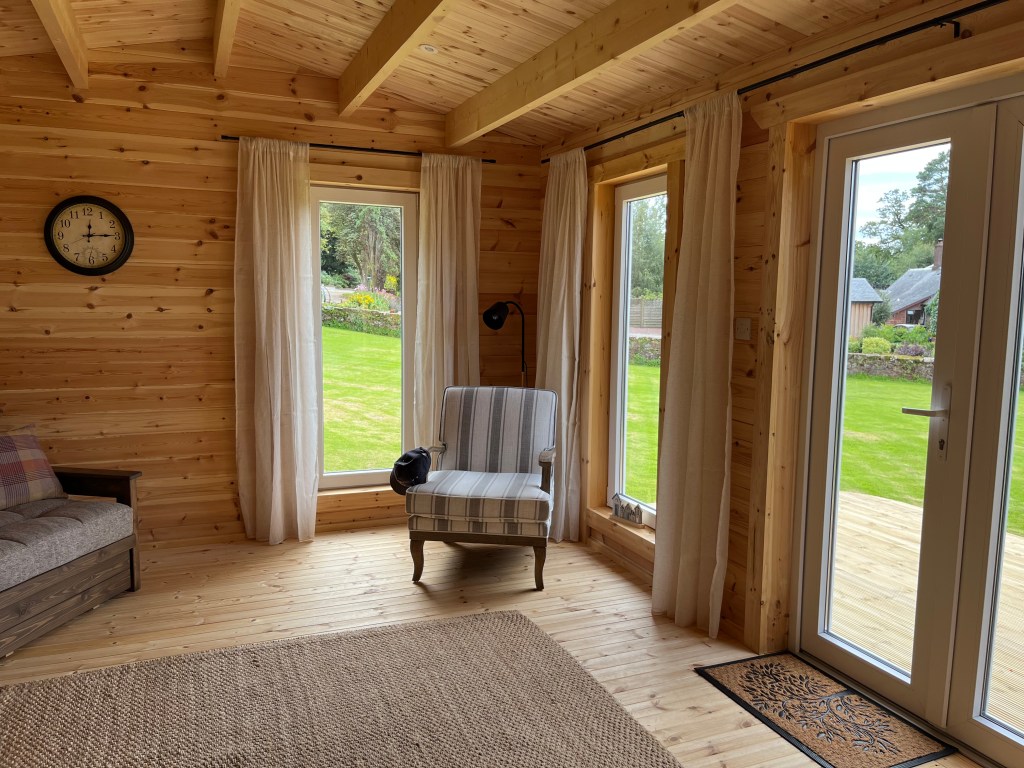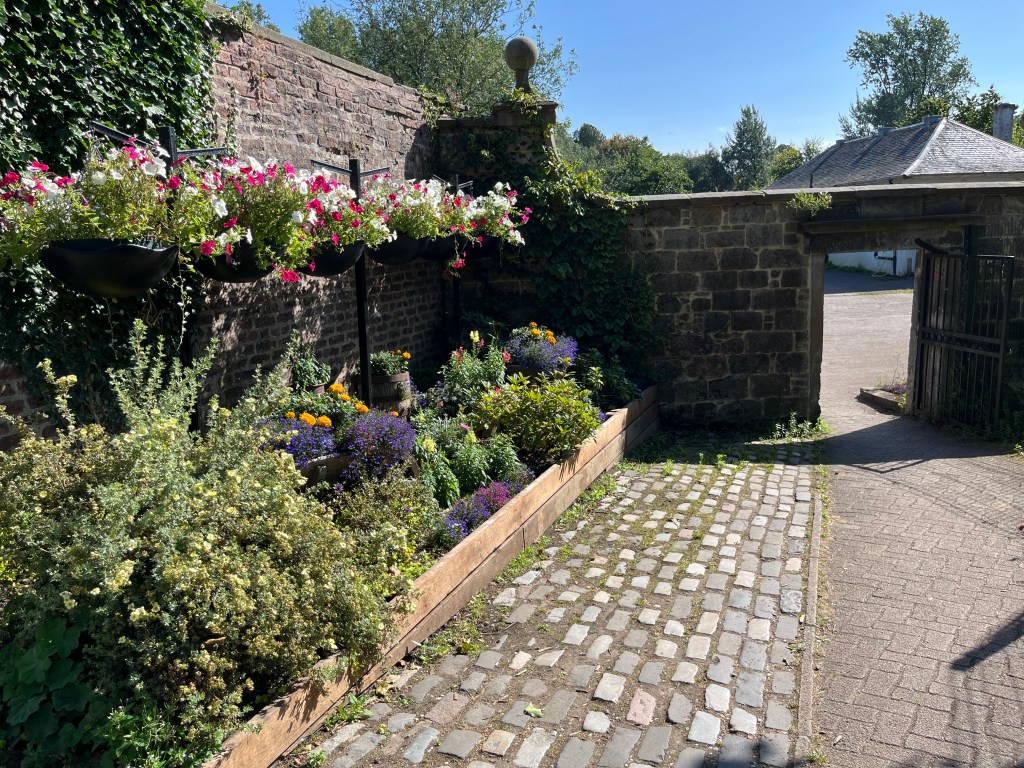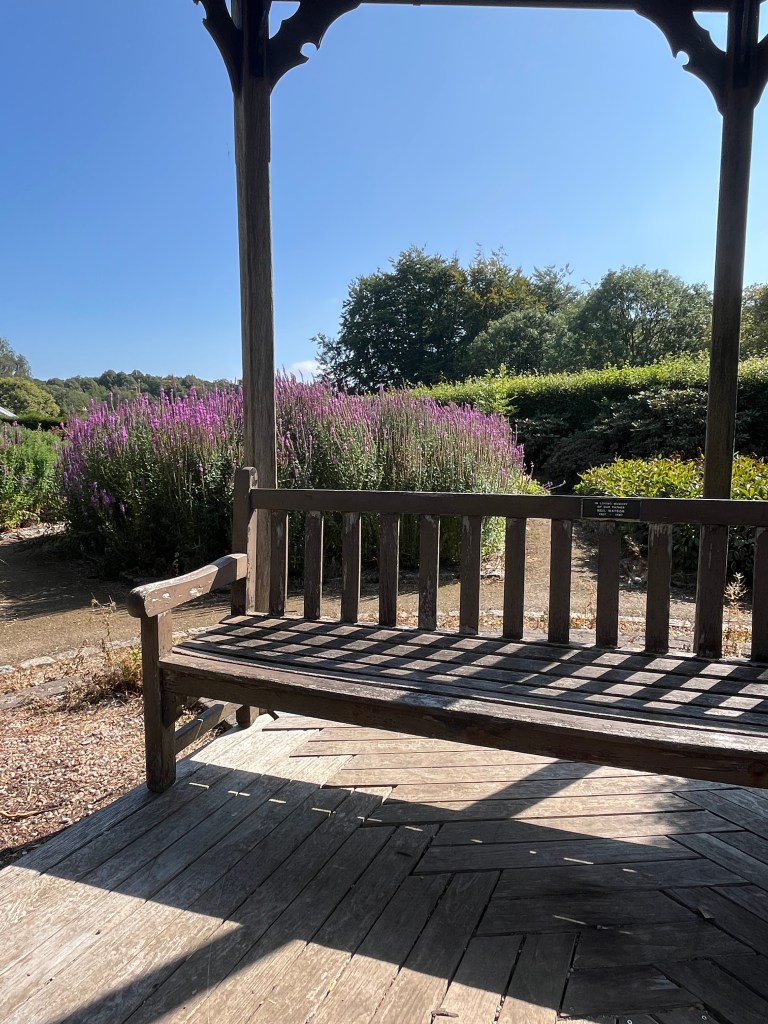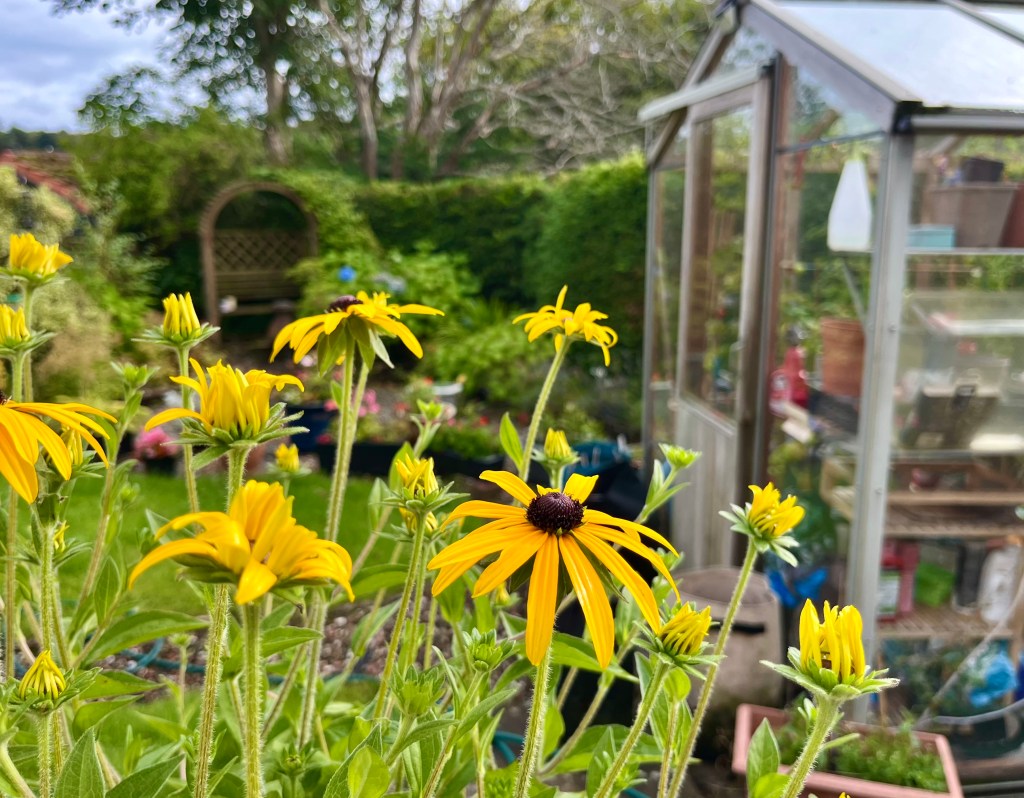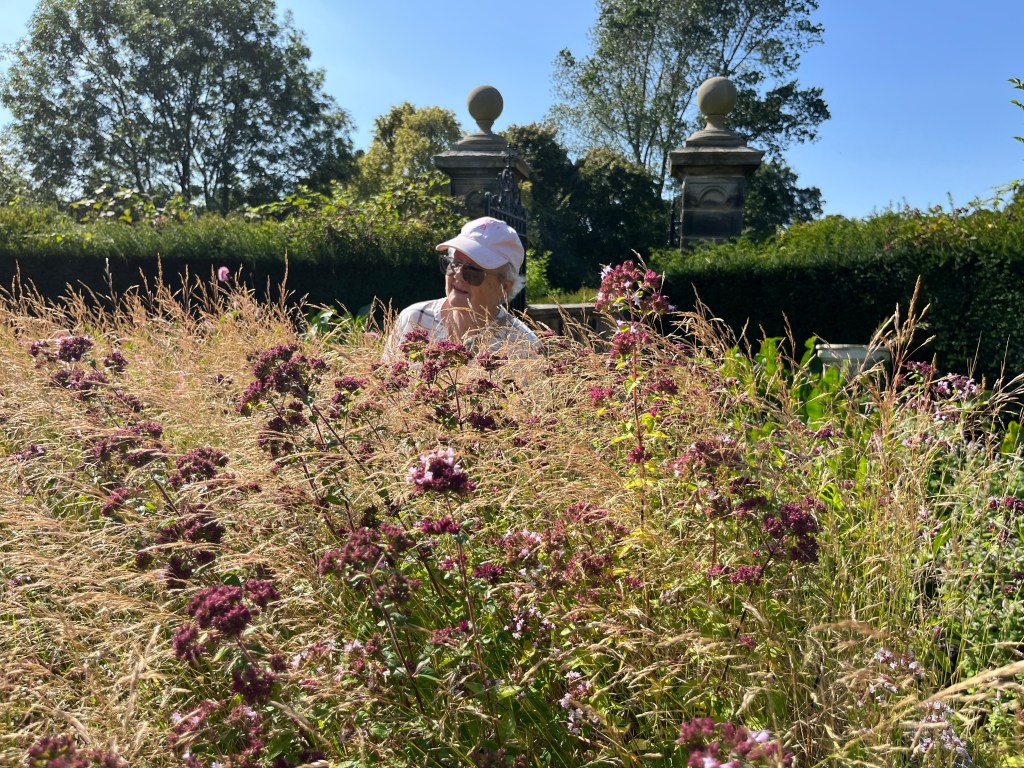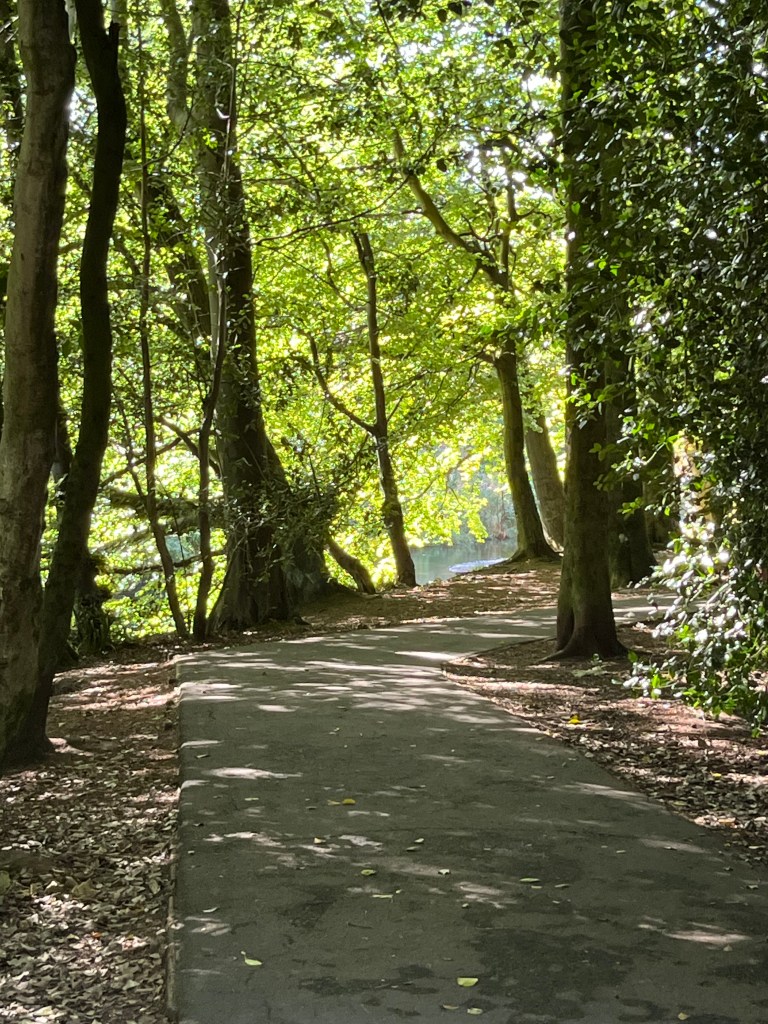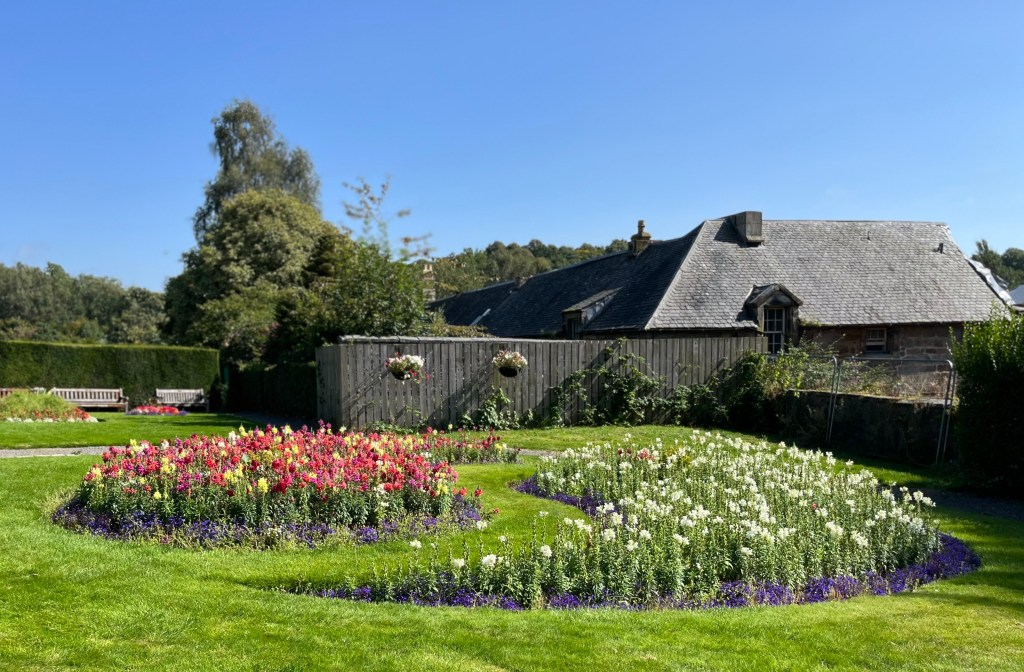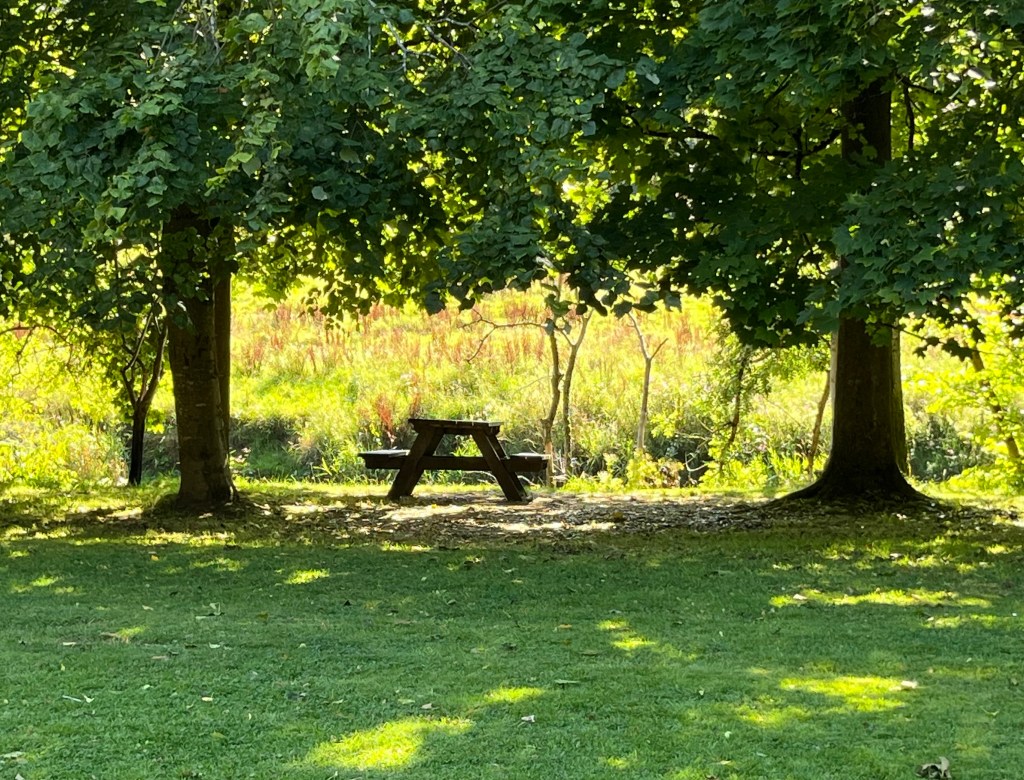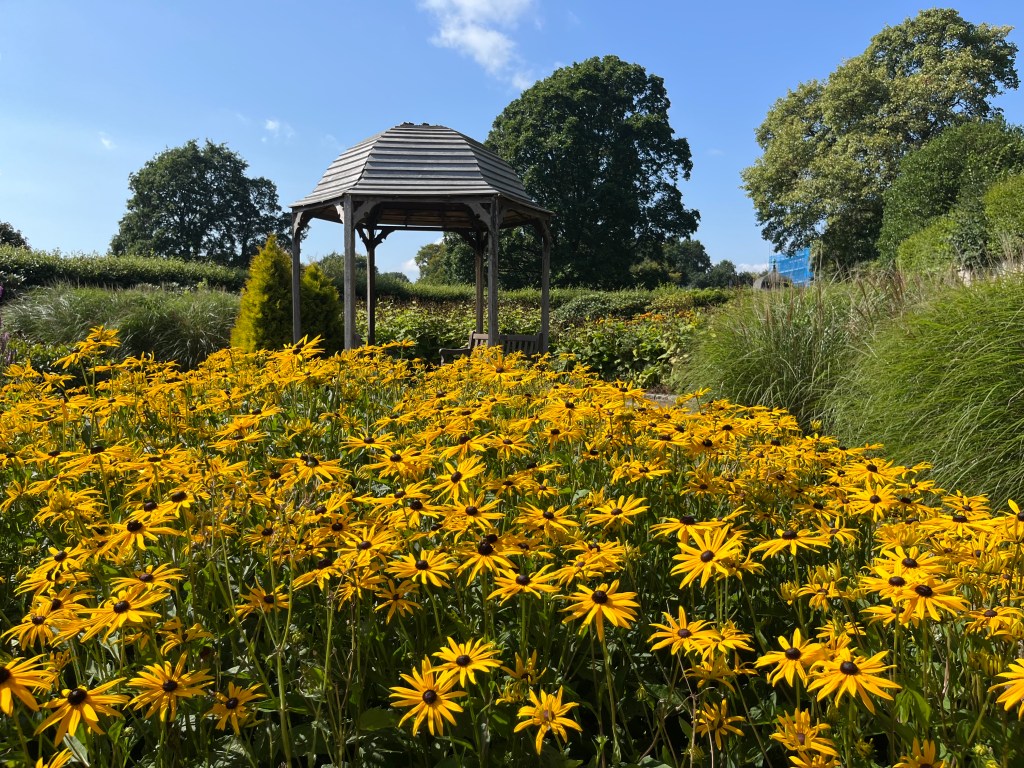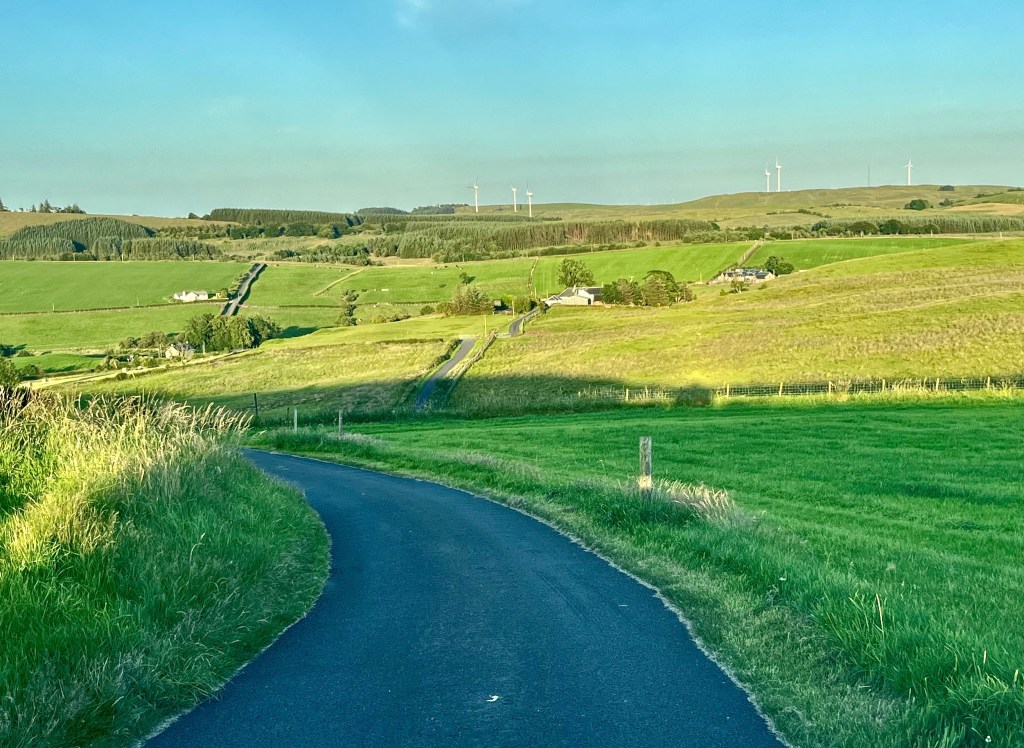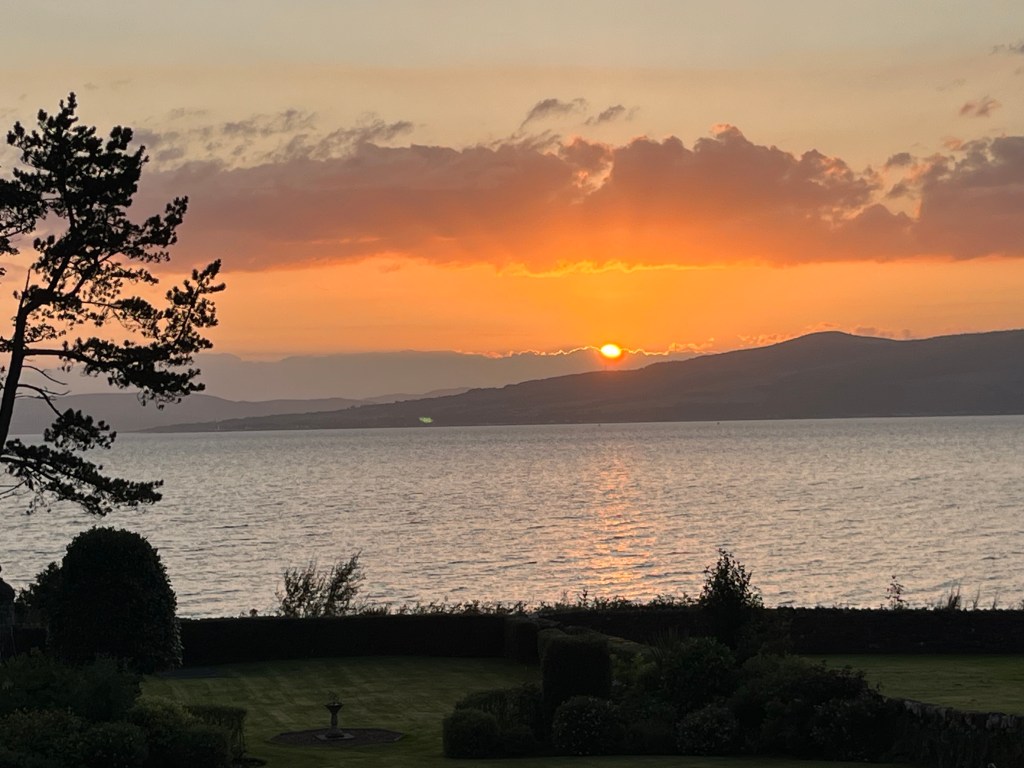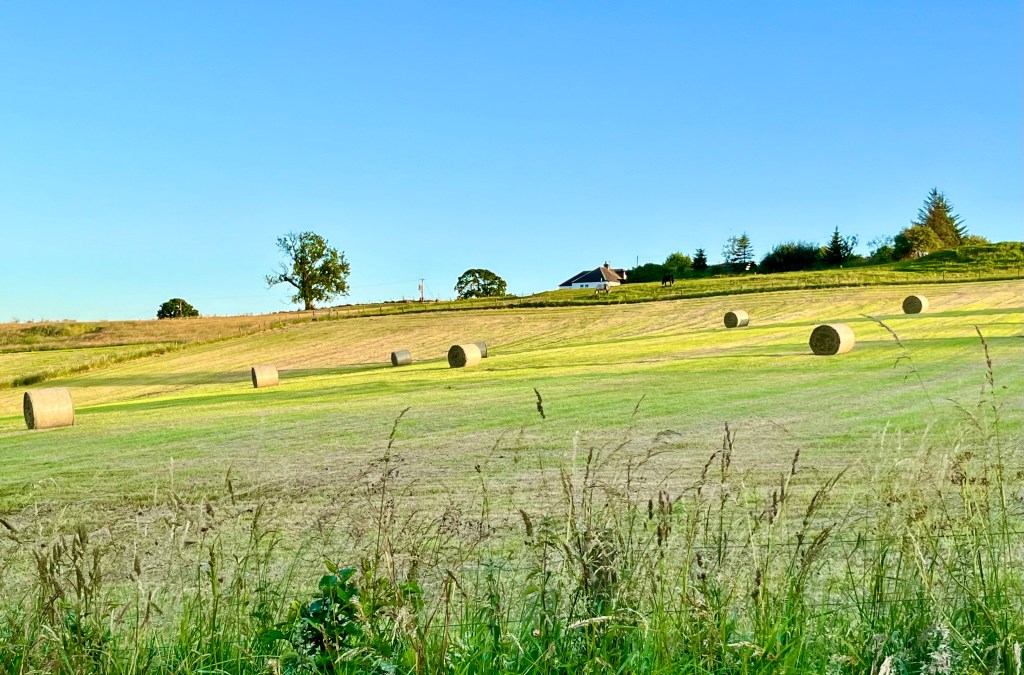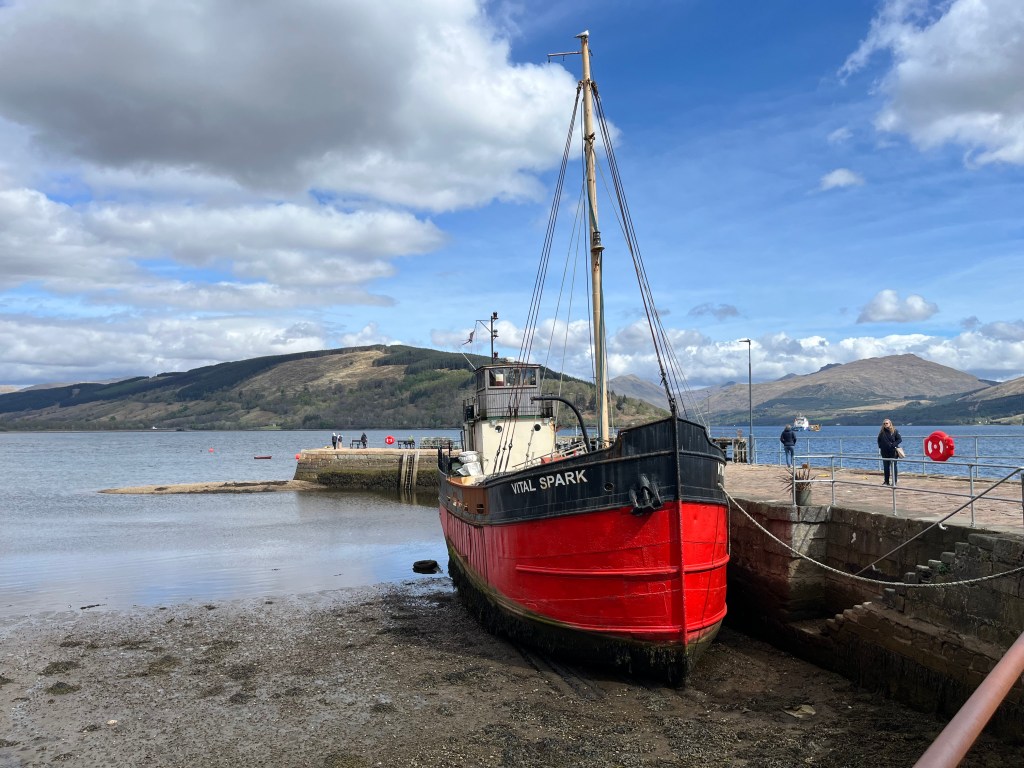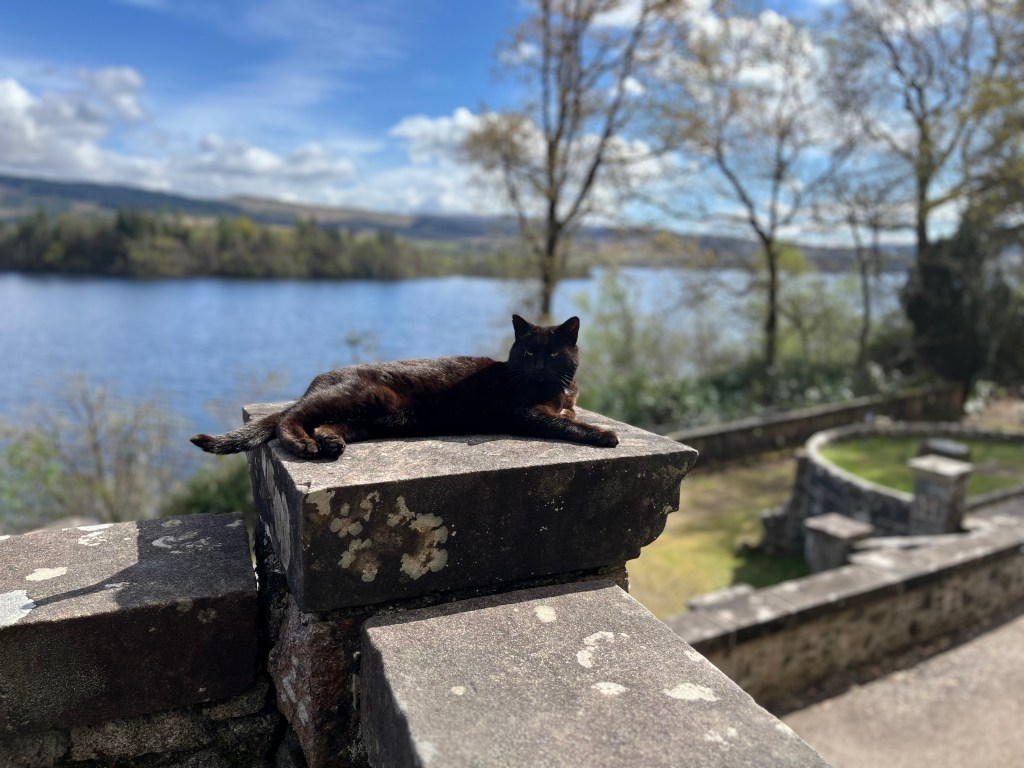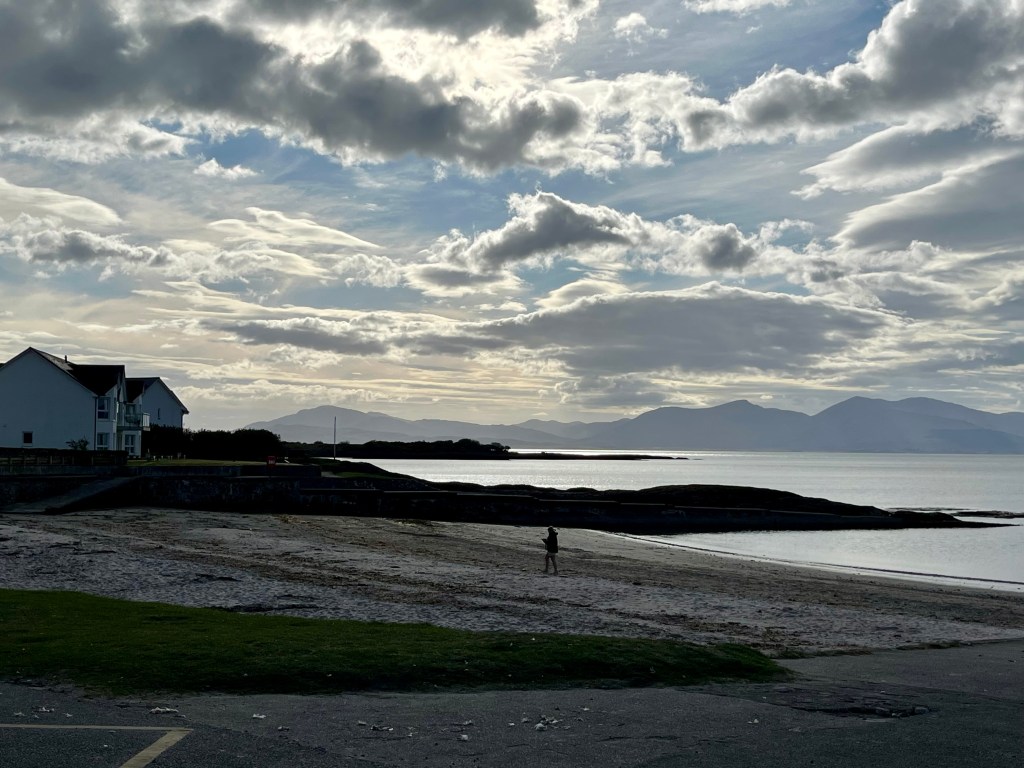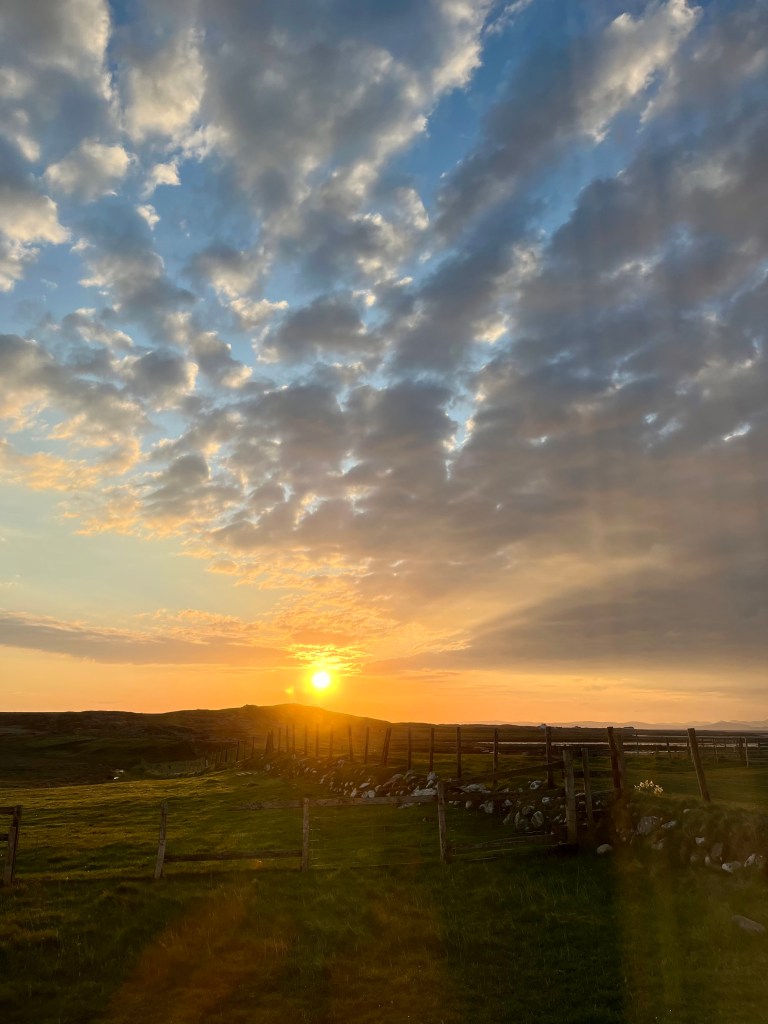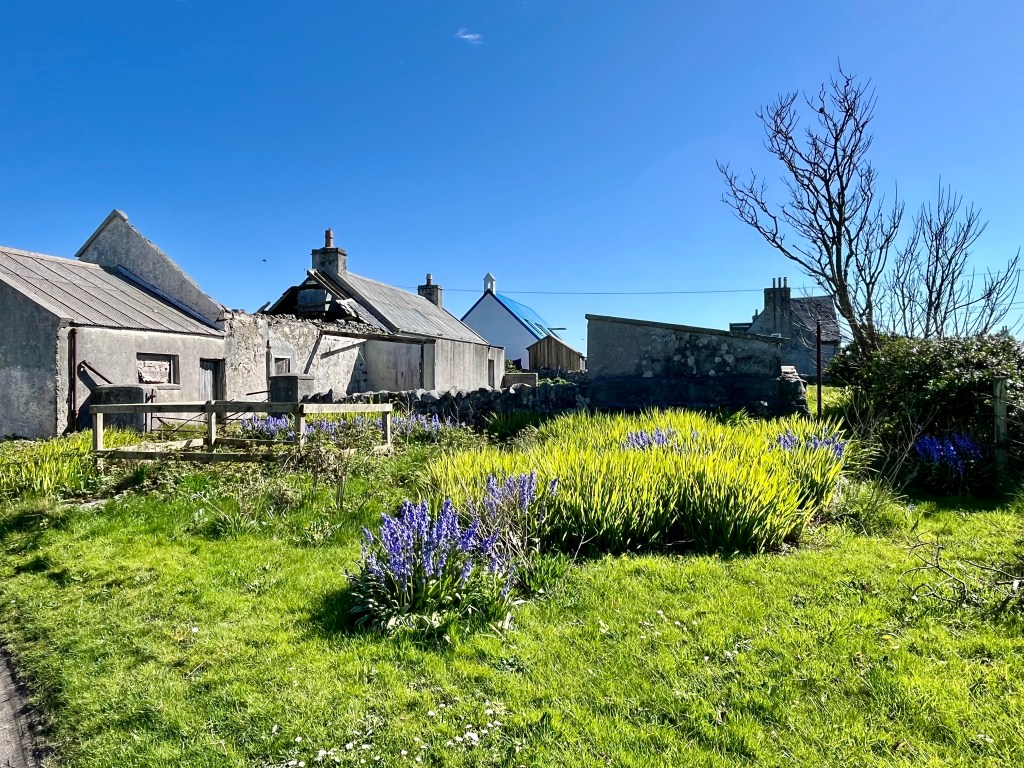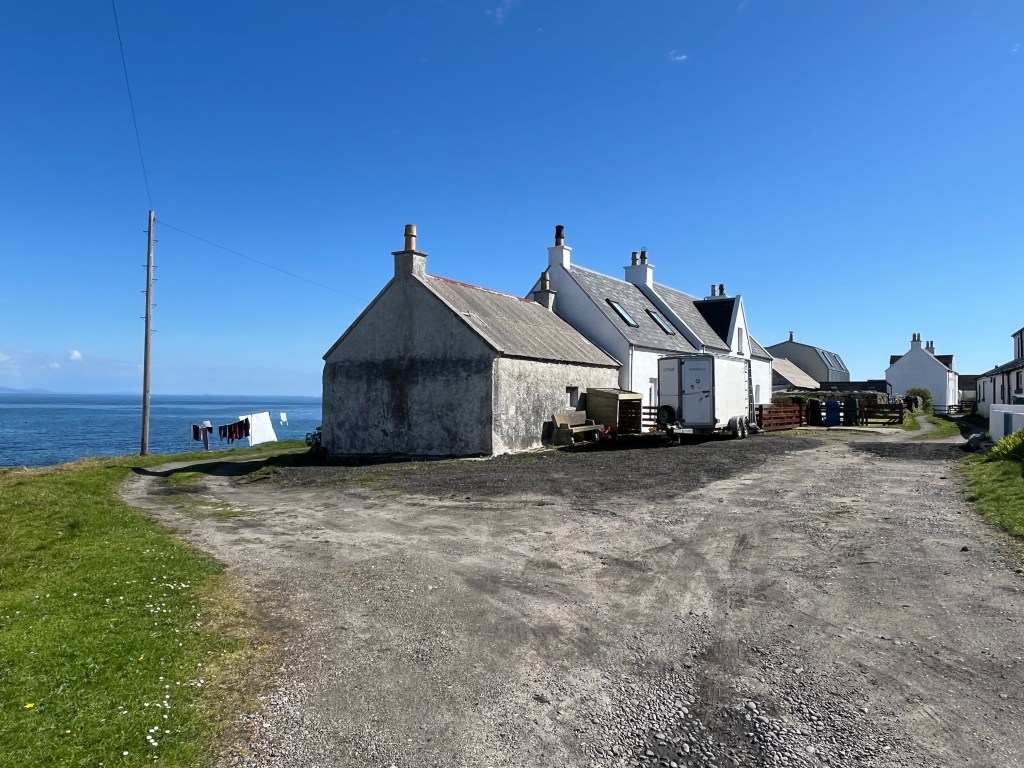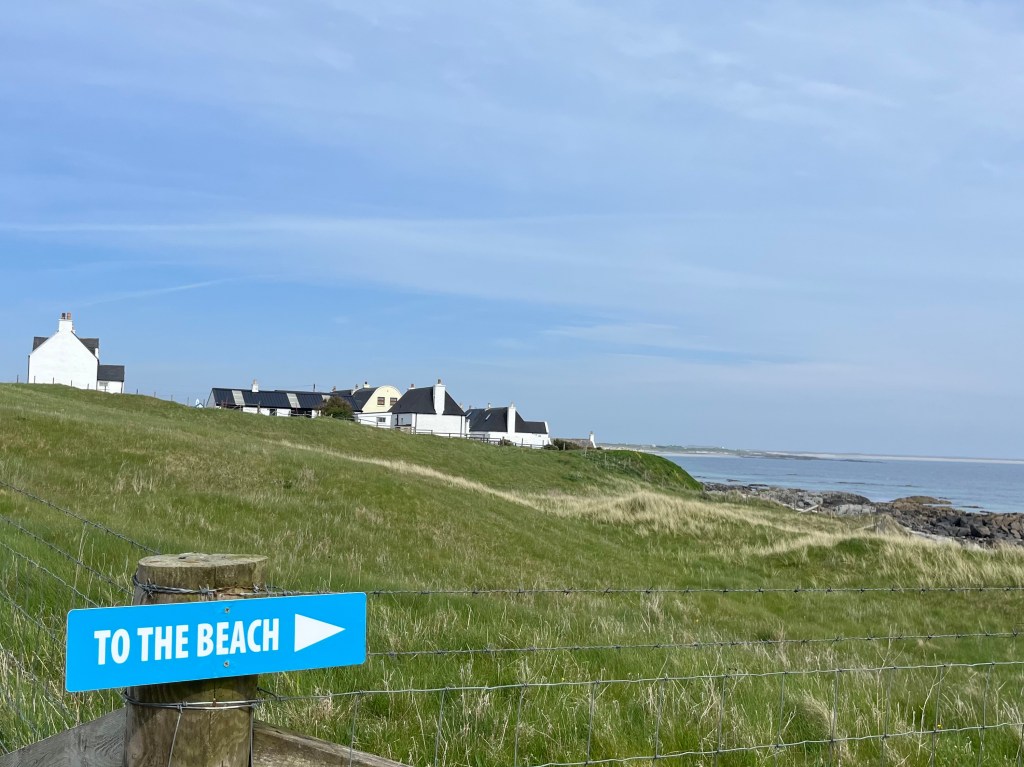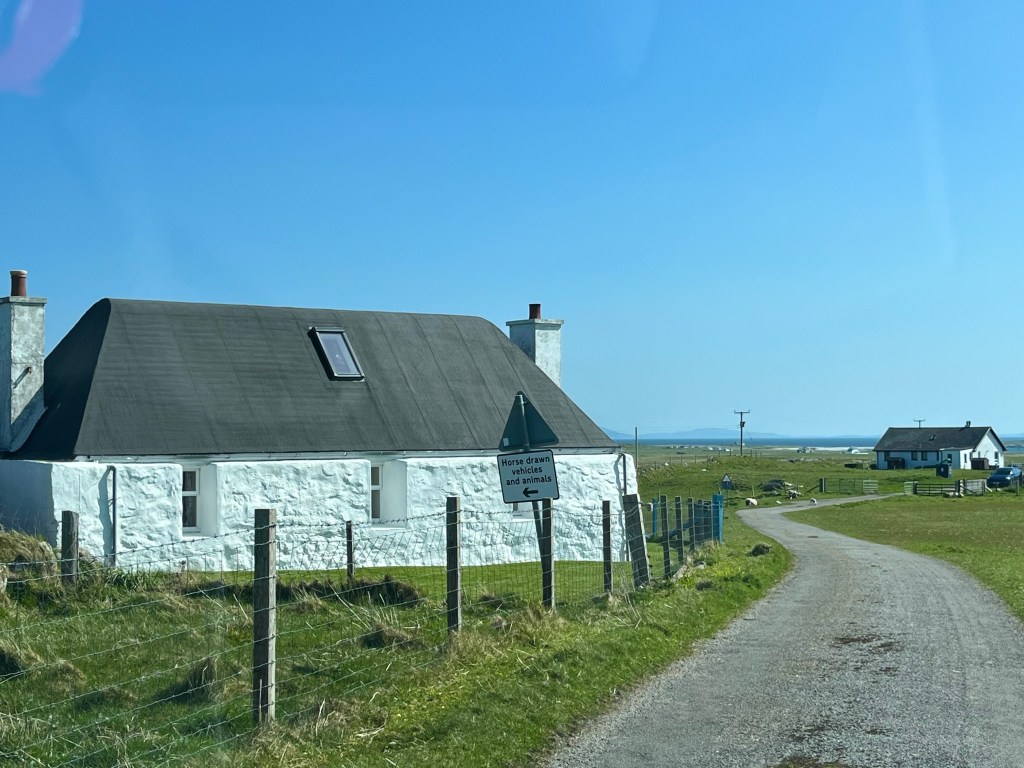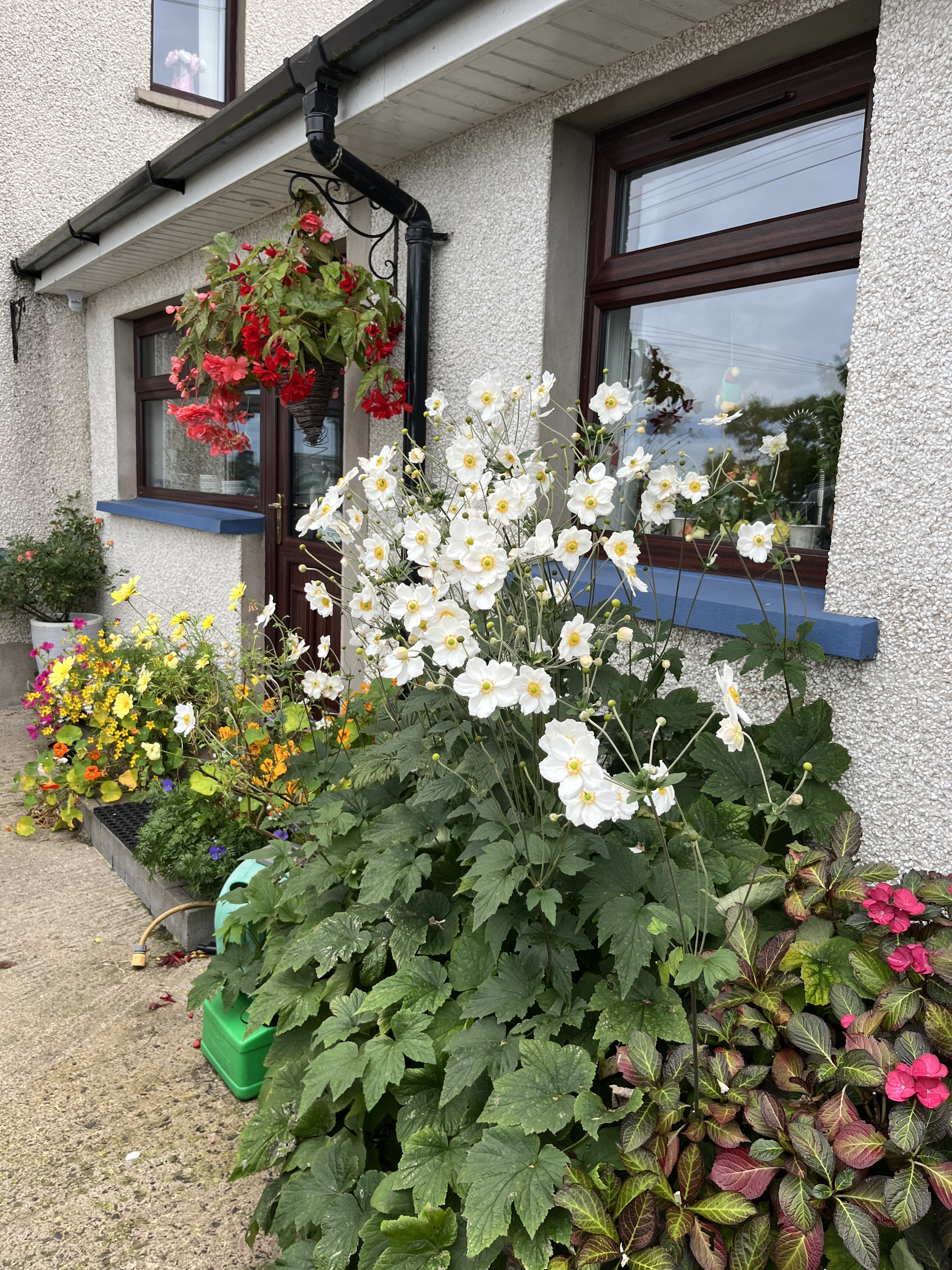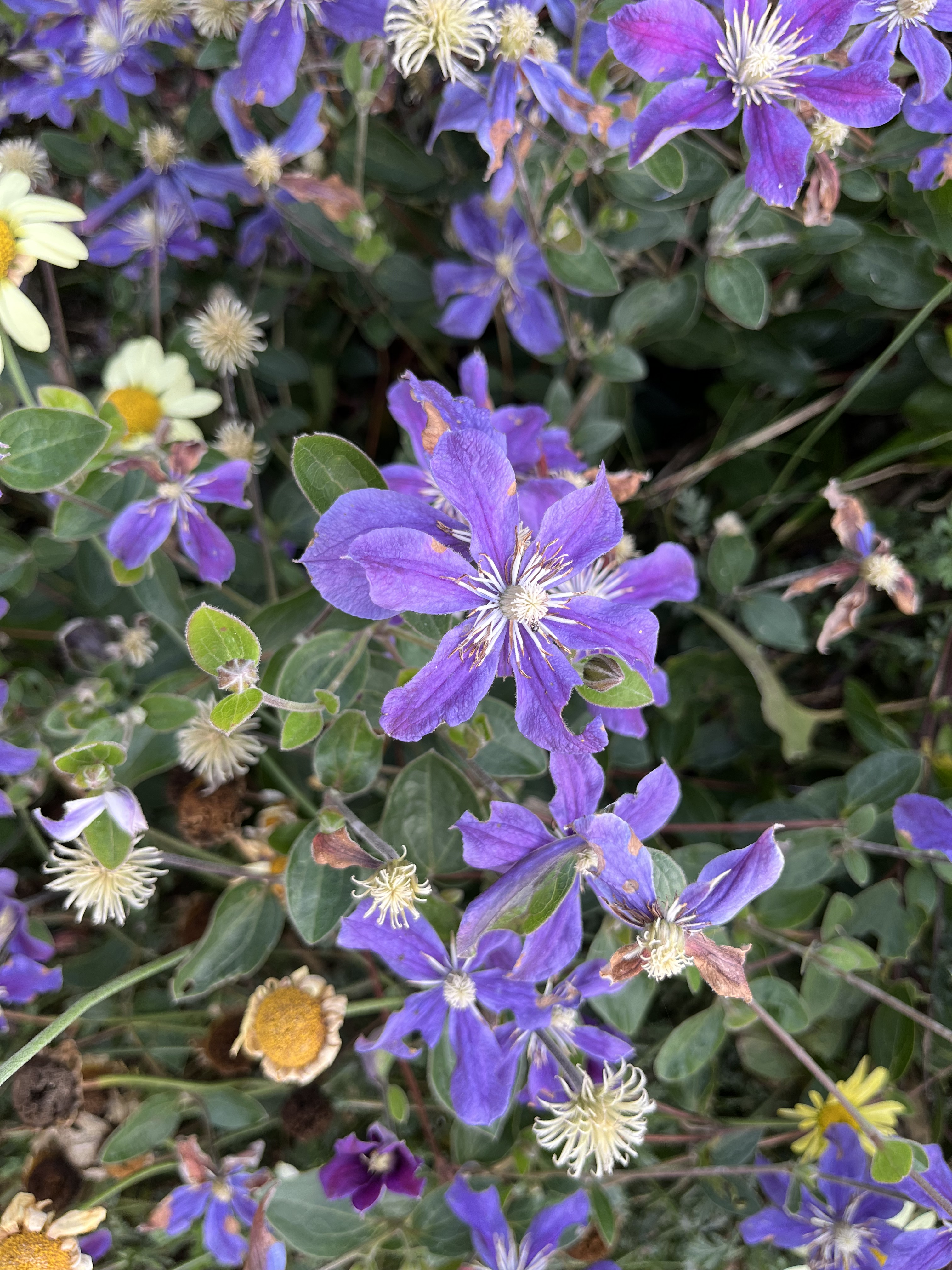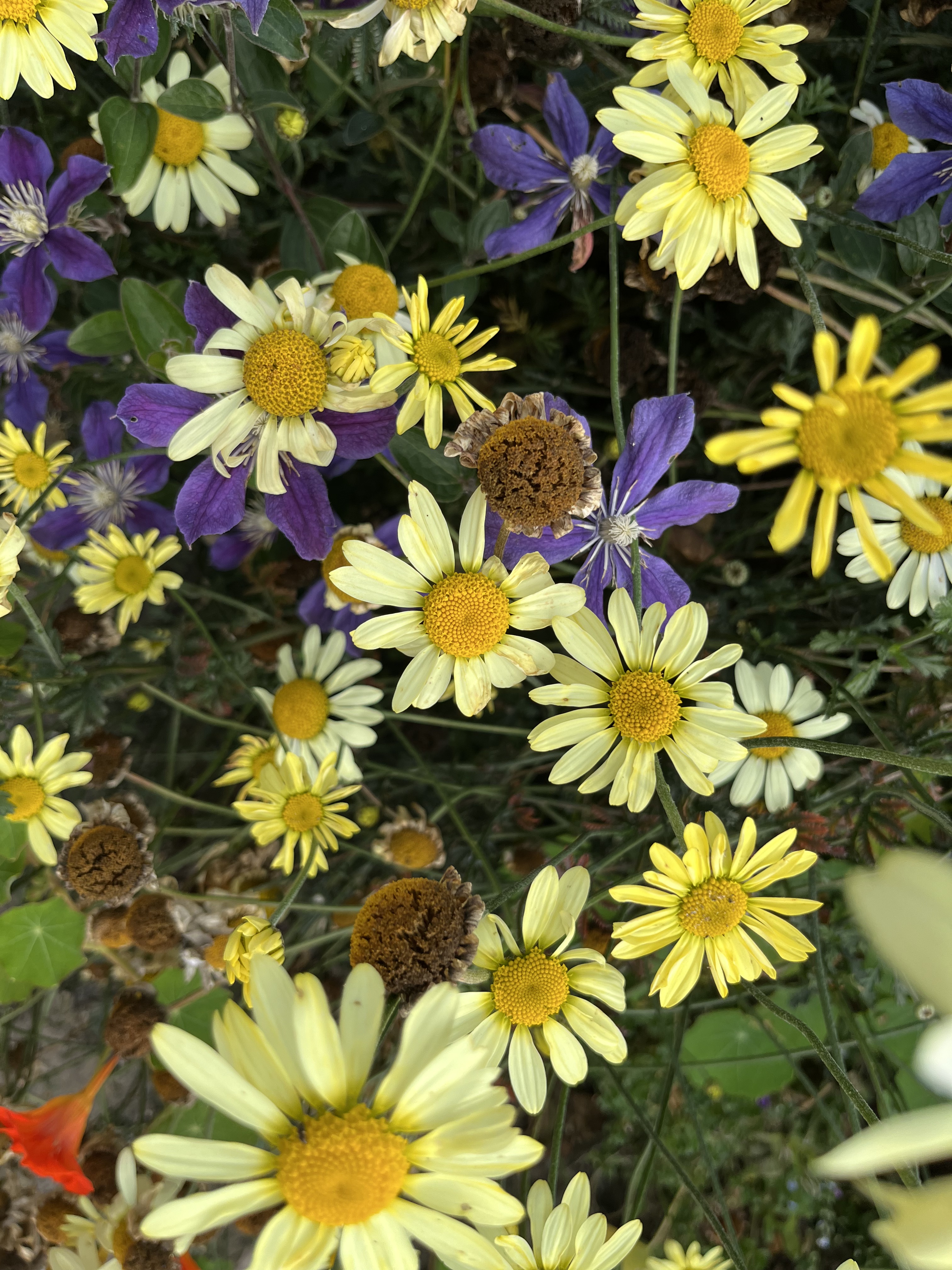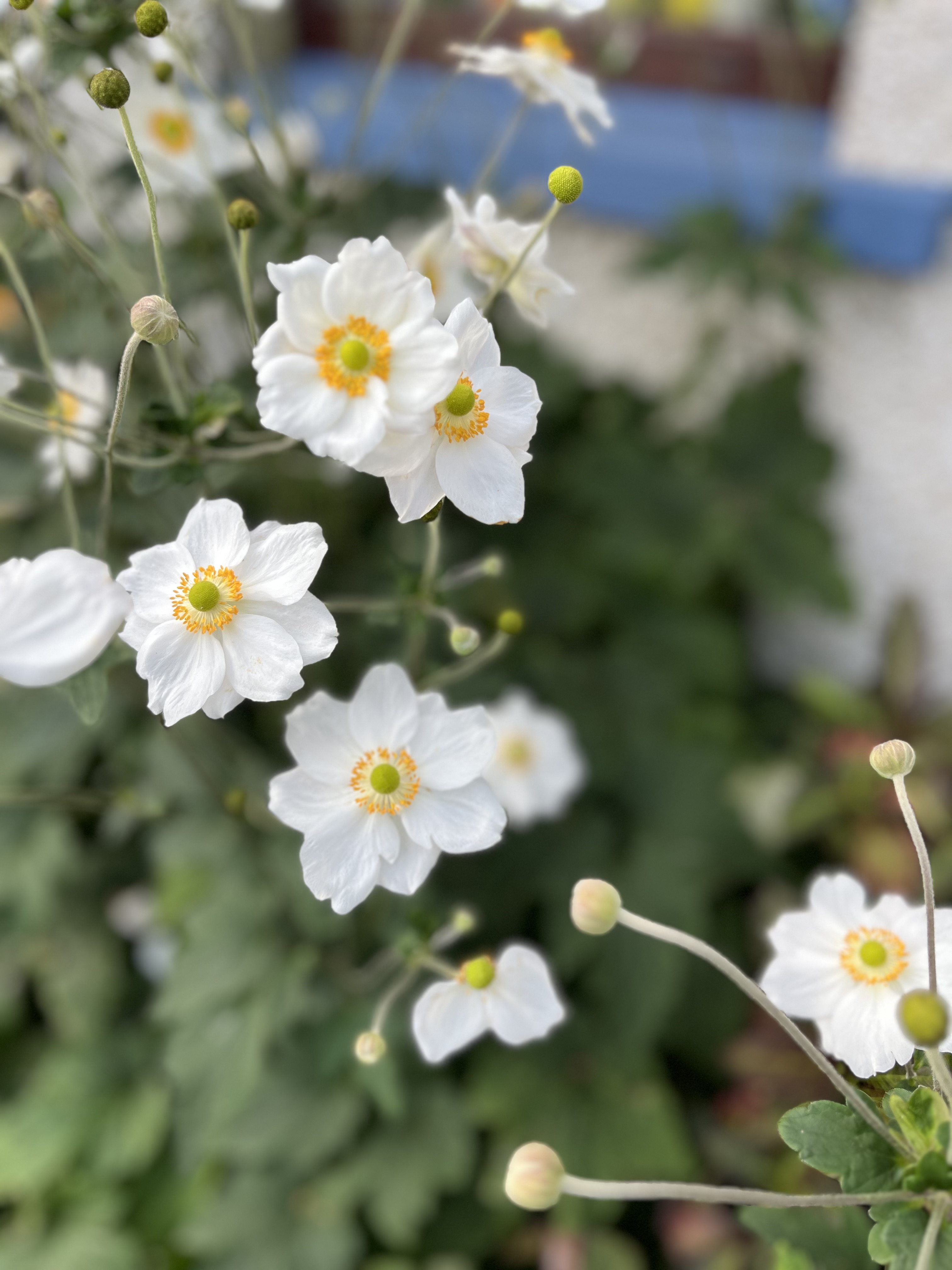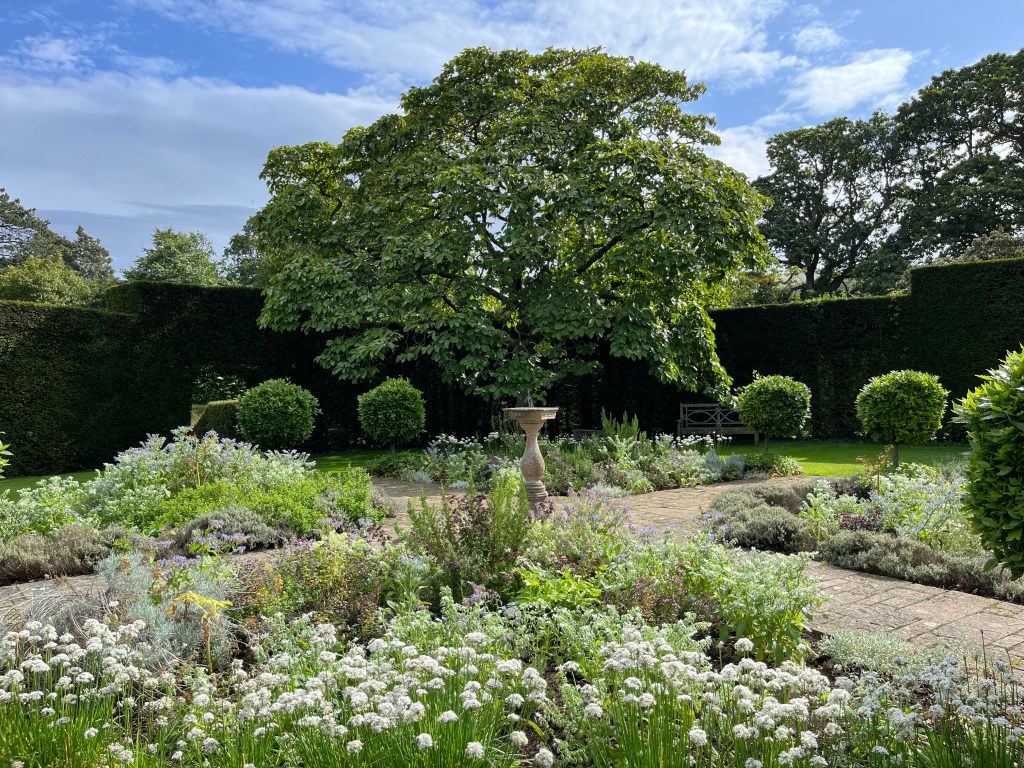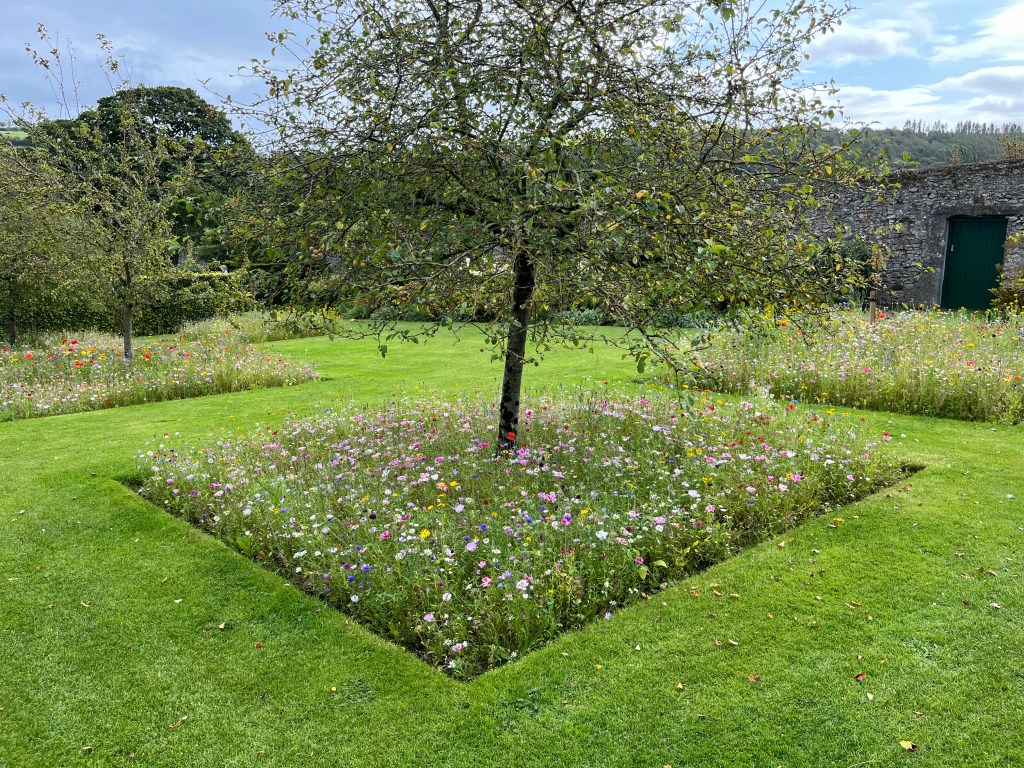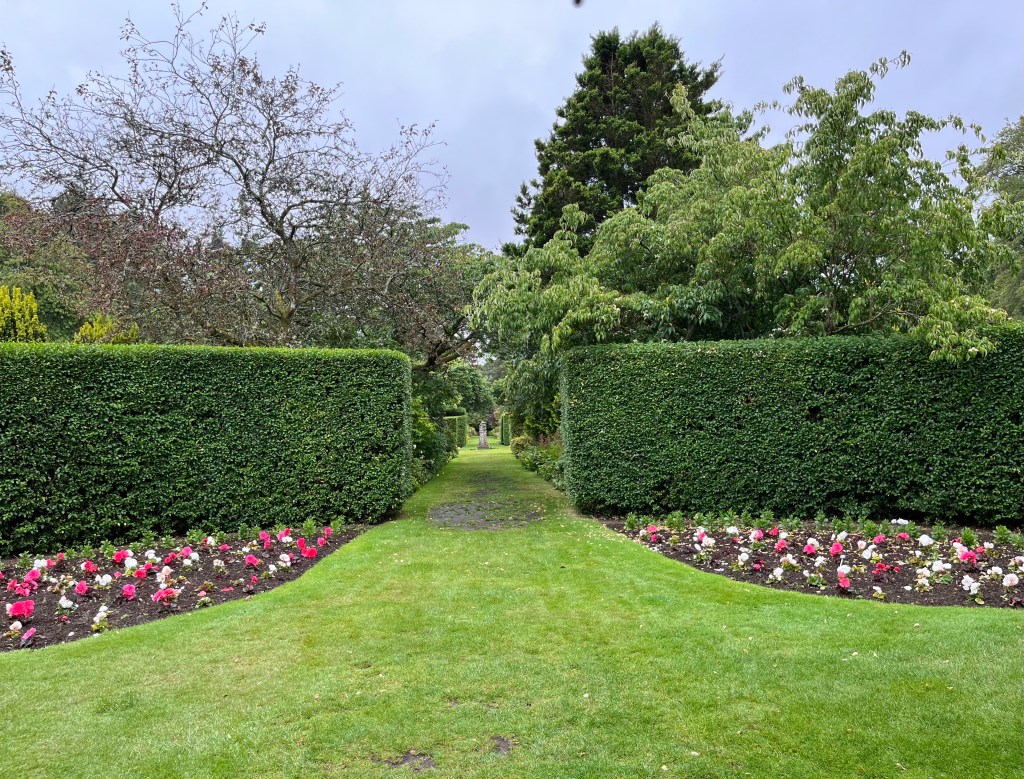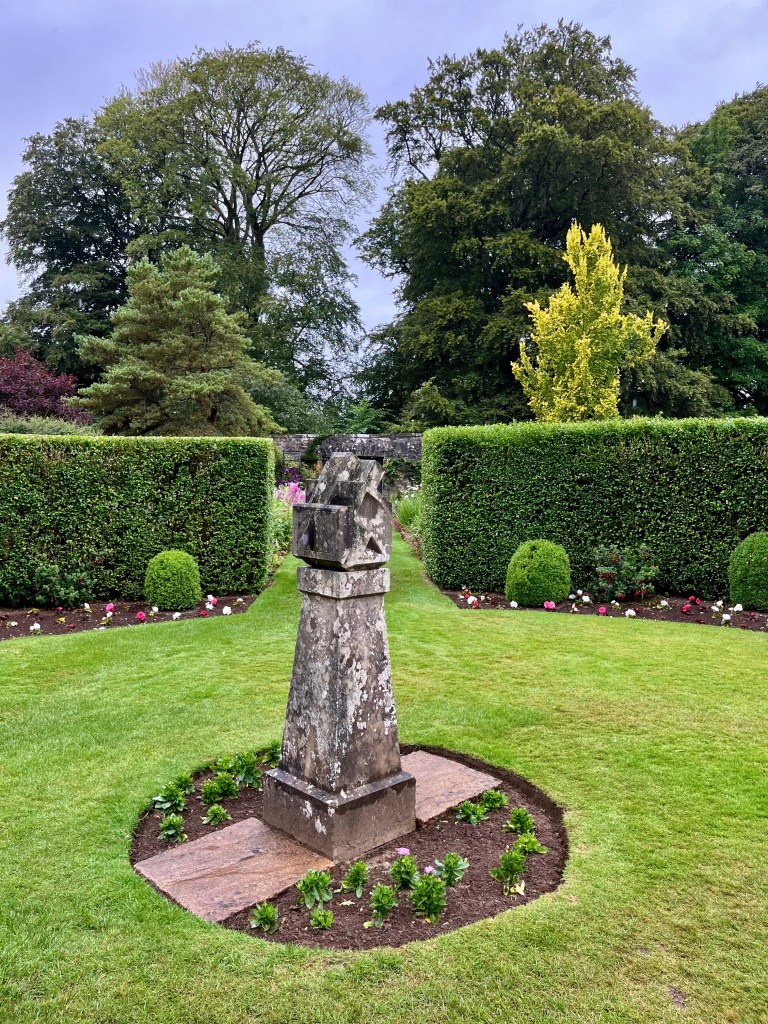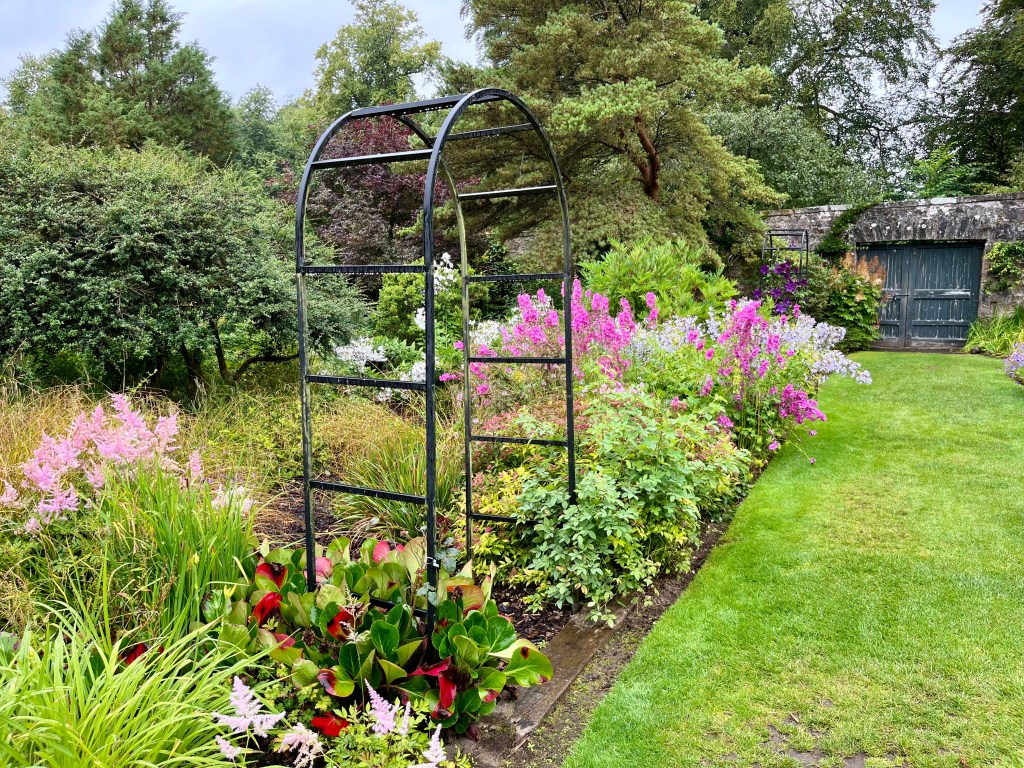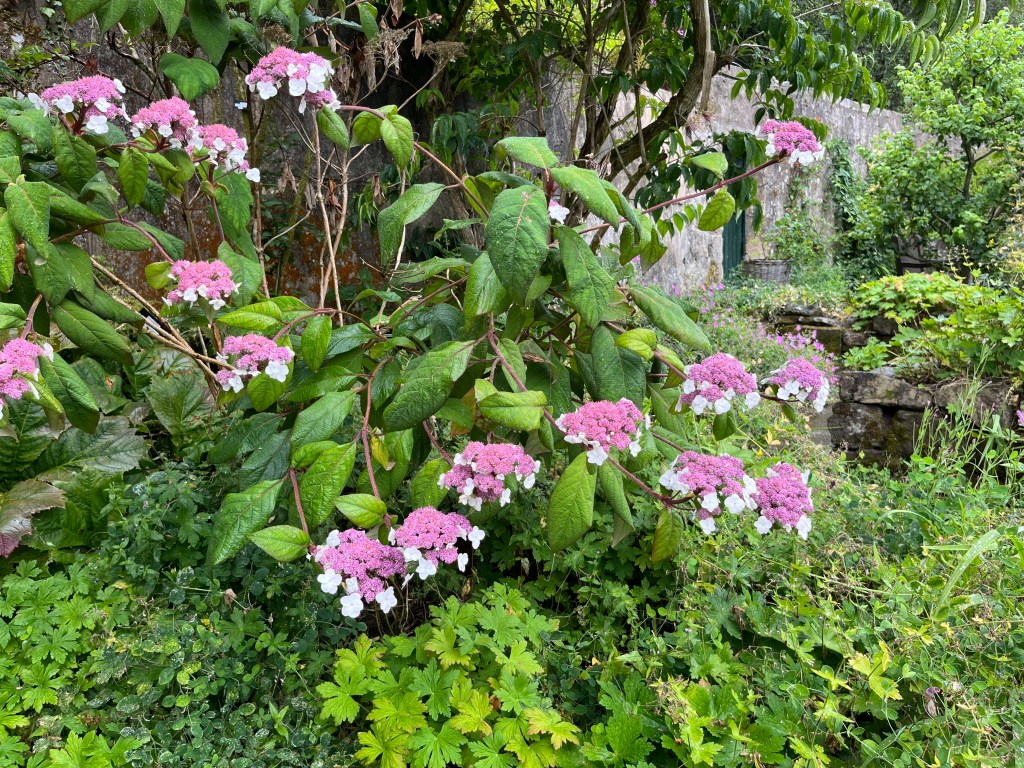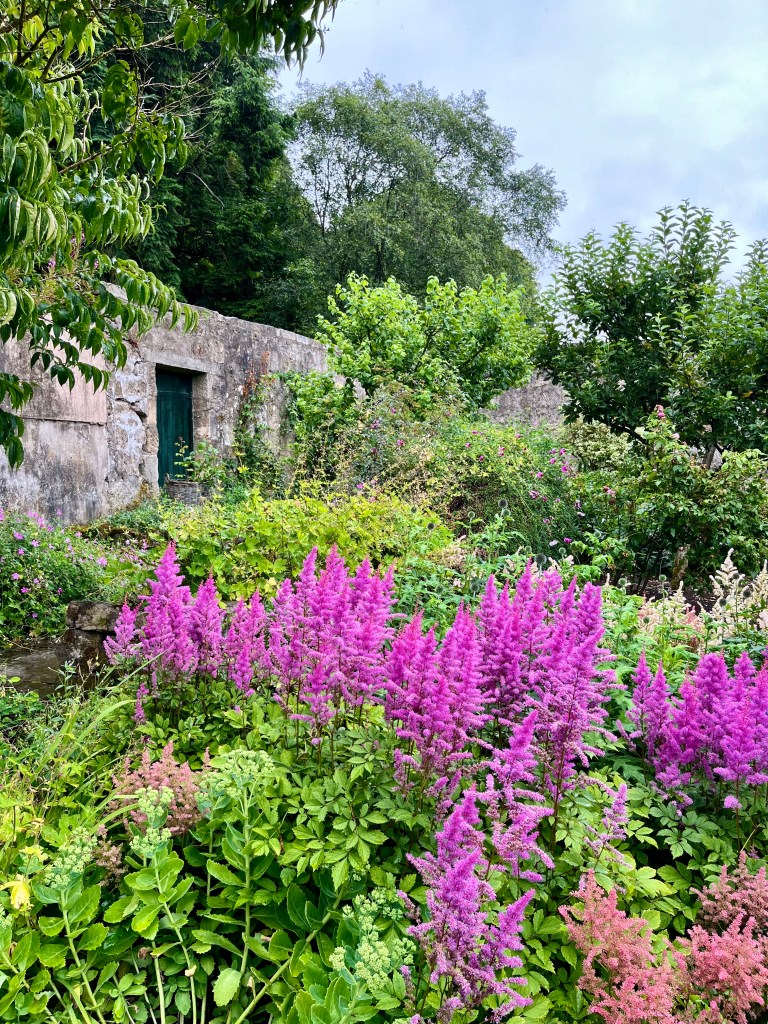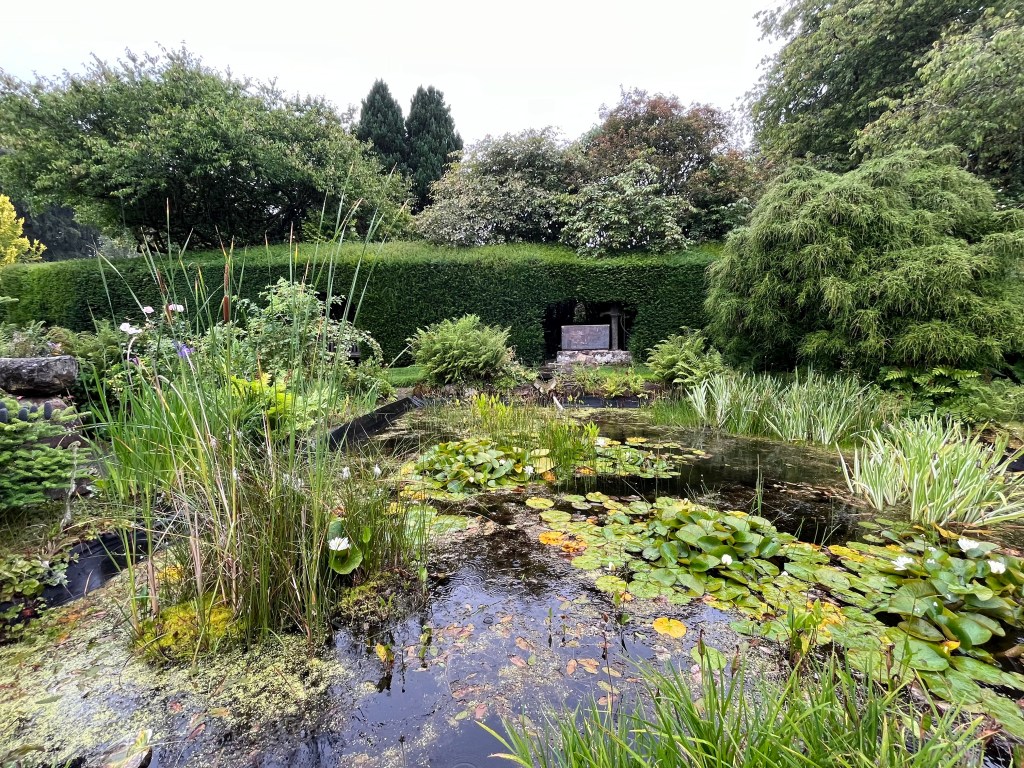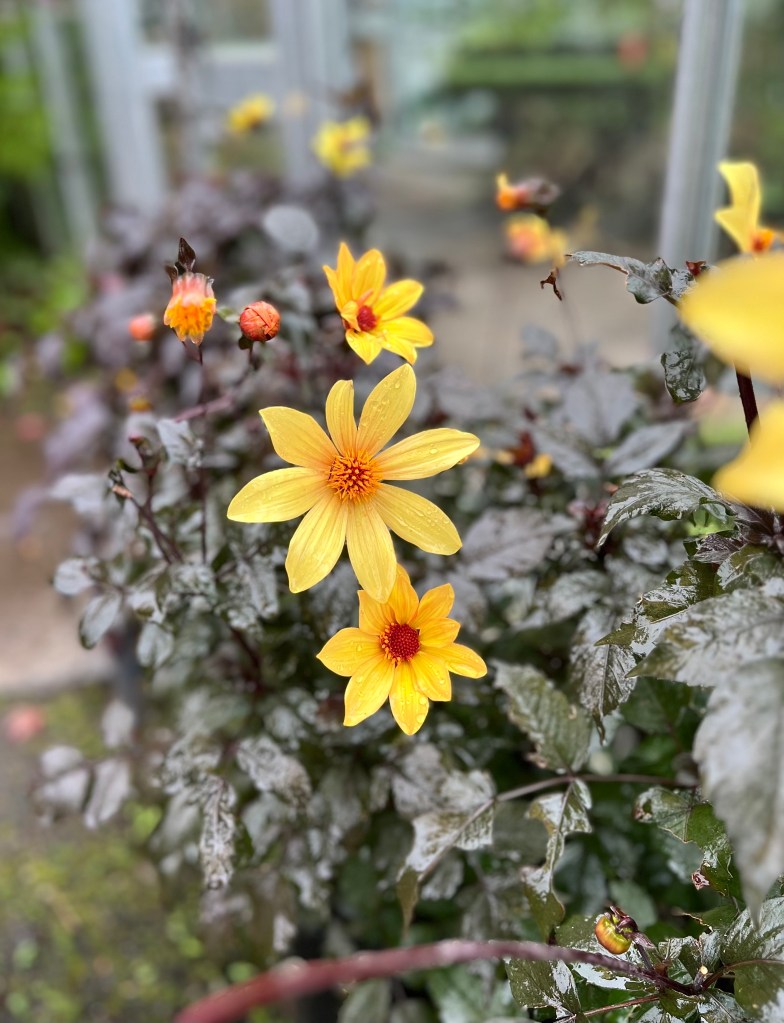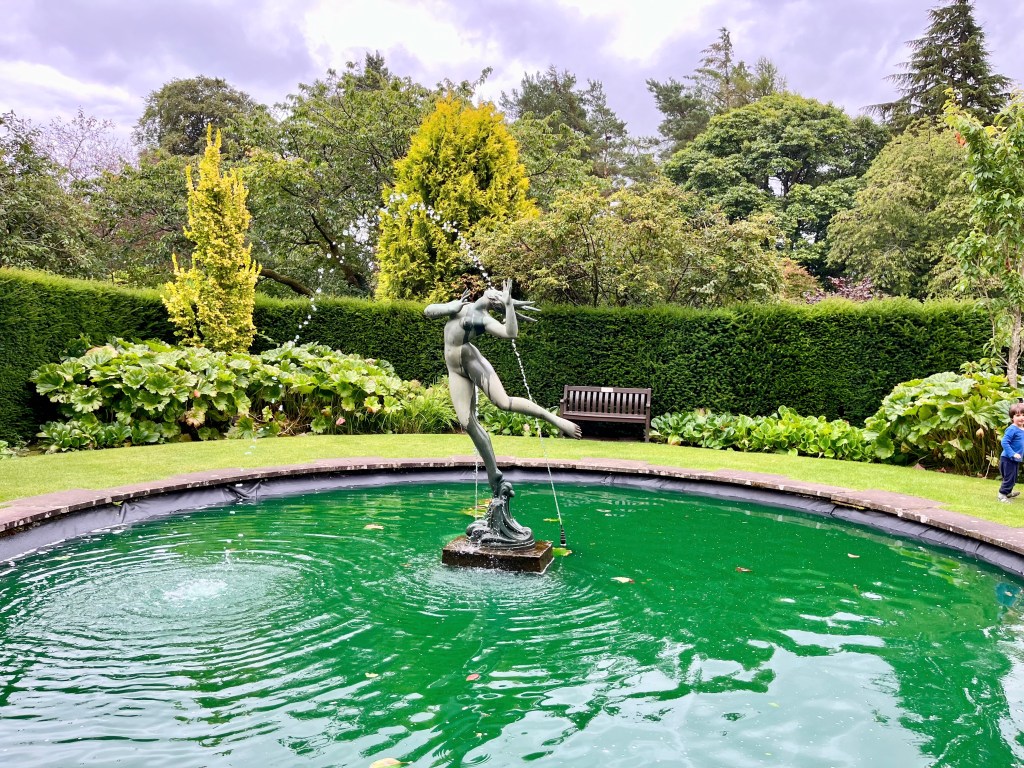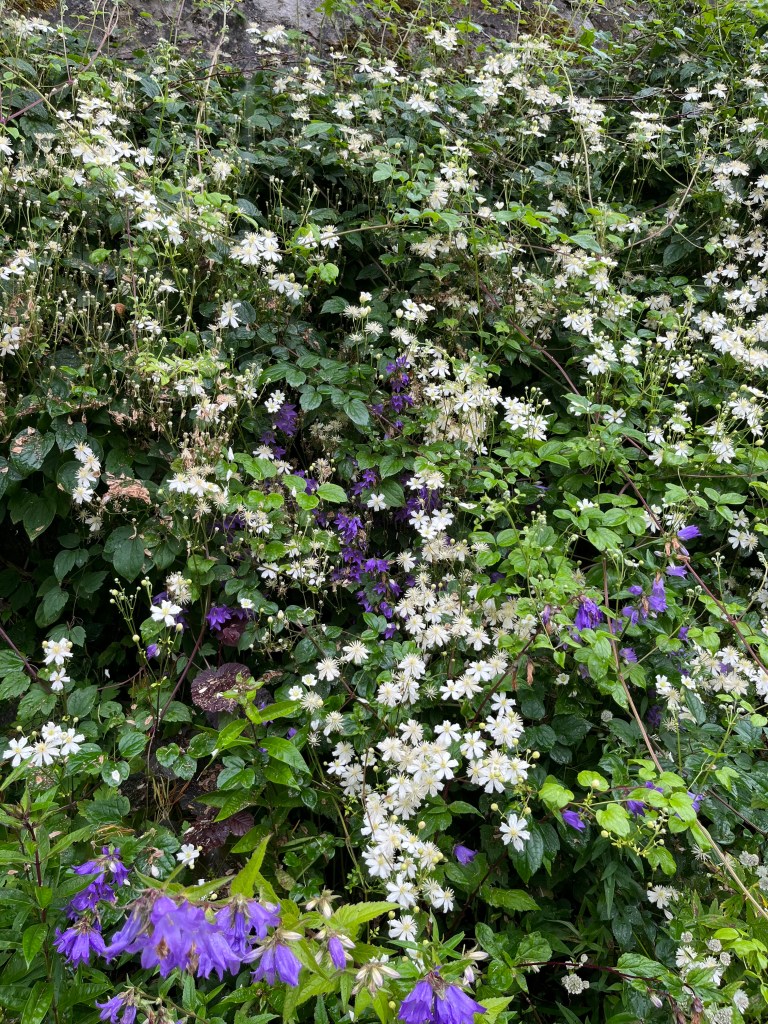
It’s lovely to sit in the morning quietness and watch the sunbeams start to creep across the garden. To see the birds activity, and often to watch the resident squirrel do his morning inspection! Today being the 31st of August, this was the last morning of Summer in 2025 here in Scotland.
Tomorrow we enter Autumn, and ‘dead on cue’ the forecast is for rain and strong winds, so we can expect a ‘windfall’ of apples from our apple tree.
Tonight I’ve been looking back on this year’s summer and enjoying photos of places, flowers and the greenhouse etc. I hope you enjoy them. Firstly, the trip we made recently to the beautiful Isle of Bute on the Clyde Coast, which I promised in my last blog.
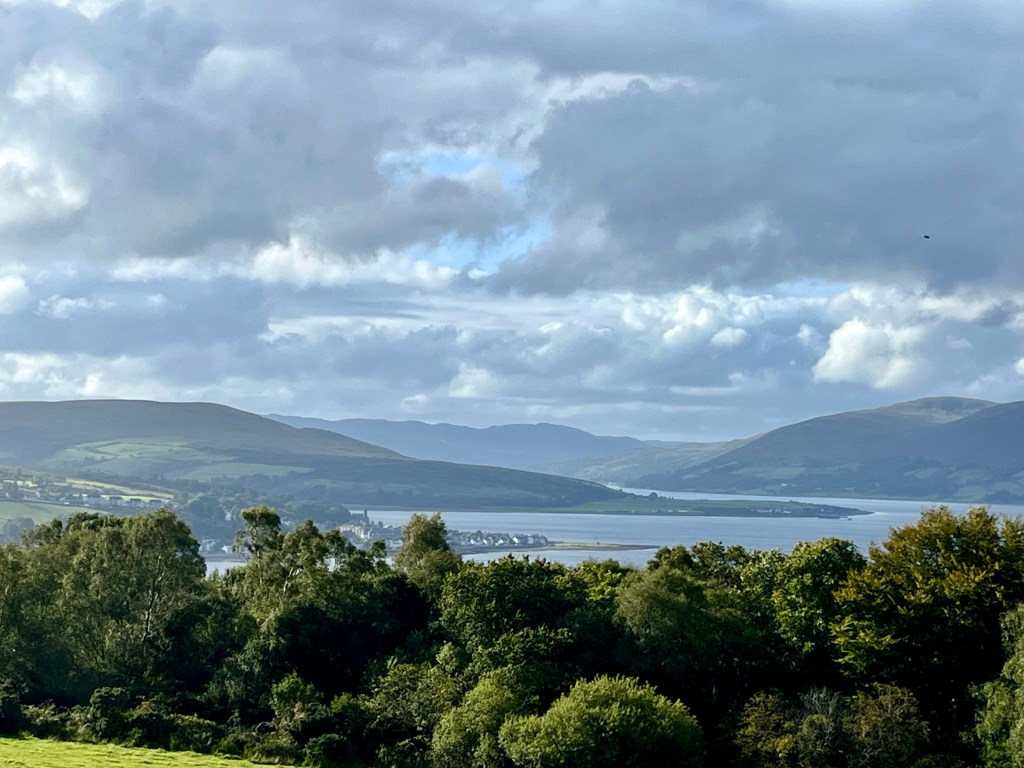
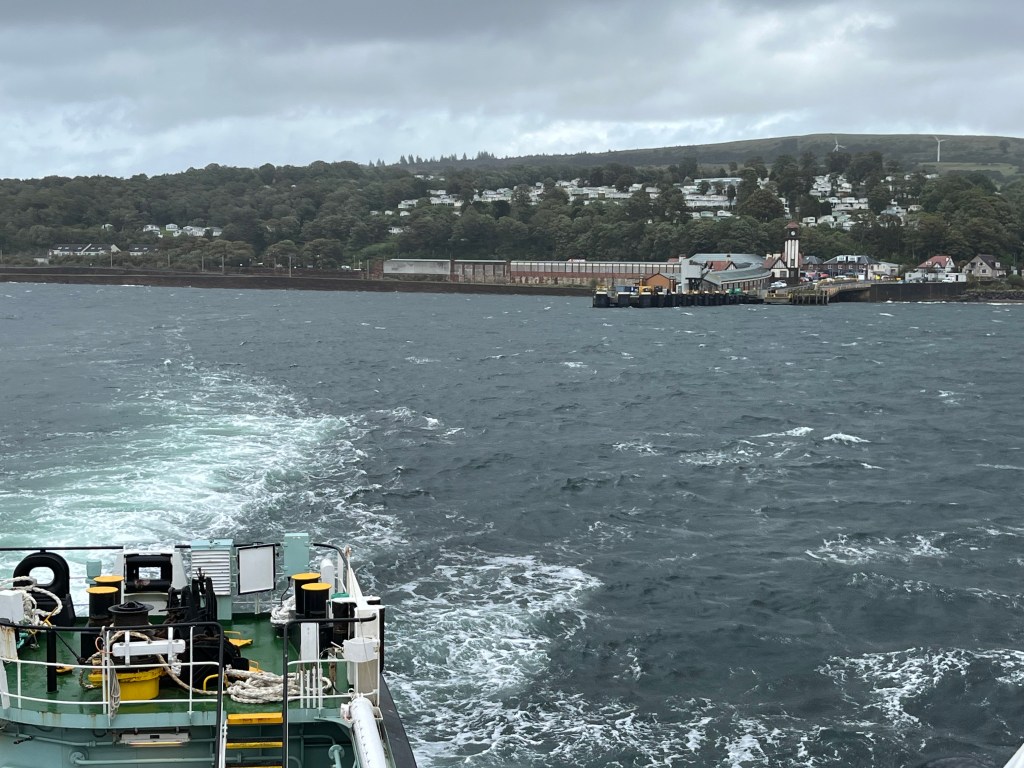
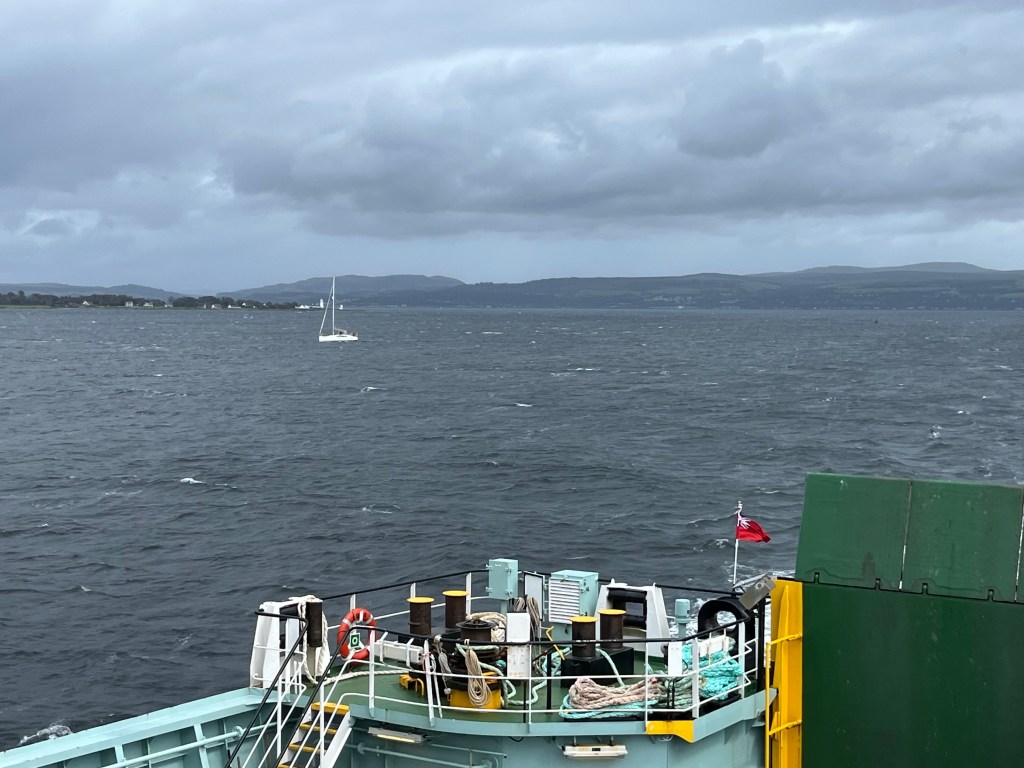
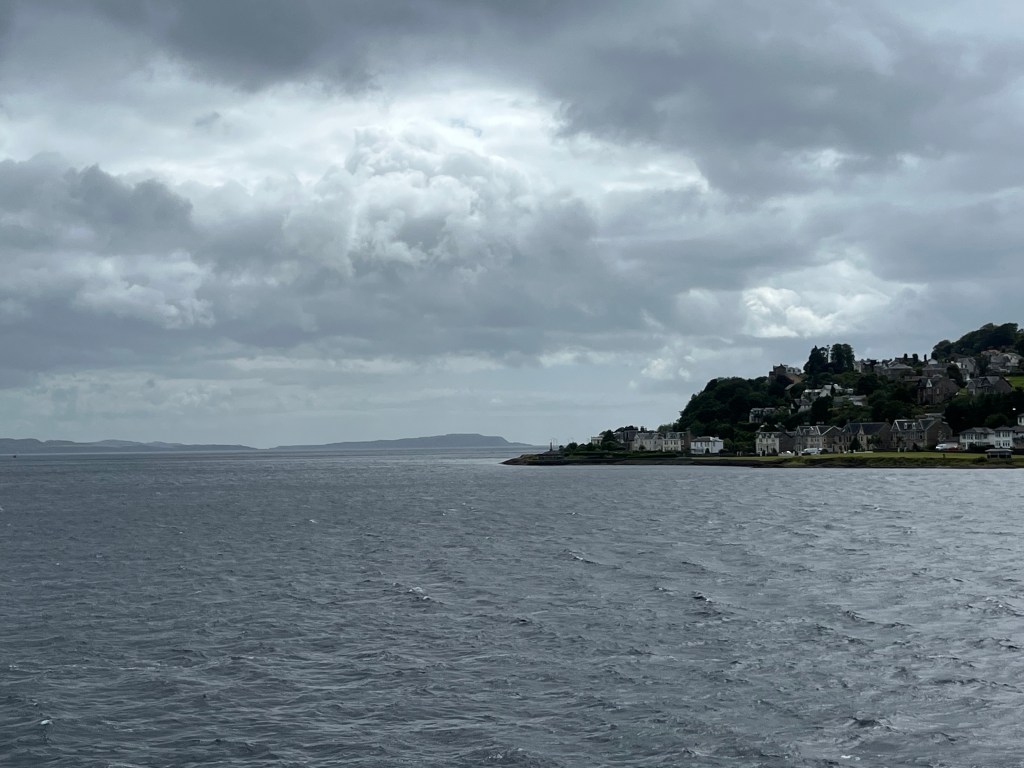
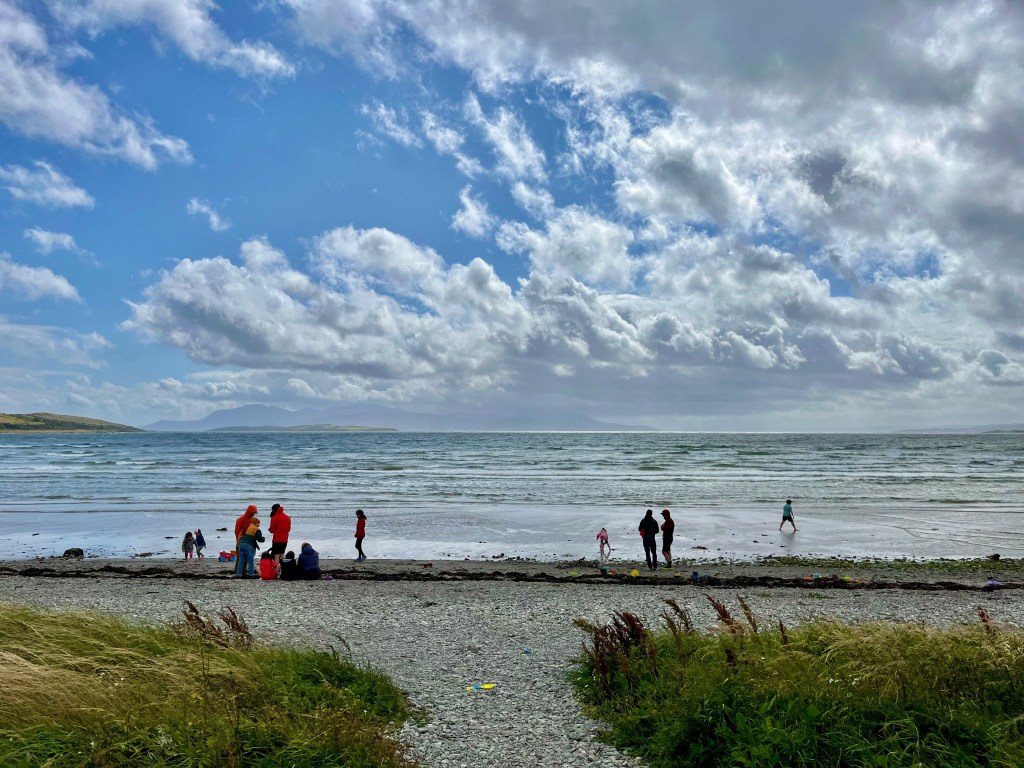
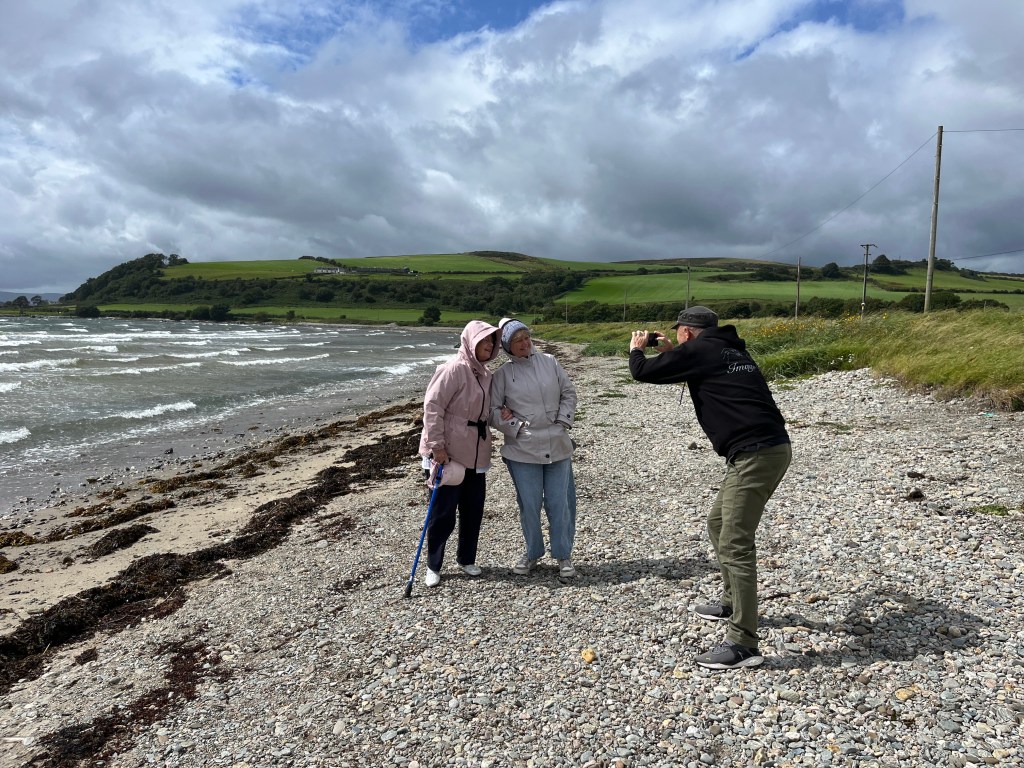
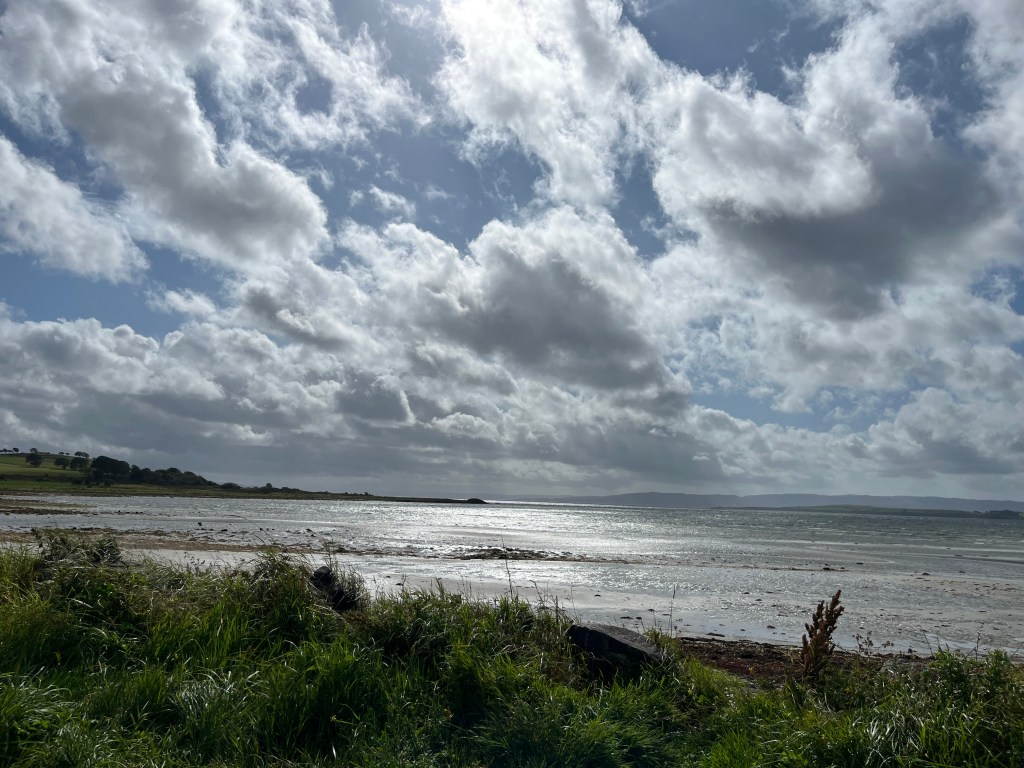
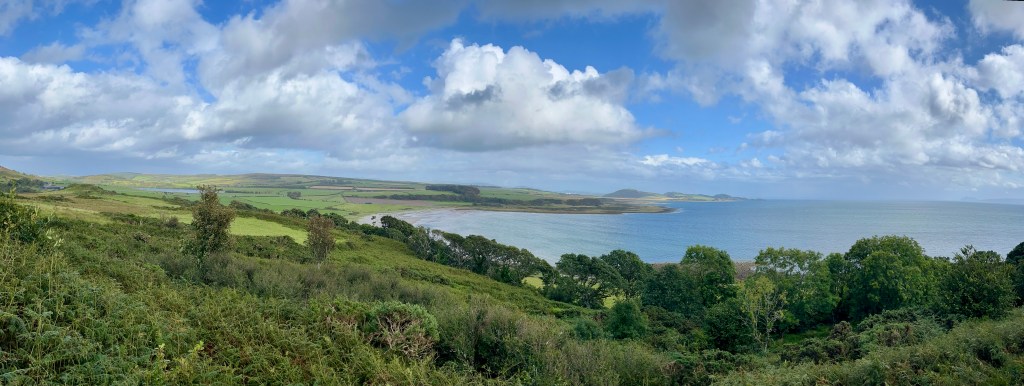
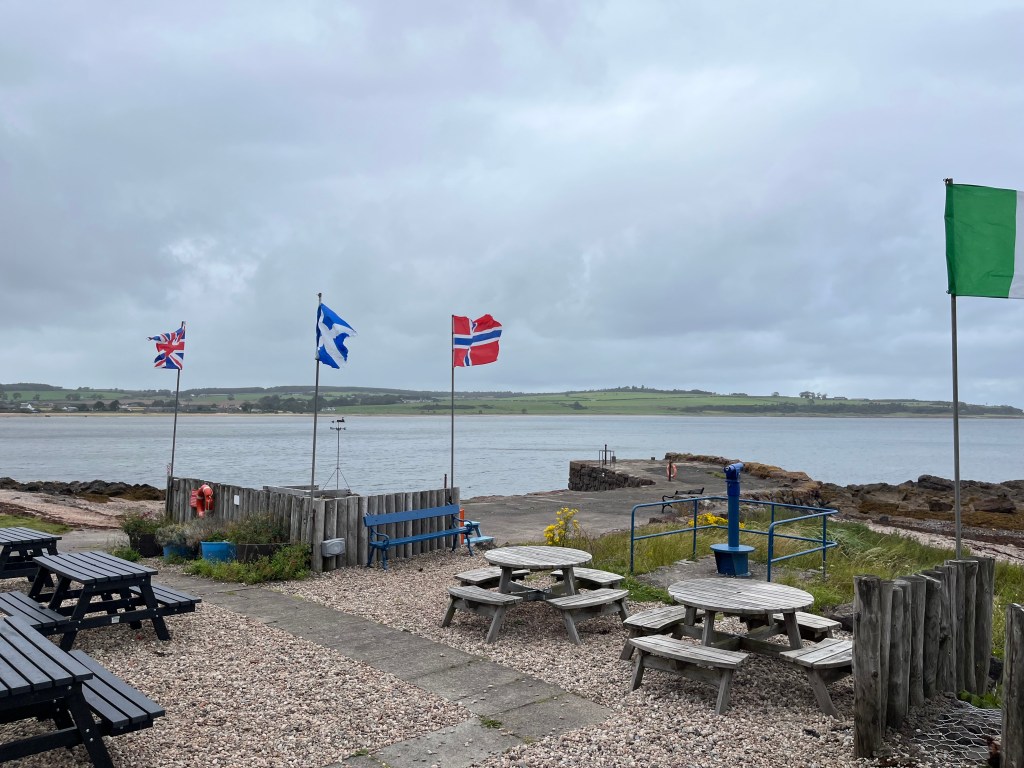
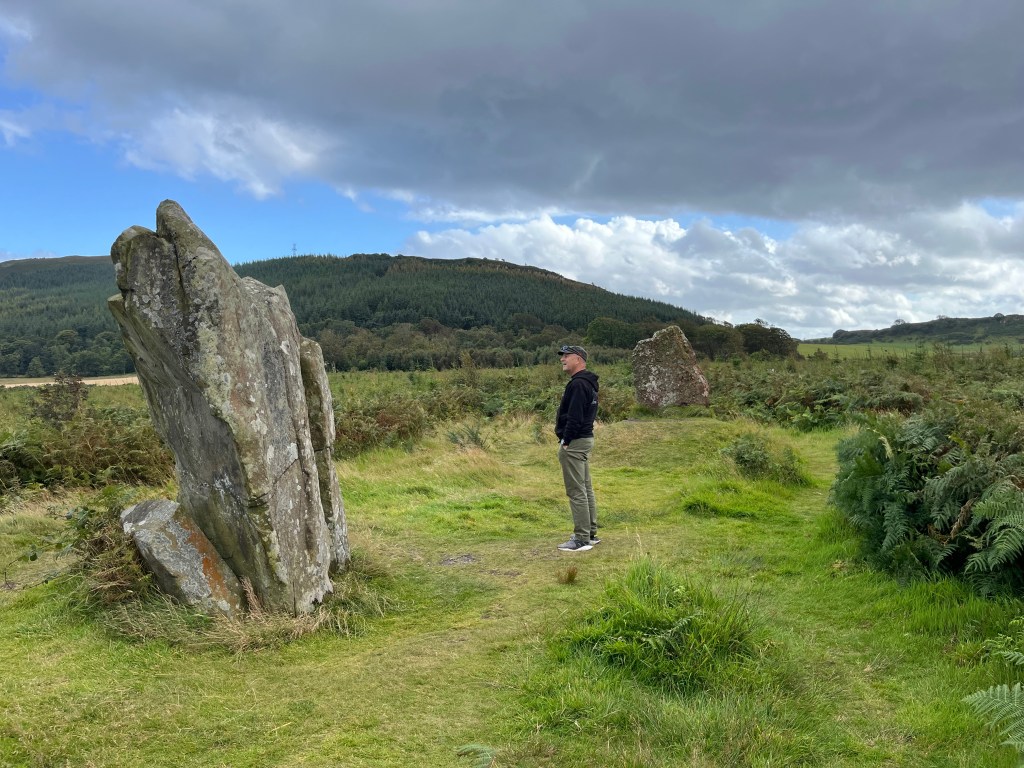
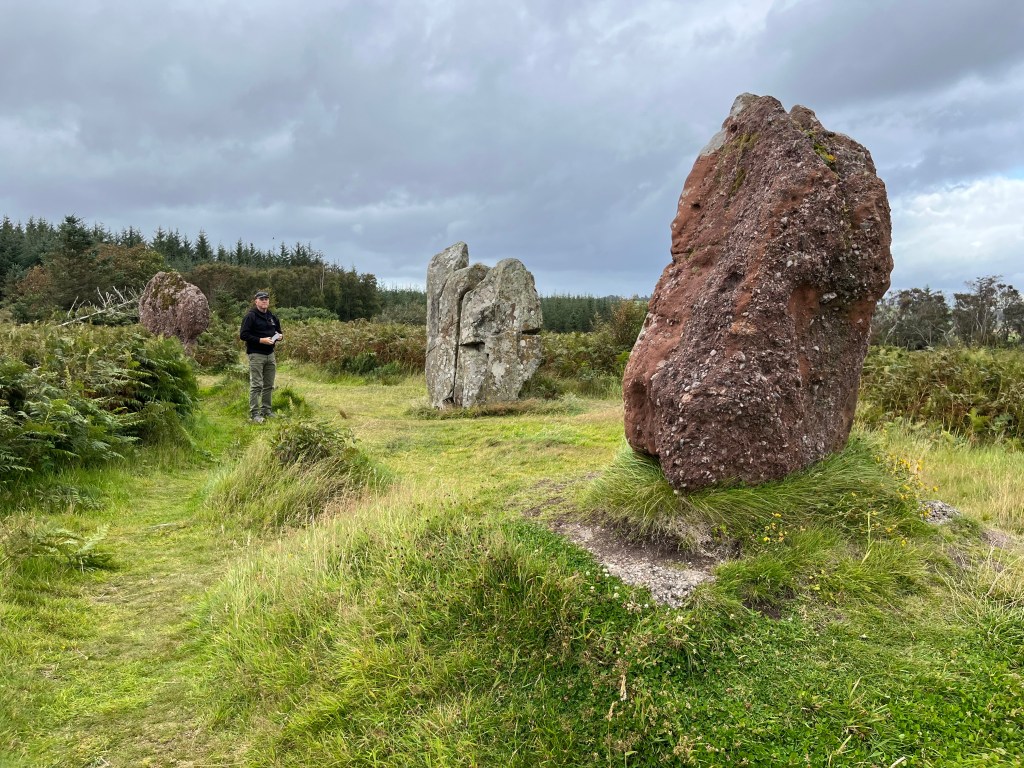
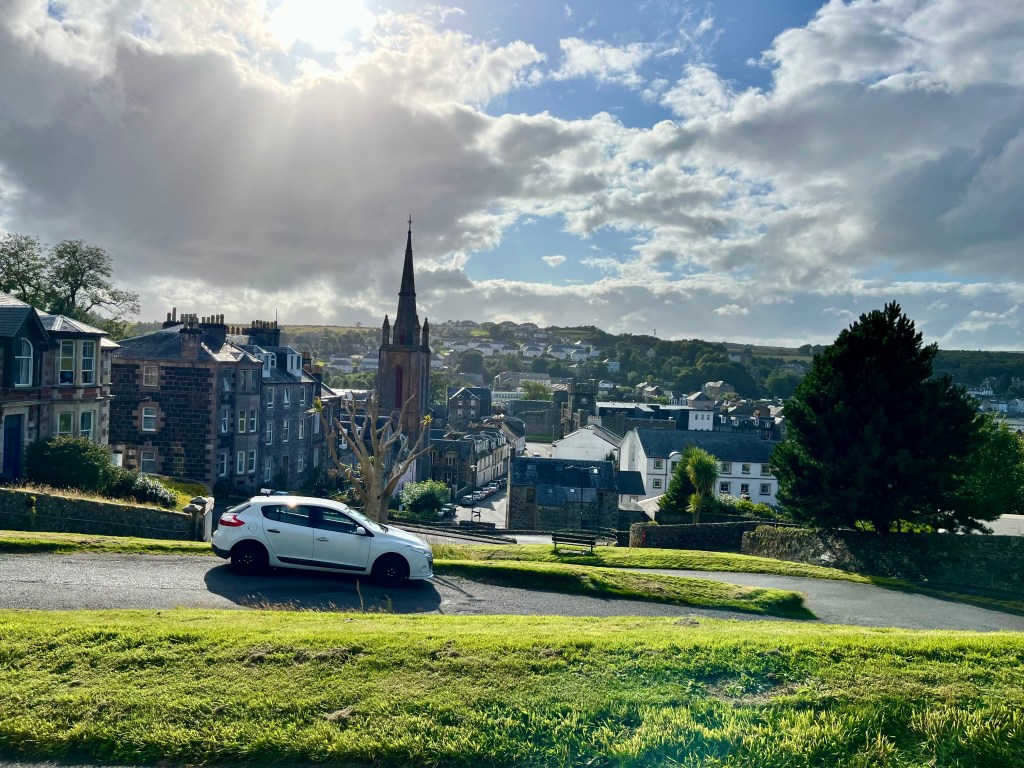
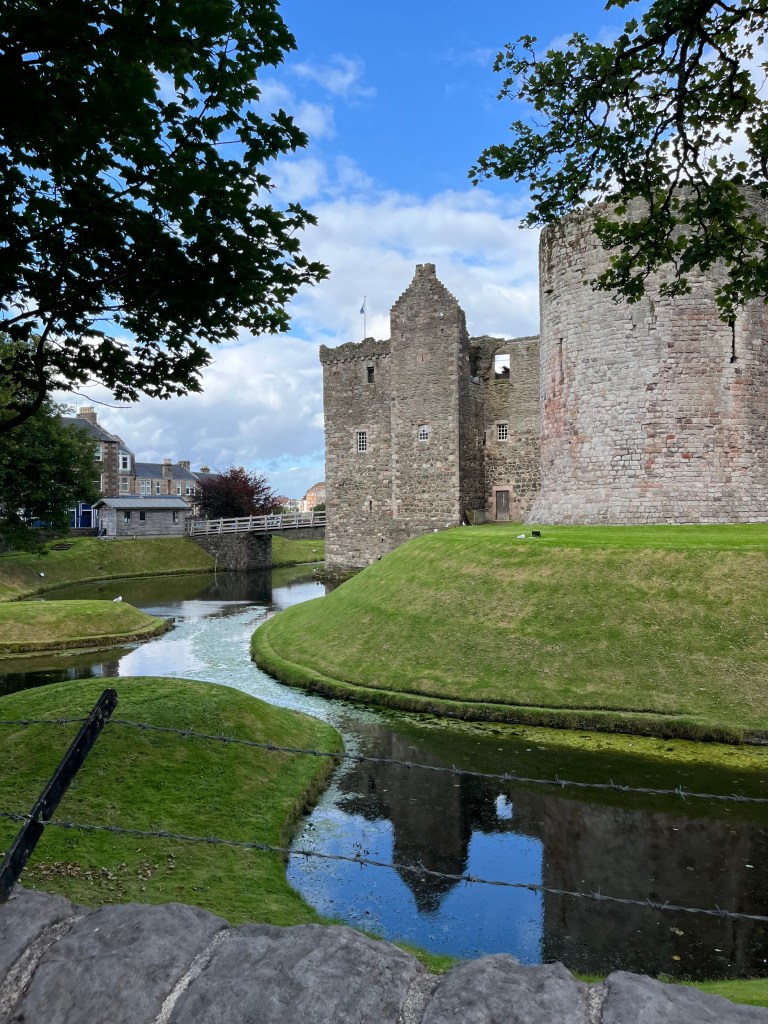
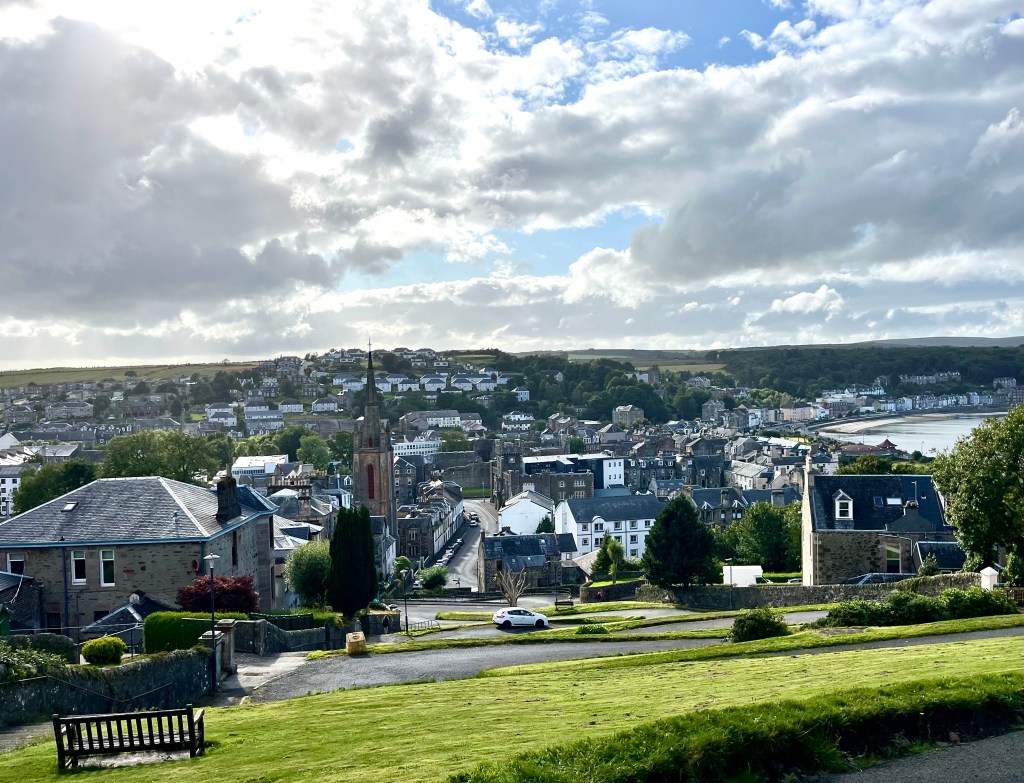
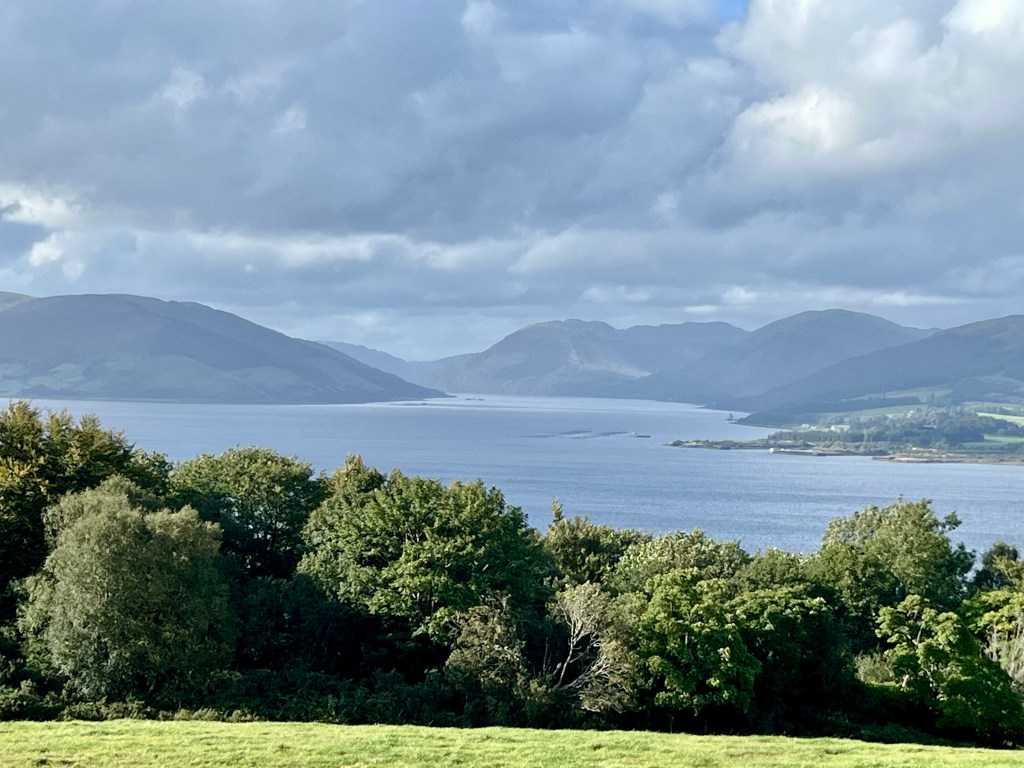
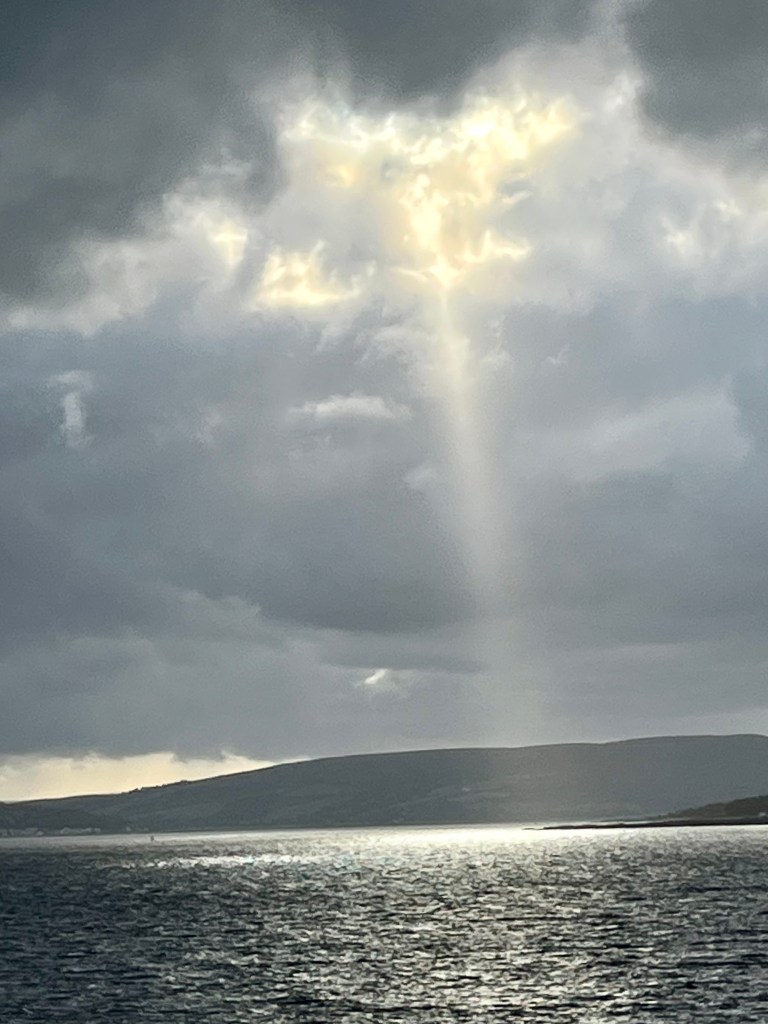
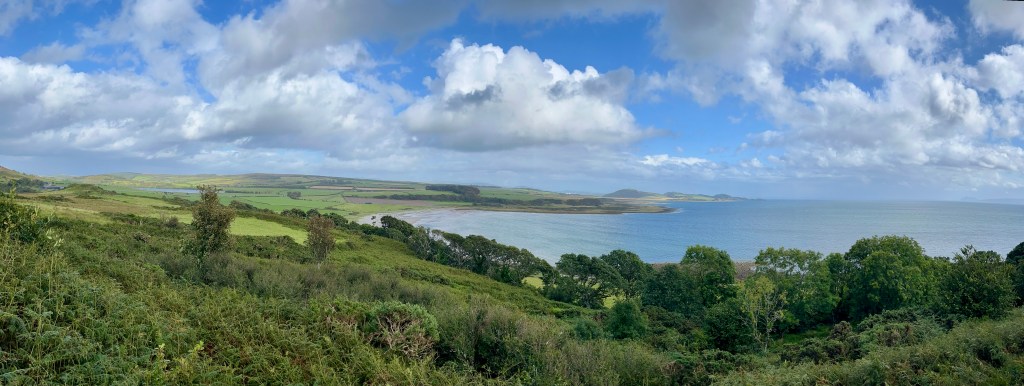
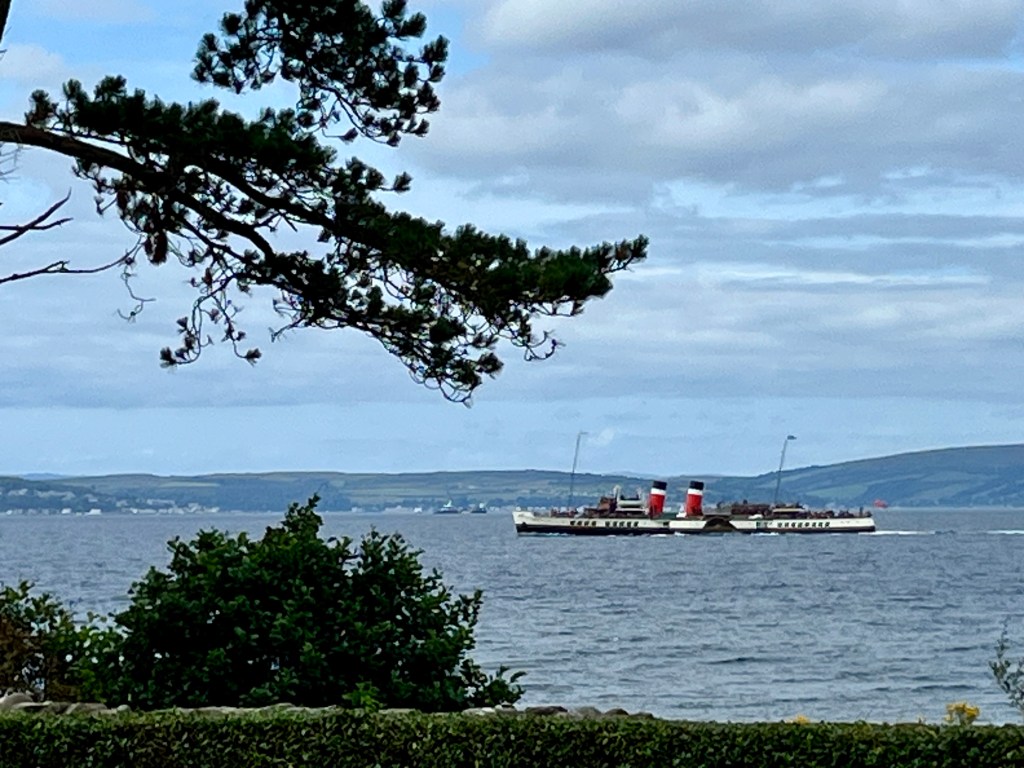
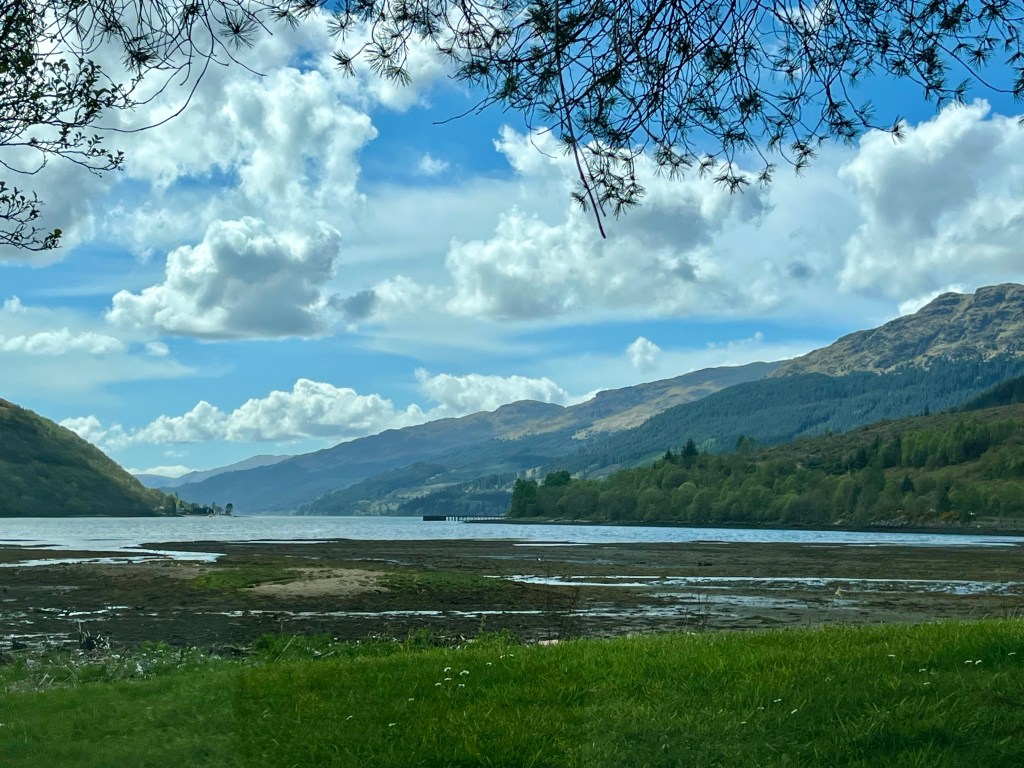
Leaving Wemyss Baynow in Rothesay BayCraigmore point – ButeEttrick BayBraving the strong wind!Looking back to Ettrick BayBeautiful edgingCoffee at Ettrick BayCountry lane< Scalpsie Bay ViewpointKilchattan BayStanding Stones – Black ParkStanding Stones – Black Park‘The Serpentine” RothesayRothesay CastleRothesay TownView towards Loch Striven< Views from Canada Hill >The day ending< Rothesay Bay >Looking towards Scalpsie Bay from Viewpoint
Now some other summer photos!
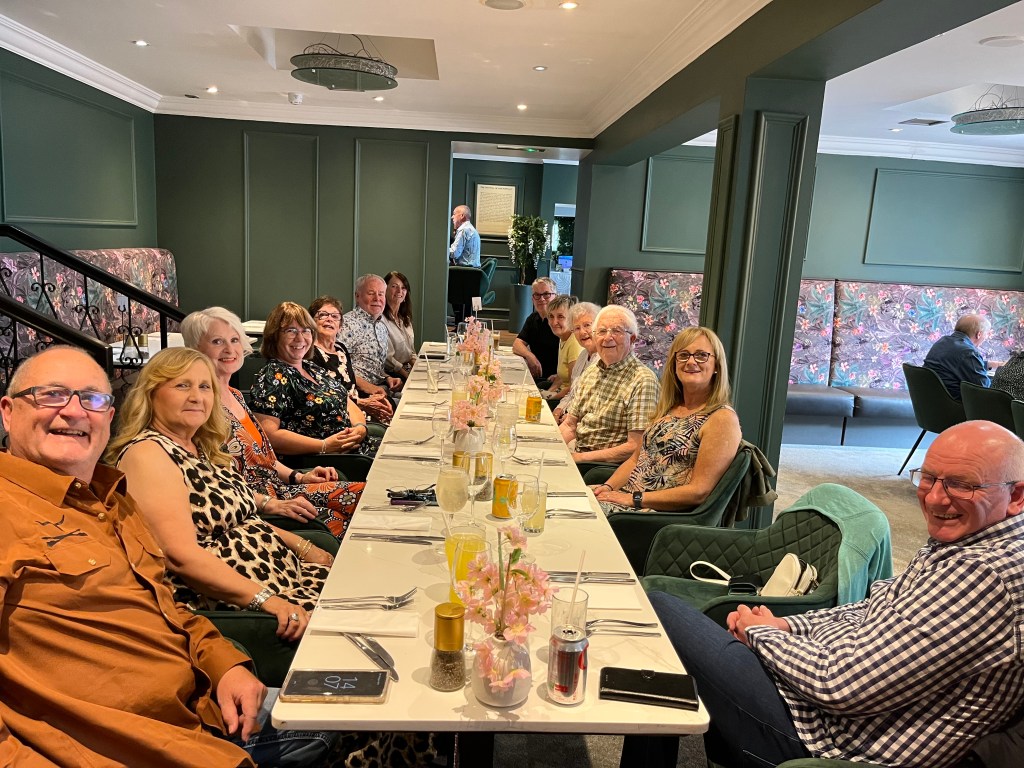
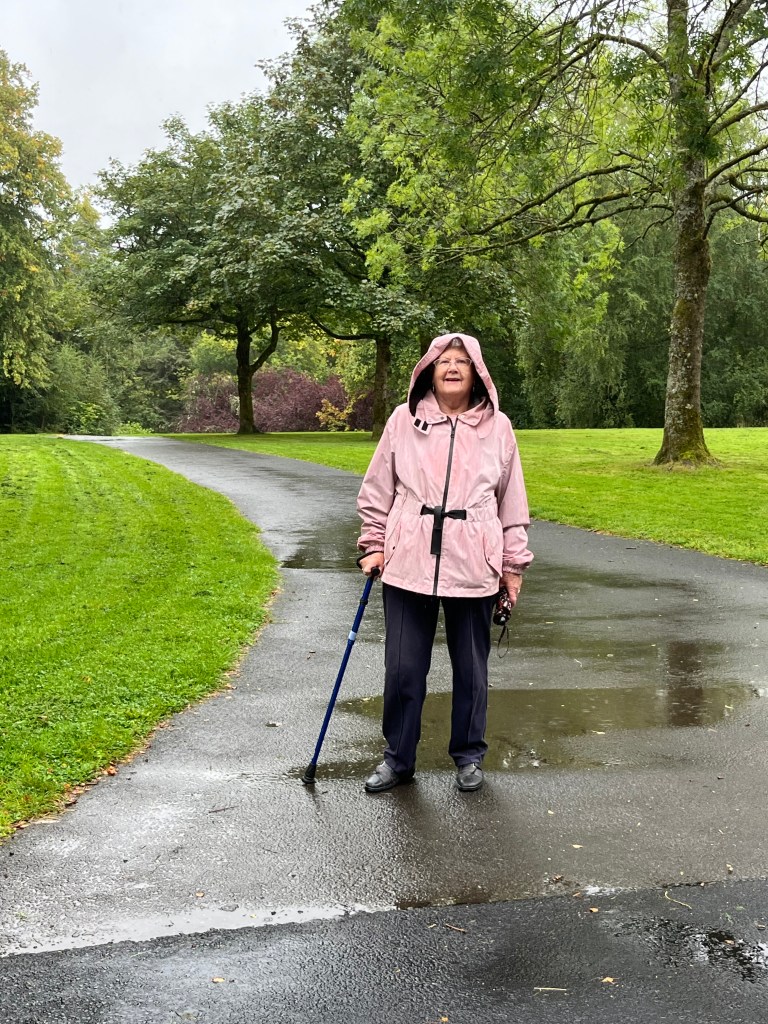
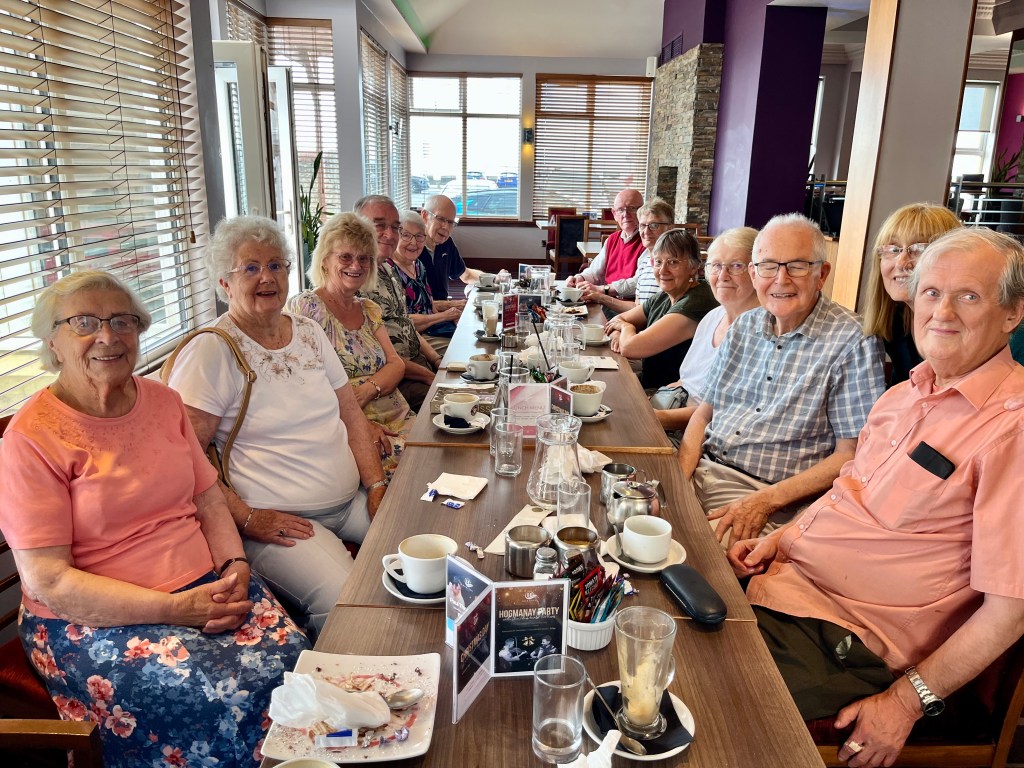
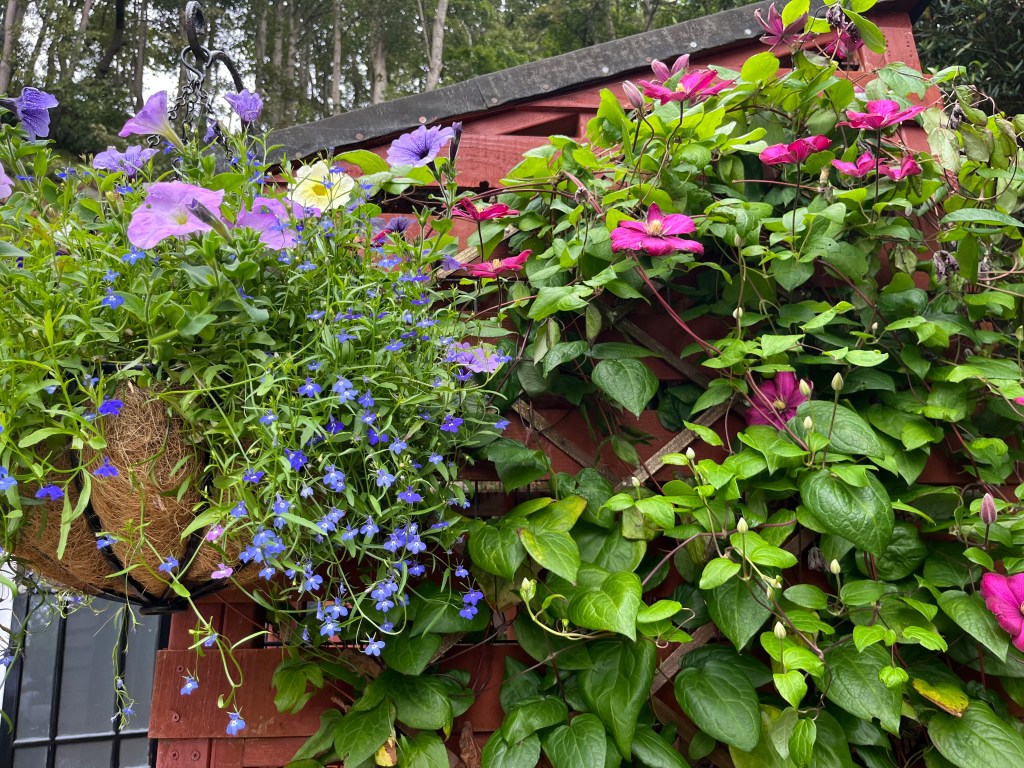
Cousins get together – Clyde ValleyA walk in the park!Seniors get-together – Ayr< Skelmorlie >< Skelmorlie >< Pollok Park – Glasgow >Pollok ParkOur GardenPollok Park< Pollok Park – Glasgow >‘Rudbeckia” – Pollok Park – Glasgow
So the harvest is past, the summer ended ……….
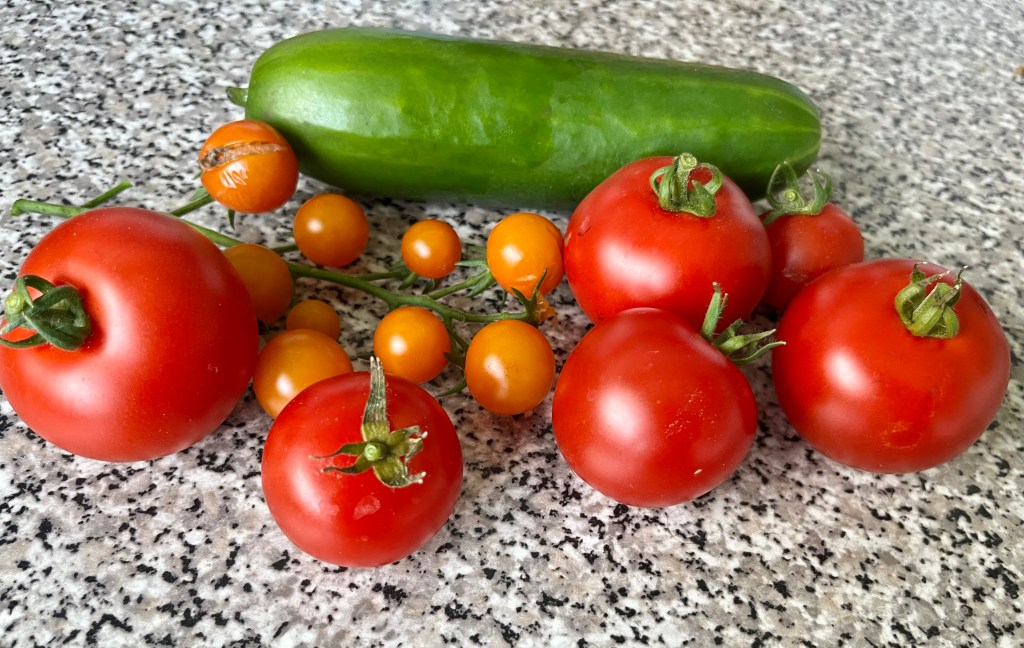
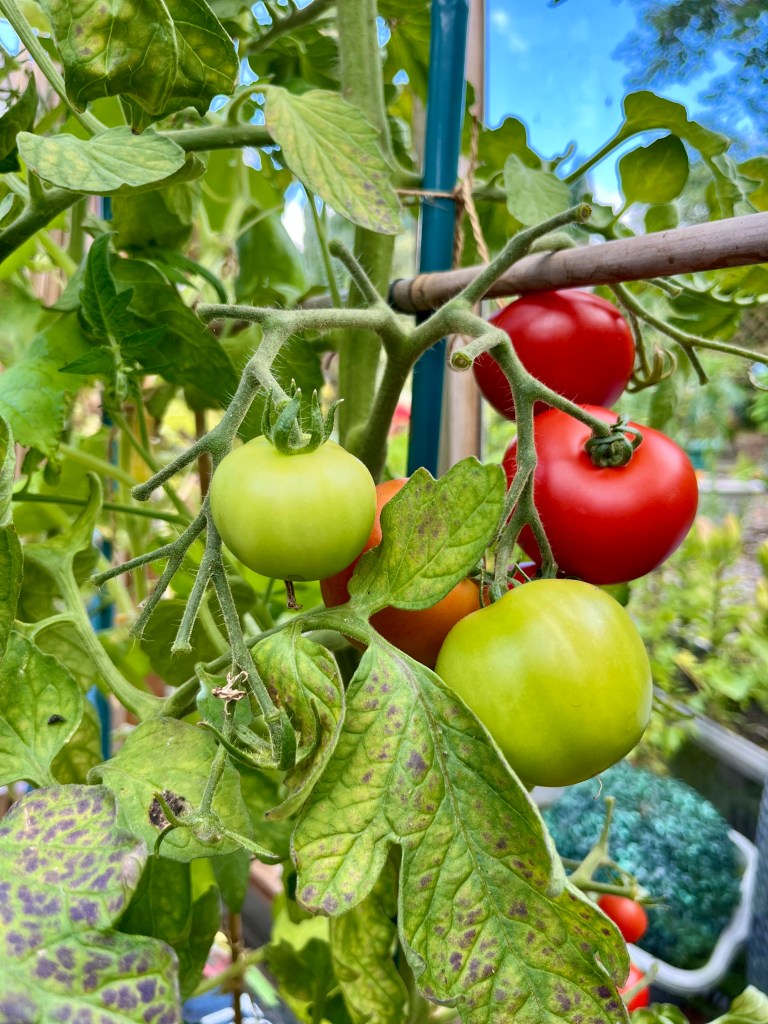
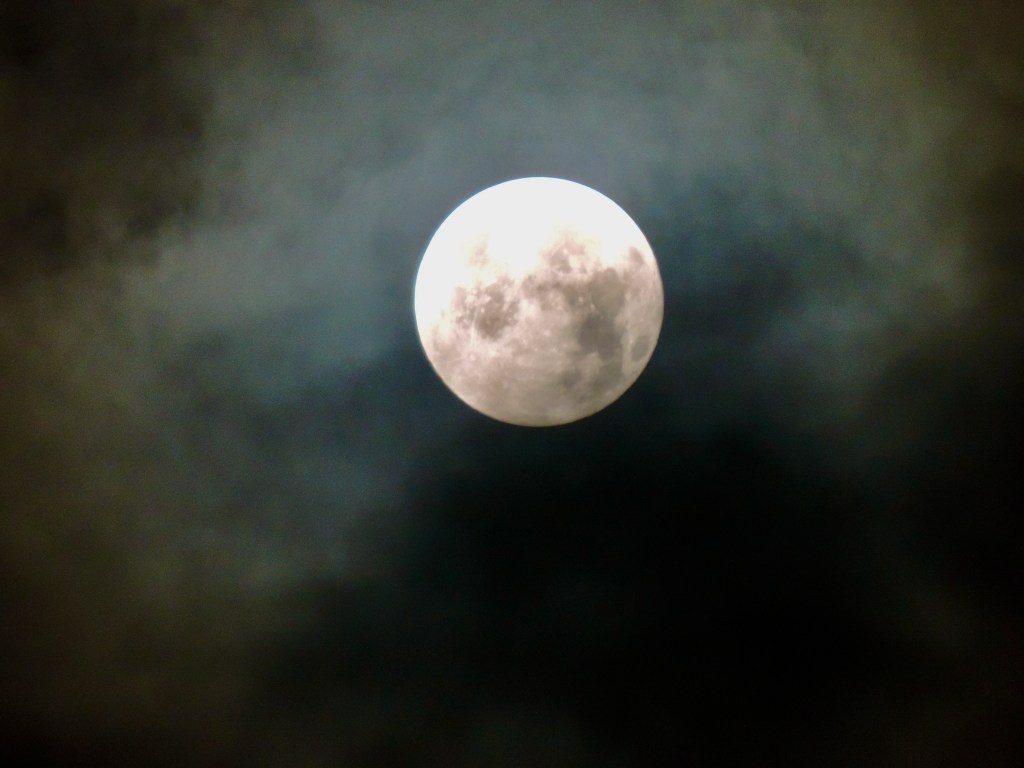
Harvest is pastSummer endedHarvest is pastGreat year for Tomatoes and CucumberPotatoes in Bags – great crop‘Shirley’ TomatoesHarvest Moon?
I started my blog by saying ‘It’s lovely to sit in the morning quietness ….’ and it was there I had the thought for this blog’s heading. Many moons ago as a teenager I had sat in a church service and heard the preacher speak on a verse from Jeremiah 8:20. the full quotation was ‘The harvest is past, the summer has ended, and we are not saved” Jeremiah the Prophet of God who wrote them, warned his people to repent of their sins, but his message went unheeded, He therefore lived through a time of war, when the nation was attacked, and many were killed and many others taken captive. They had looked to others for help, but it had not come. His plaintive cry was “Oh, that my head were a spring of water and my eyes a fountain of tears! I would weep day and night for the slain of my people”. This was written in the seventh century BC.
I guess at times we all feel like weeping for people around the world who suffer in so many different and tragic ways. The statistics are mind blowing. Last year (2024) – 233,000 people are estimated to have been killed in armed conflicts. One Christian organisation that report on Christian persecution says 1 in 7 Christians are persecuted world-wide – 4,476 were murdered last year, 7,679 Churches and properties were attacked and 4,744 Christians imprisoned. Tearfund one of the UK’s leading charities, in their Autumn report speaks of an unprecedented increase in crisis. When we worked in Africa with this organisation, it was not uncommon for those around the table to say ‘If only we could stop the arms race for one year, thnk of what could be done with the money saved’.
So whilst people all around the world, men and women, boys and girls cry out to be saved, from war, famine. drought, persecution, abuse and poverty, Governments continue to increase military defence expenditure. In 2023/24 the UK budgeted £53 .9 billion and then budgeted £56.9 billion for 24/25 with a promised 2.2 billion uplift for 25/26. Worldwide in 2024 the figure is estimated to be US$2.718 trillion! That is $2,718,000.000,000 Wow!
Do you get the feeling that something is wrong with humankind? I’m reminded of the famous quote of G. K. Chesterton the author, philosopher and Christian apologist of the last century who responded to a newspaper article on this subject. He said, “Dear Sir. What’s wrong with the world? I am”. Yours G. K. Chesterton.
The preacher of my youth wasn’t slow to remind us that when we point the finger at others, four fingers point back at ourselves. For we are all far from perfect. Yes we are all children of Adam, and we might not say ‘Scotland first’, but act like it’s ‘me first’. You see it on social media regularly, ‘if someone annoys you, or doesn’t like you, the advice is ‘dump them’.
The Christian gospel is so counter cultural. We read in the book of Romans ‘… God demonstrates his own love for us in this: While we were still sinners, Christ died for us.” (Romans 5:8) and again, “For God so loved the world that he gave his one and only Son, that whoever believes in him shall not perish but have eternal life. For God did not send his Son into the world to condemn the world, but to save the world through him”. So the message is clear we ALL need to be saved from the consequences of our sins, and the only Saviour is Jesus Christ God’s Son.
Yes, like the leaders of our world past and present, we too will give an account. We don’t all automatially go to heaven, but are in danger of eternal separation from God (which the Bible calls hell) unless we turn from our sin and receive the free offer of Salvation through faith in Jesus Christ.
Summer is past, time is moving on .. would you like to be sure that you will be in heaven? then act now … for it is written:
For he (God) says, “In the time of my favour I heard you, and in the day of salvation I helped you.” I tell you, now is the time of God’s favour, now is the day of salvation.
Always happy to hear from you. I hope this short reflection will lead you to commit your life to Jesus Christ if you have not already done so.
Wishing you God’s blessing wherever you are – Matthew
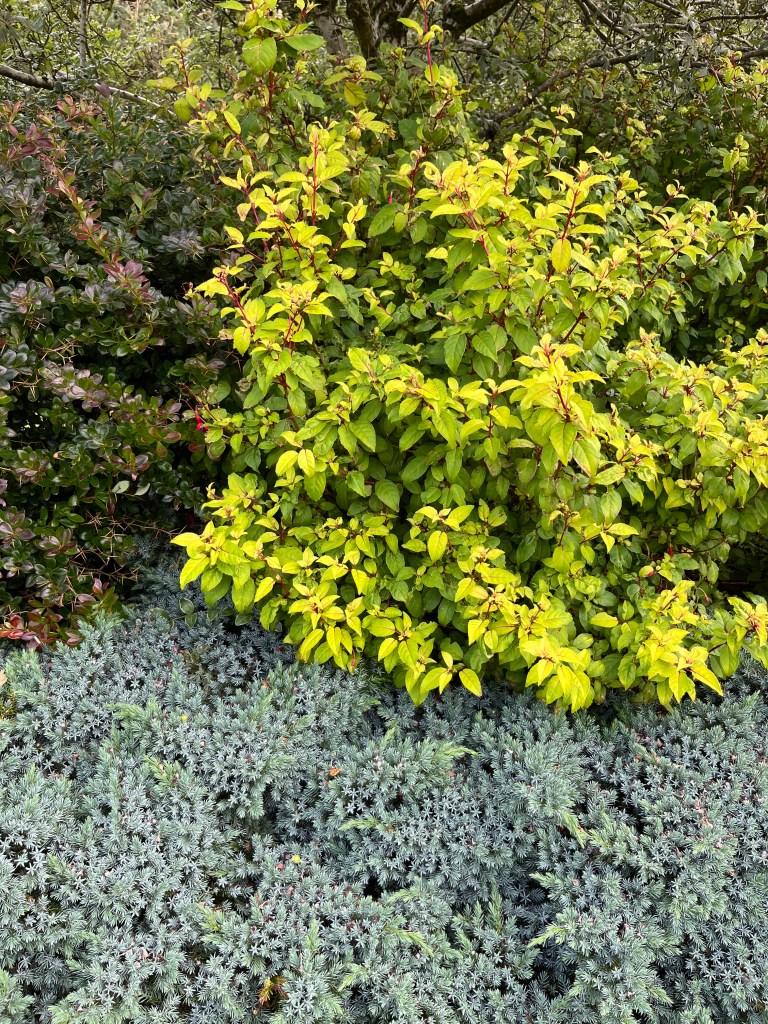
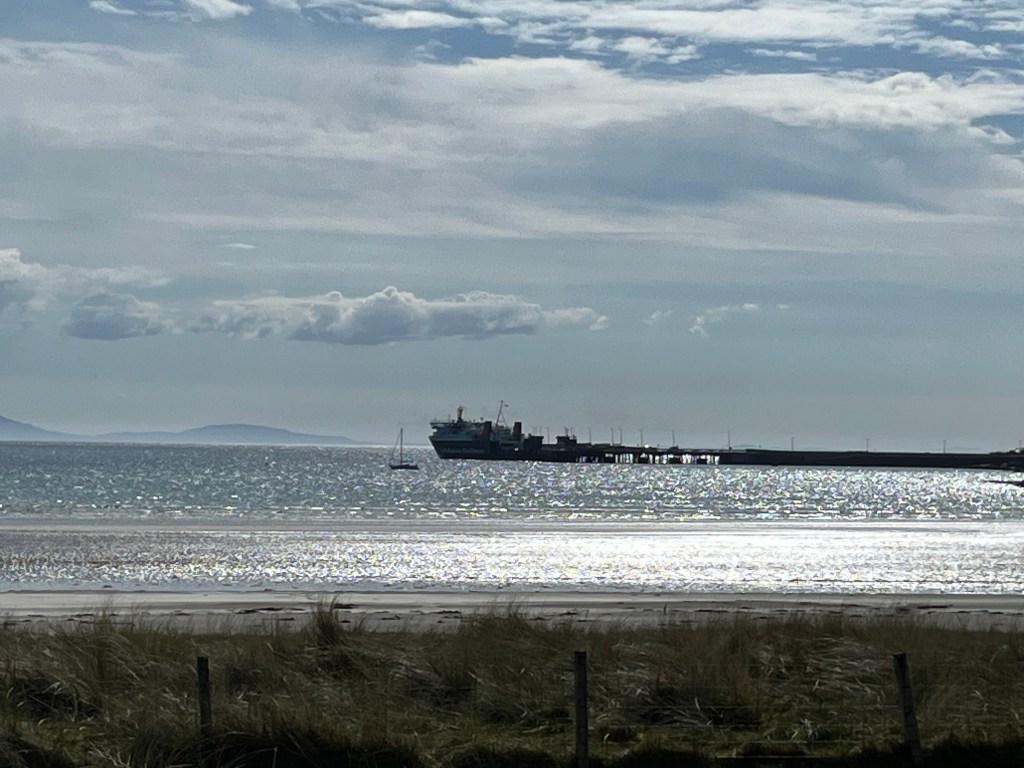
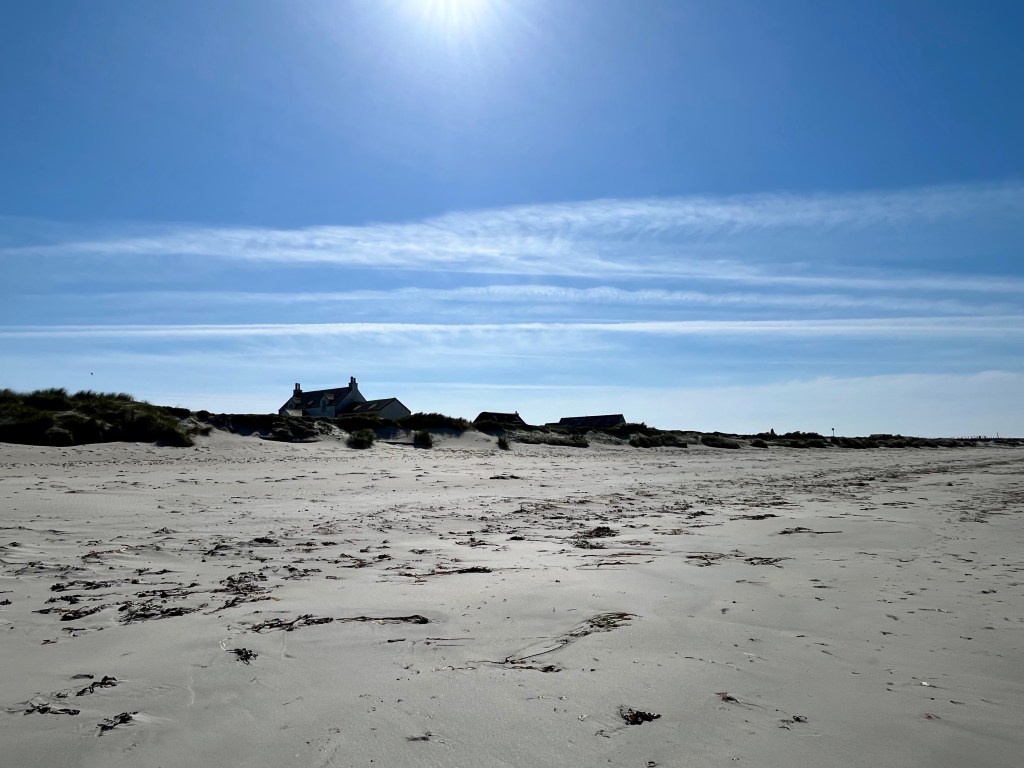
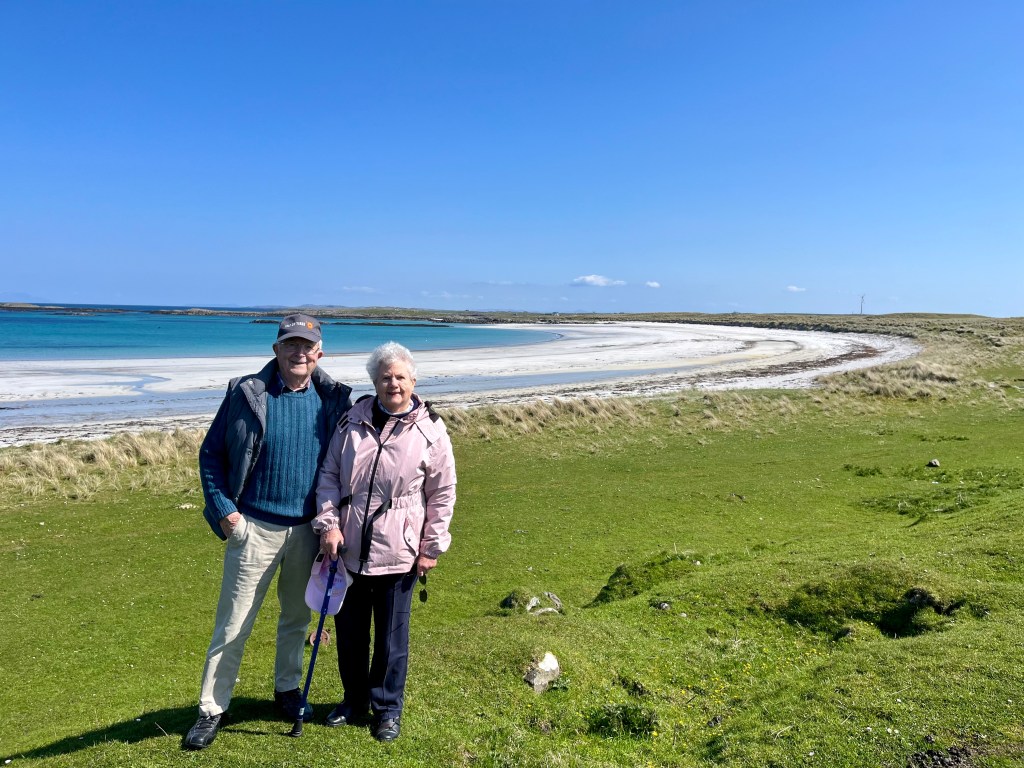
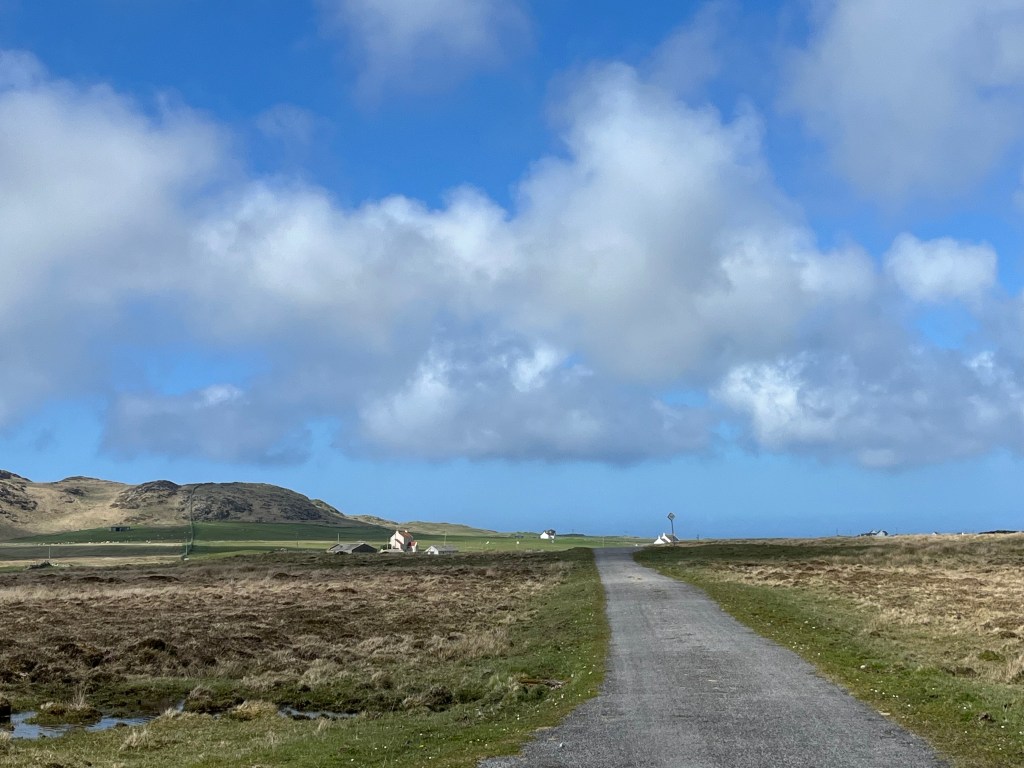
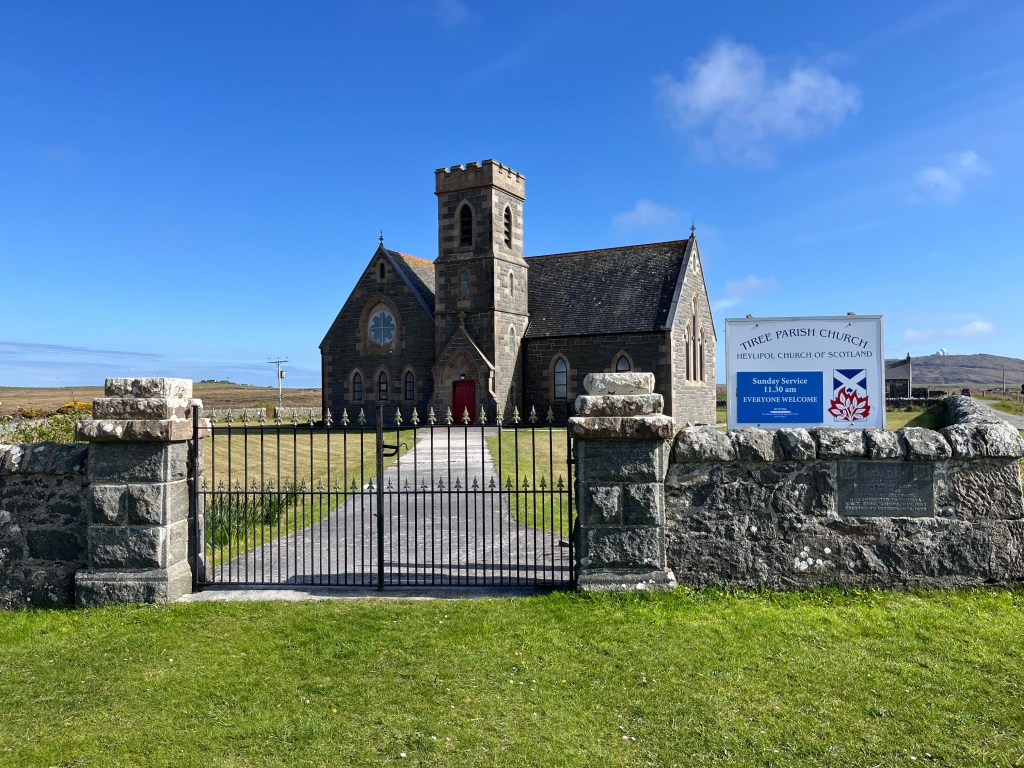
It seems no time at all since the end of April, when we were on holiday in the beautiful island of Tiree off the west coast of Scotland. Soon we were out and about on our various trips to many of our favourite picnic haunts, in some glorious Spring weather.
Now looking back I reflect on all that has happened since, which has caused us to re-evaluate our new circumstances and to ponder on how quick life can change. Before I expand on that let me share some photographs of our adventures in Springtime.
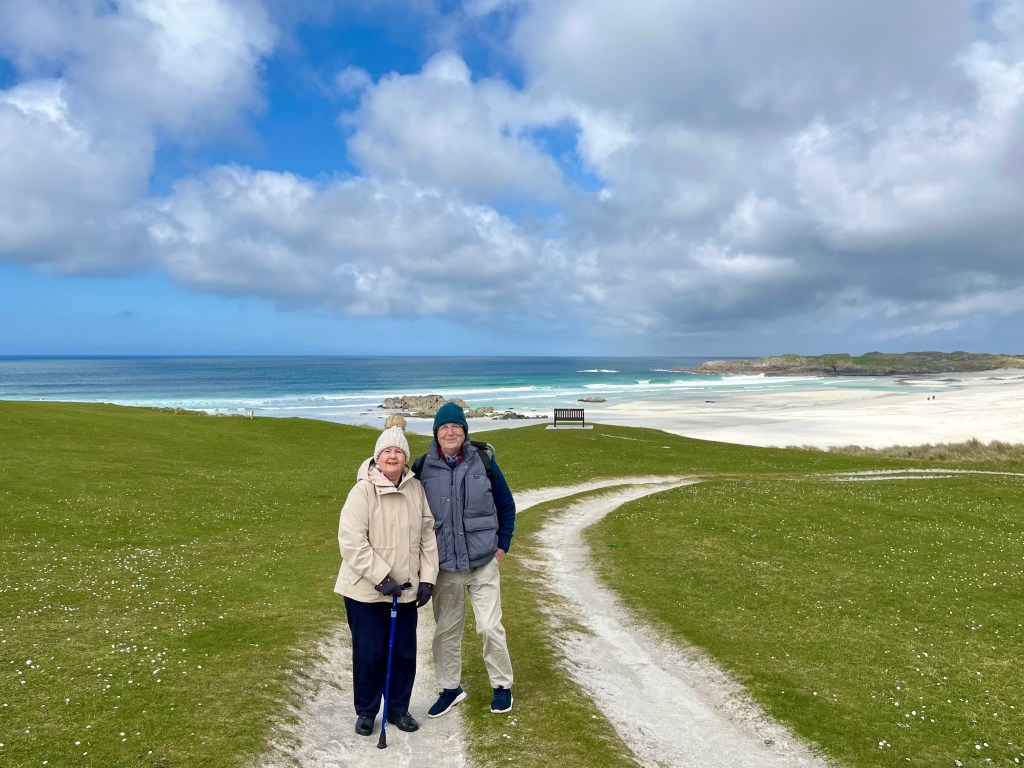
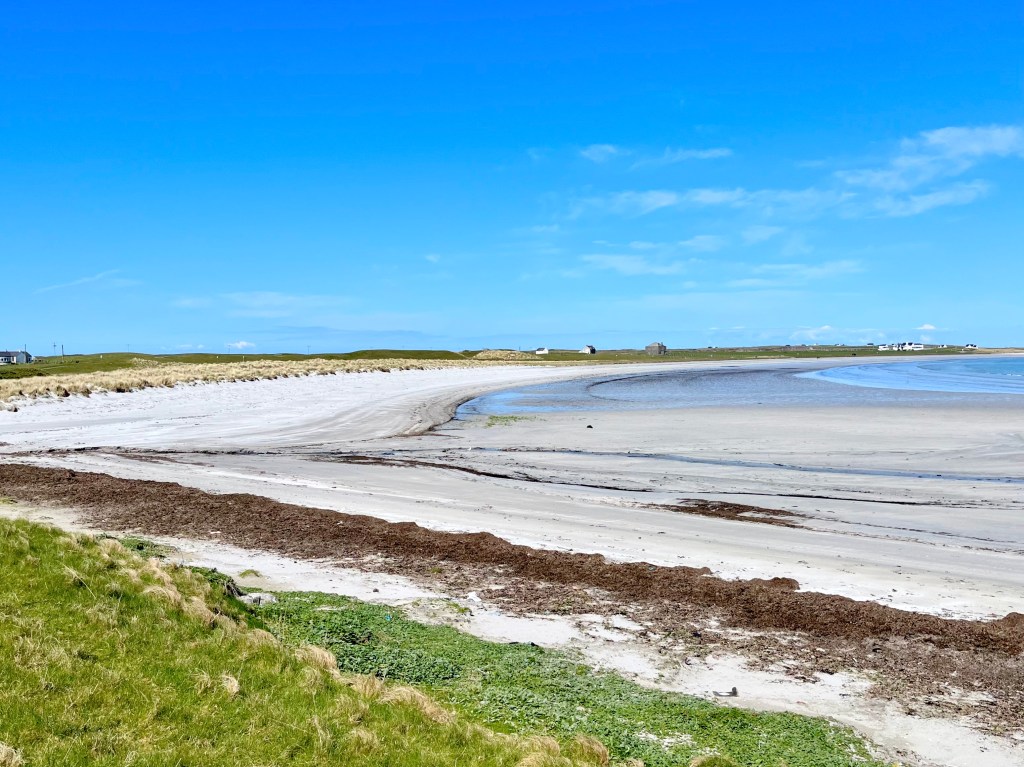
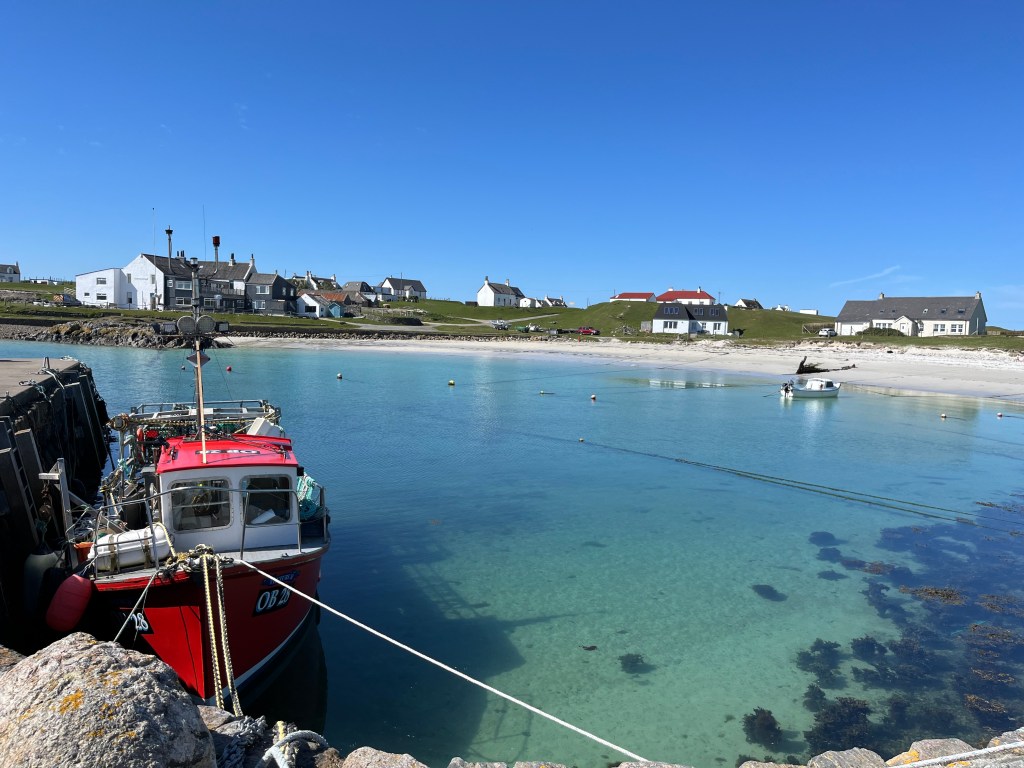
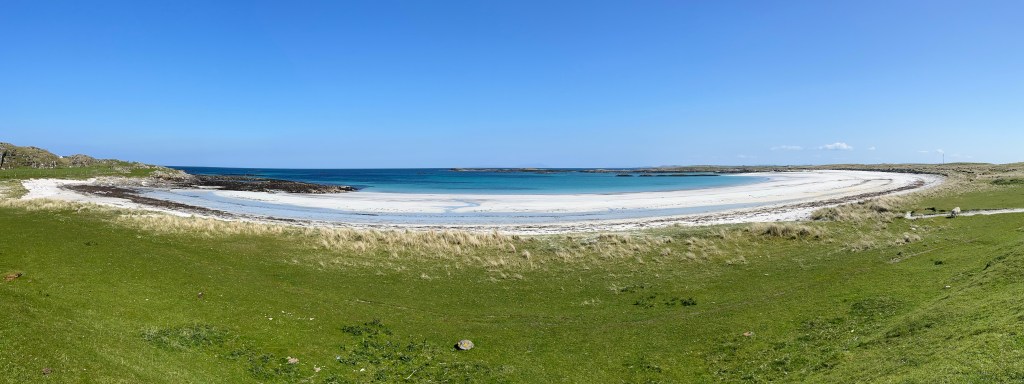
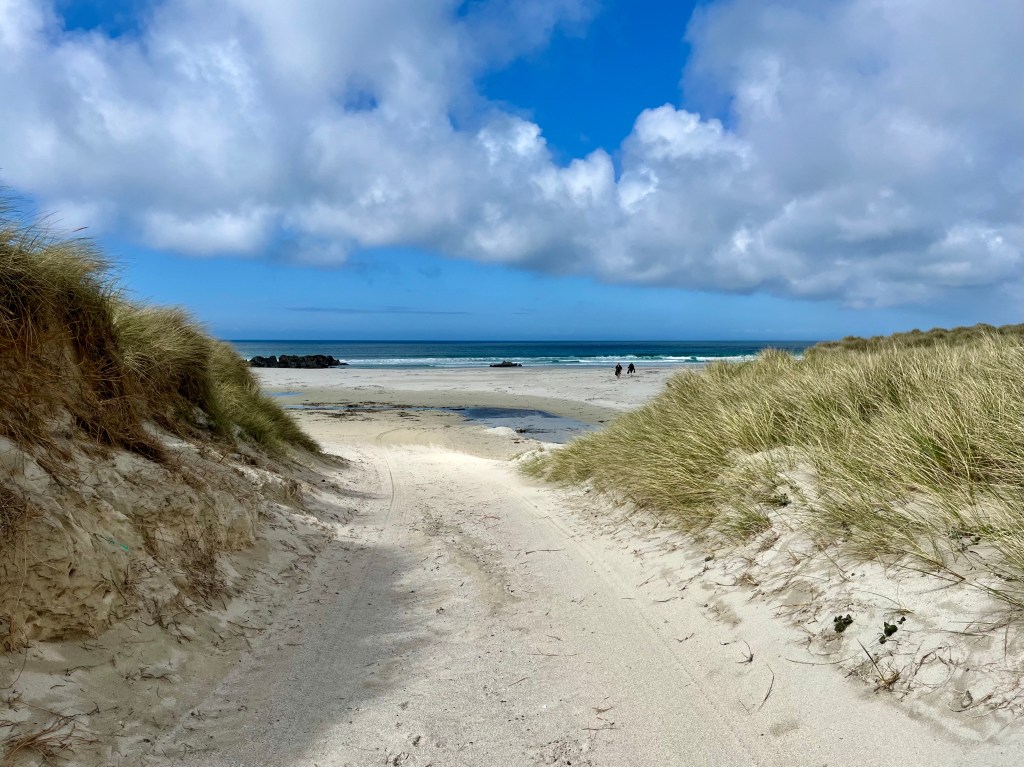
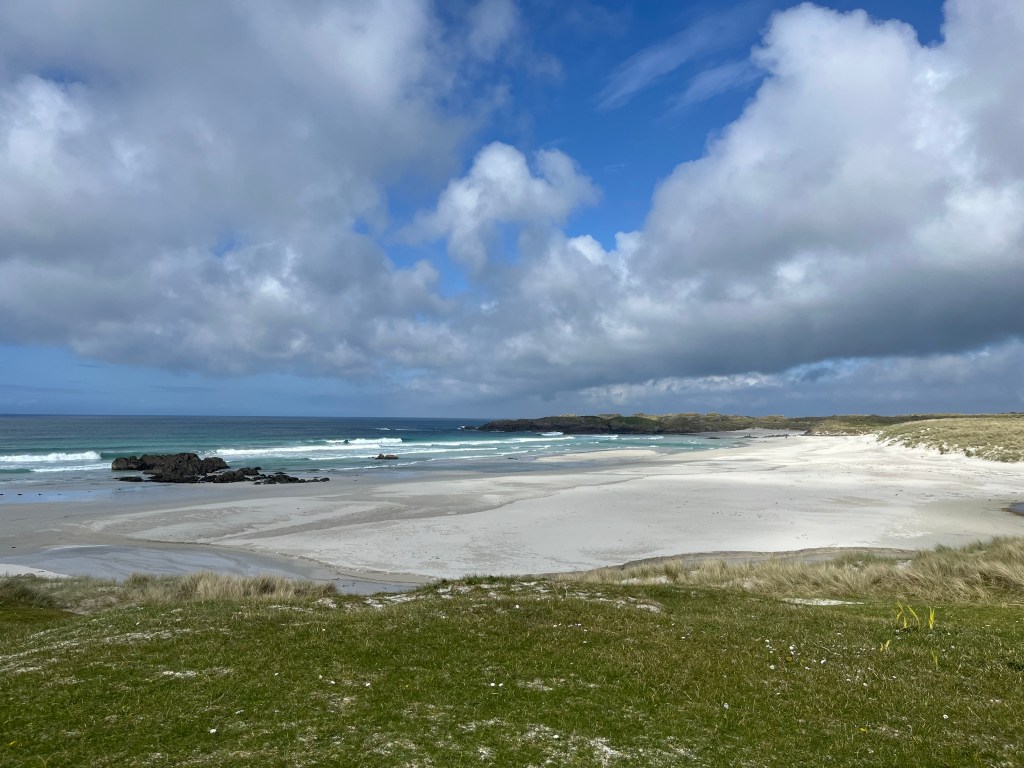
Yes we had an amazing holiday in Tiree, the weather was cool but beautifully sunny almost every day. We enjoyed slowly driving around the island and walking on the white sandy beaches and taking in the breathtaking beauty which surrounded us. It was the lambing season and signs of new life were everywhere, in the flowers, birds and young lambs and calves. Here are some photos, first showing our journey by car from Glasgow to Oban.
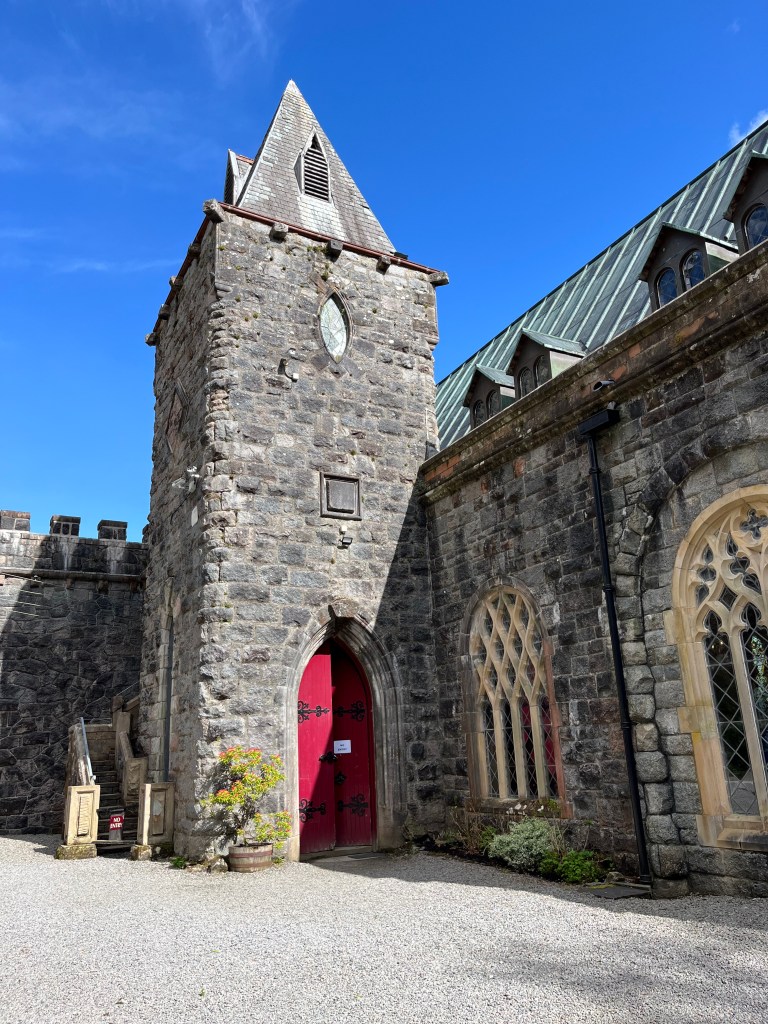
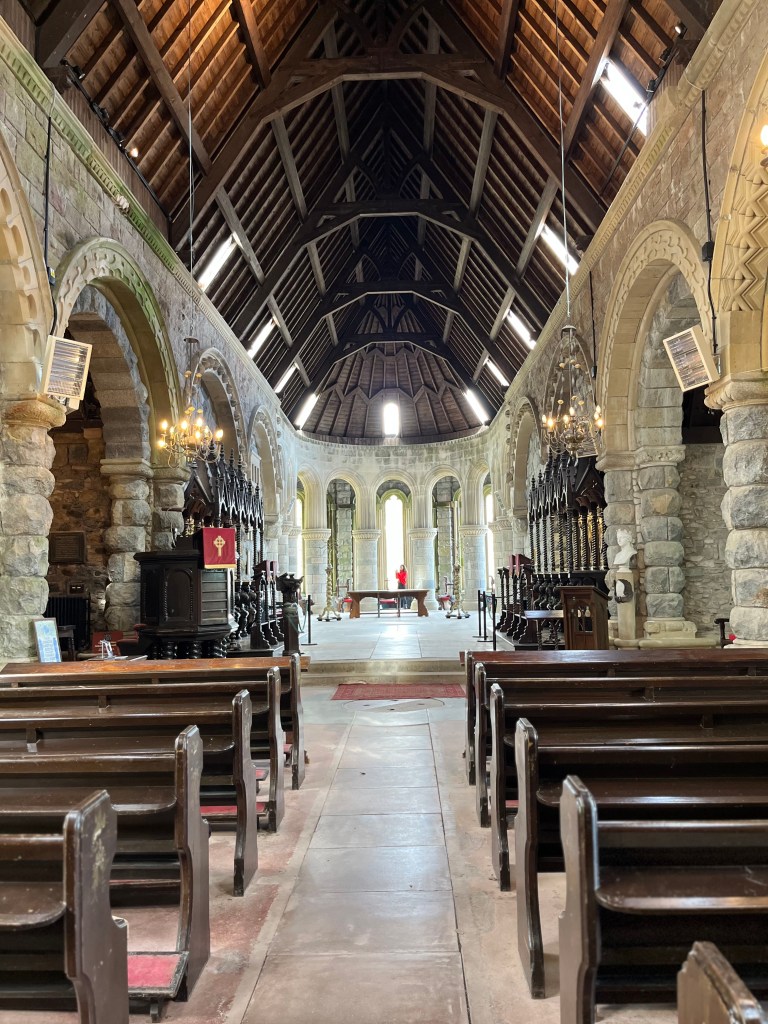
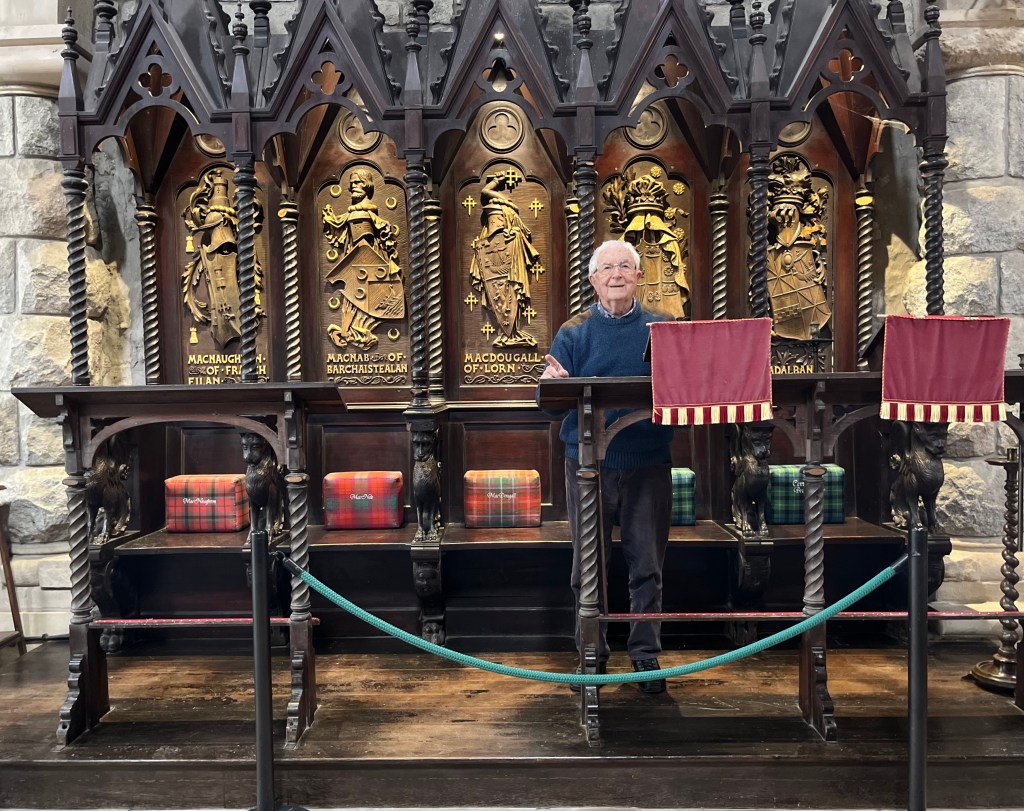
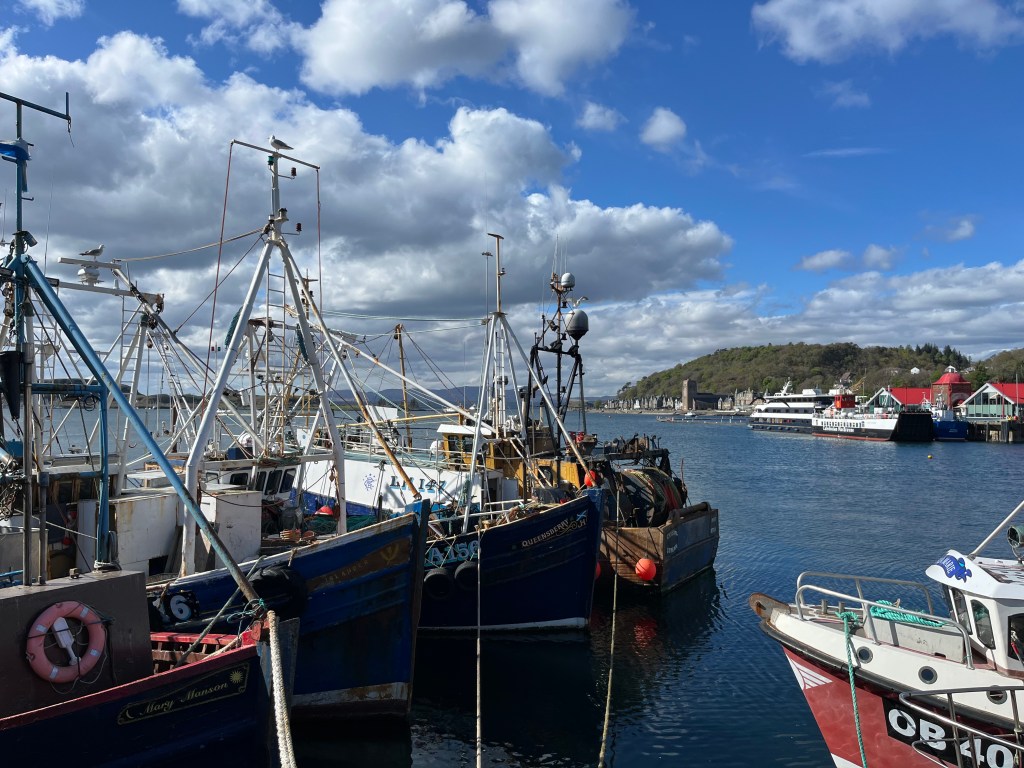
Loch Long at ArrocharLoch Fyne at InveraraySt Conan’s KirkSt Conan’s KirkSt Conan’s KirkSt Conan’s KirkOban HarbourGanavan Sands – Oban
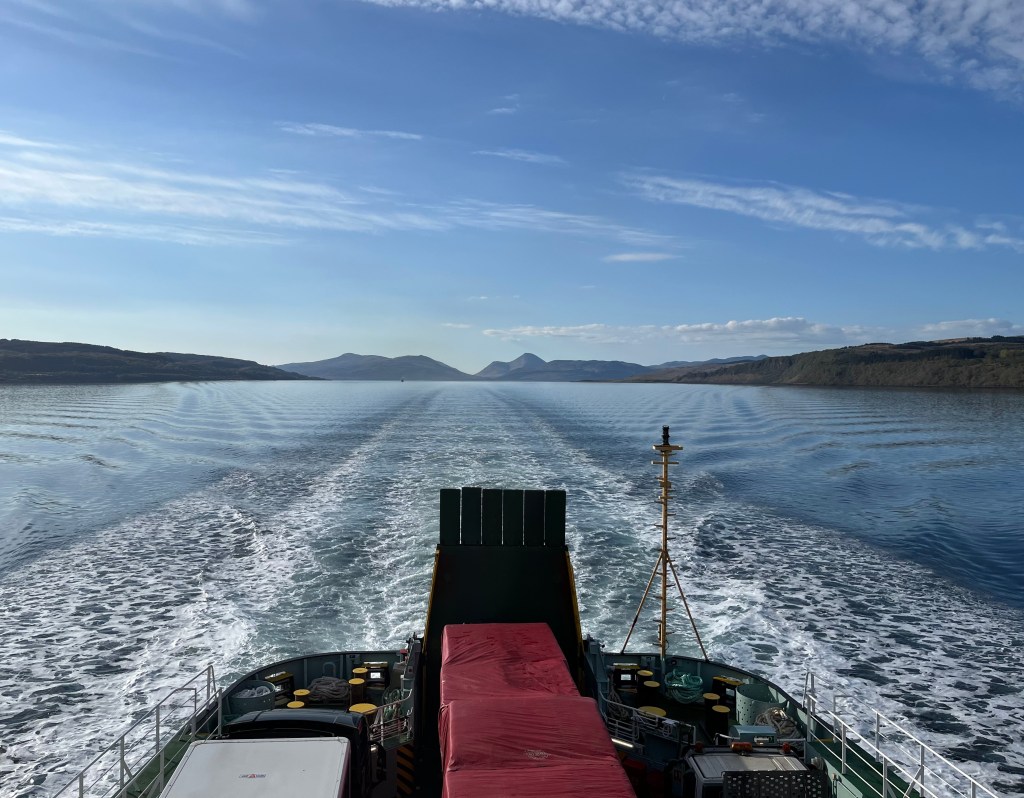
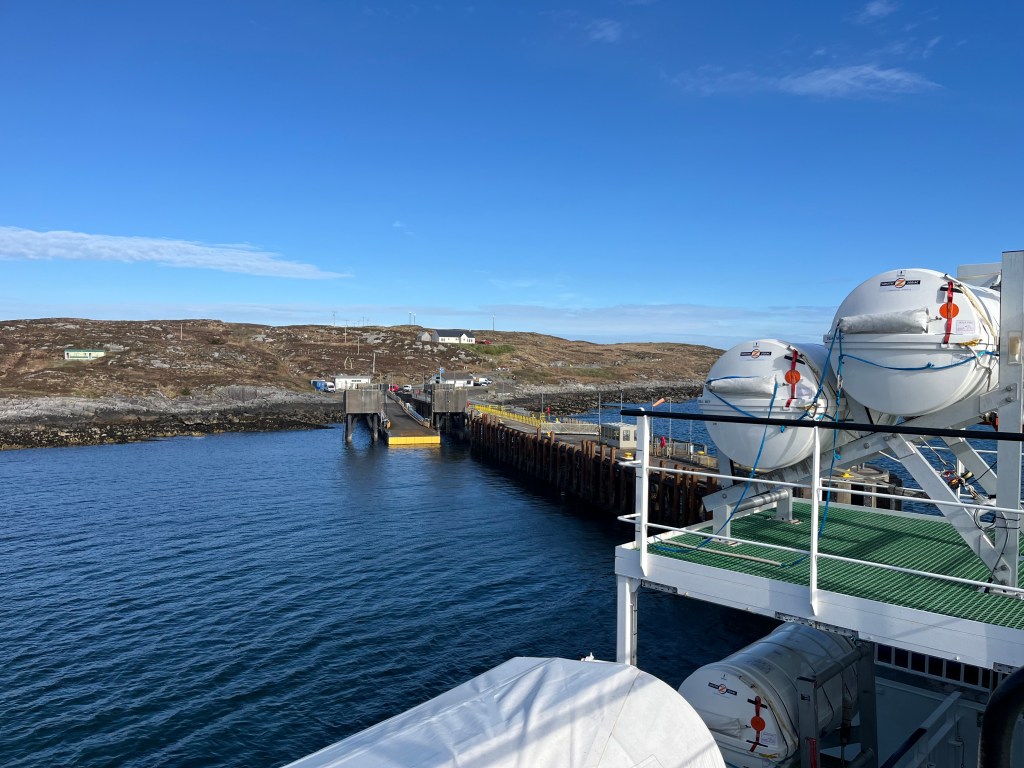
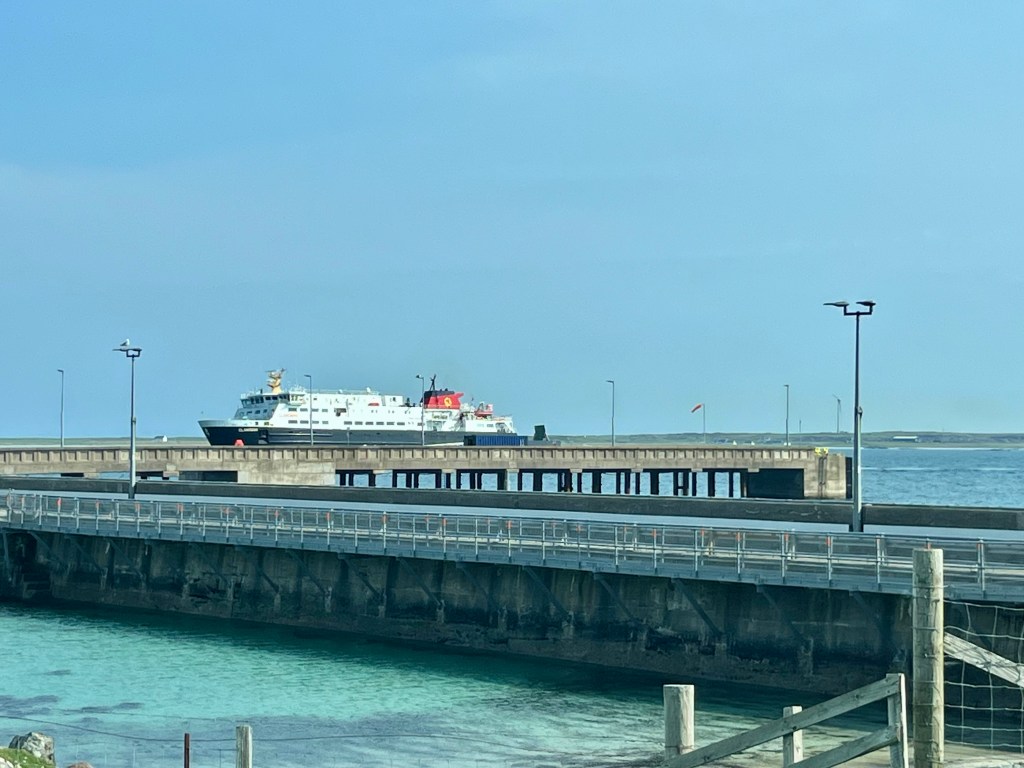
We had a night’s bed and breakfast in Oban and next morning caught the early morning ferry to Tiree via the Isle of Coll.
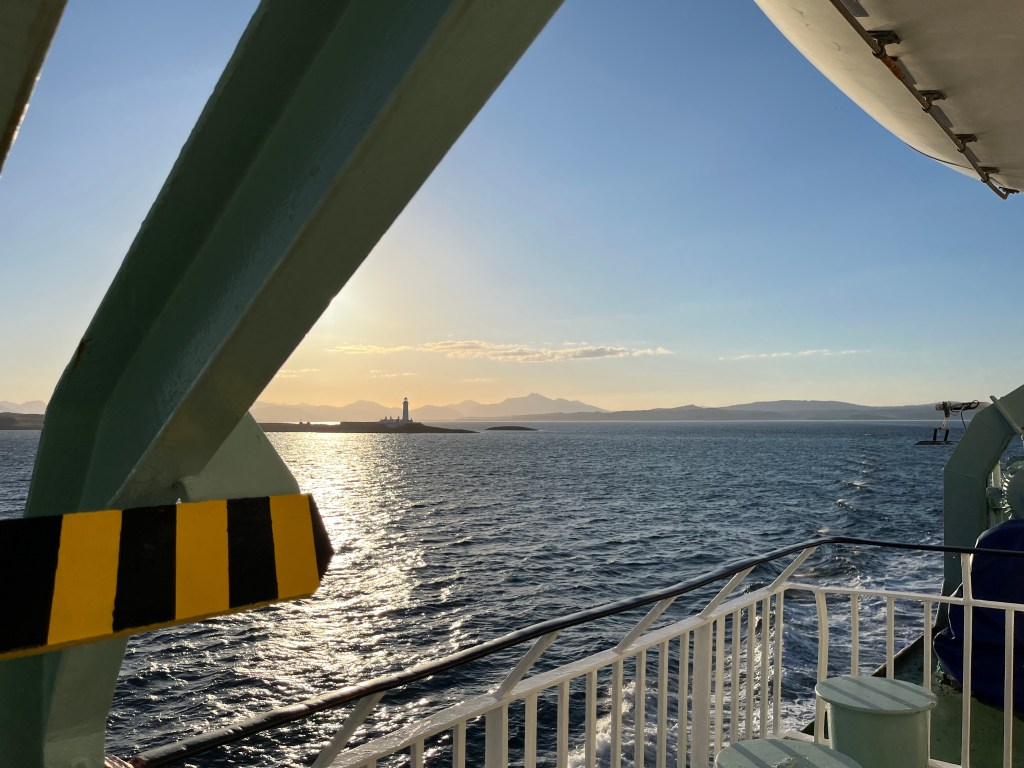
Passing Lismore Lighthouse at dawnLeaving CollArrive Tiree
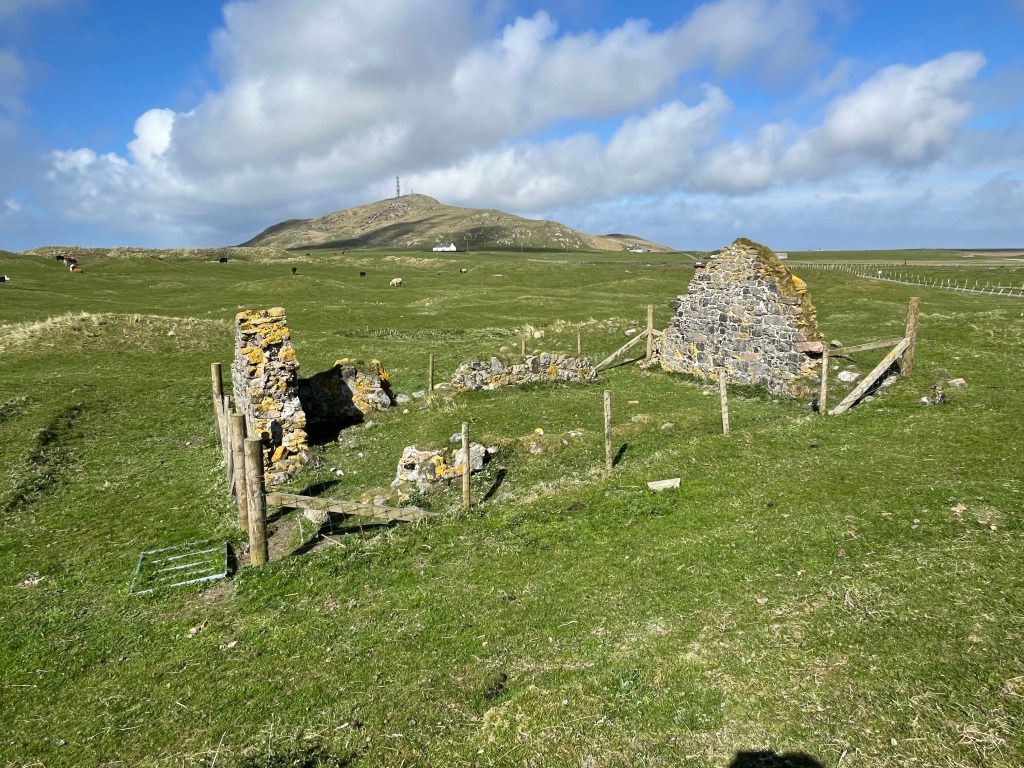
A week’s stay in Tiree was as usual a week of peace and tranquility, and somehow we always manage to enjoy many sunny days. Yes it was April, with still a cold wind so you need to dress appropriately. Too many photos to show, but here are some of this years favourites.
Good morning Tiree!Gott BaySkarmish< Balemartine >VaulBalephetrishVaul BayVaul BaySt Kenneth’s ChurchBallevullinTime to go homeBalevullin
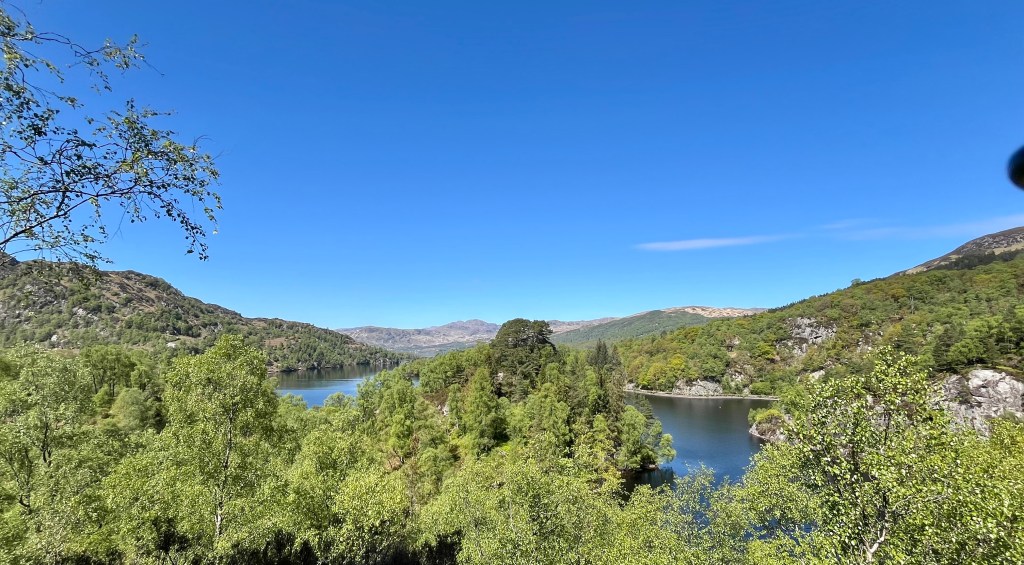
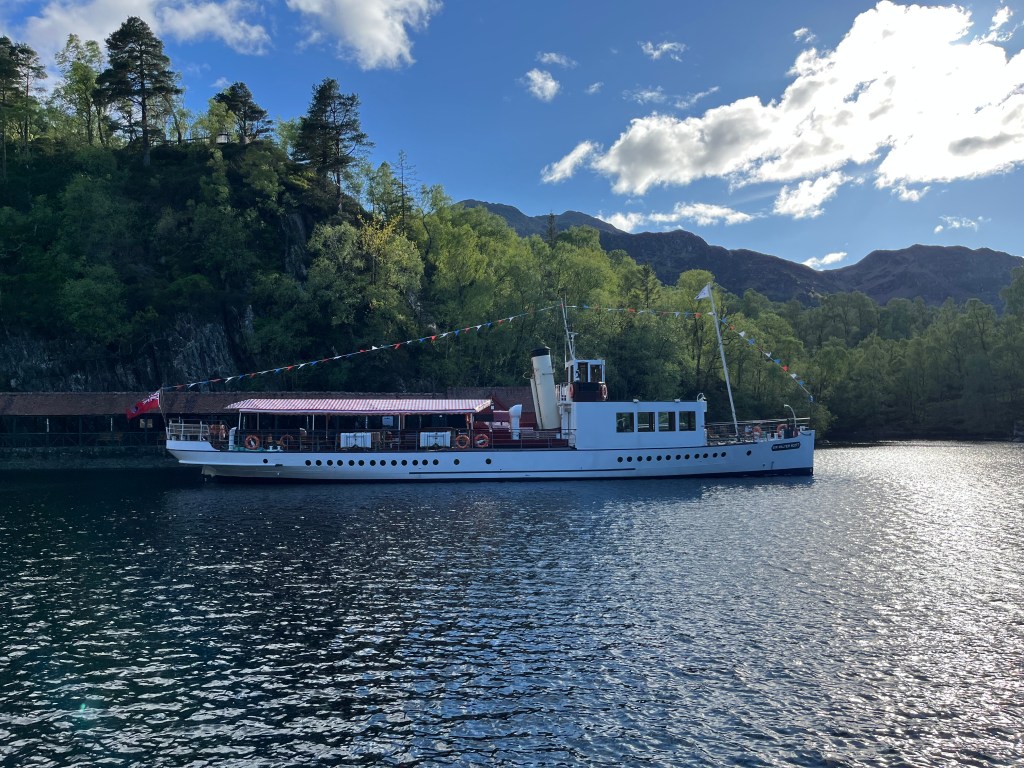
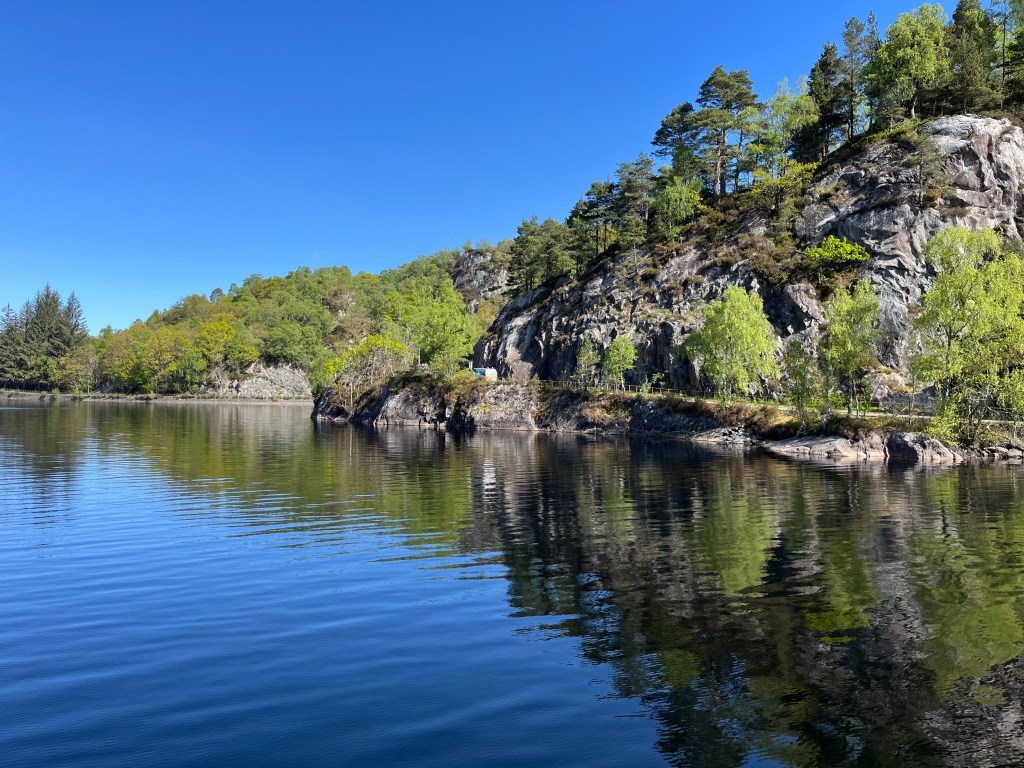
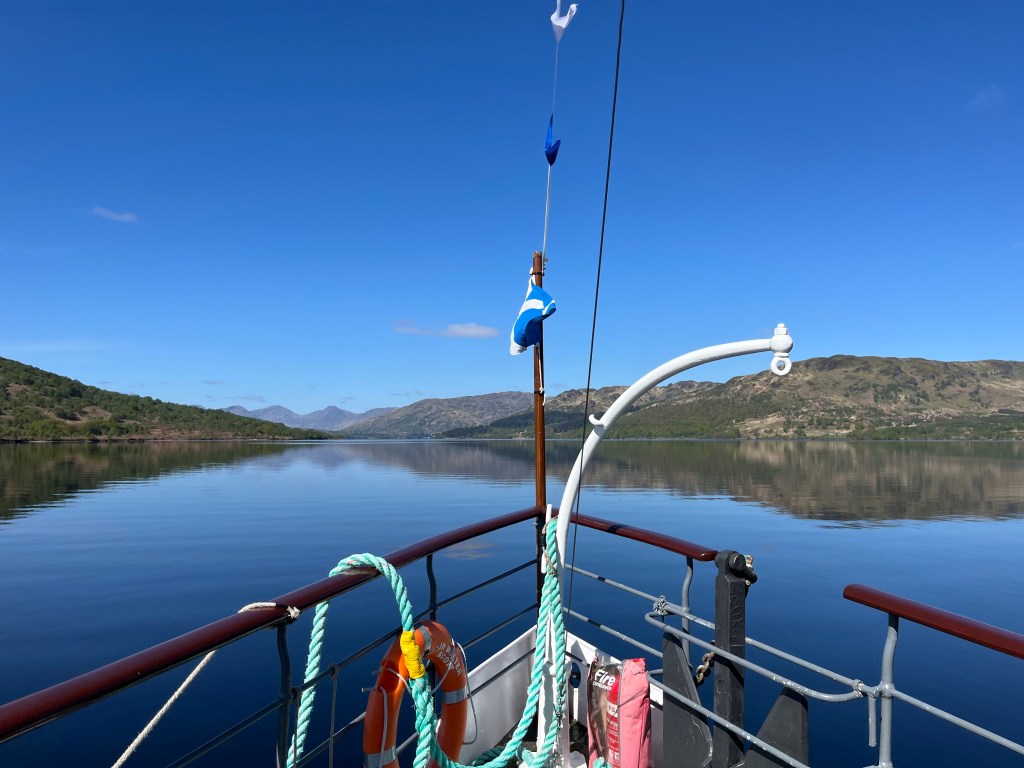
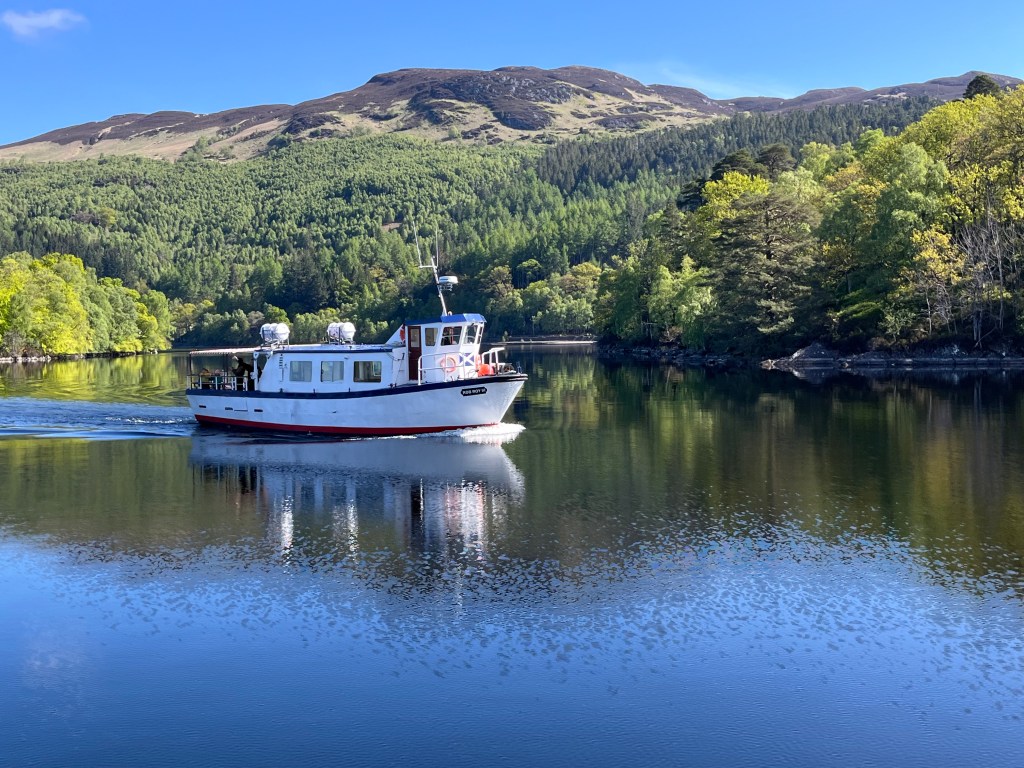
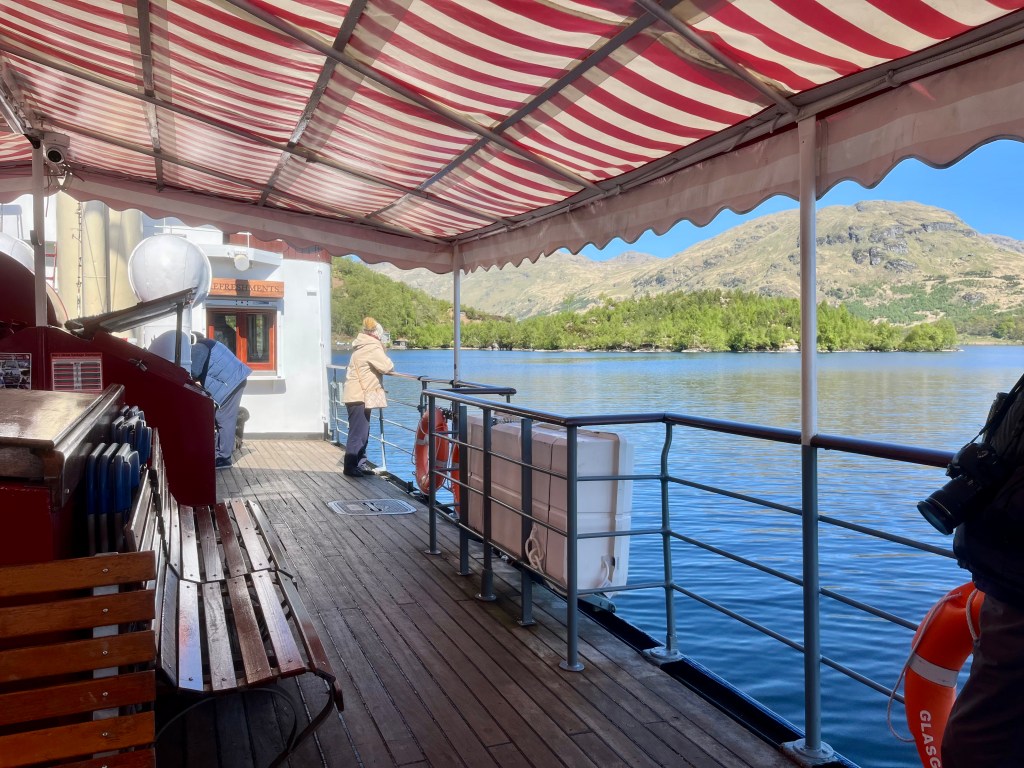
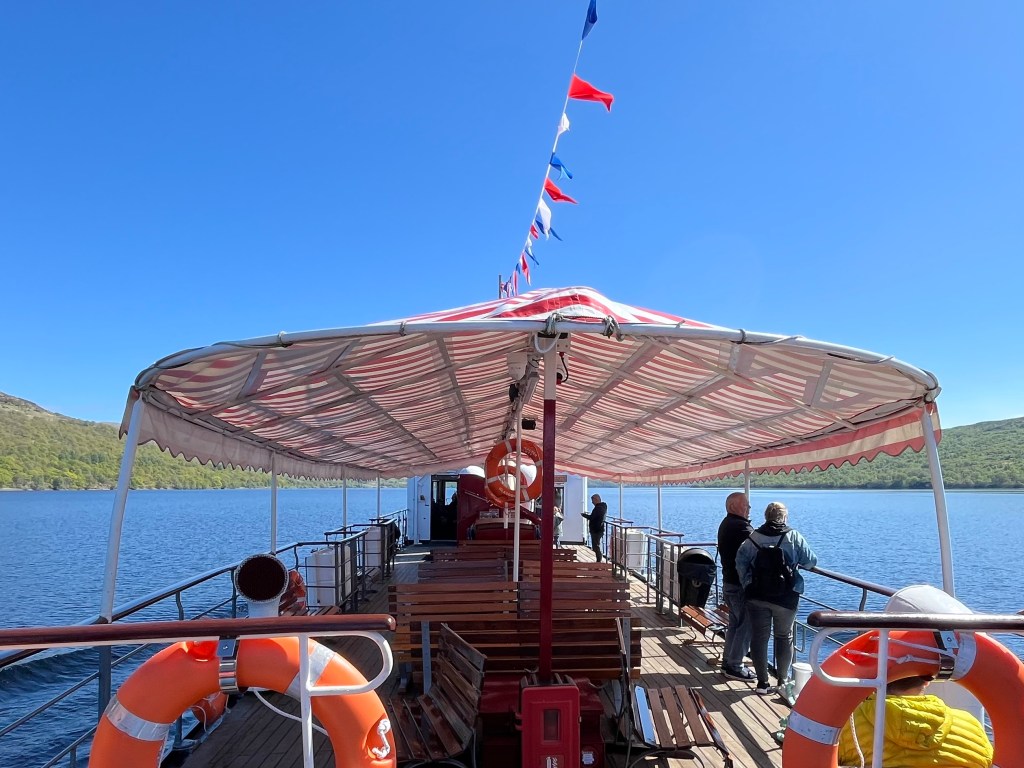
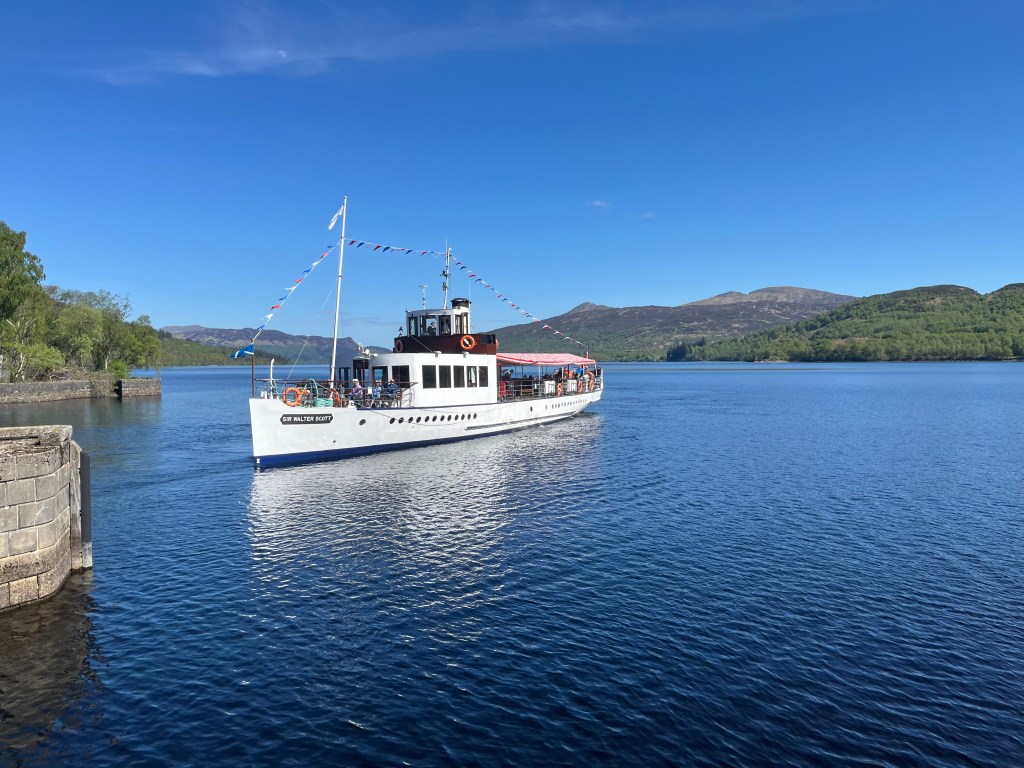
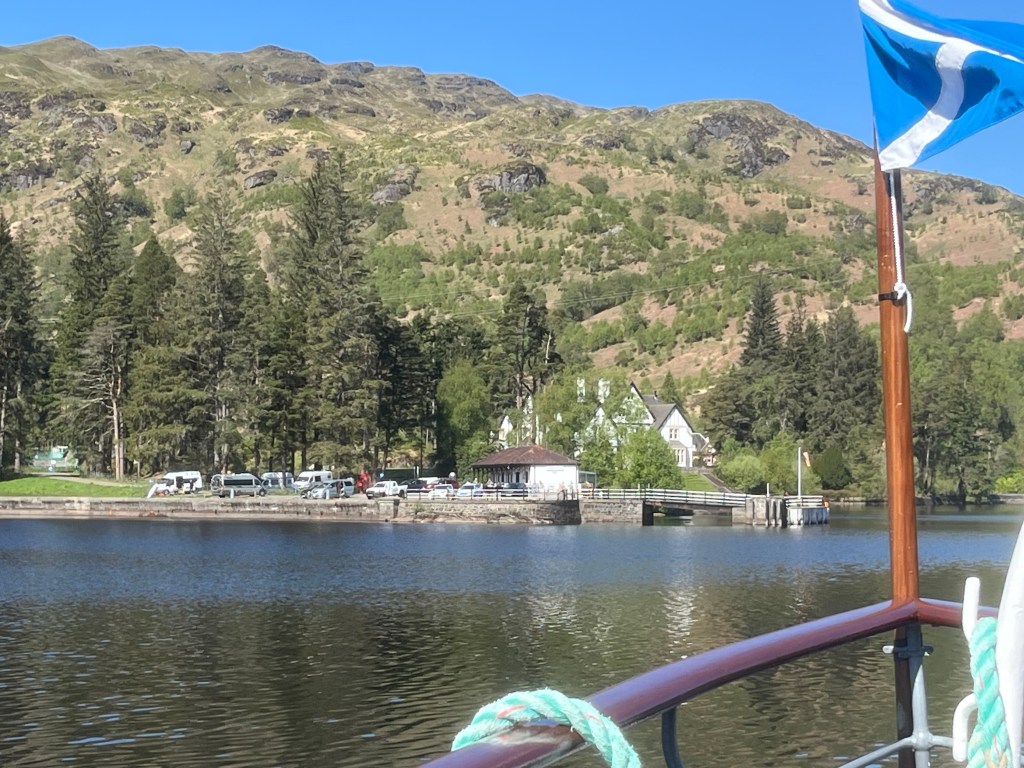
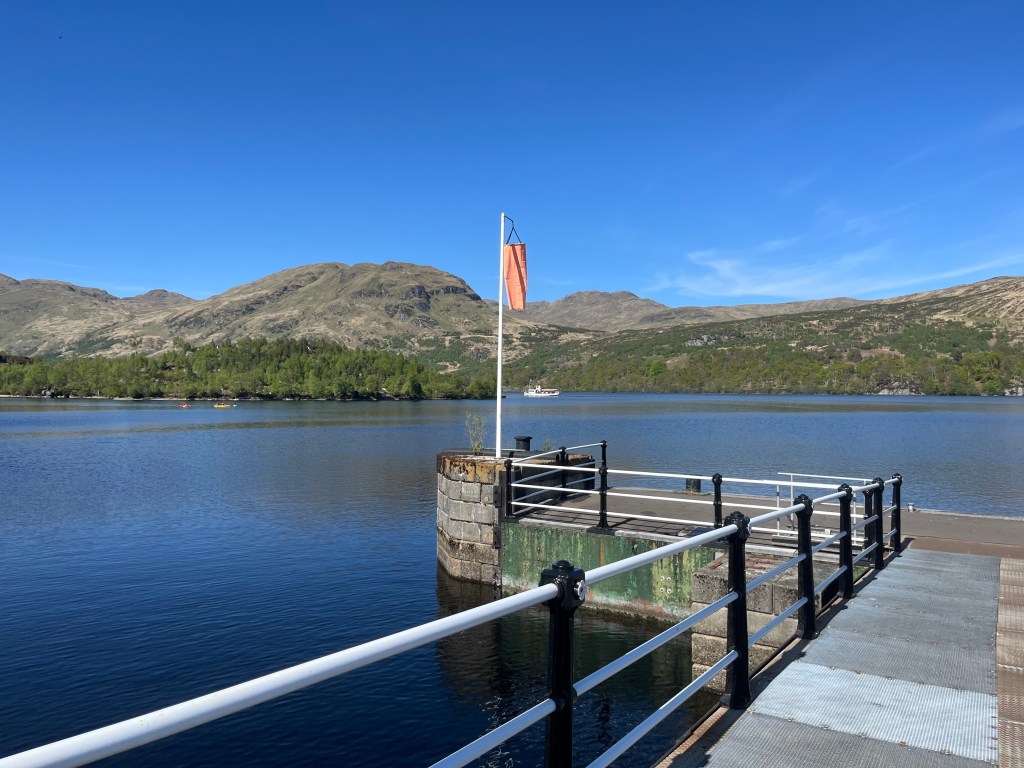
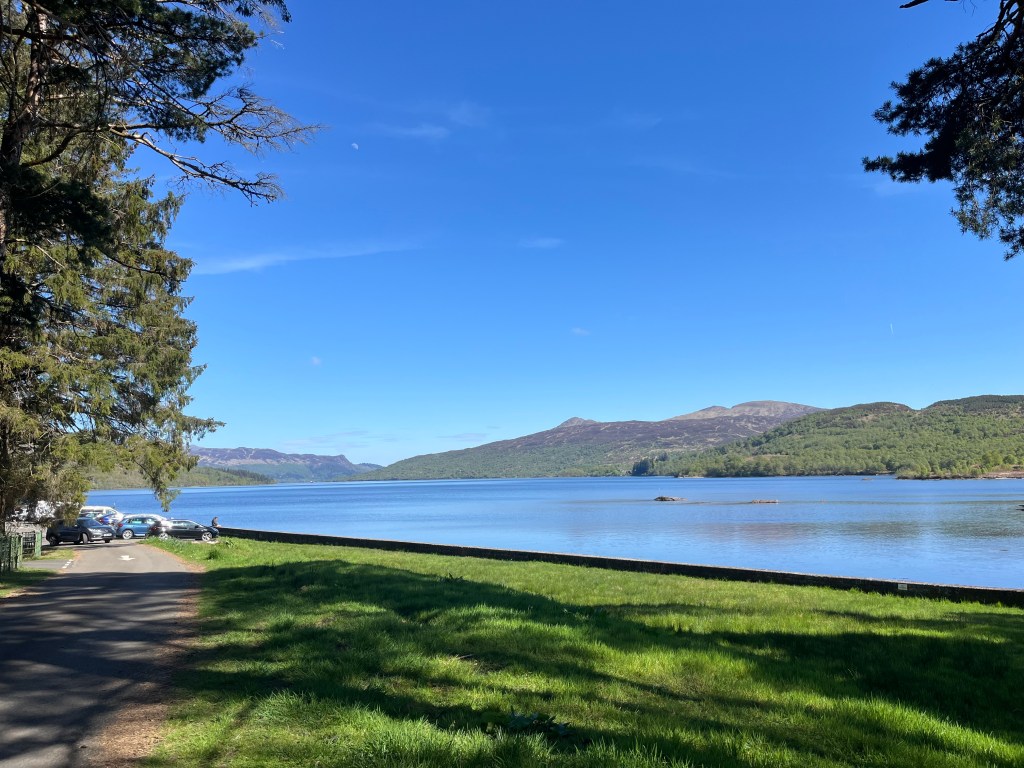
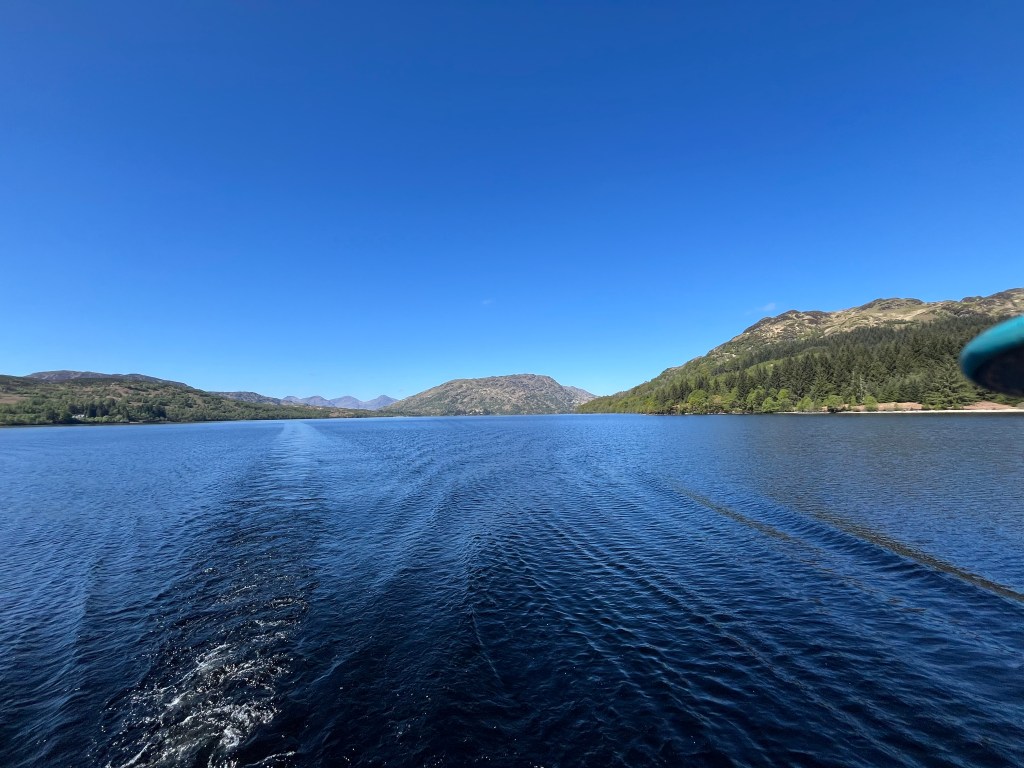
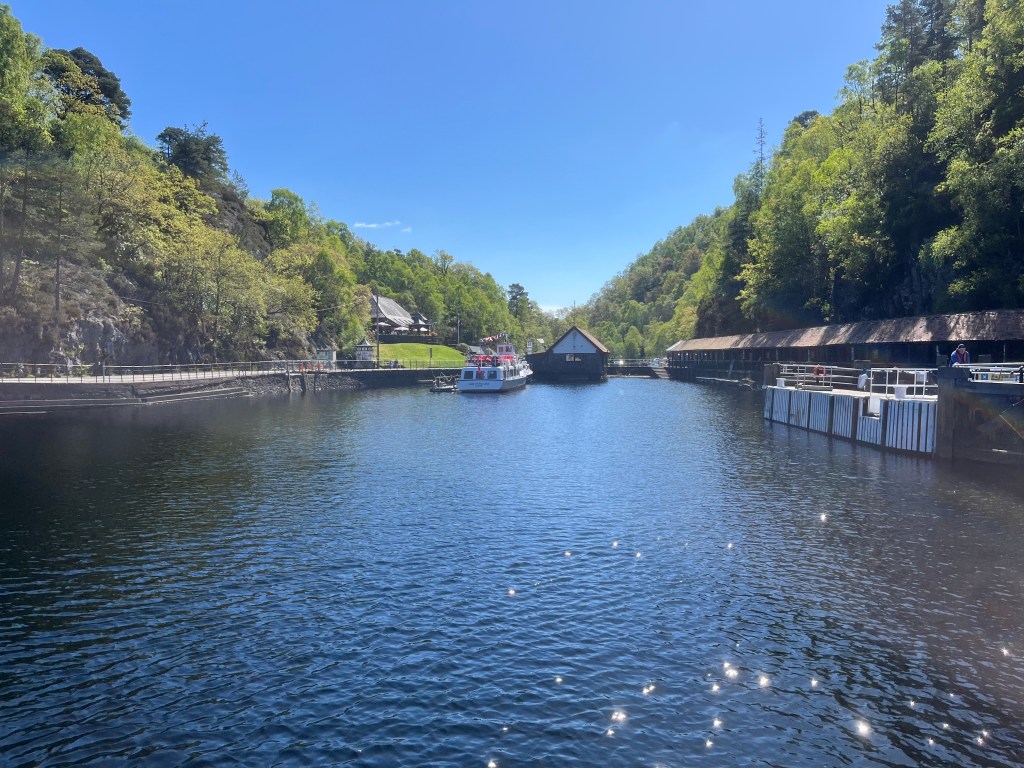
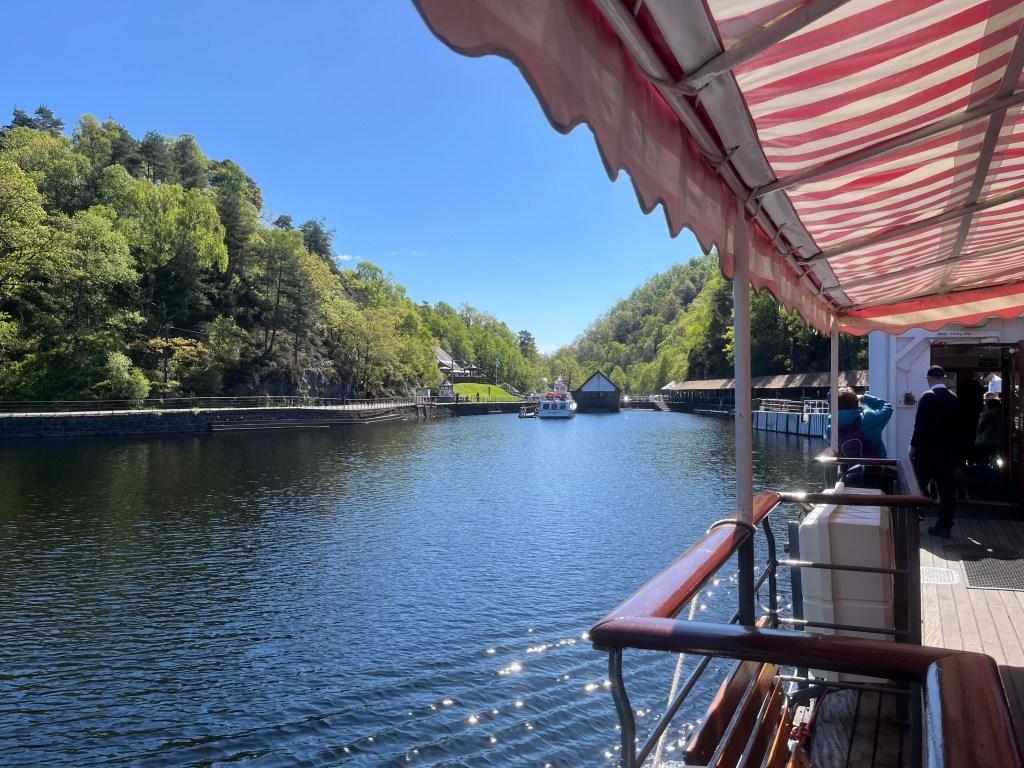
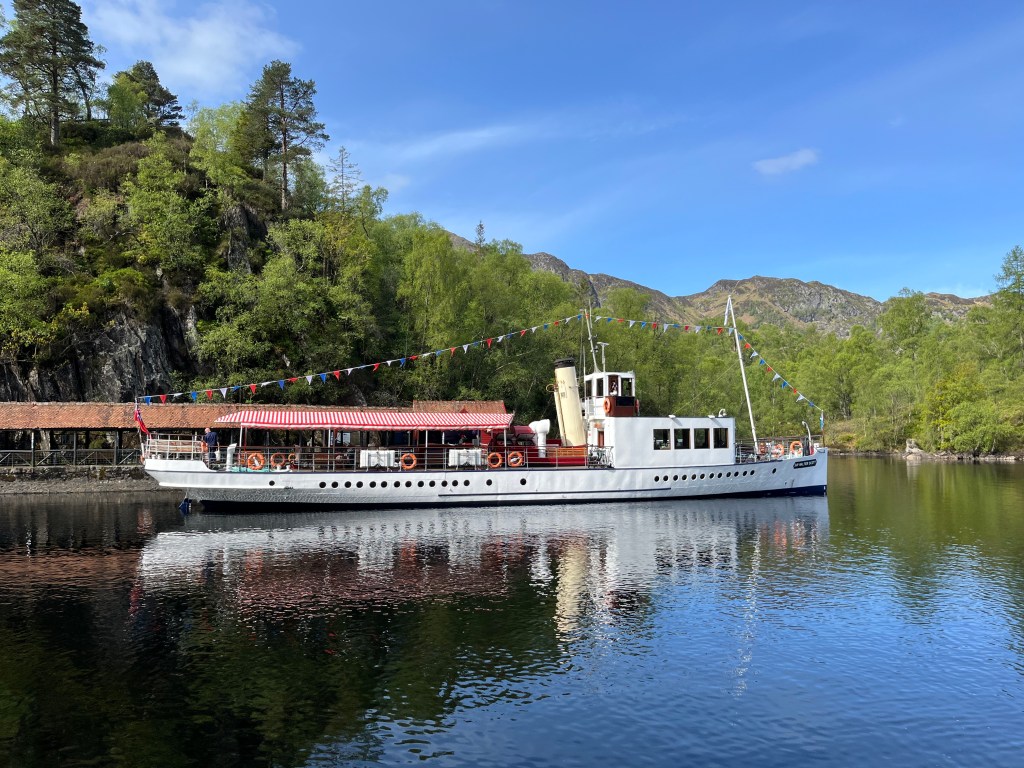
The following weekend was the May Spring holiday here in Scotland, and we had been kindly given some vouchers for sailing on the ‘Sir Walter Scott Steamship’ on Loch Katrine in the Trossachs area, within the National Park. We awakened to a beautiful morning with cloudless blue sky, and soon made our way across the Duke’s Pass to Loch Katrine. I am sure you will never get a better day than that day. The weather was absolutely glorious, this is a day trip highly recommended..
Loch Katrine taken from the new viewpoint just above the pier
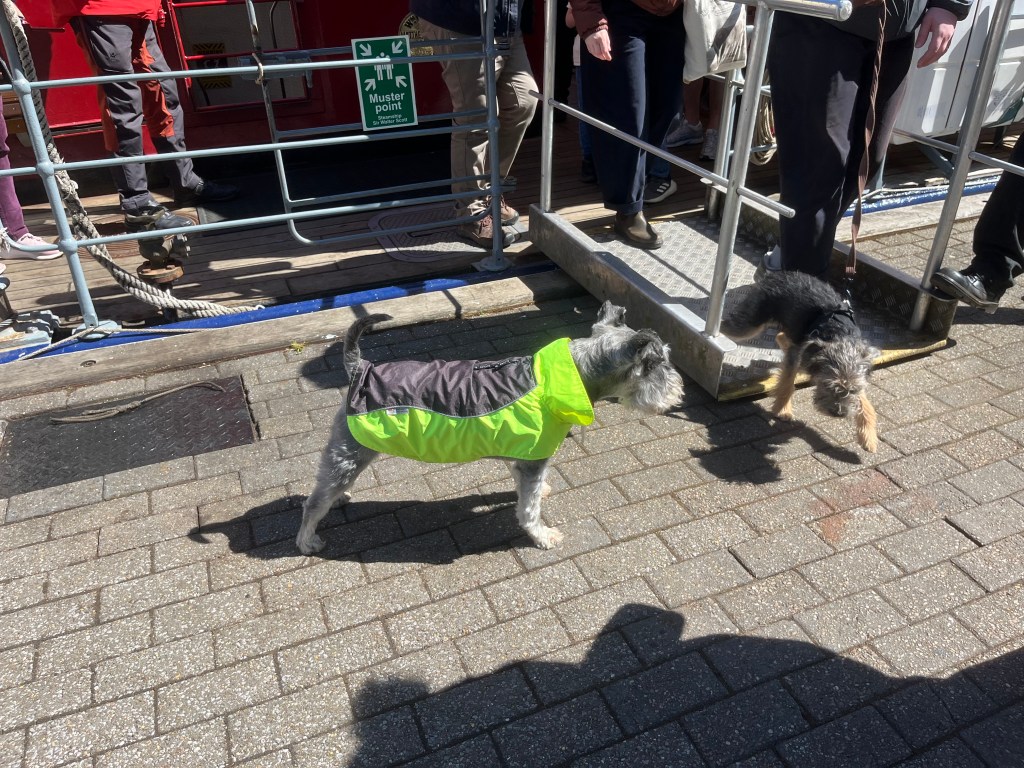
The Sir Walter ScottSailing on calm watersHeading for Stronachlachar< Arriving at Stronachlachar >Time for the return journeyThe Captain’s ‘guard dog’ 🙂Walk to Viewpoint.Ready for the next trip!
The following day was not so exciting as after our Tiree week and our sail on Loch Katrine, I had to catch up with all the mail that had accumulated during our absence, so it was the day of sitting at the computer. That night at around 3am I had a stroke and was hospitalised for nine nights.
Thankfully I am well on the way to recovery, and again, thankfully my speech and mind were not affected; mostly my left arm and leg which are now functioning well, so I am hopefull that I can make a full recovery.
However, some things that come your way in life, bring you up with start. I had often been told that I was very fit for my age, and after my holiday and trip to Loch Katrine I certainly was feeling very well. Then as I lay in bed in hospital I was reminding myself of the verse in the book of Proverbs that says ‘Do not boast about tomorrow, for you do not know what a day may bring.’ Prov. 27:1. whew, how true! All these summer plans were now on hold.
I have had many encouragements from family and friends near and far, in the way of visits, text-messages, cards, flowers, food and fruit juice, and even someone arriving at our door to help in the garden. So if you are one of those who are reading this, let me say a huge THANK YOU!
As a Christian I am truly appreciative for the many prayers spoken from my local Church family, and indeed from so many others around the world to our God and Father on my behalf. I believe that the progress made to date is in many ways an answer to them. I’m also thankful for the many Bible thoughts and verses sent and spoken to me, they are such an encouragement. Here’s just one:- ‘May the God of hope fill you with all joy and peace as you trust in him, so that you may overflow with hope by the power of the Holy Spirit.’ Rom.15:13
Yes, truly this is our sure hope in Jesus Christ and what he has promised to those who trust in Him, whether in life or death. I said to someone recently who had kindly wished me ‘all the best’ – thank you, but whatever happens, the best is yet to be‘- this is the Christian hope.
My stroke certainly got me thinking, and perhaps has got YOU thinking too? As I write news has just come in of 21 people involved in a balloon disaster in Brazil, first reports of 13 killed. The recent ‘AIR India’ disaster saw just one survivor out of 242 people on board. HOW SAD. It’s good to be ready don’t you think? Here’s a song that is special to me – have a listen
Matthew
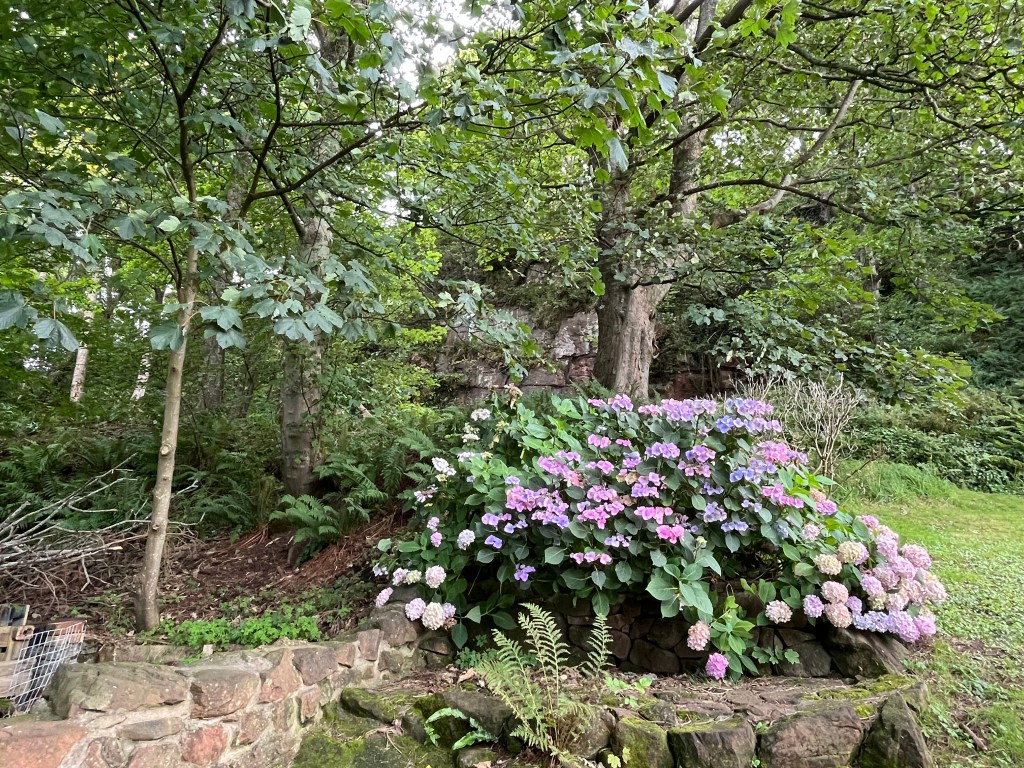
PS: There has been much criticism of the NHS. Next time I would like to tell you of my experience.
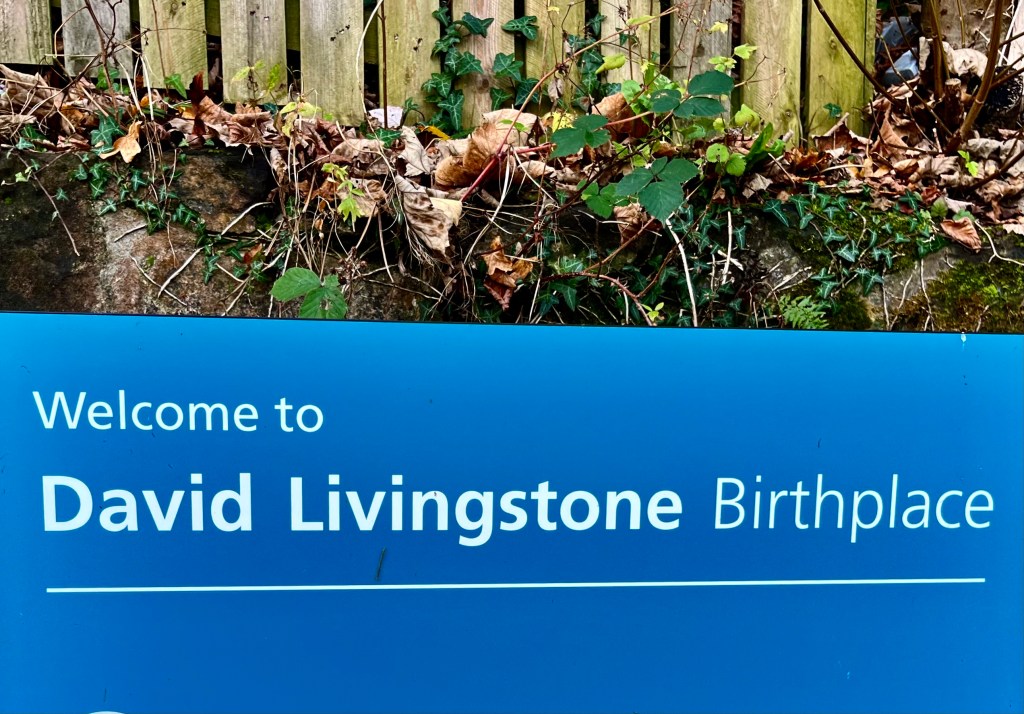
Last week we visited the birth place of Dr. David Livingstone at Blantyre, which is just 20 miles from our home here in Glasgow, Scotland. There is a beautiful Memorial Museum there which in recent times has been completely refurbished, and faithfully records the life and times of Livingstone.
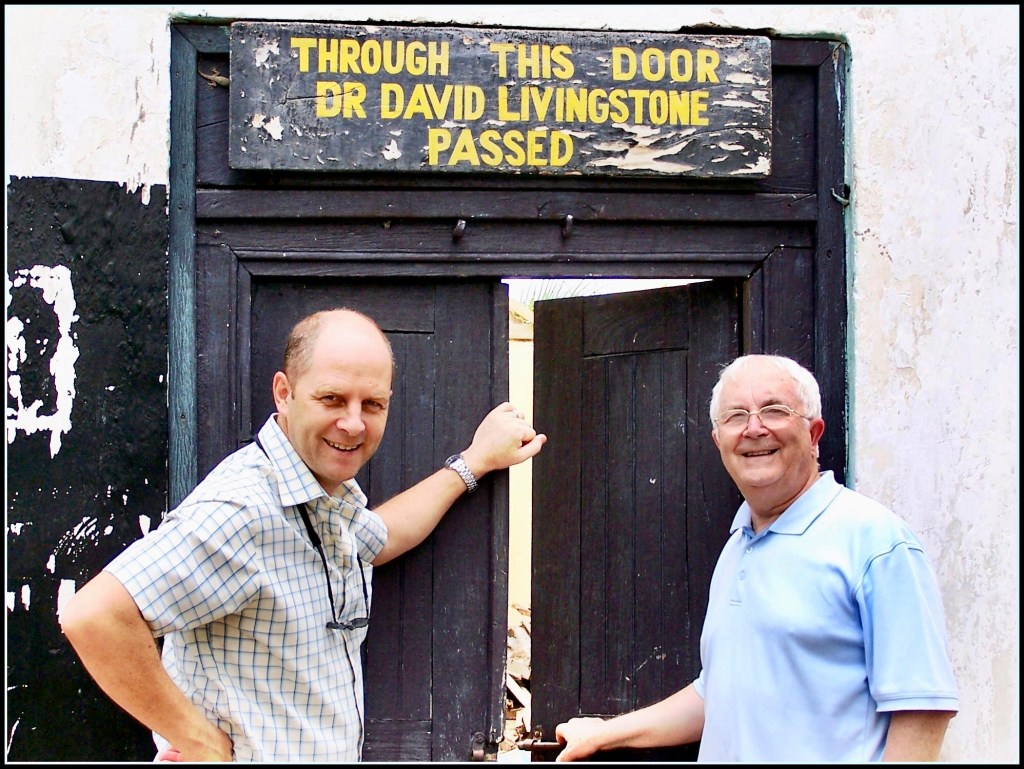
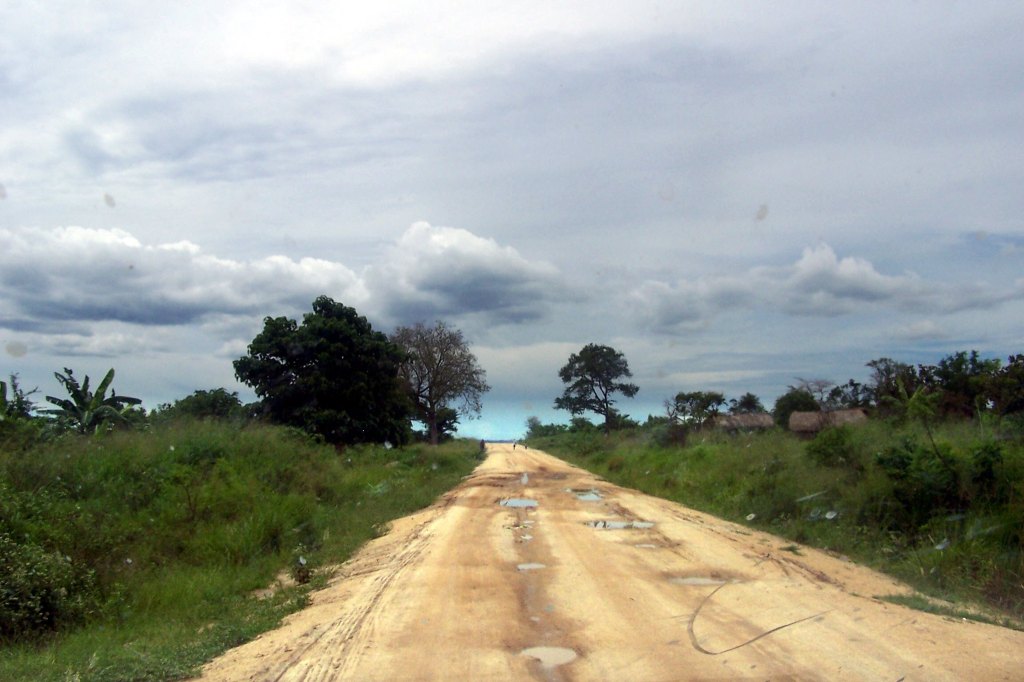
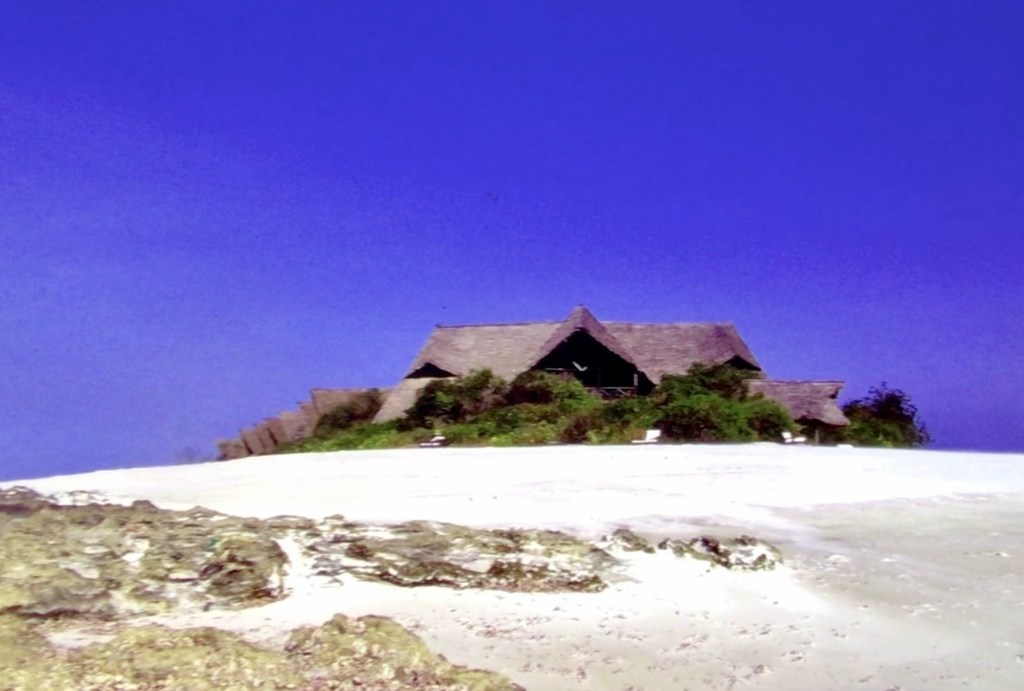
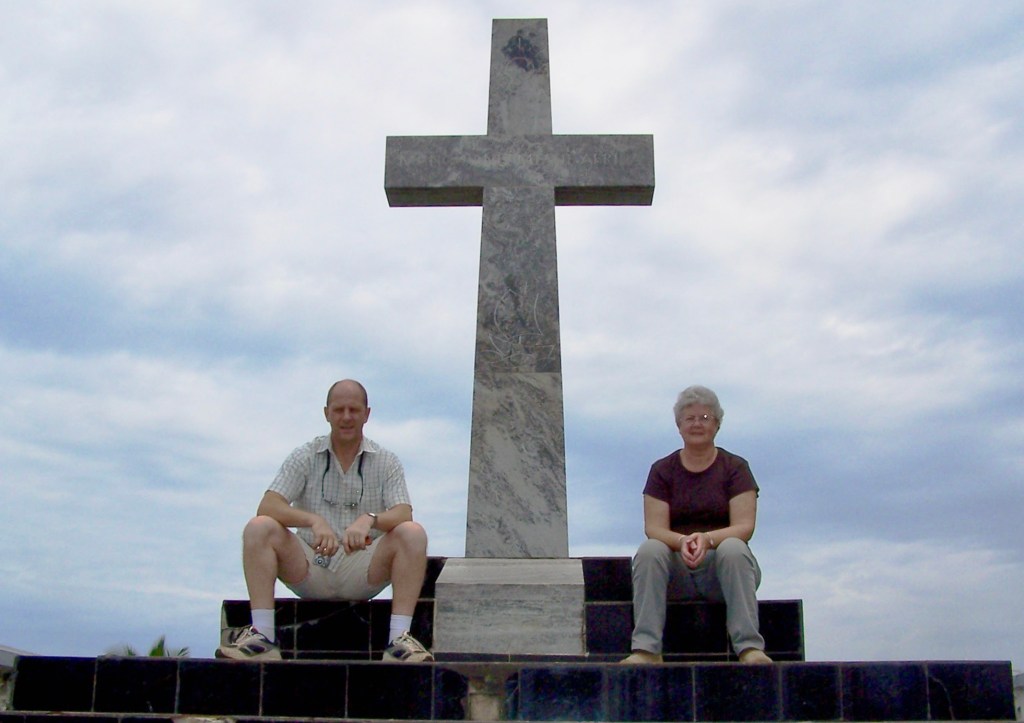
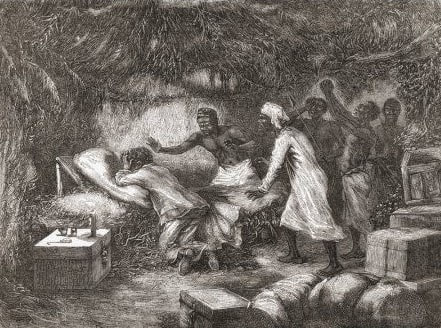
It’s not surprising then that this also brought to my mind a visit we made with my son and daughter in law to Bagamoyo in Tanzania during one of our African travels. So before sharing with you something of the Memorial Museum, there follows a few photographs of our trip to Bagamoyo. This town was once considered to be the capital of Tanzania, a centre of business and commerce, strategically placed on the East African coast. David Livingstone’s body was brought here by his faithfull African friends and companions after his death on the southern shore of Lake Bangweolu on the 1st May 1873, he was aged sixty. They had carried their friend and colleague more than a thousand miles over a period of nine months, so that he could be transported back to his home country for burial in Westminstter Abbey, London.
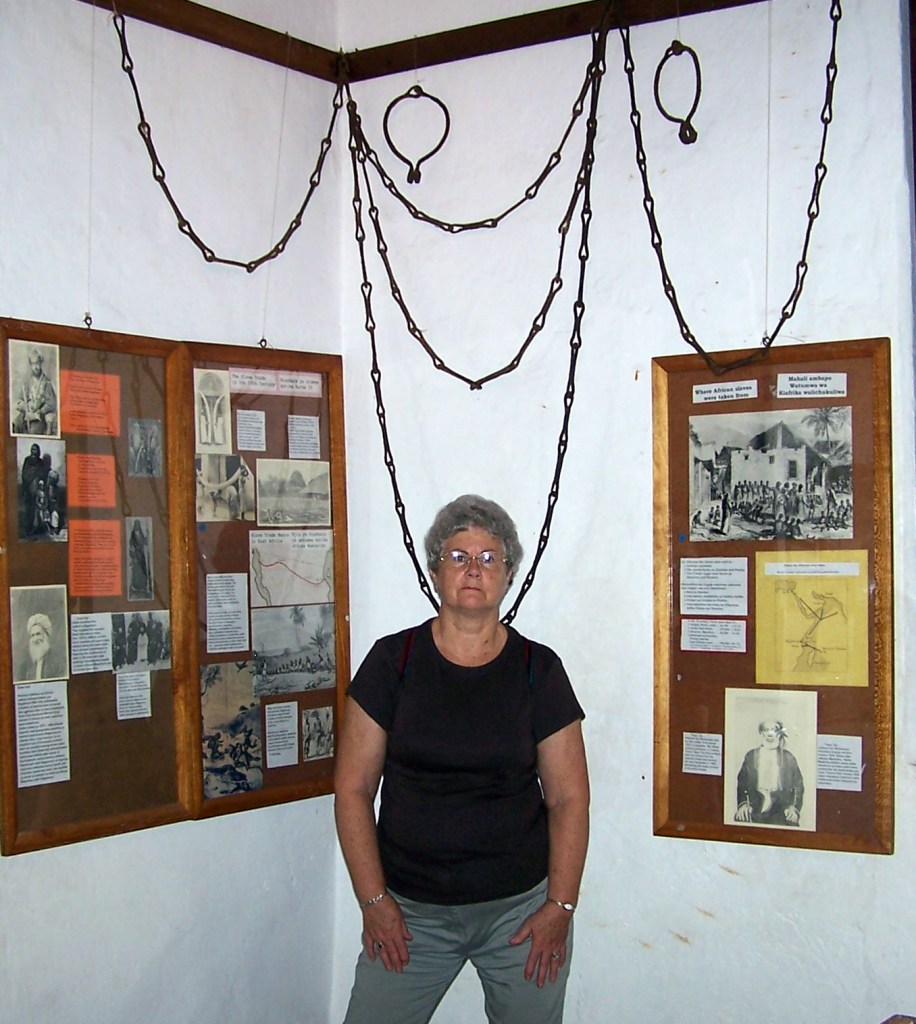
On the road to BagamoyoThis building has since been refurbished Safari LodgeThe first cross raised in East AfricaVisiting the slave memorial
Sadly this port was used by Arab slave traders who brought caravans of slaves from the interior to be shipped to the slave market in Zanzibar. It is estimated that 50,000 young and old African men and women were shipped from here every year over a number of decades, amounting to an approximately 1.5 million souls, not counting those who died on the way. It was a sobering experience walking around that place.
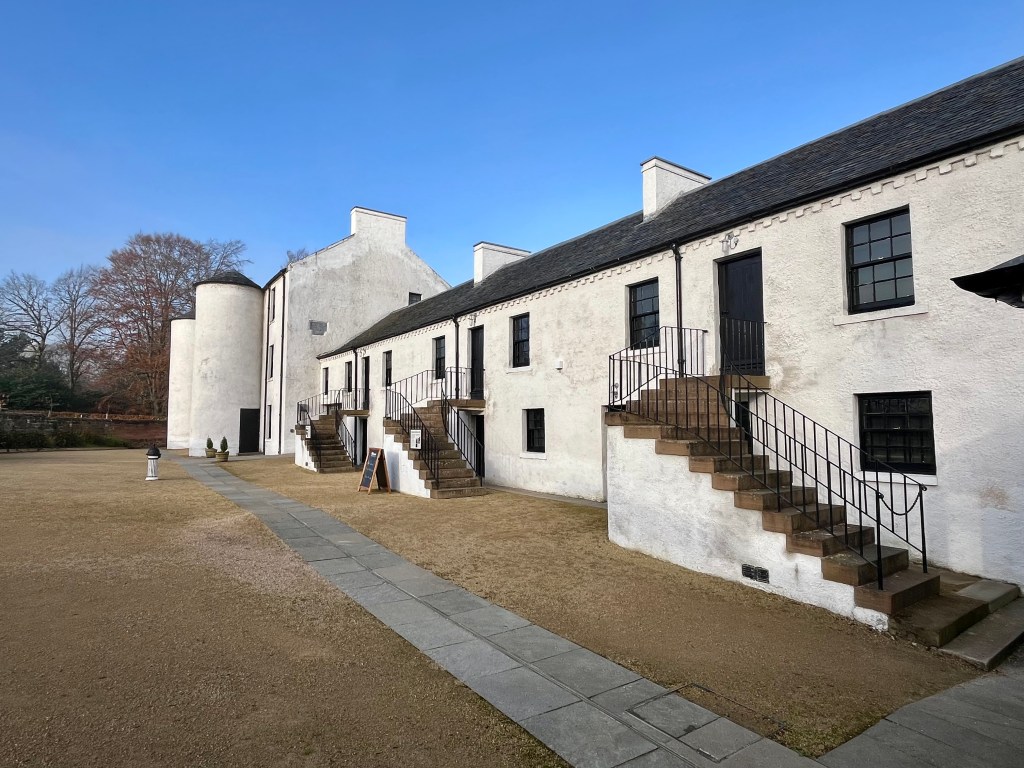
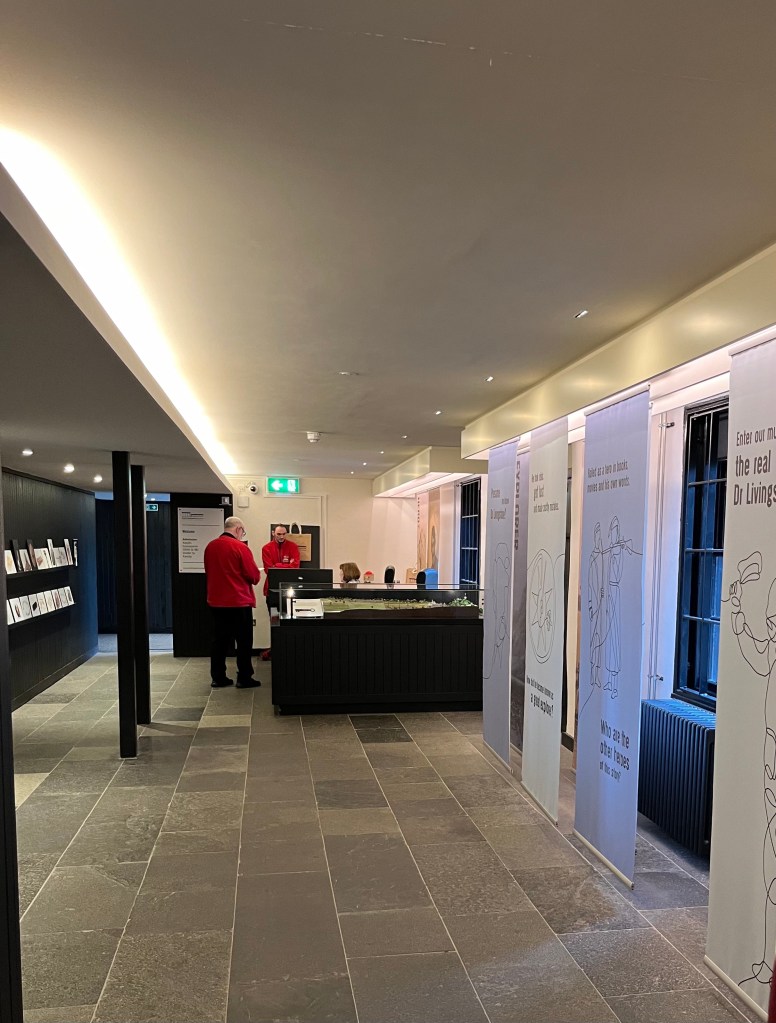
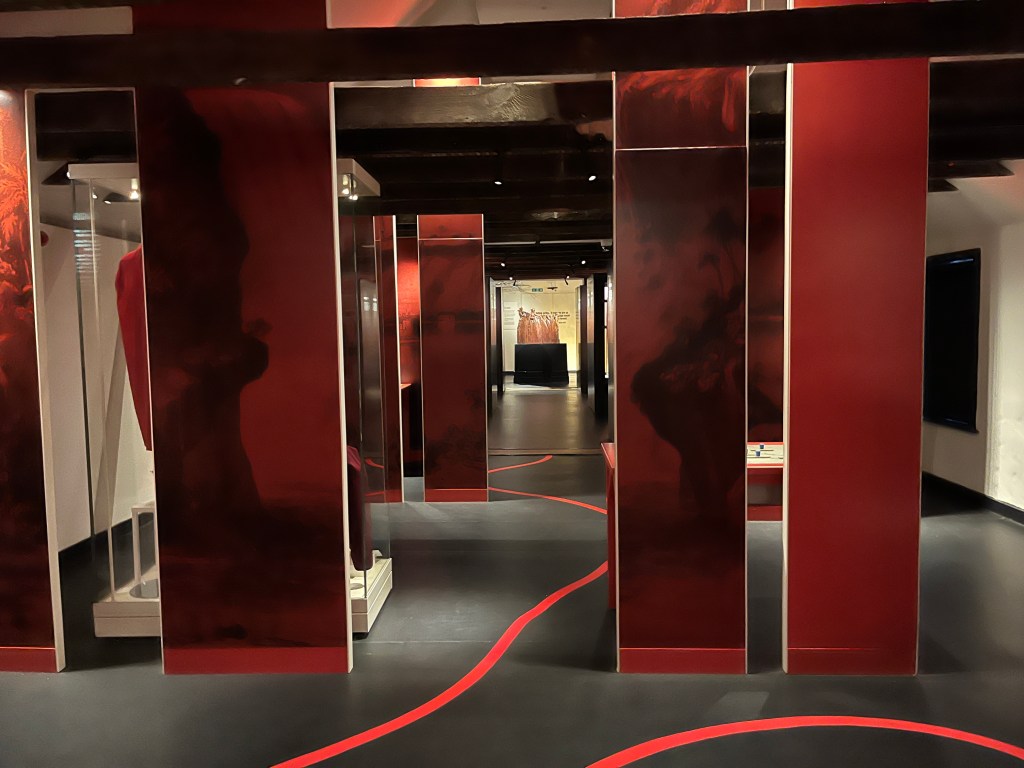
THE BLANTYRE MEMORIAL MUSEUM is set on the banks of the river Clyde, surrounded by open fields, and paths, and the old mill houses have been remarkably well preserved, one end of the row forming the museum on three levels with lift access. There are modern toilet facilities in the museum, and on site, also a shop and restaurant. This place is well worth a visit, with plenty of space for a group outing and for children to play. Entrance prices are very competitive and can be checked on line.
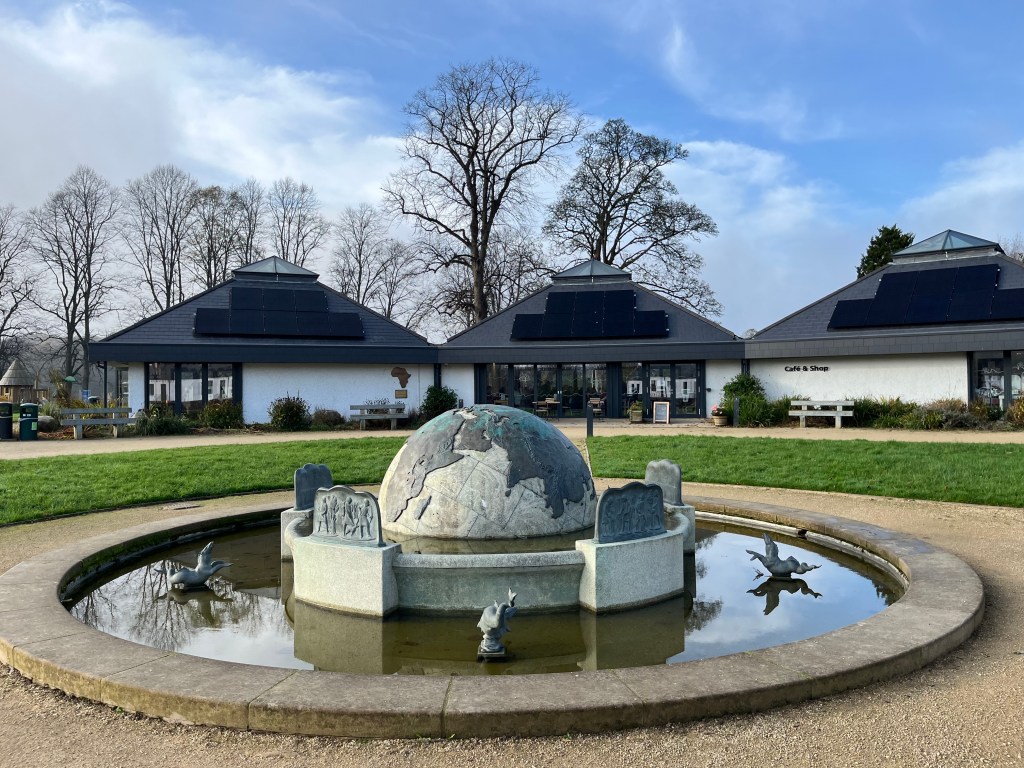
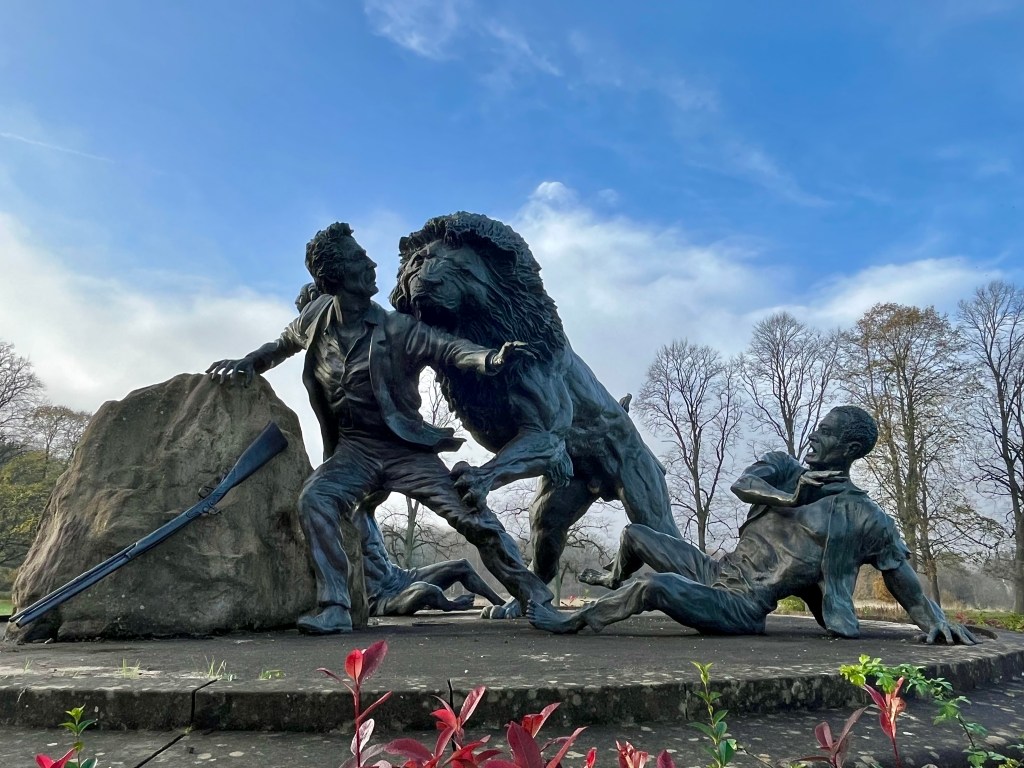
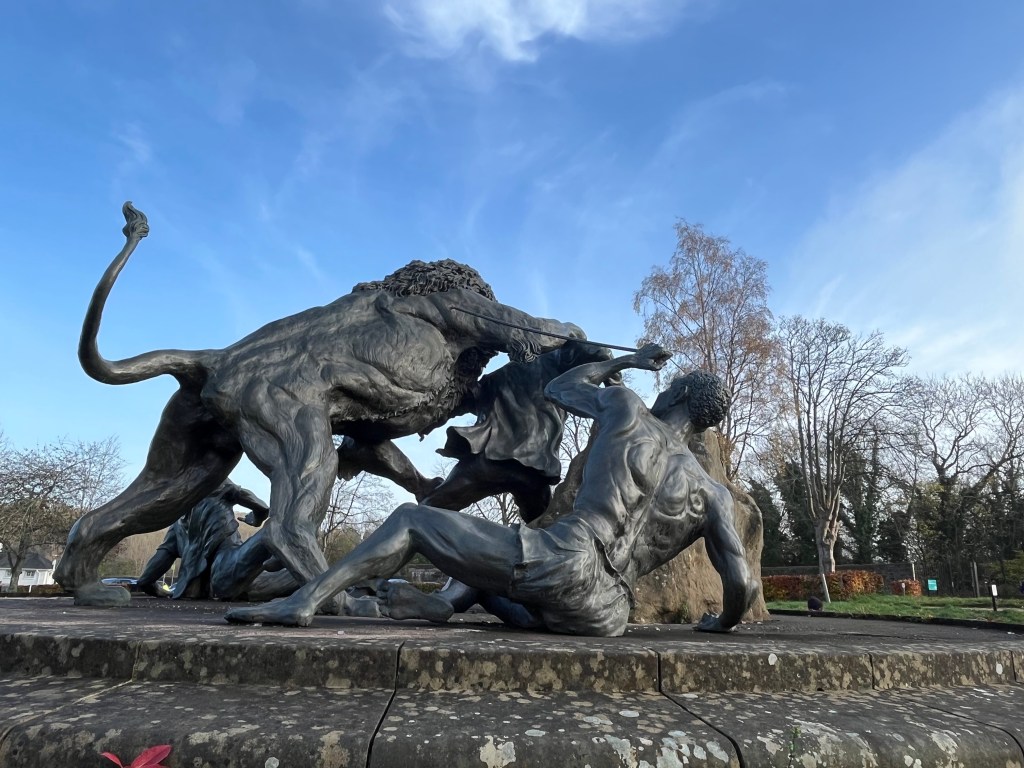
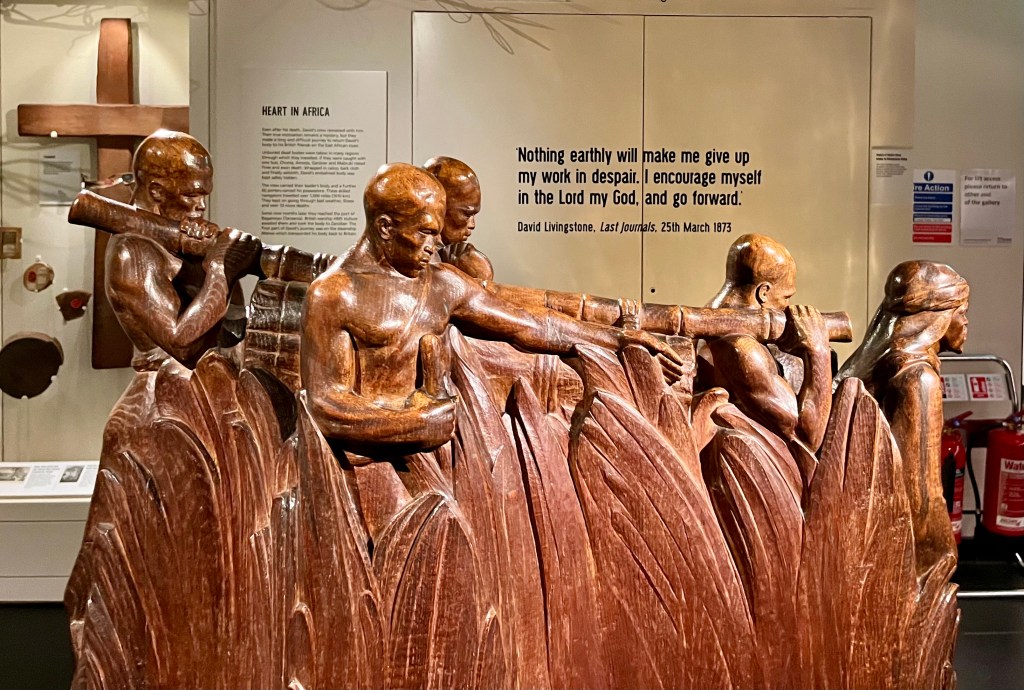
A view of the expansive siteThe old mill house cottegrs and MuseumThe African fountain with shop and restaurant in the backgroundThe large sculpture depicting the incident when they were attacked by a lion
David Livingstone, one of Scotland’s famous sons was the second child of Neil and Agnes Livingstone, and was born on the 19th March 1813. He was of humble birth and had six siblings, but grew up knowing the love and discipline of good Christian parents in a happy home. At the age of ten, he was sent to work at the local cotton mill, first as a piercer and then as a spinner. At the age of twenty he made a personal commitment to Jesus Christ after readng Dick’s “Philosophy of a Future State”. He said ‘I saw the duty and inestimable privilege immediately to accept salvation by Christ‘. This experience determined the course of his life.
Livingstone had a great love of reading, and this opened up the world to him. He is said to have read all sorts of books that came into his hands, but especially books on travel and missionary enterprise. By the age of 23 years, he was studying theology and medicine at Glasgow University and by September 1838, had been provisionally accepted by the London Missionary Society. After further studies in England, he returned to Glasgow in November 1840, and passed at Glasgow as a licentiate of the faculty of physicians and surgeons. During that same month he was ordained a missionary at Albion Street Chapel, and the following month he set sail for Capetown in South Africa. Here are some photos from within the museum.
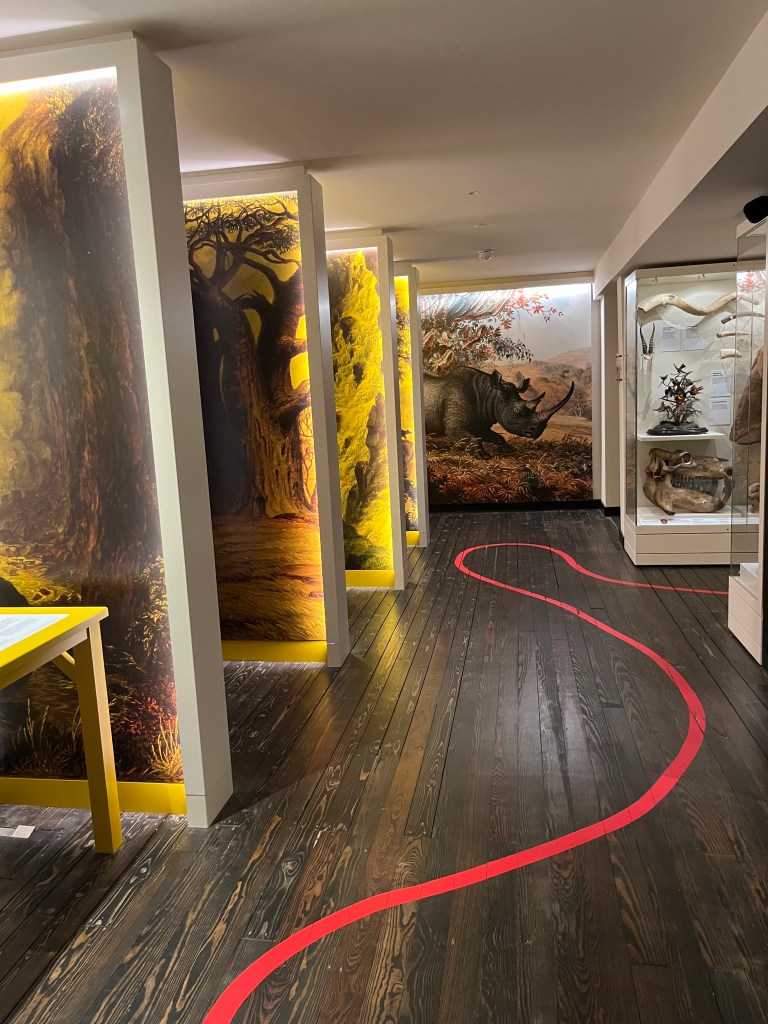
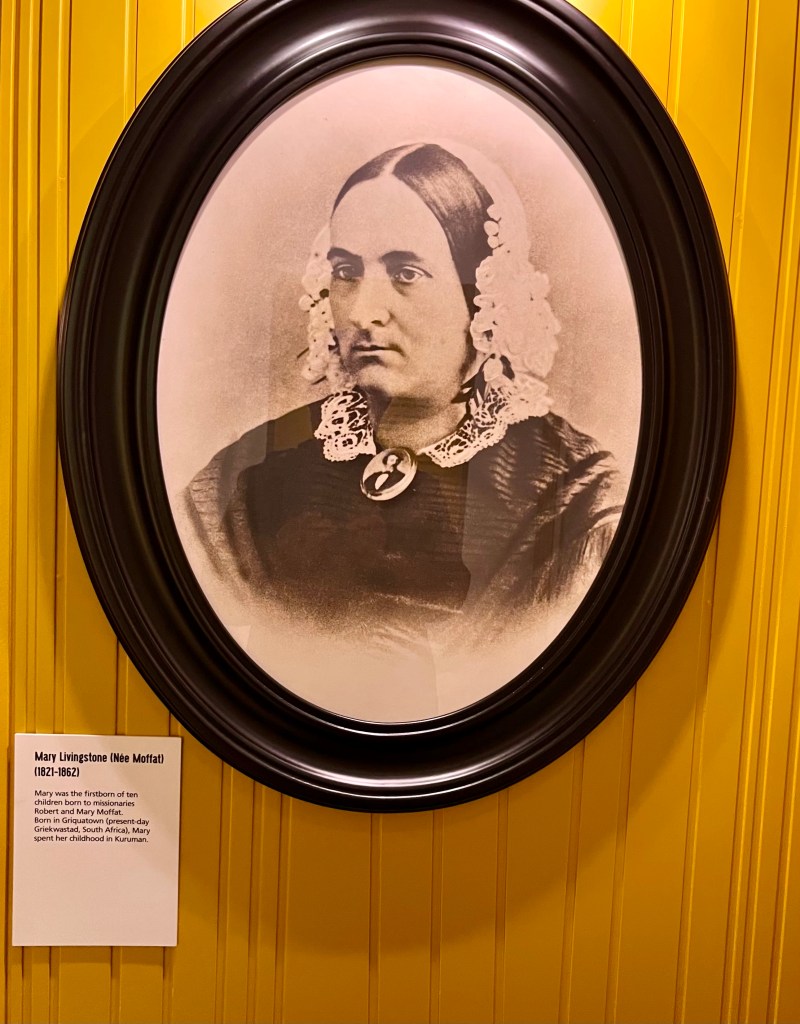
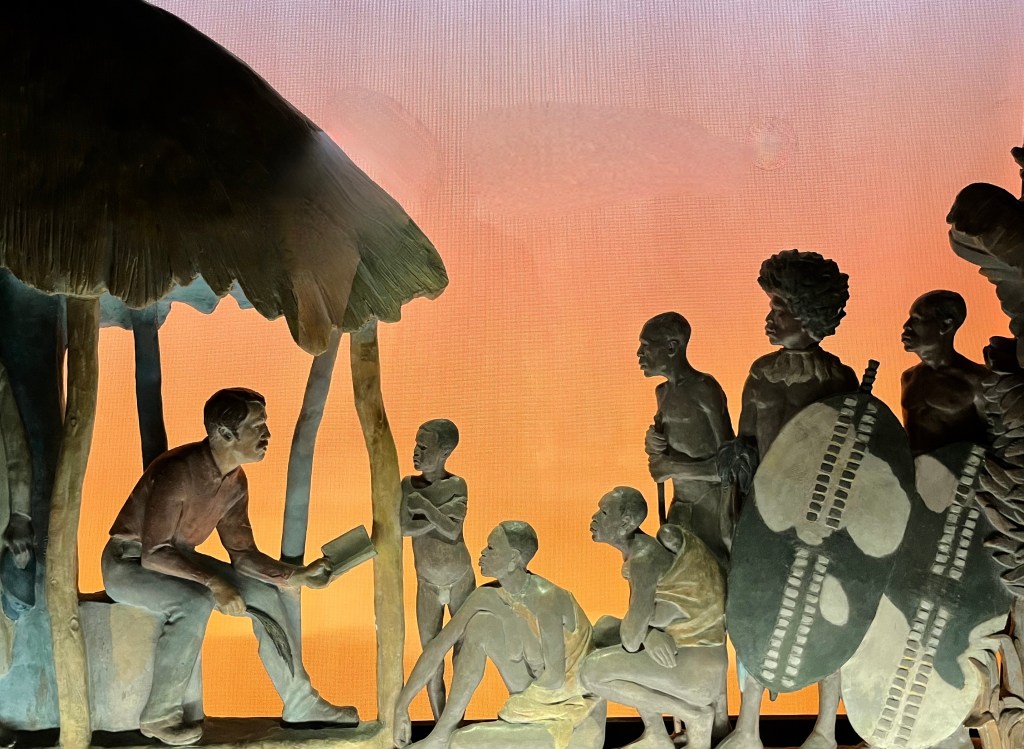
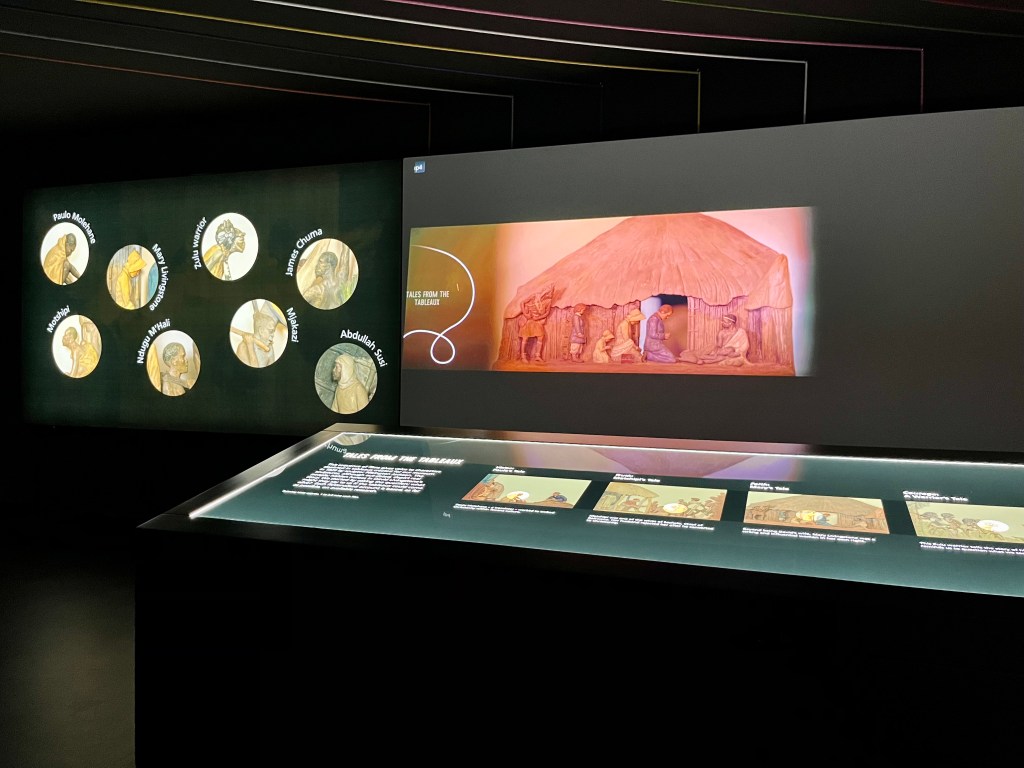
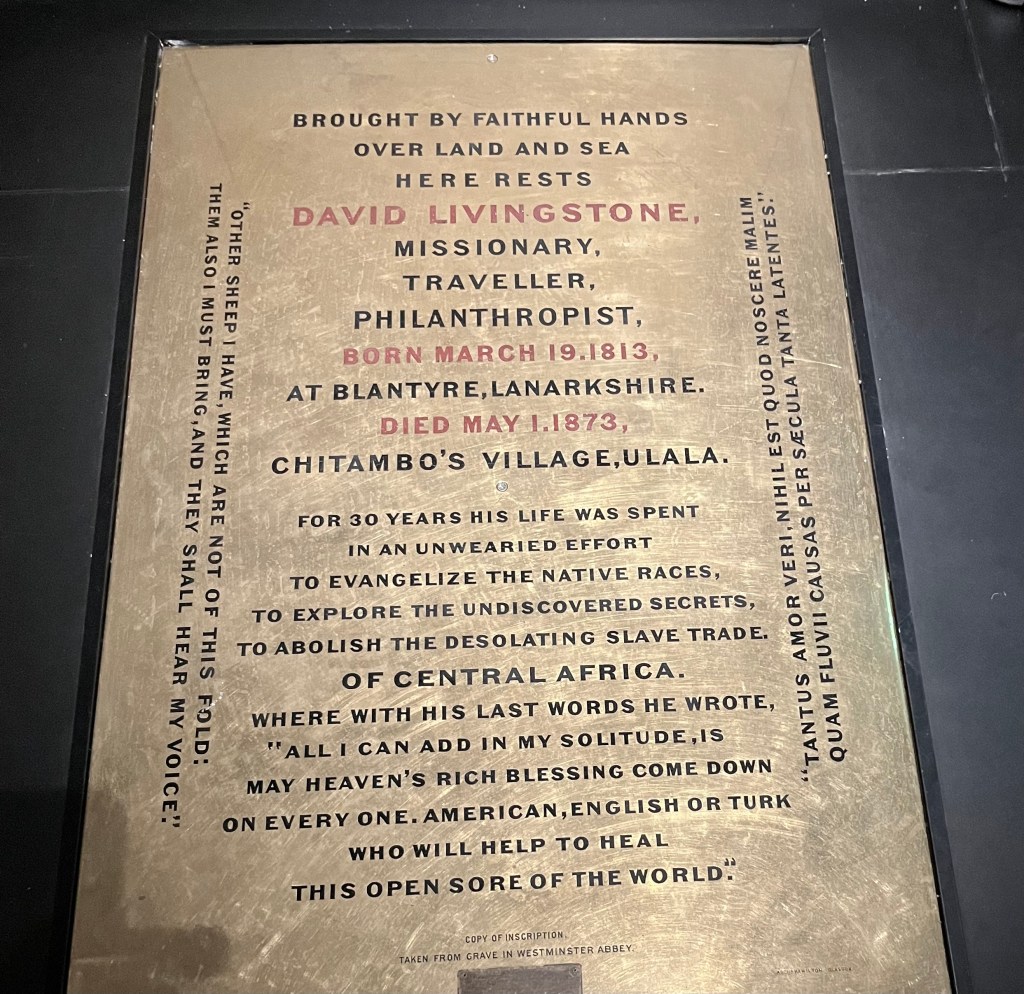
Museum Entrance The familly’s Single room >These panels illustrate and tell his storyDavid’s wife MaryThese panels illustrate and tell his storyOne of a number of many ‘reliefs’ within the museumThe film roomCopy of the Westminster Grave slab.Brave and valliant friends David Livingstone
This Memorial Museum is well worth a visit if you are ever in Scotland,I suggest it be one for your bucket list!
Thirty three years later on his last expedition in search of the source of the river Nile, he penned his last journal entry. This was just a few weeks before his death, he wrote “Nothing earthly will make me give up my work in despair. I encourage myself in the Lord my God, and go forward”. 25 March 1873.
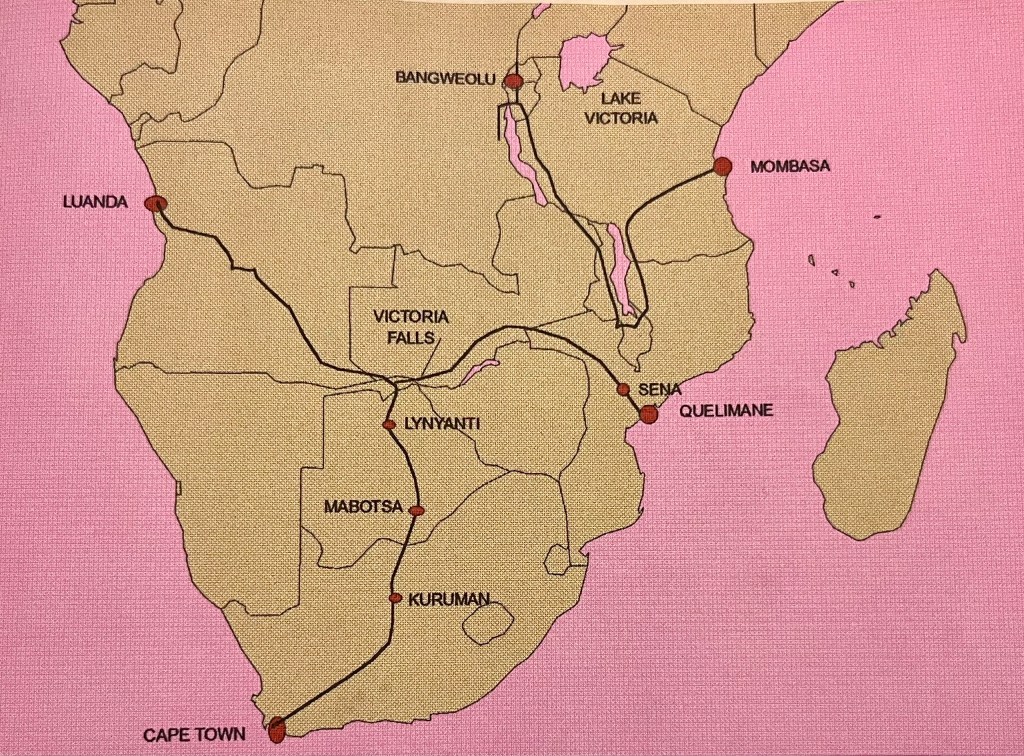
During his 33 years in Africa it is estimated that Livingstone walked 29,000 miles crisscrossing a third of the African continent. The map below shows some of his most famous missionary / explorational expeditions.
Dr. David Livingstone – Expeditions
Journeys of Dr. David Livingstone:
Capetown 1852 – For their safety his family returns to UK. and Livingstone to Lynyanti.
November 1853 he departs on his expedition to Luanda, and arrives 1854.
September 1854 he returns to Lynyanti.
November 1855 Livingstone departs on an expedition to the East Coast, and on route becomes the first European to witness the magnificent Zambezi waterfall, which he named the ‘Victoria Falls’
May 1856 he successfully arrives at Quelimane on the East Coast
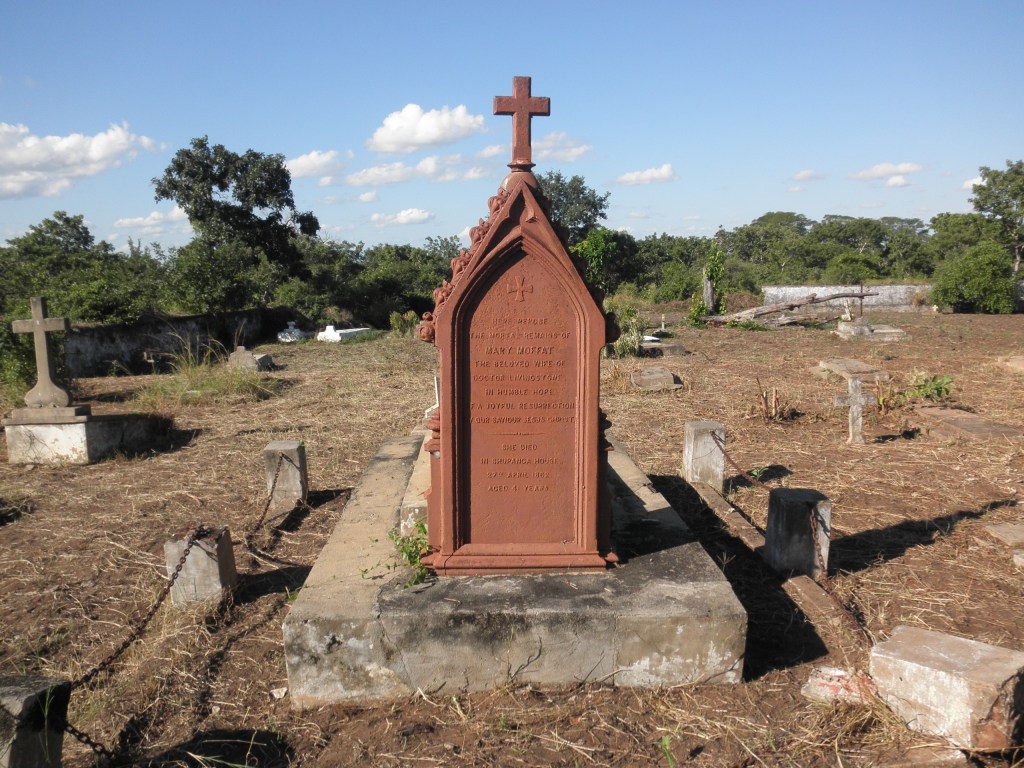
Sadly David’s loving wife and fellow worker Mary (nee Moffat), who had returned to be with her husband in Africa died of malaria on 27 April 1862 aged 41, and was buried at Shupanga.
Between 1866 – 1873 David’s last expedition in search of the source of the Nile, took him around Lake Malawi and Lake Tanganyika. On this journey he had his meeting with Stanley, who on finding him famously said ‘Doctor Livingstone I presume‘.
May 1st 1873, He died on the southern shore of Lake Bangweolu.
Things people have said of him:
Mr Young lecturer at Glasgow said – Livingstone was the best man he ever knew, he had more than any other man of true filial trust in God, more of the Spirit of Christ, more of integrity, purity, and sismplicity of character, and of self denying love for his fellow men”.
Hildebrandt J – ‘Apparently he did not know fear and inspite of periods of gloom, he was generally hopeful and had a quiet humour. He had an indomitable will power which propelled a body often racked by fever. He was skilful in dealing with people and was a keen and accurate observer.’
What he said about himself at Cambridge University in 1857 – ‘…people talk of the sacrifice I have made in spending so much of my life in Africa. Can it be called a sacrifice which is simply paid back as a small part of a great debt owing to our God? ”’ it is emphatically no sacrifice. Say rather it is a privilege.
Others of course have been critical, but it’s relatively easy to be critical with hindsight. Livingstone was not to know of the excesses to which future colonialists would go in their exploitation of Africa.
His writing of papers, his speeches back home, and his book ‘Missionary Travels and Researches in South Africa’ highlighted amongst other things the needs of Africa. Particularly however was his horror of the slave trade. When confronting Arab slave traders in Tanganyika he wrote –‘This is a den of the worst of slave traders … they are the vilest of the vile. It is not a trade, but a system of consecutive murders; they go to plunder and kidnap, and every trading trip is nothing but a foray”. His last recorded words are these – “All I can say in my solitude is this, “May Heaven’s rich blessing come down on everyone – American, English, Turk – who will help to heal this open sore of the world”. Almost within a month of his death the slave market in Zanzibar was closed forever.
When David Livingstone applied to the London Missionary Society he stated at the start of his career his ideas of a Missionary’s work. He wrote “The missionary’s object is to endeavour by every means in his power to make known the Gospel by preaching, exhortation, conversation, instruction of the young; improving so far as is in his power, the temporal condition of those amongst whom he labours, by introducing the arts and sciences of civilisation, and doing everything to commend Christianity to their hearts and consciences. This extraordinary man, by God’s grace and help, and by his inspiration, accomplished through his work and writings nearly all of this to the Glory of God and the blessing of Africa’s peoples.
Mary Livingstone’s Grave at ShupangaDavid Livingstone found dead kneeling at his bedside 1 May 1873
I hope the above photos and paragraphs have been enough to encourage you to visit the Blantyre Memorial if you live in the UK, or are on a visit here. If not you may wish to read one of the many books on Doctor David Livingstone which are readily available . I acknowledge their value here, as I have drawn on some of these invaluable resources when compiling this short blog.
It would be lovely to think of slavery as a thing of the past, but have you ever stopped to consider that slavery is still a problen in almost every country in the world today? Current estimates mention a figure of 50 million worldwide. In the UK a recent government report from the Home Affairs Committee on Human Trafficking was submitted to the government. In that, it mentions that the potential victims of modern slavery has increased substantially. There were 16,938 referrals in 2022, five times as many as the 3,263 referrals in 2015 when the Modern Slavery Act was passed. Nonetheless it has been estimated that there are at least 100,000 victims of modern slavery and human trafficking in the UK.
I felt aghast reading these statistics, just to think of the depth of human misery, exploitation and suffering that these statistics represent, and to think that they almost certainly describe situations happening in the city of Glasgow or even within a short distance from my own doorstep. It is at least heartening to know the government are trying to do something about it. But one thing it surely proves is that the human heart has not basically changed throughout the centuries. We don’t need to start by pointing the fingure at anyone else, we all know our own heart and mind. But hallelujah, there is a Saviour – Jesus, and it’s great to accept His invitation to come to Him in repentence and faith.. Jesus said, “Very truly I tell you, everyone who sins is a slave to sin. Now a slave has no permanent place in the family, but a son belongs to it forever. So if the Son sets you free, you will be free indeed”. John 8:34-36.
Today in Glasgow we had the first snow of the season, so we are endeavouring to keep warm. But wherever you are be blessed, and spread the word. Last night I was listening to people speaking of how Jesus had set them free from sin here in Glasgow. Some amazing stories.
My wife and I had been talking about having a short end of summer break before the days shorten and the cold Autumn and Winter weather creeps in. The question though was, where should we go? The answer to that question came with an unexpected invitation from my wife’s cousin Helen, suggesting we come over the Irish Sea for a visit. It had been a long time since we last visited Ireland – the Emerald Isle. So after some thought we signaled yes” and soon the plans for the trip were in place. Would we be leaving a wet and dreich Scotland for the same weather in Northern Ireland we asked ourselves? I’ll let the photographs answer that question! Here is our story. Note – click on images to enlarge!
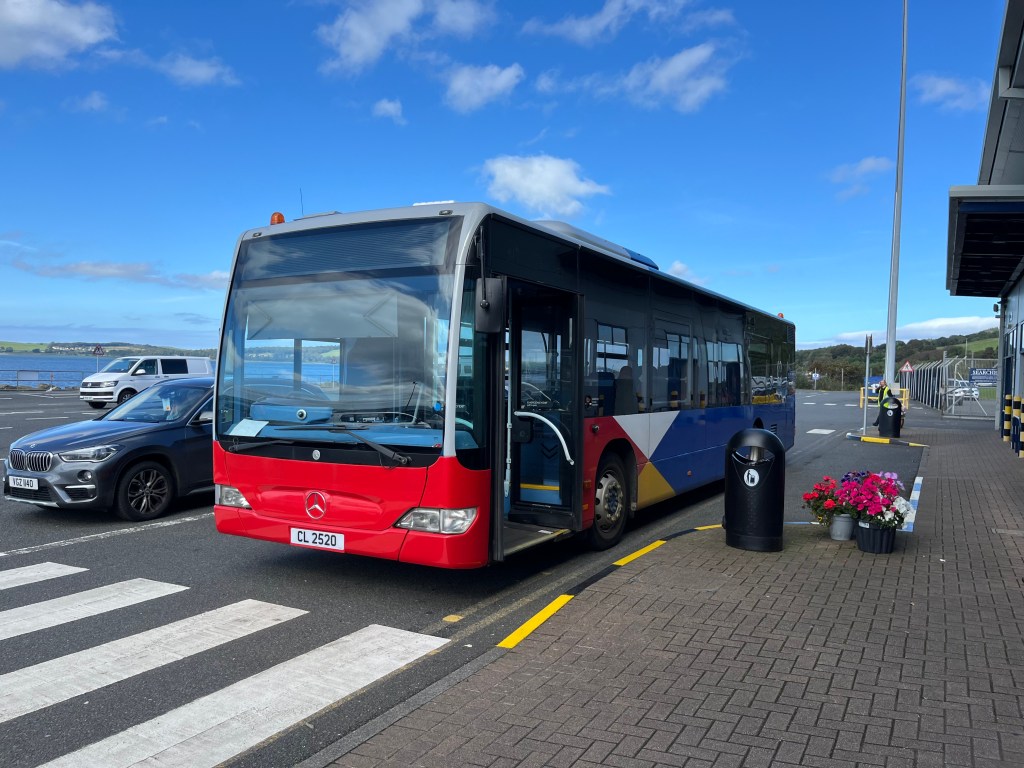
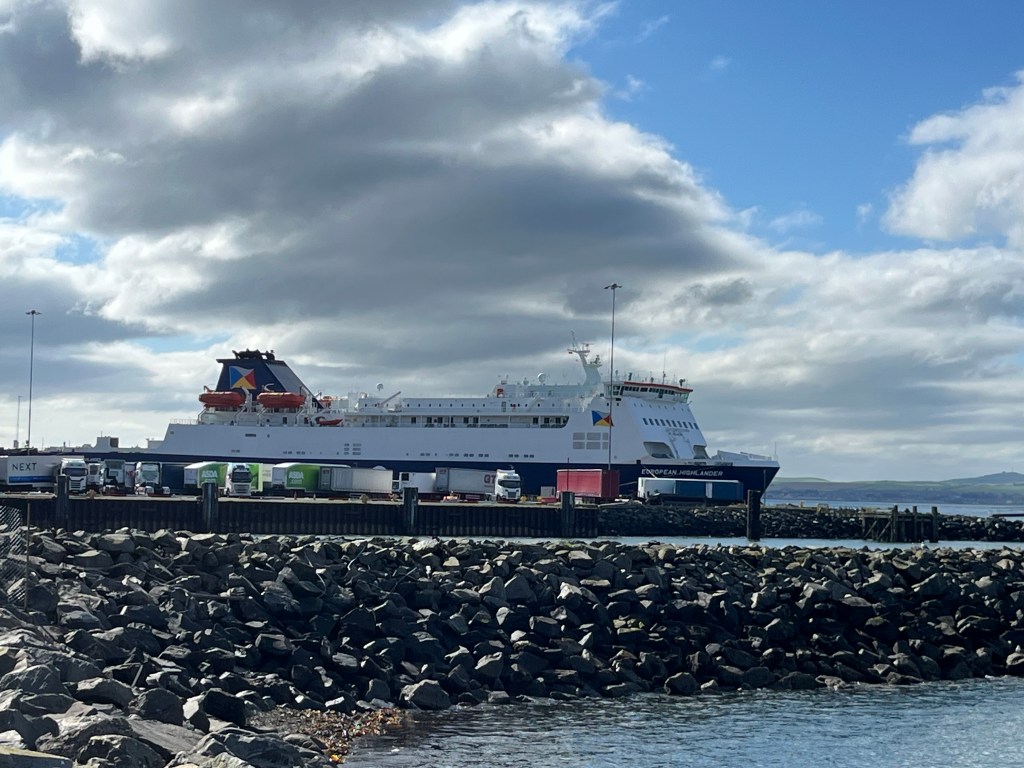
Ferry TerminalCourtesy CoachOur Ferry
We left home in Glasgow, Scotland at 8.30am in busy traffic, but after clearing the city we made good progress and arrived at the port of Cairnryan in perfect time for the 12 noon sailing with P and O Ferries. The long-stay free car park was situated close to the terminal building and the check-in process was very easy and straightforward, as all that was required was our booking reference. We were also delighted to learn that the coach, which would take us onto the ferry was staying with us to Larne, so we should leave our luggage on the coach. Great news for Seniors 🙂
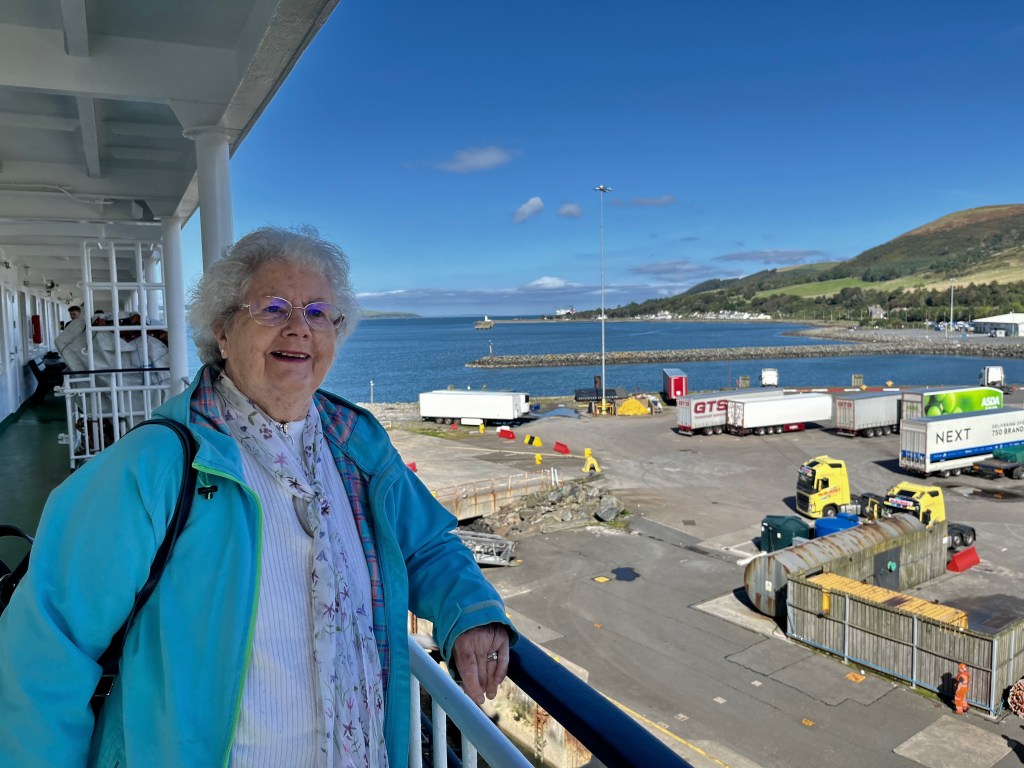
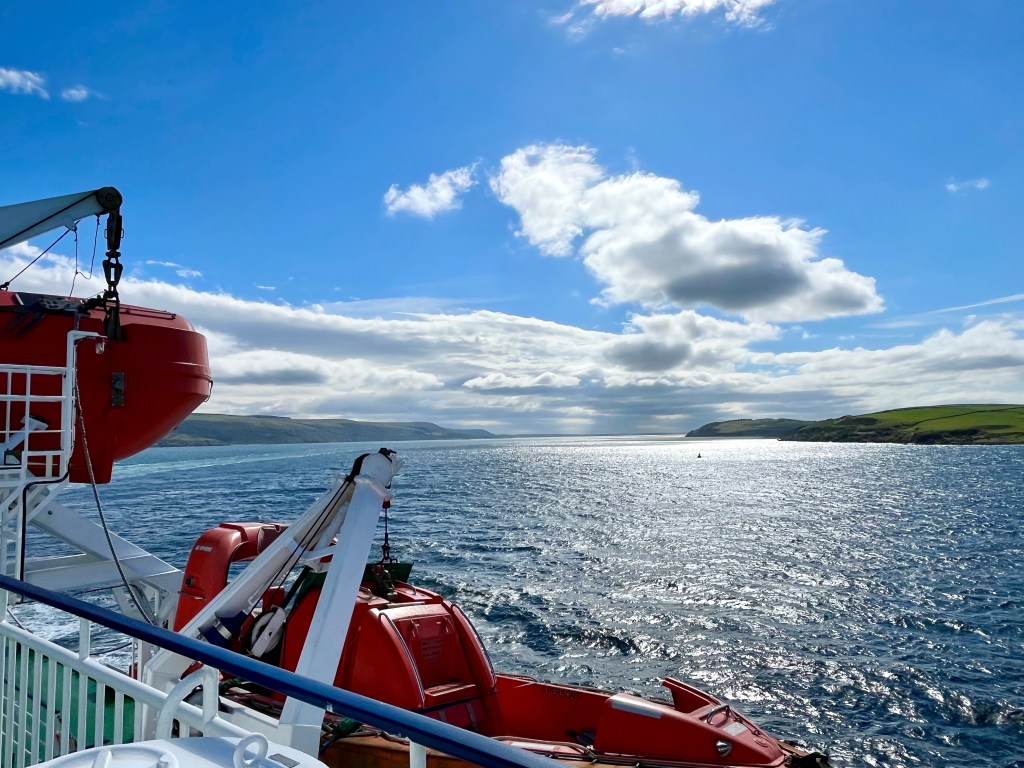
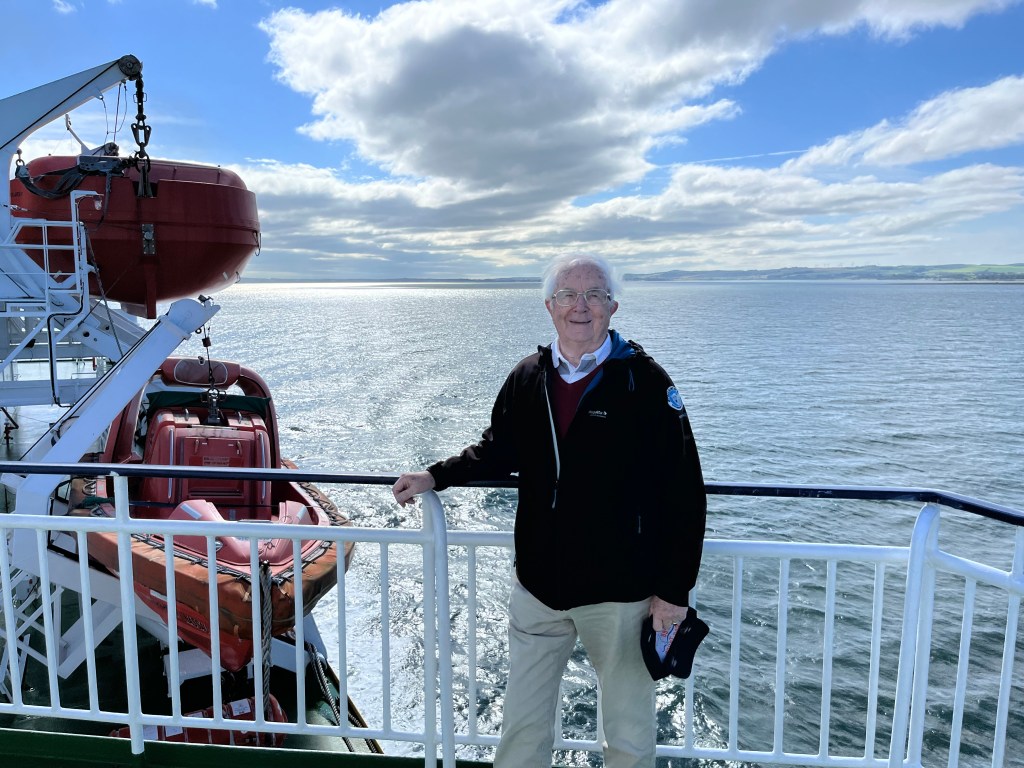
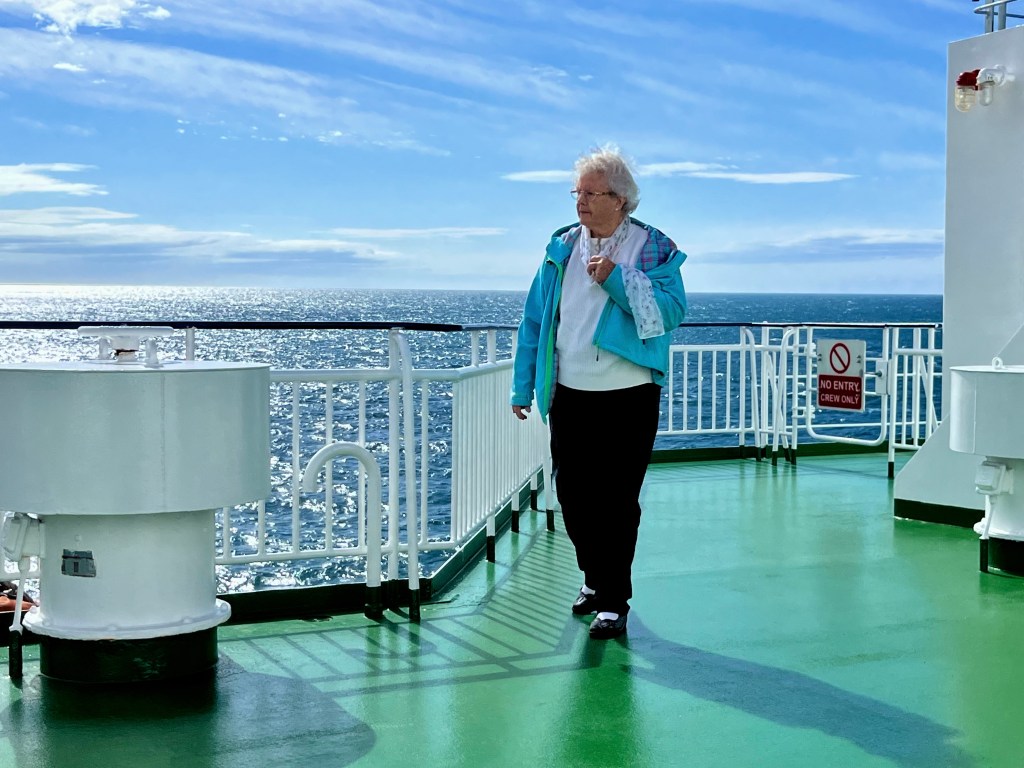
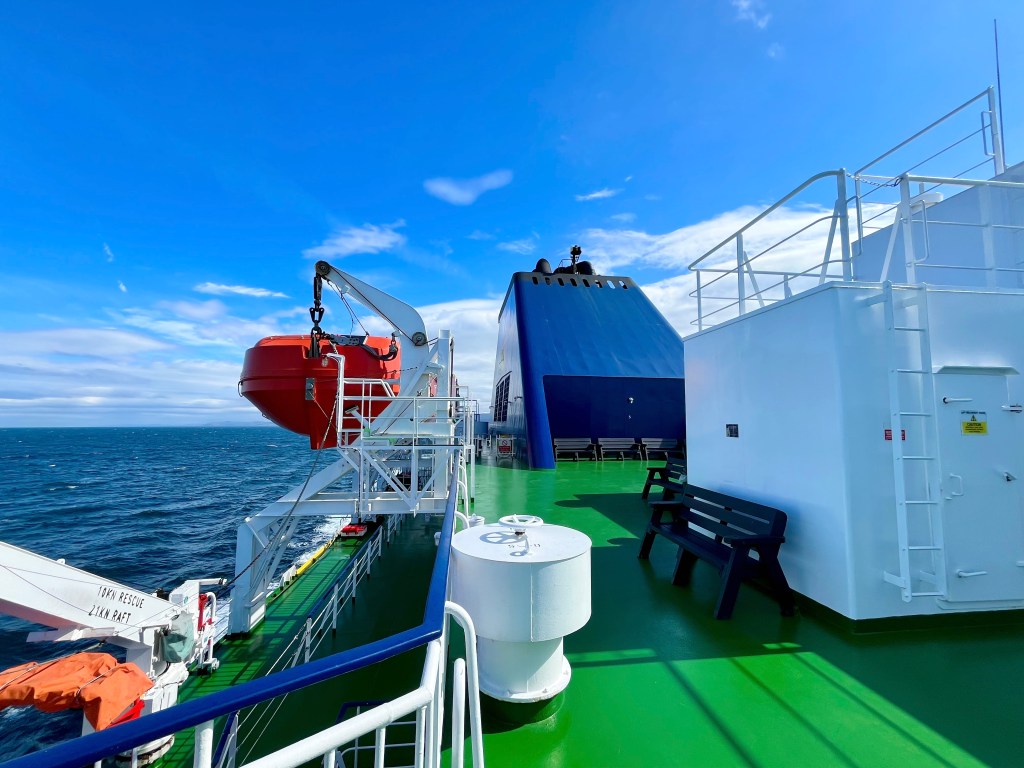
Muriel on the ‘European Highlander’Most of the two hour crossing spent on the Viewing DeckBasking in the sunshine.Blue sky all the way.
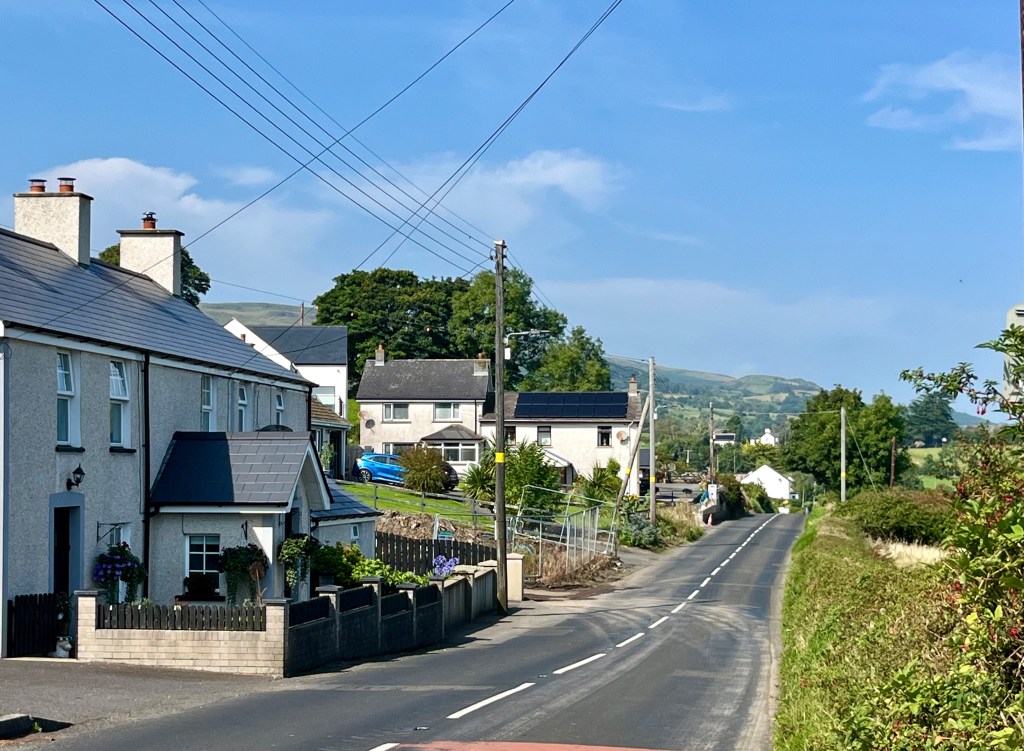
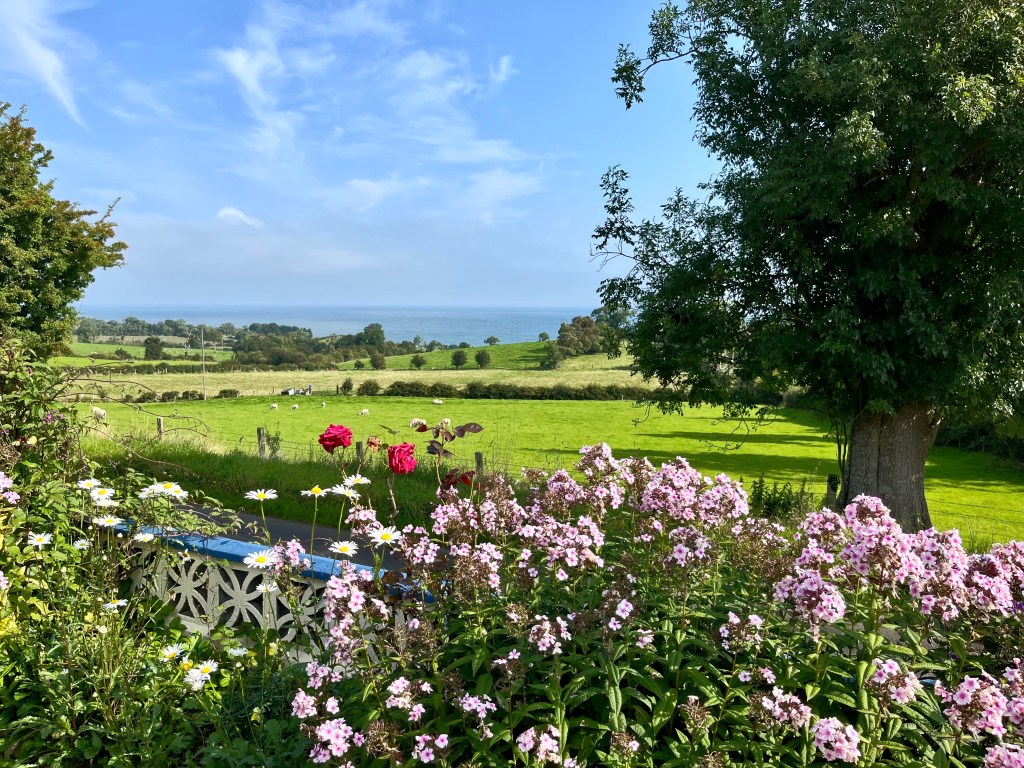
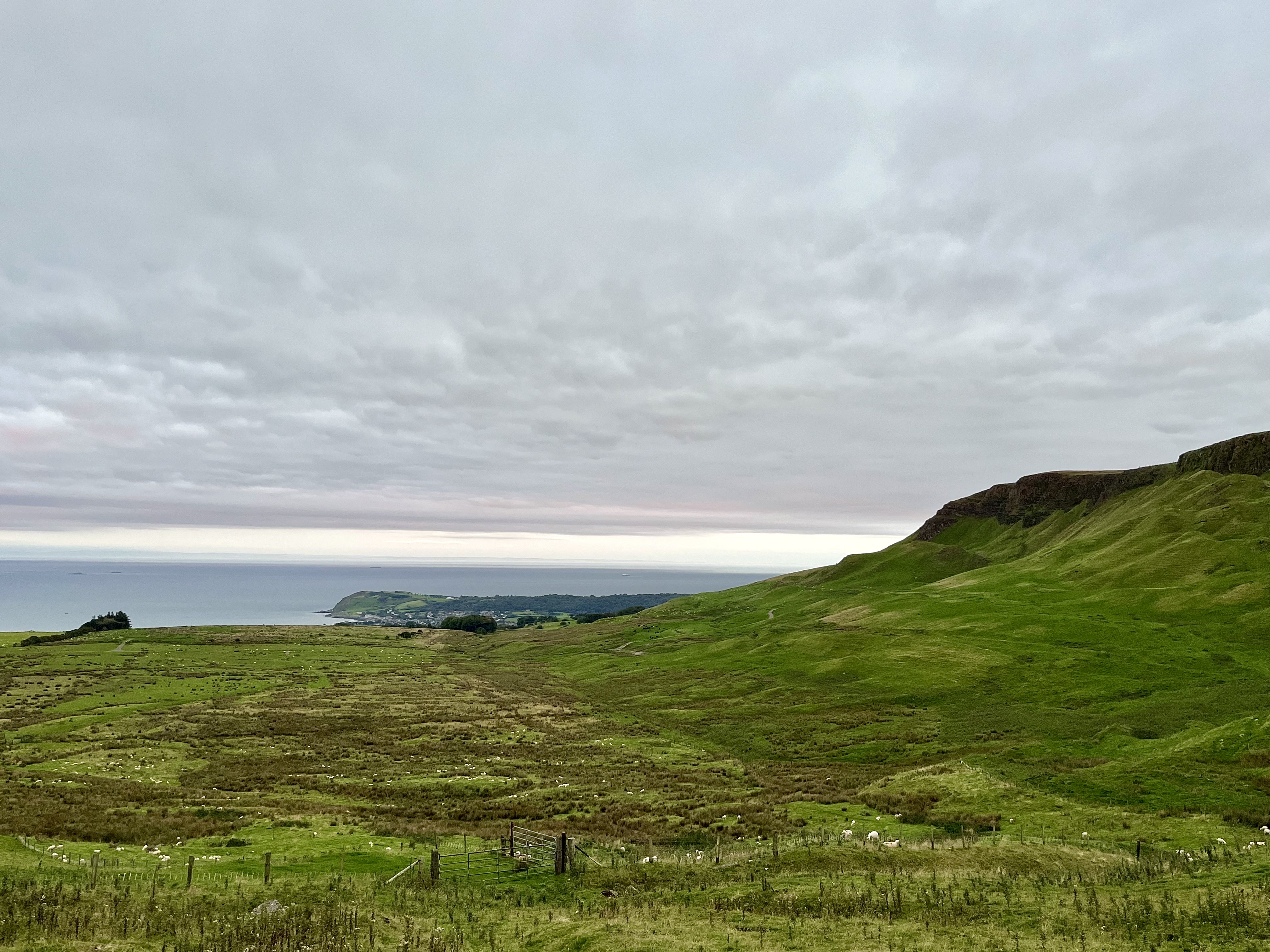
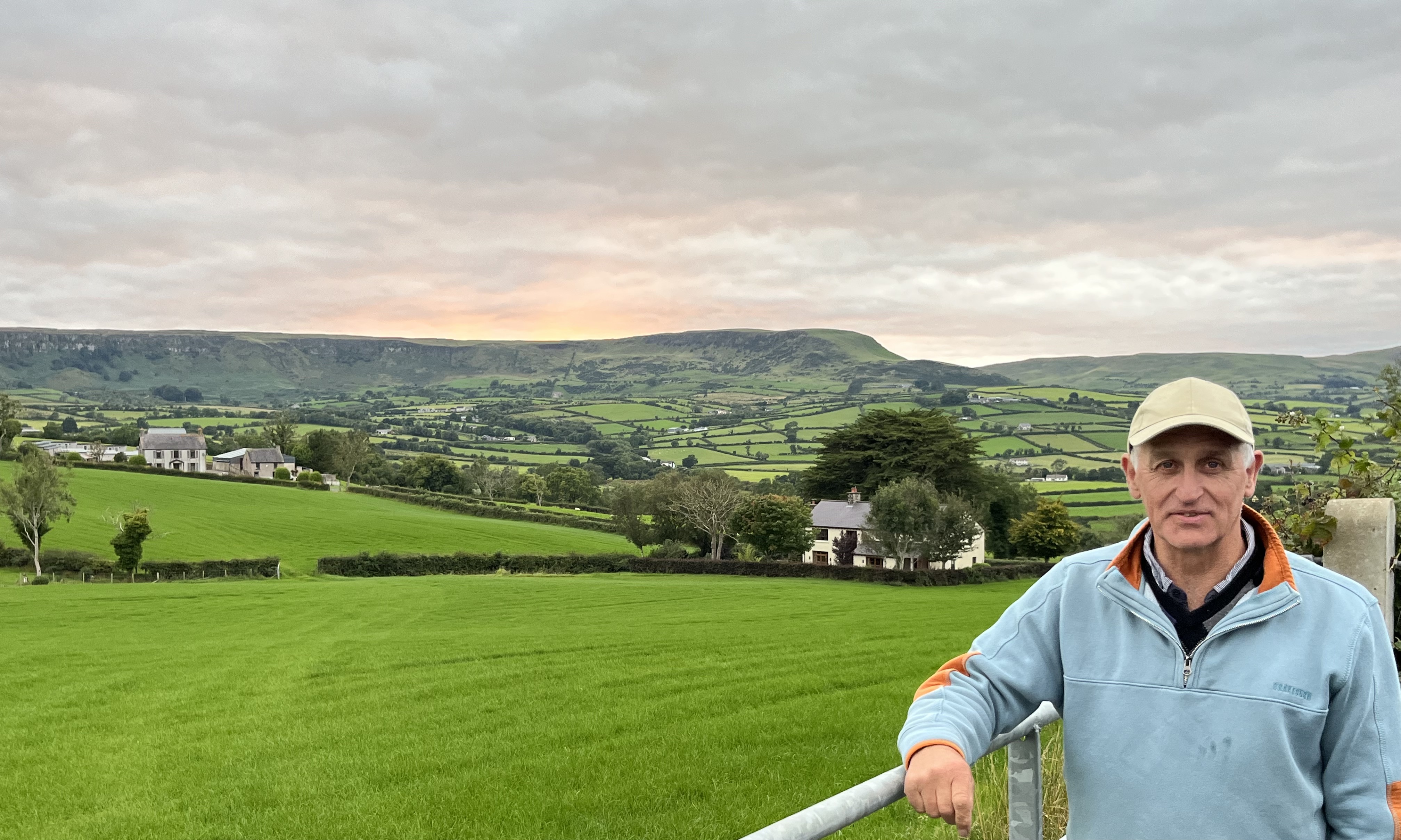
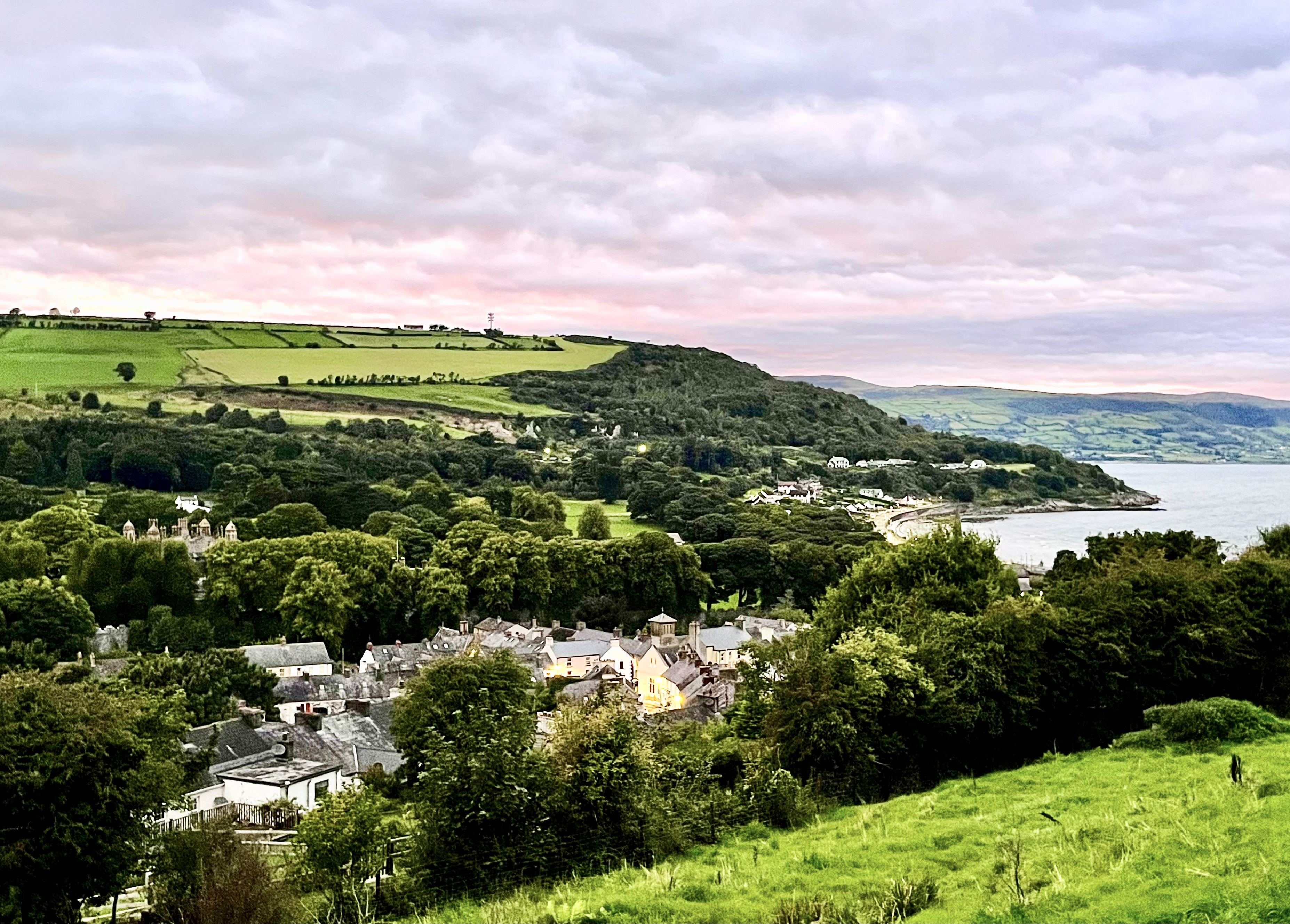
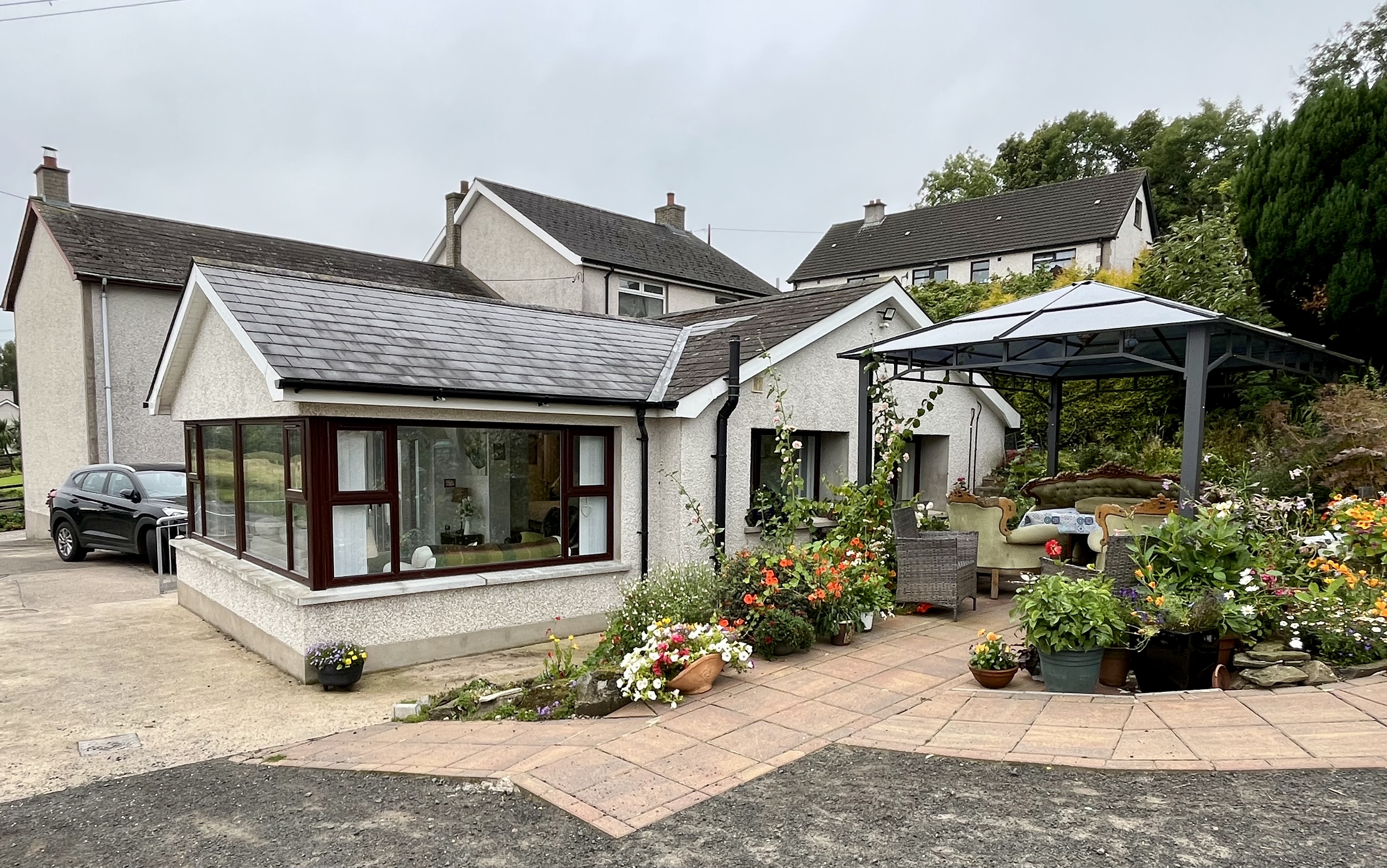
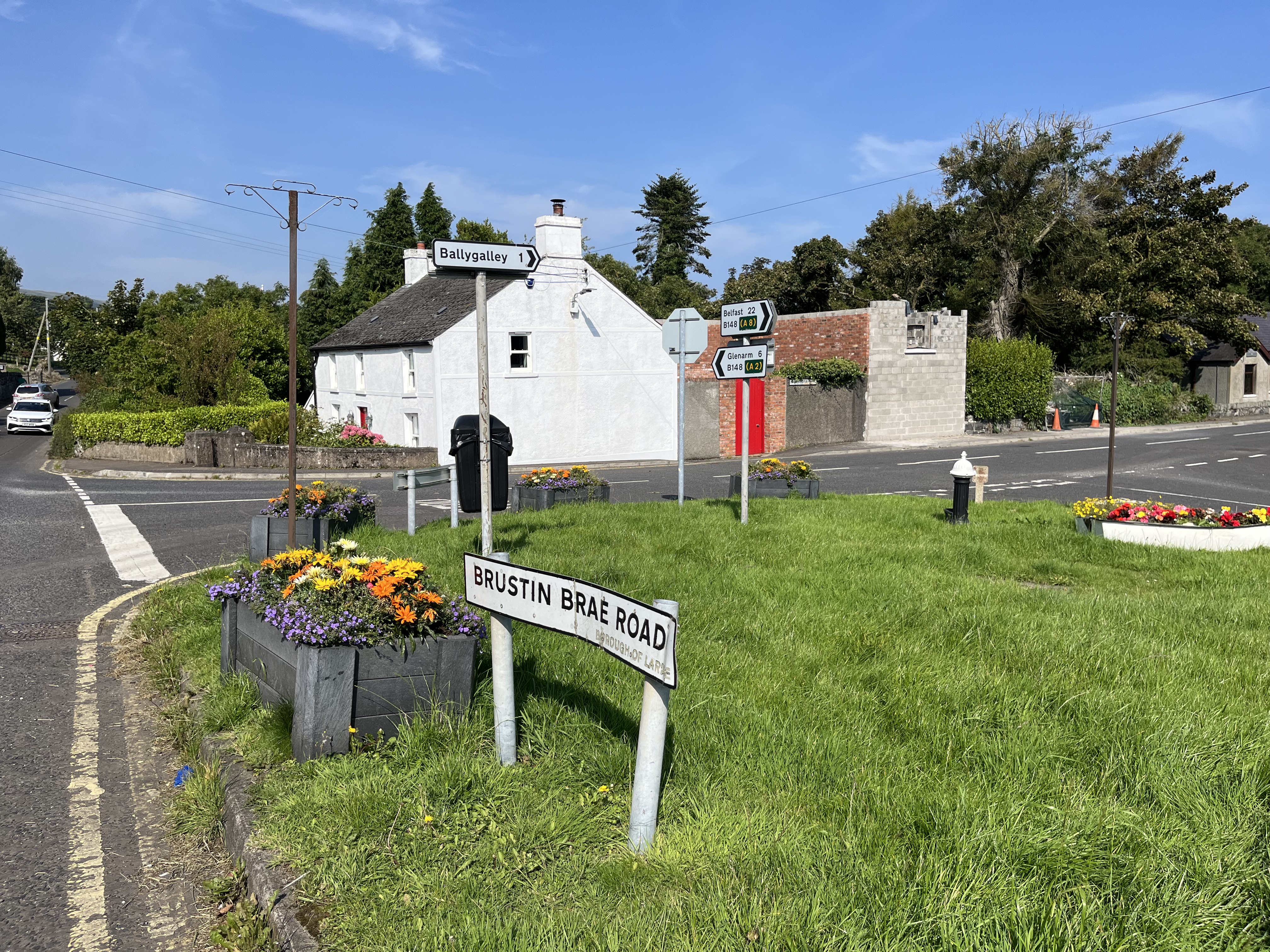
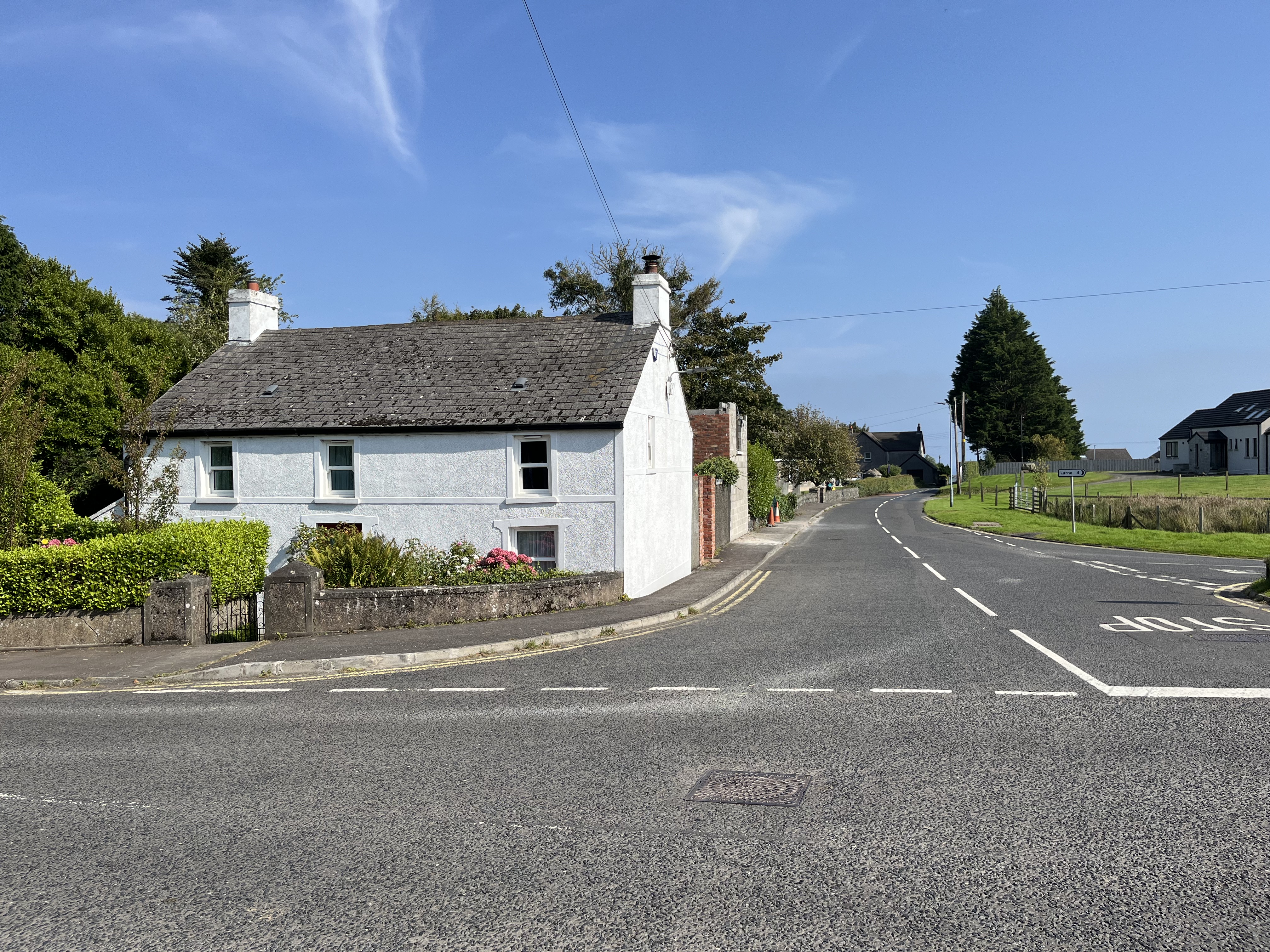
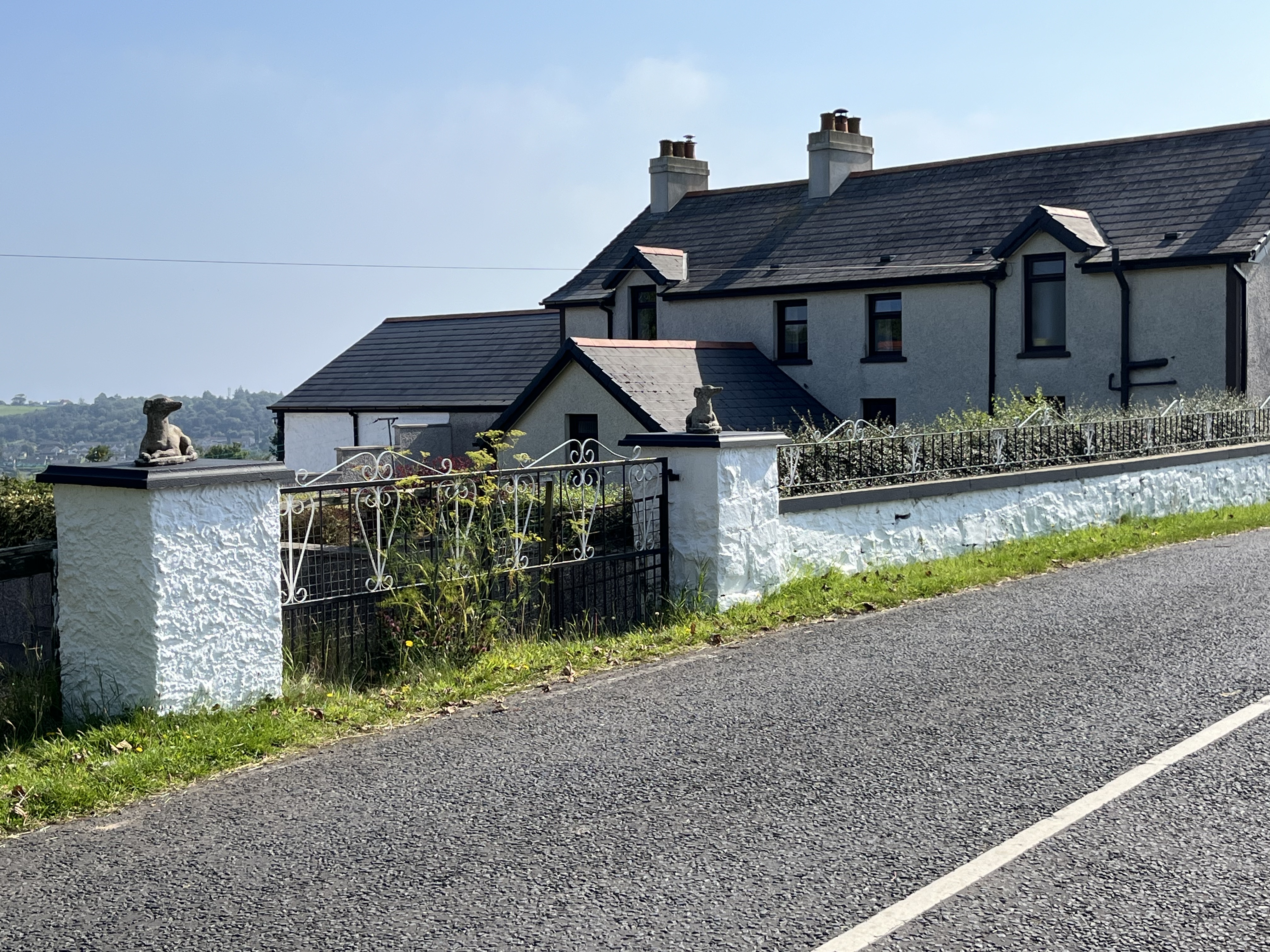
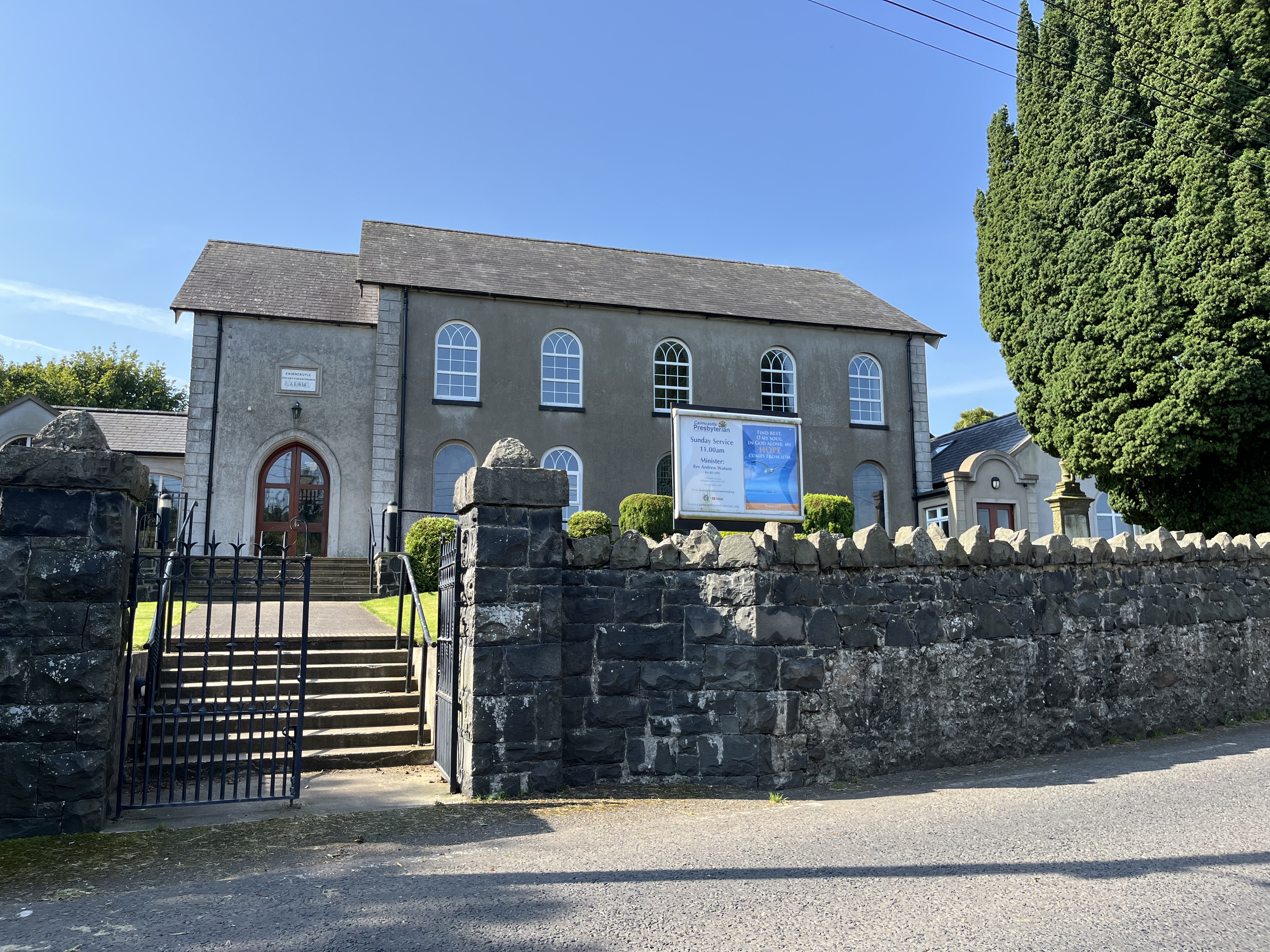
Met by our friends at Larne, we were soon at their beautiful ‘Arran View’ bed and breakfast’ at Cairncastle, (arranviewbedandbreakfast.co.uk) and relaxing with a cup of tea, ready for a long catch-up! After an evening meal the sun was still shining, so we enjoyed a guided tour of the local area. Photos below.
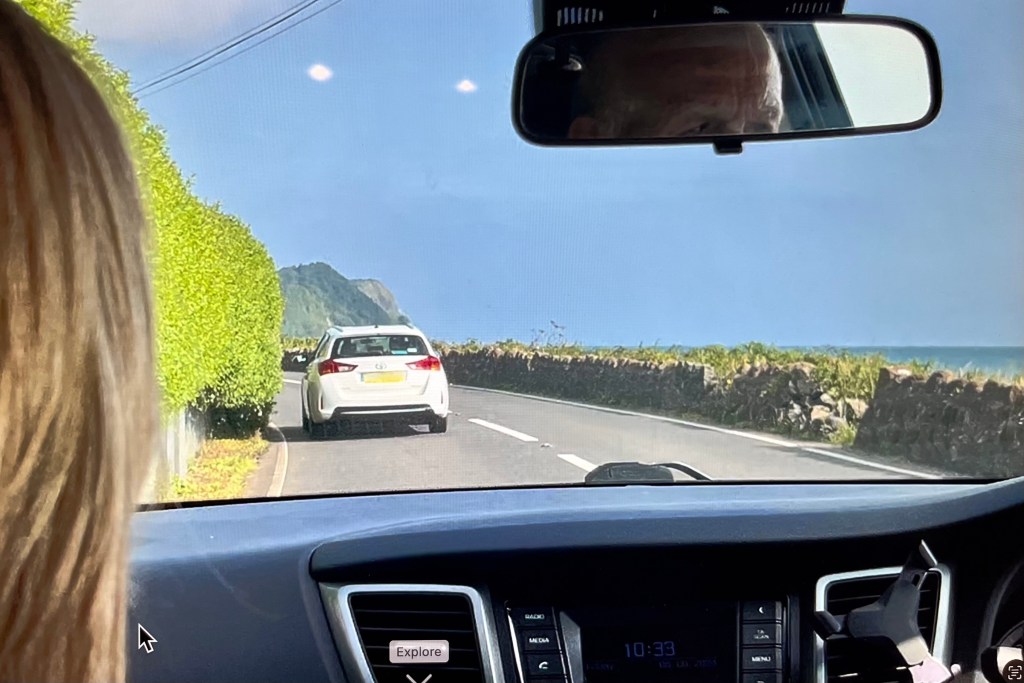
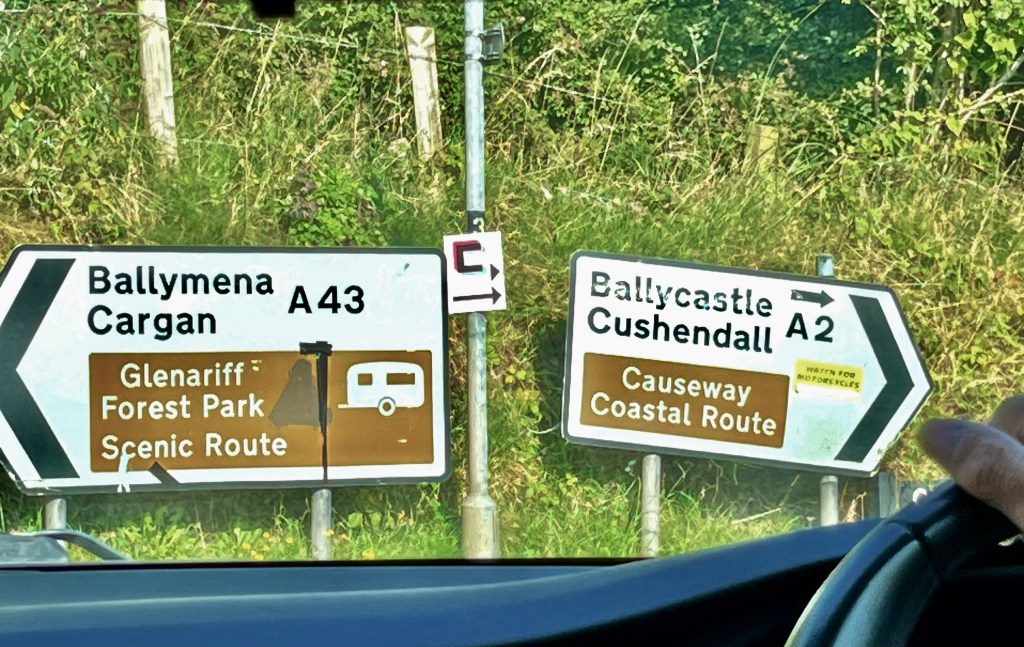
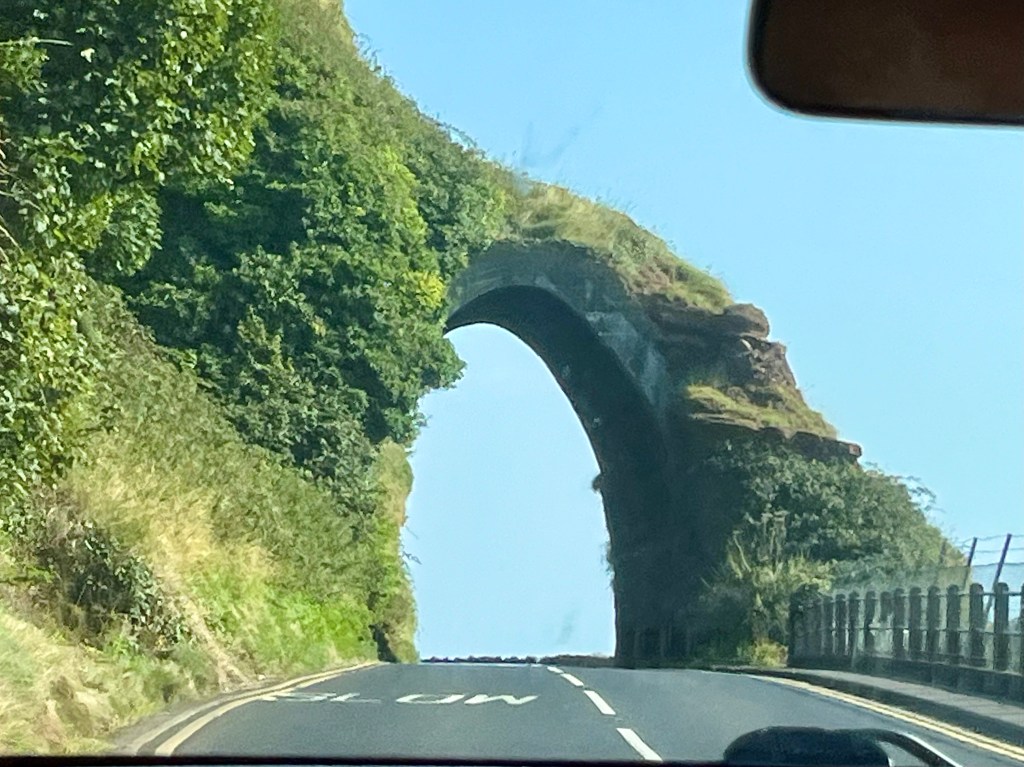
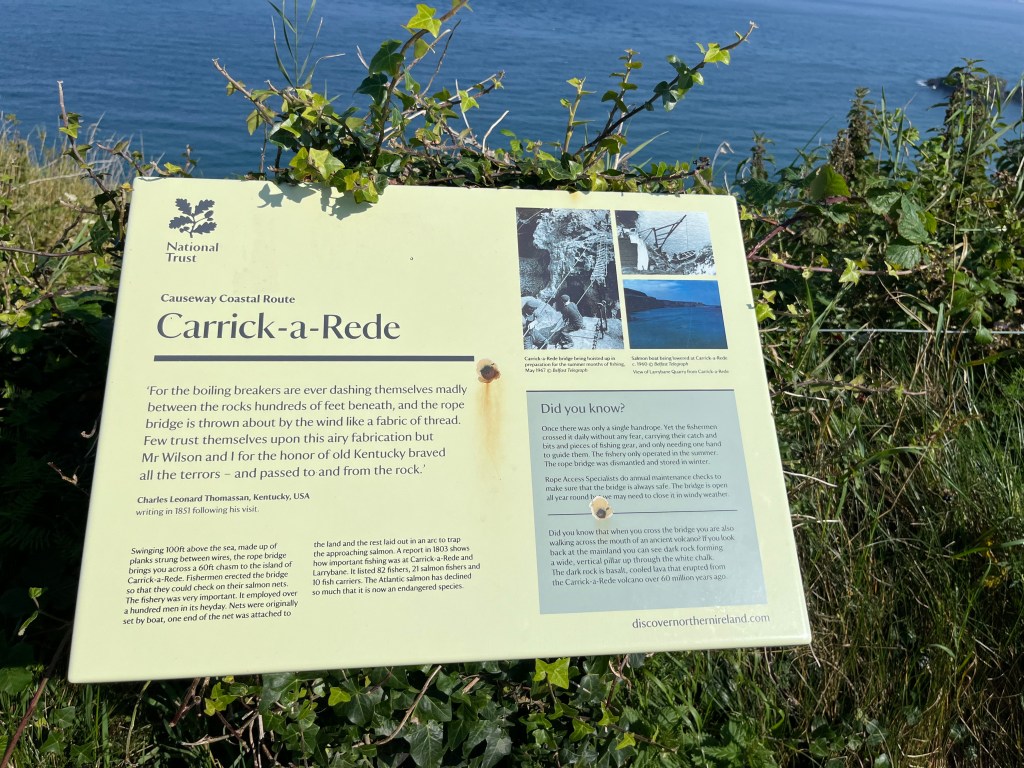
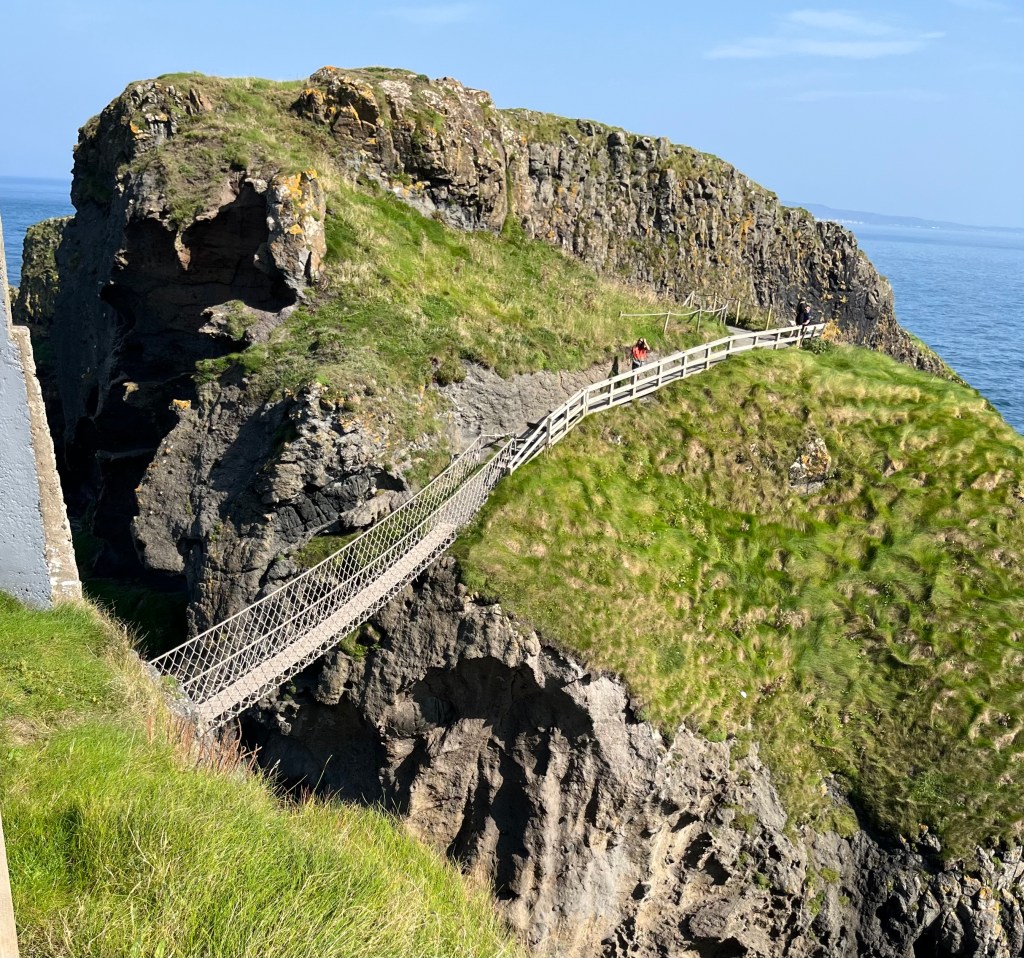
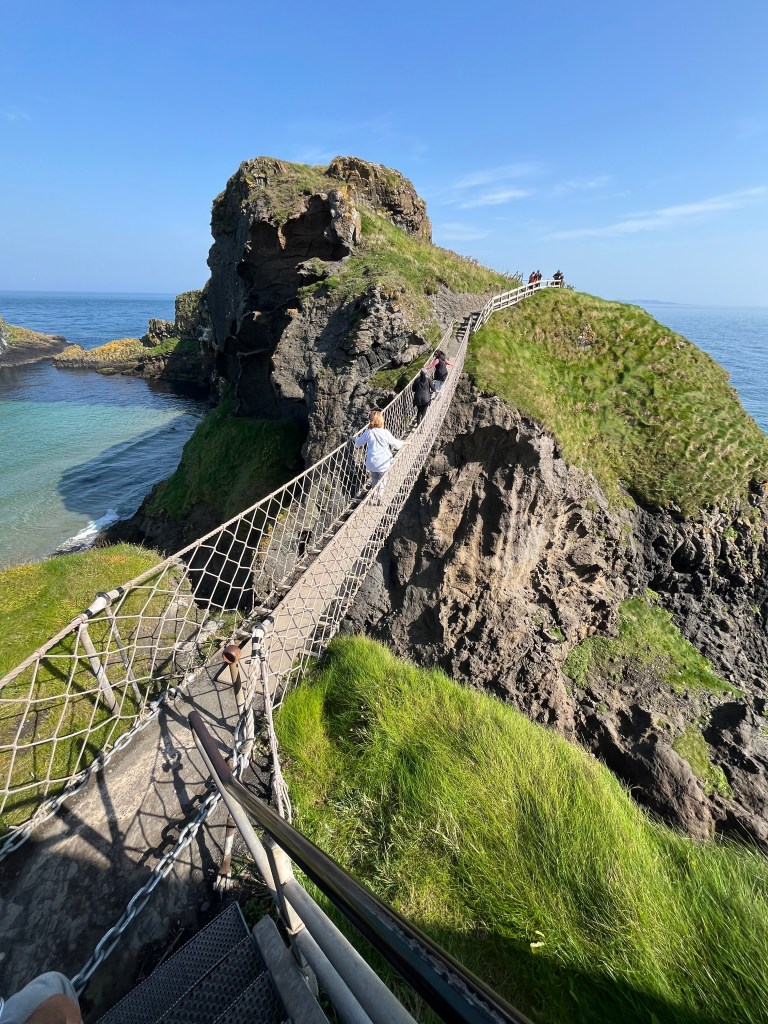
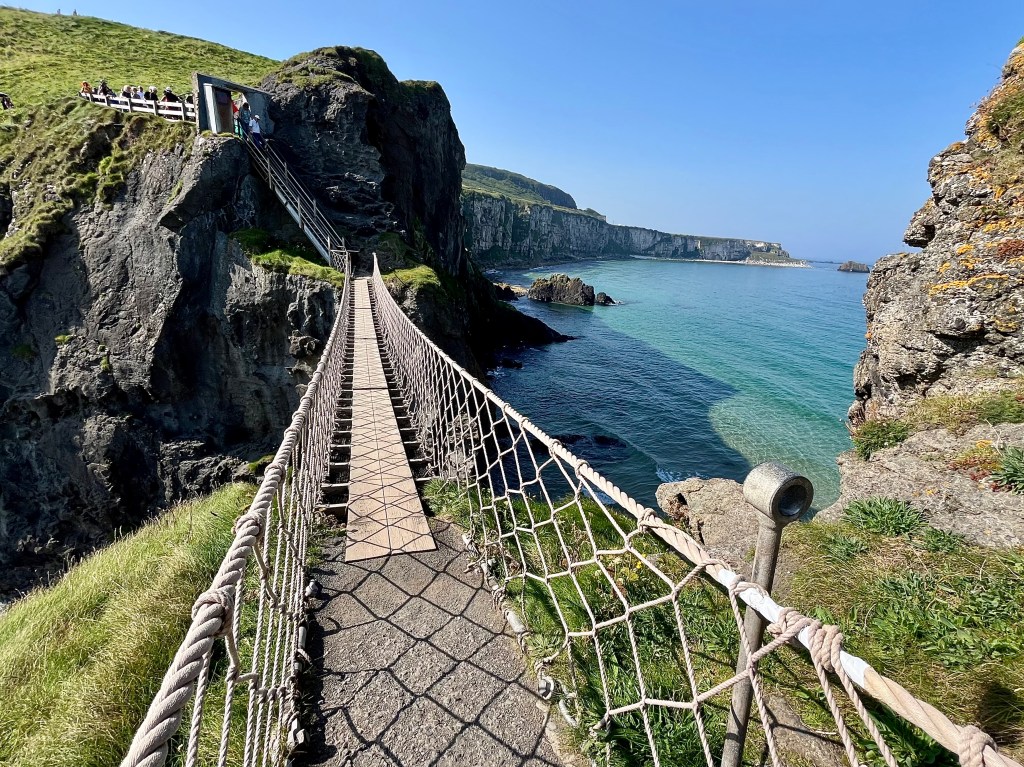
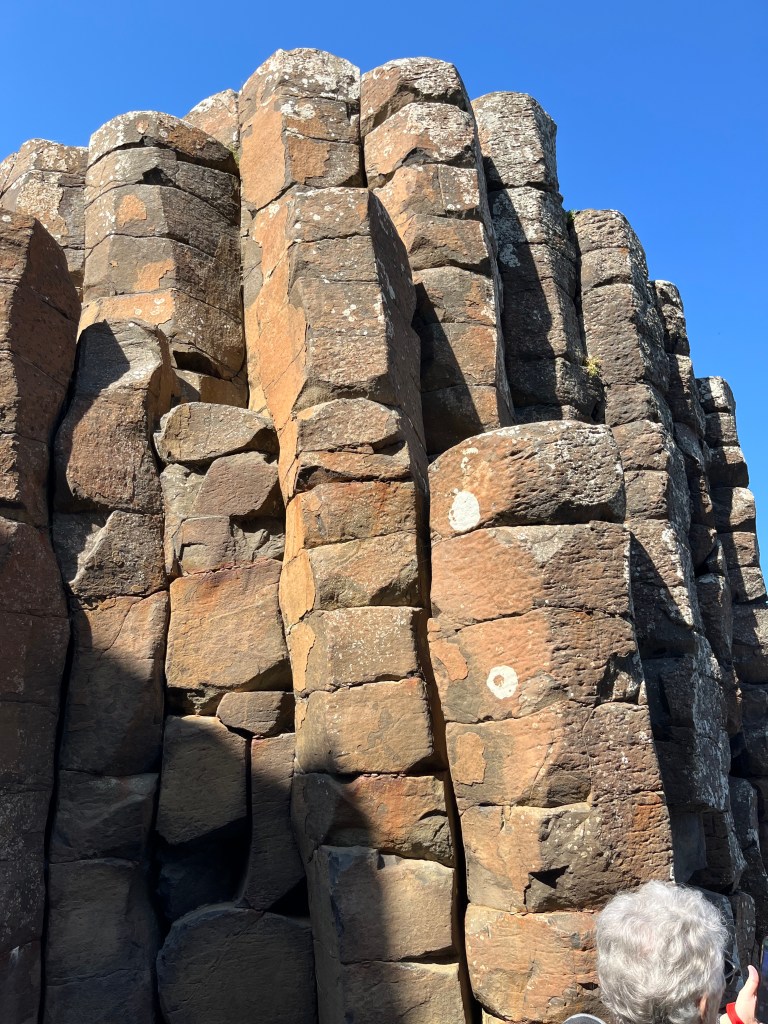
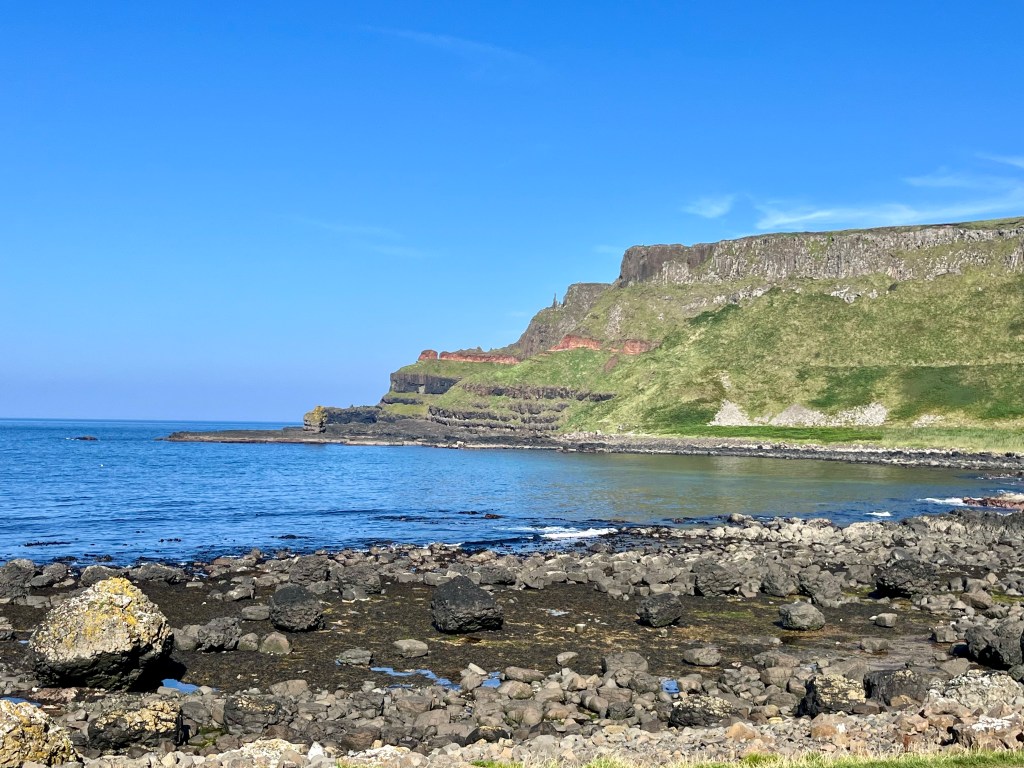
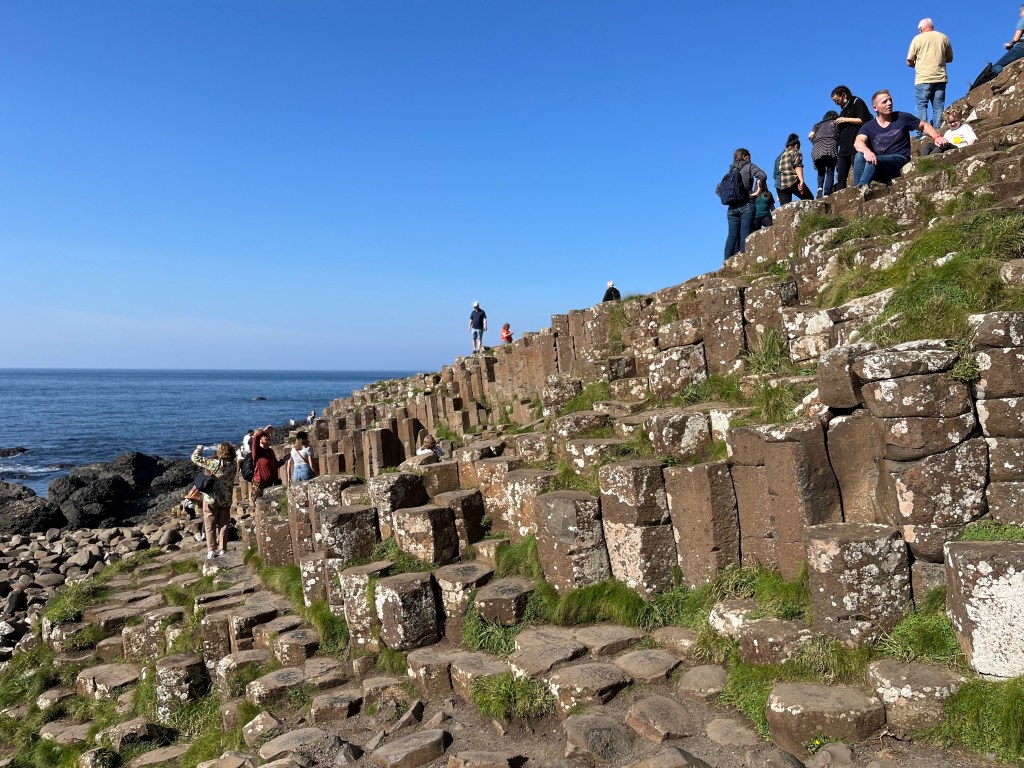
In the morning, after a very comfortable night’s sleep and a refreshing breakfast we were ready for one of the world’s great road journeys around the Antrim Coast, with its magnificent views of land and sea, and beautiful quaint villages! Robert (Helen’s husband) was our experienced driver and guide and we had two particular places in mind – Carrick-a-Rede and its spectacular rope bridge, and the famous ‘Giant’s Causeway’ with its large Museum and Visitors’ Centre, and its fascinating rock formations. (See earlier blog re visit to Fingals’ Cave for a similar phenomenon).
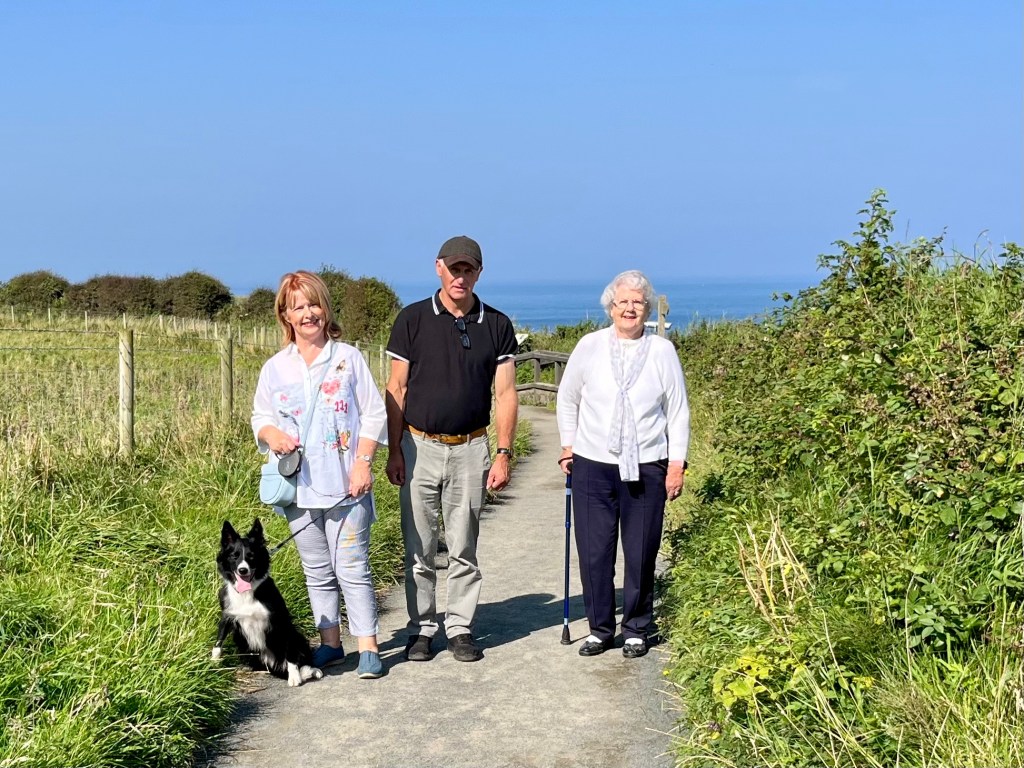
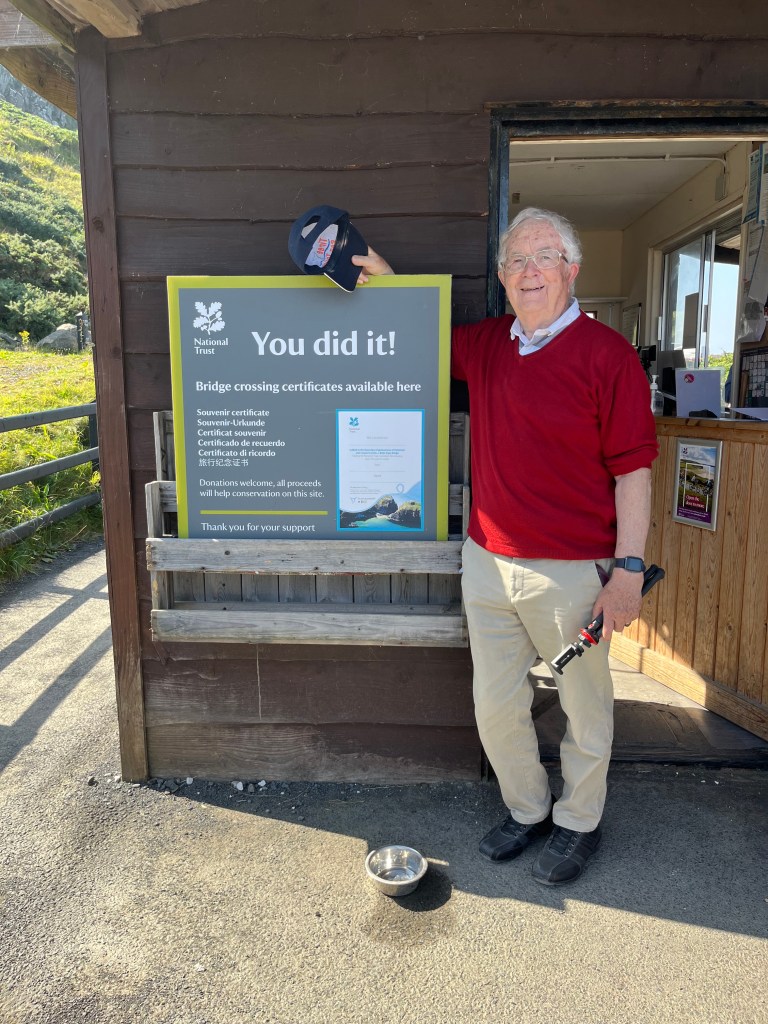
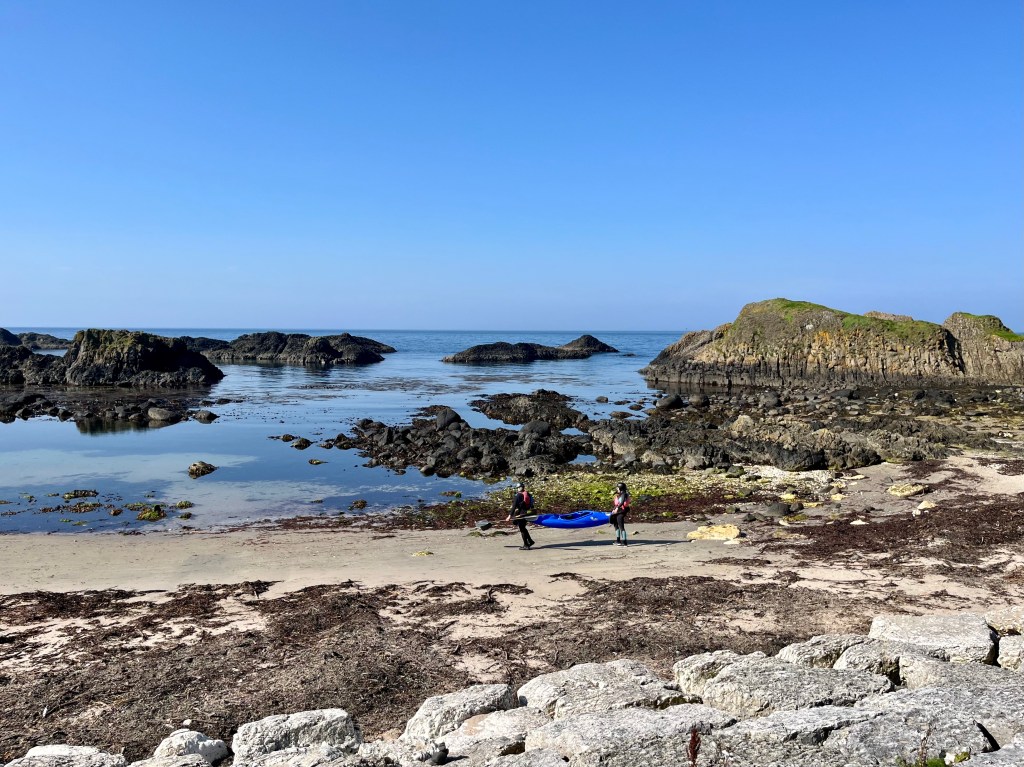
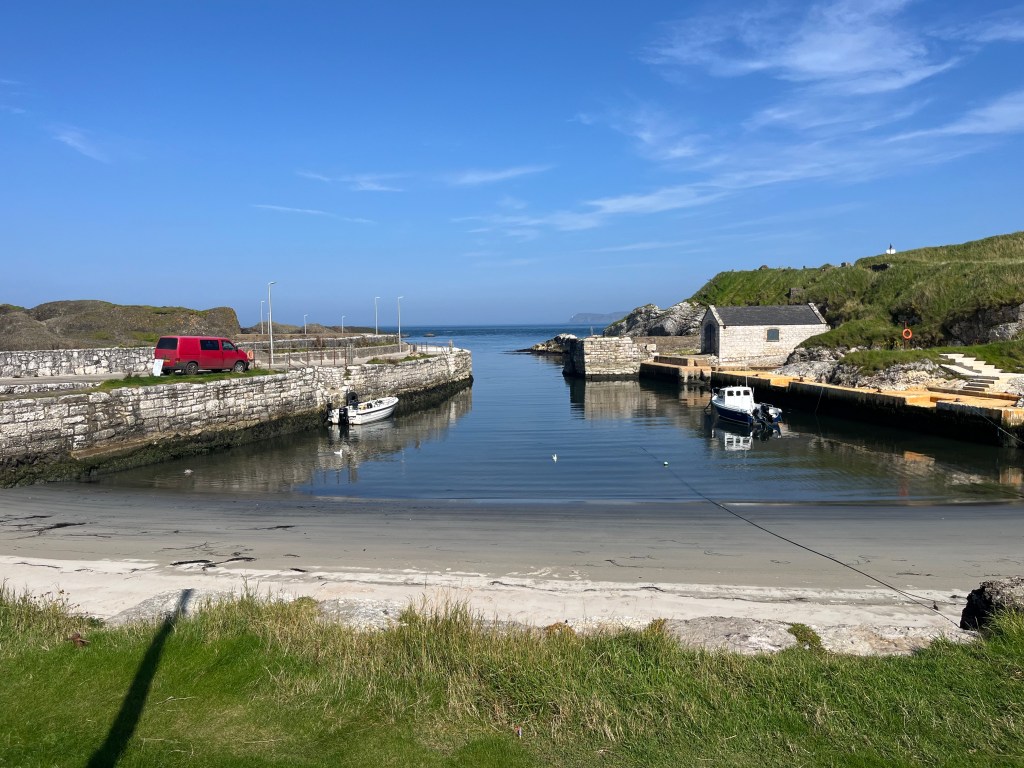
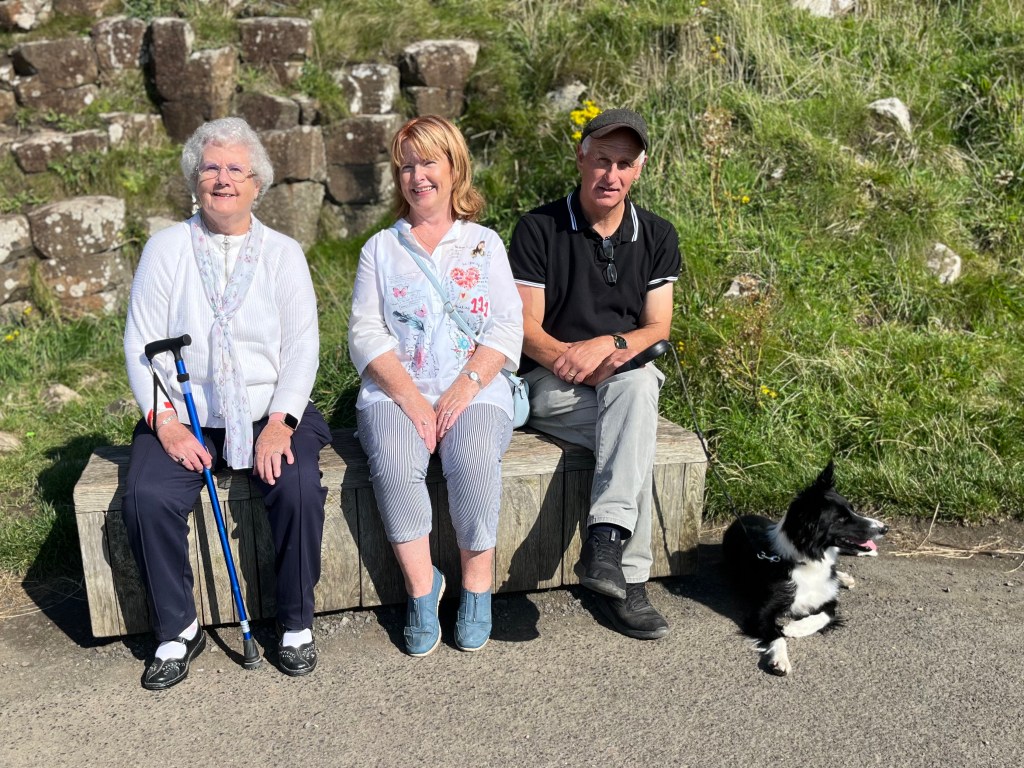
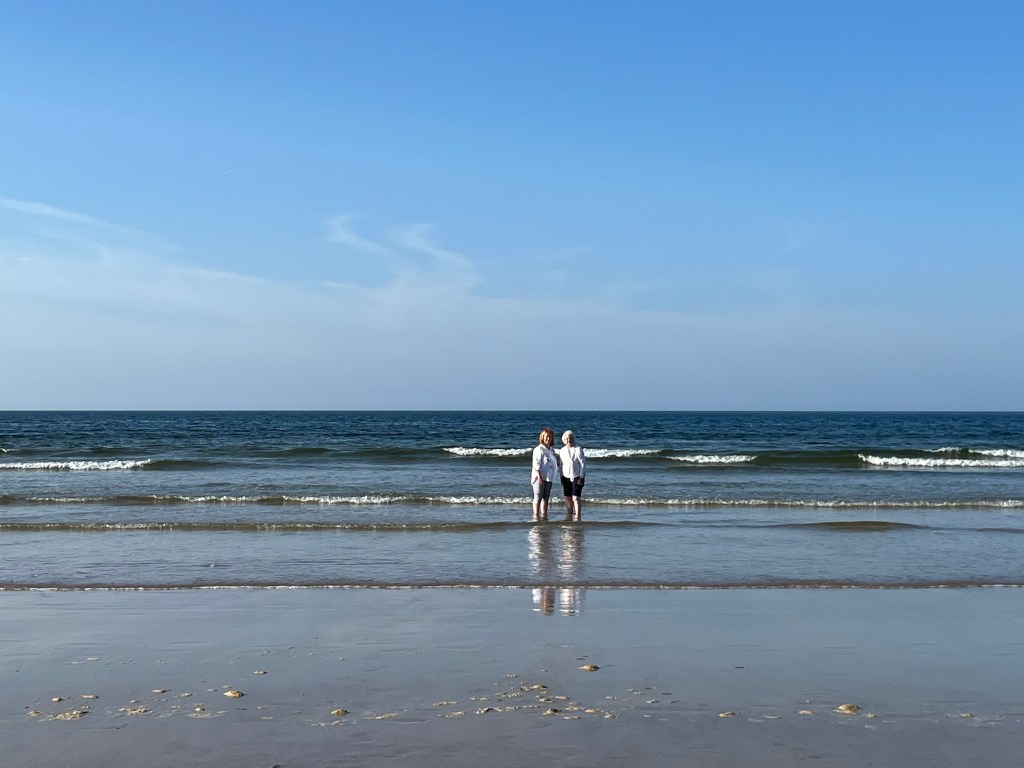
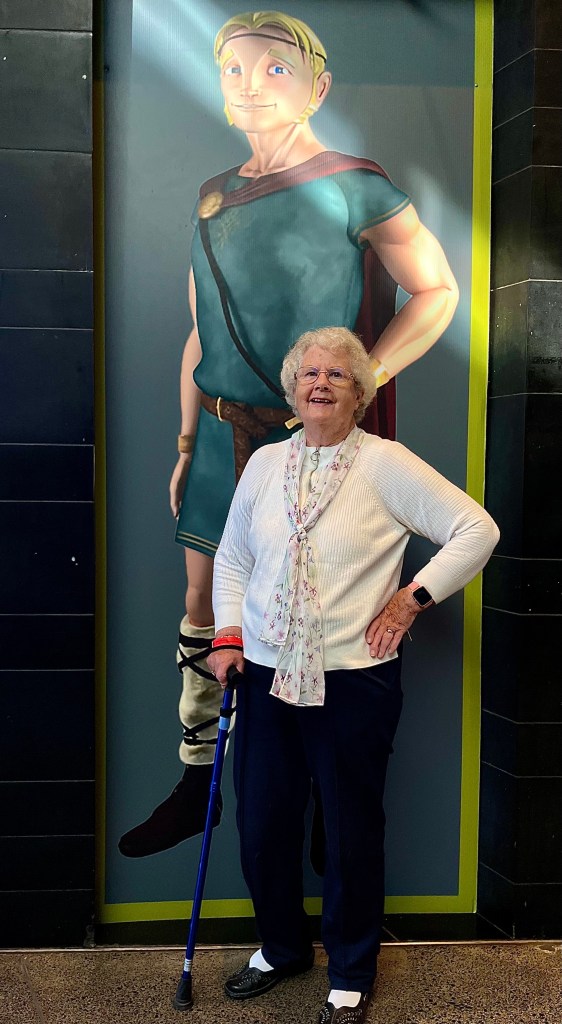
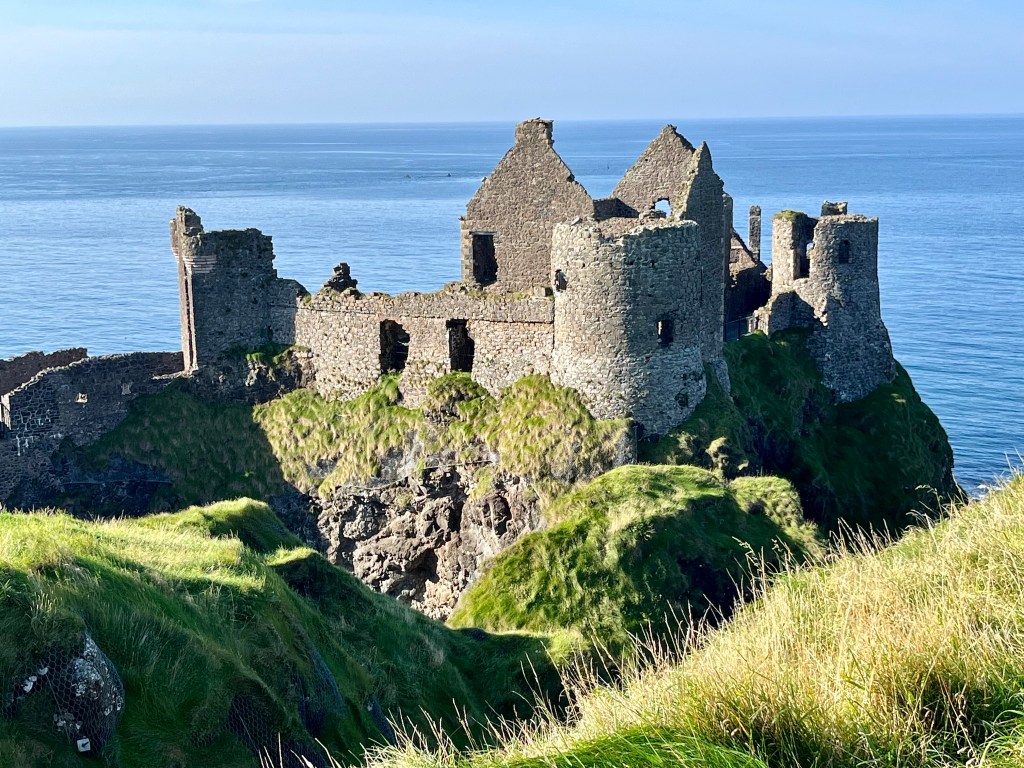
>>>>>Helen, Robert and Muriel with sheepdog ‘Belle at Carrick-a-Rede.Carrick-a-Rede Rope BridgeNot for the faint-hearted.Looking pleased with myself.Not too strong a breeze for the crossing, as you looked down on the rocks and waves below.< Ballintoy >Balintoy’s ChurchThe amazing hexagonal rock formations.< The Giant’s Causeway. >Time for a rock climb.Enjoying the view at the Giant’s CausewayNow for a ‘paddle’ ‘at PortrushMuriel and that Giant!Dunluce Castle
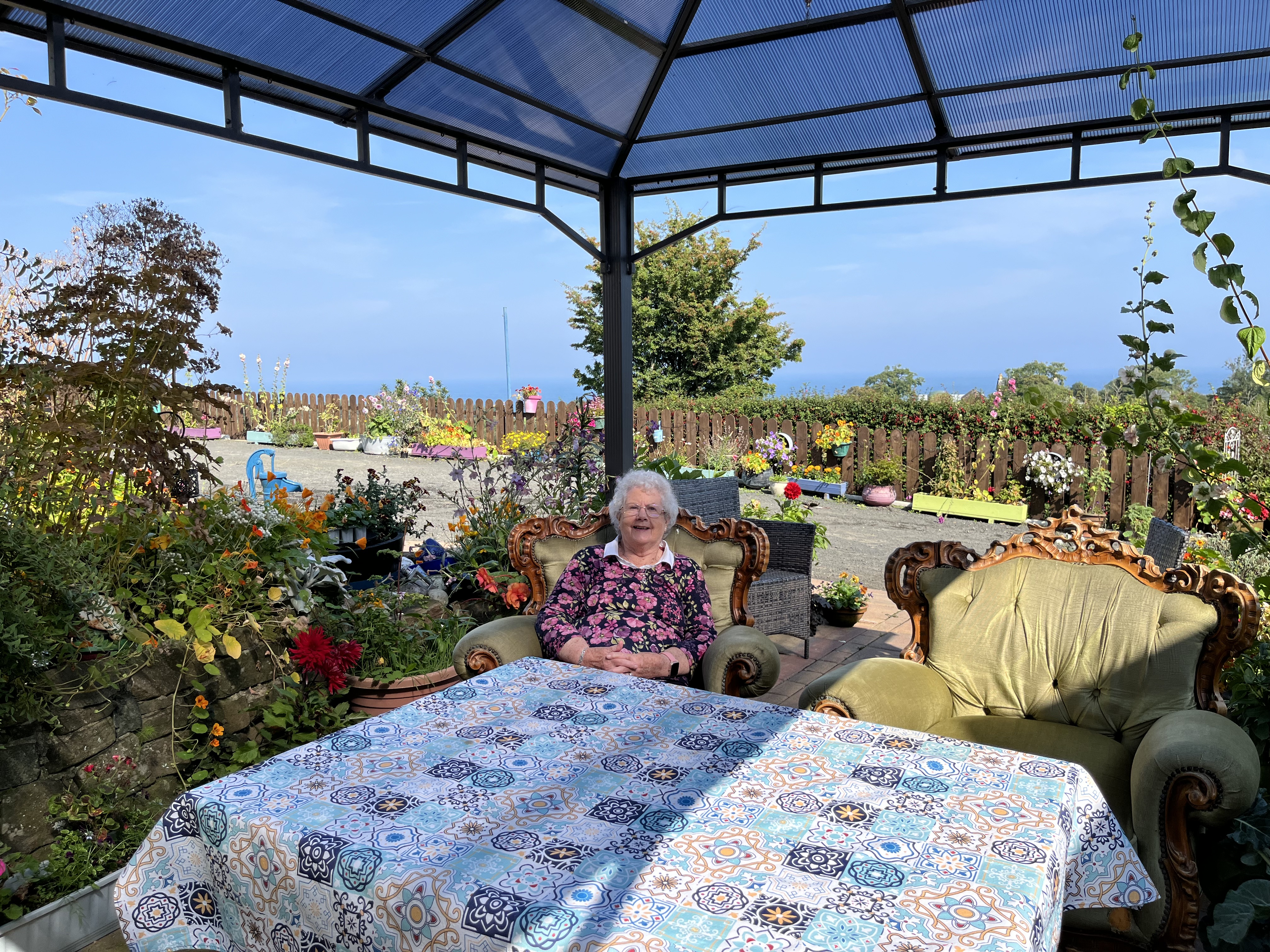
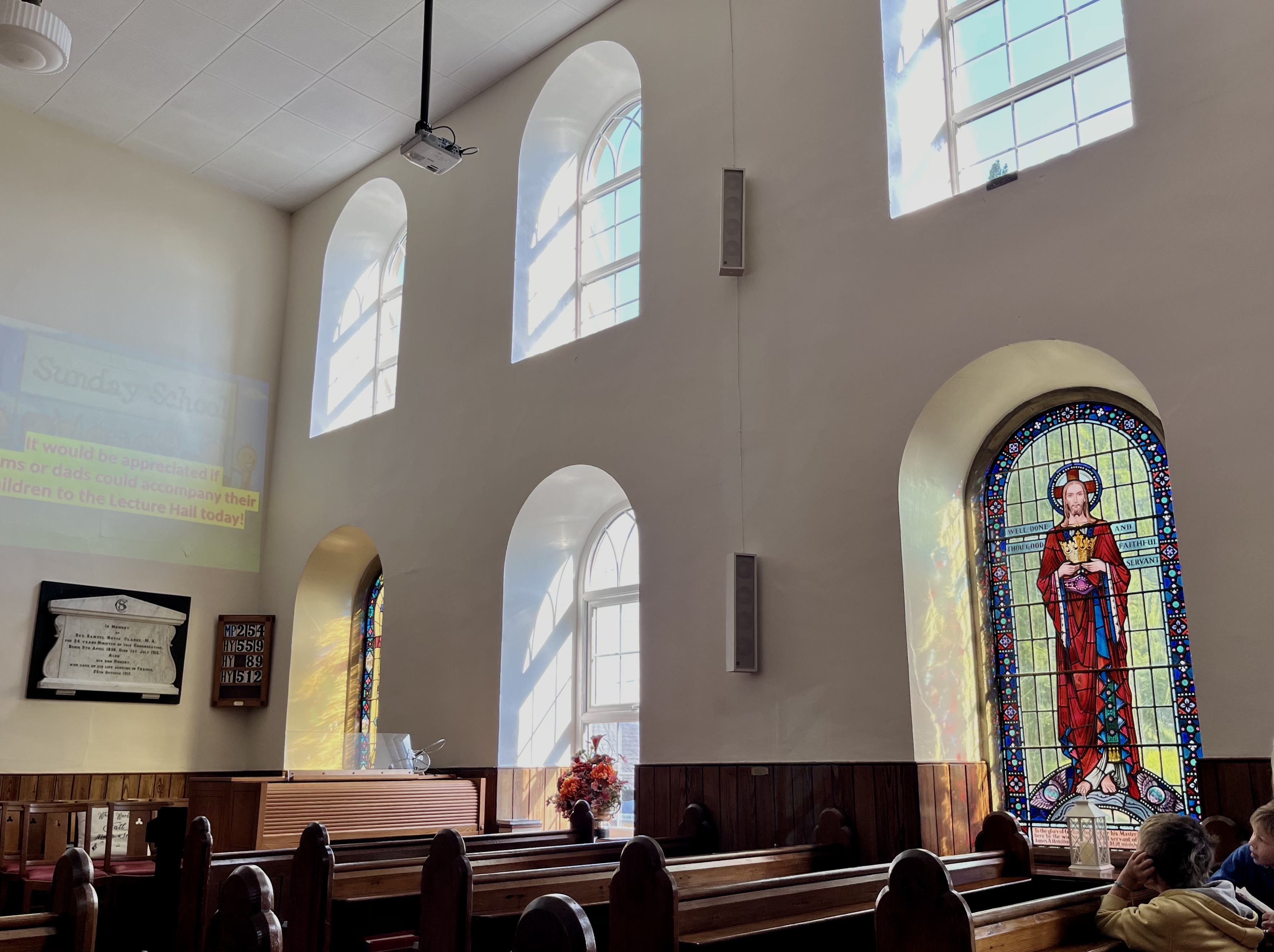
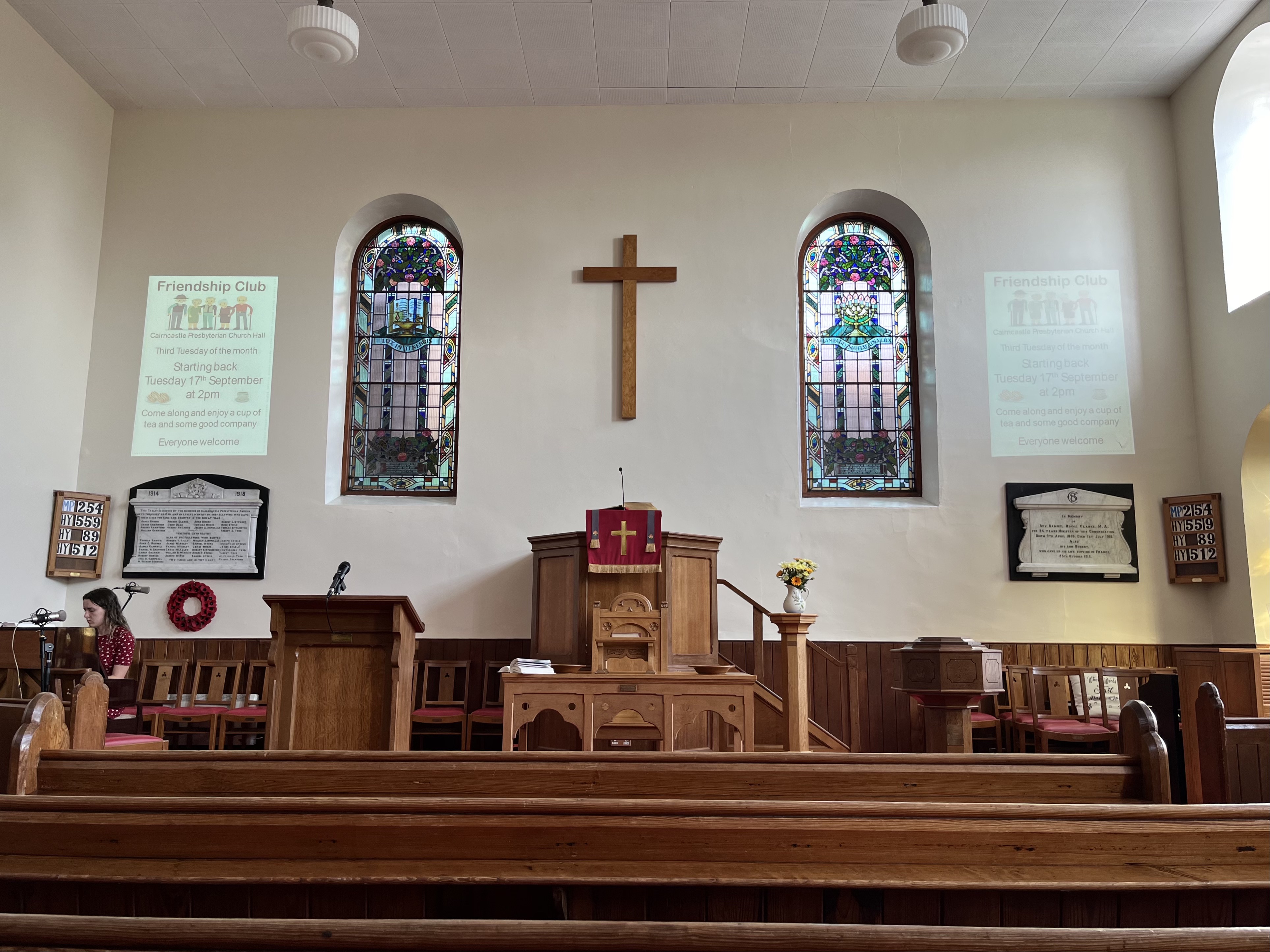
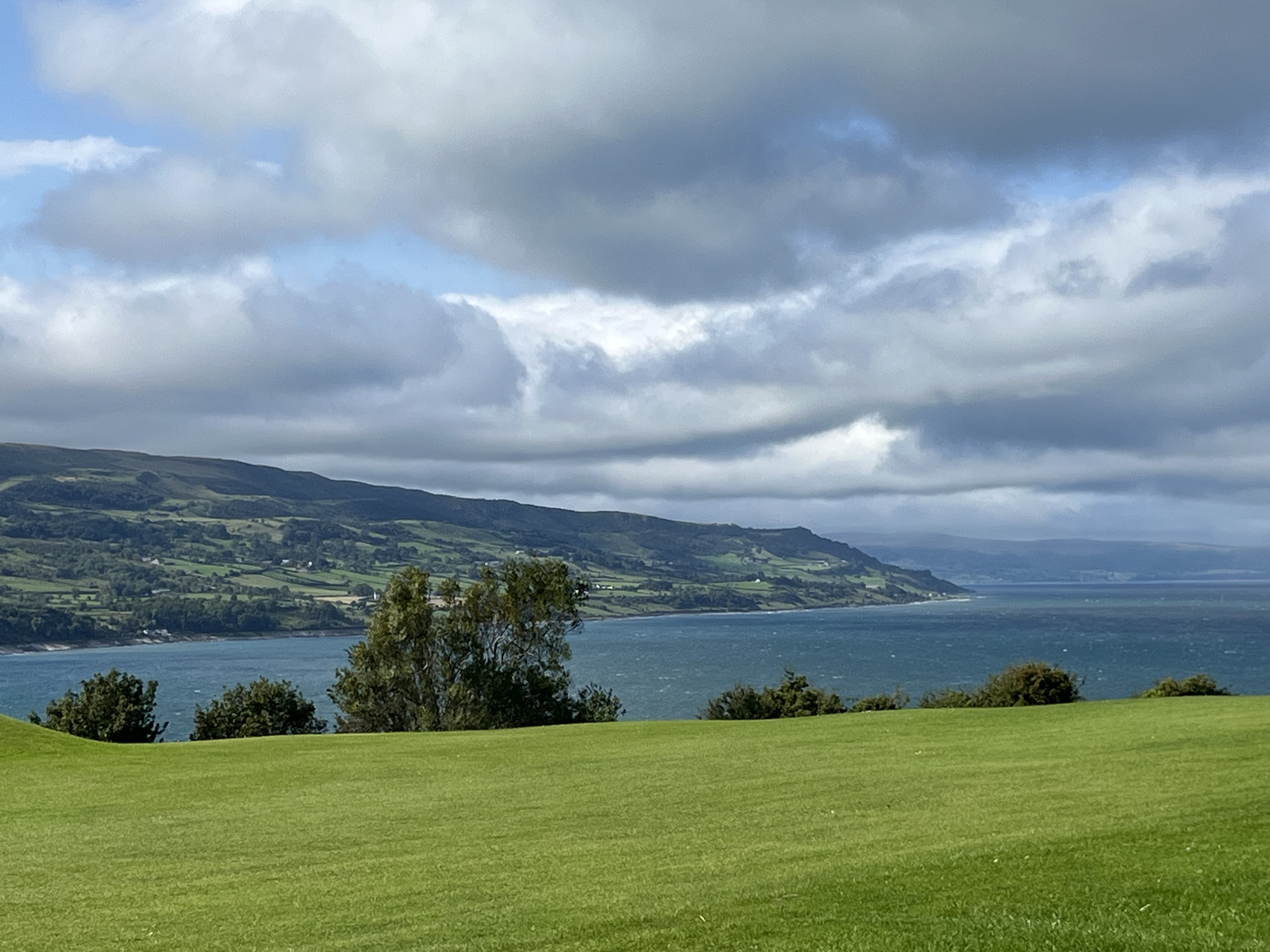
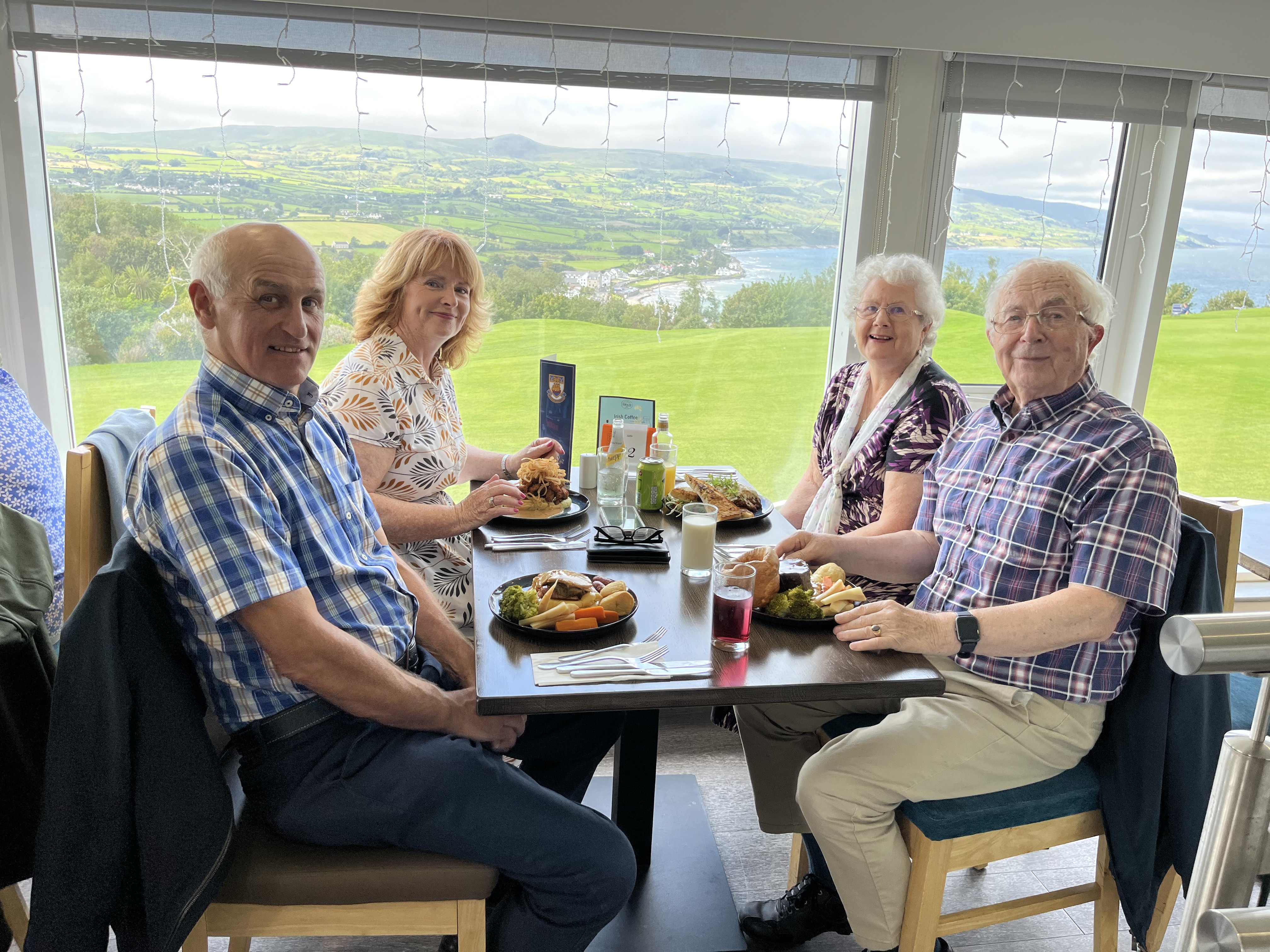
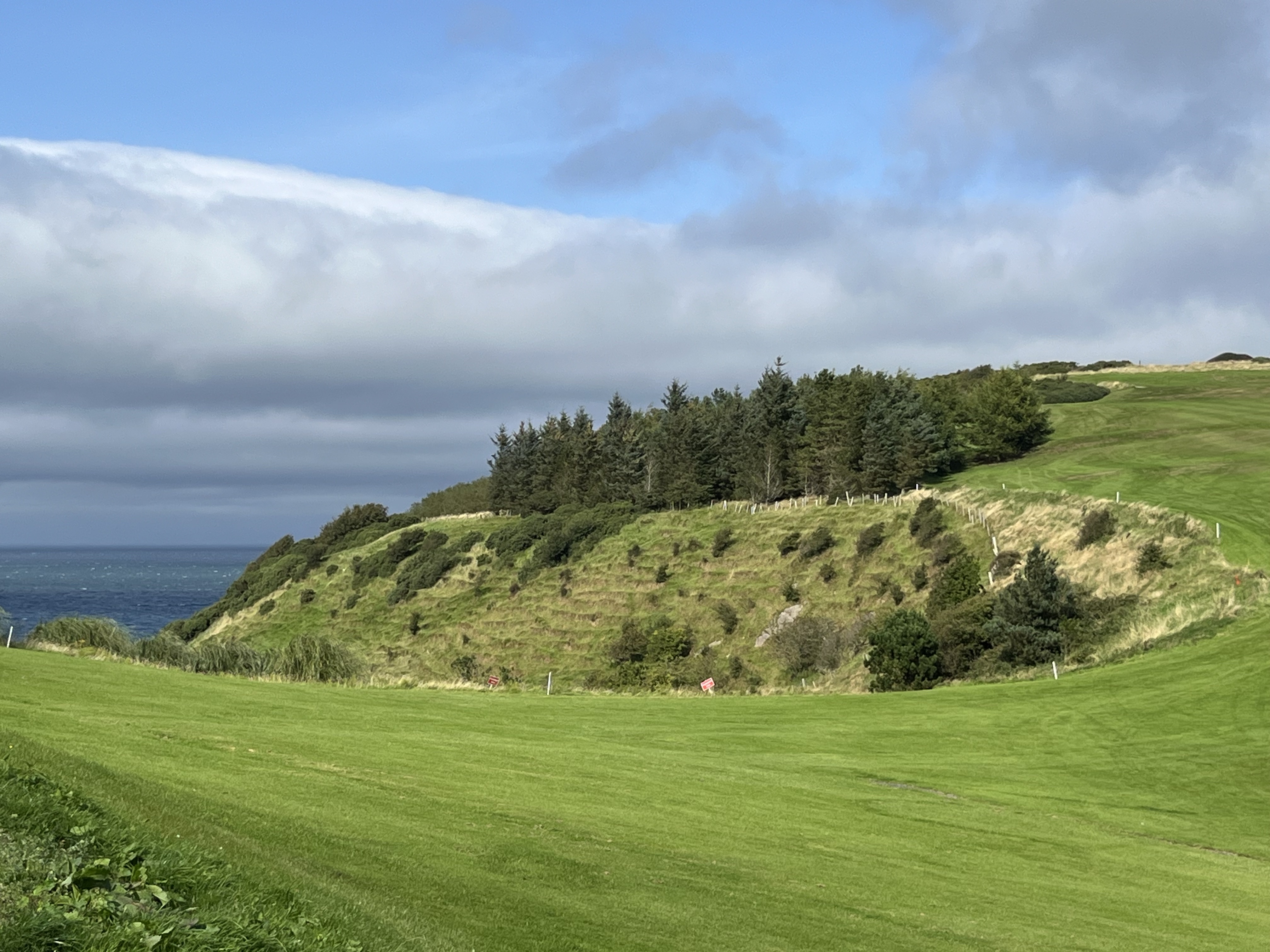
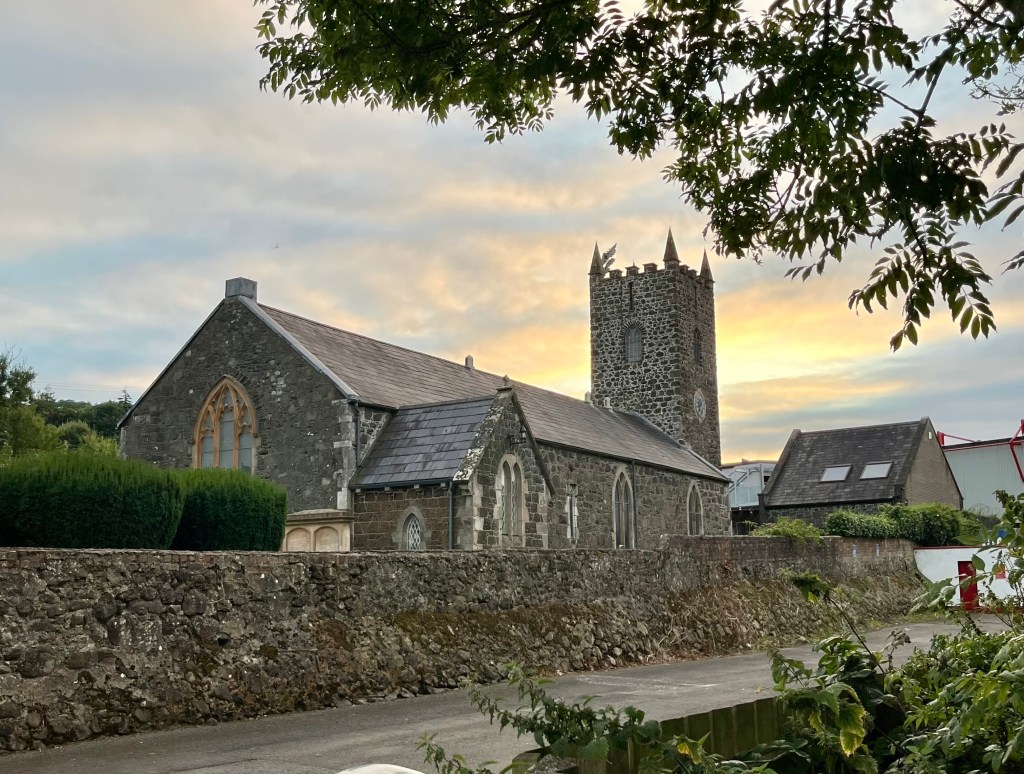
It’s good to be busy and its good at times to sit back and relax, so after the previous busy day, that’s just what we did next in the best of surroundings with family and their village friends in Cairncastle. On the Sunday we enjoyed attending Cairncastle Presbyterian Church for their morning service, and this was followed by our wedding anniversary celebration lunch at the beautiful Cairndhu Golf Club restaurant. Throughout the sun continued to shine, and the flowers were blooming in abundance!
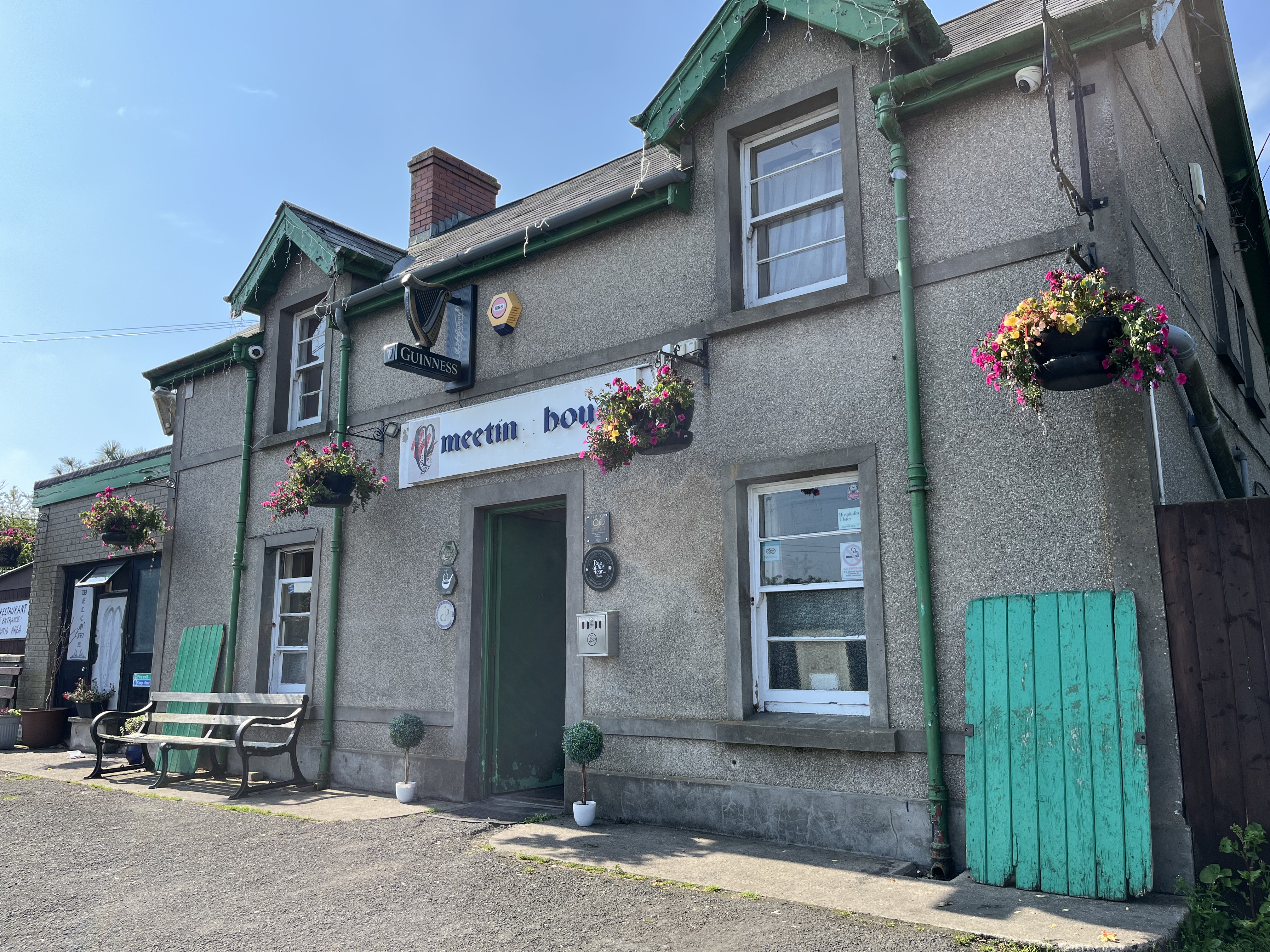
Here are some other places of interest that we visited before it was time to head for home.
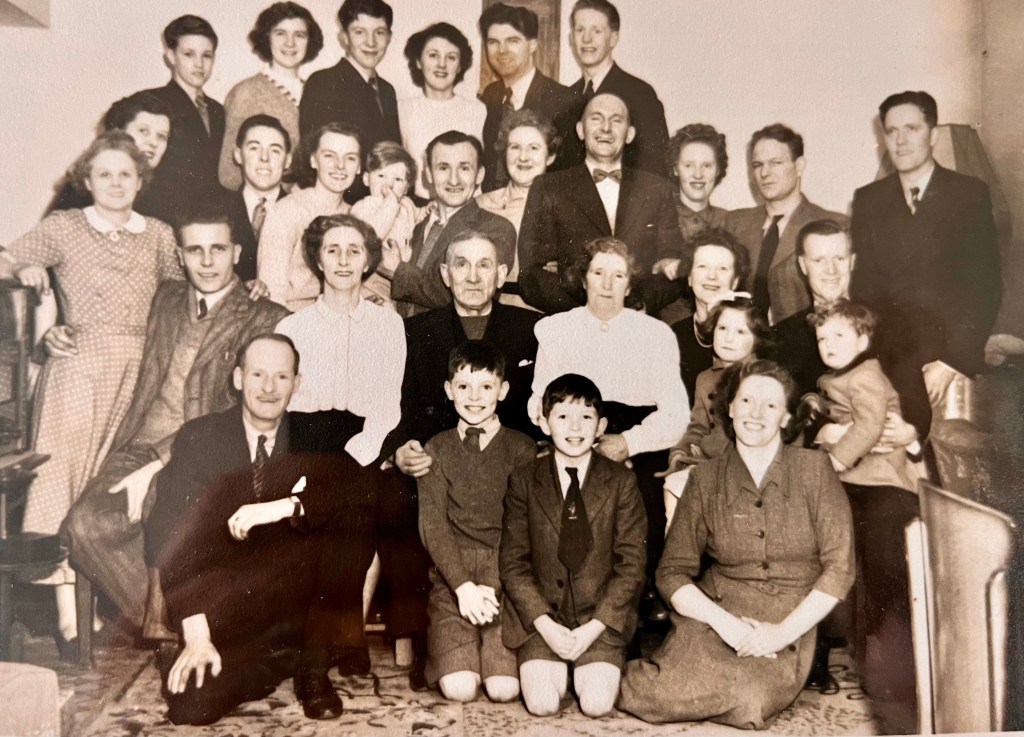
Oh, and of course, we did talk for a while of ‘Family Trees’ and I was pleased to come home with some photographs of Muriel’s family, complete with names and some more details of family history.
The Bain ClanThe Bain Clan
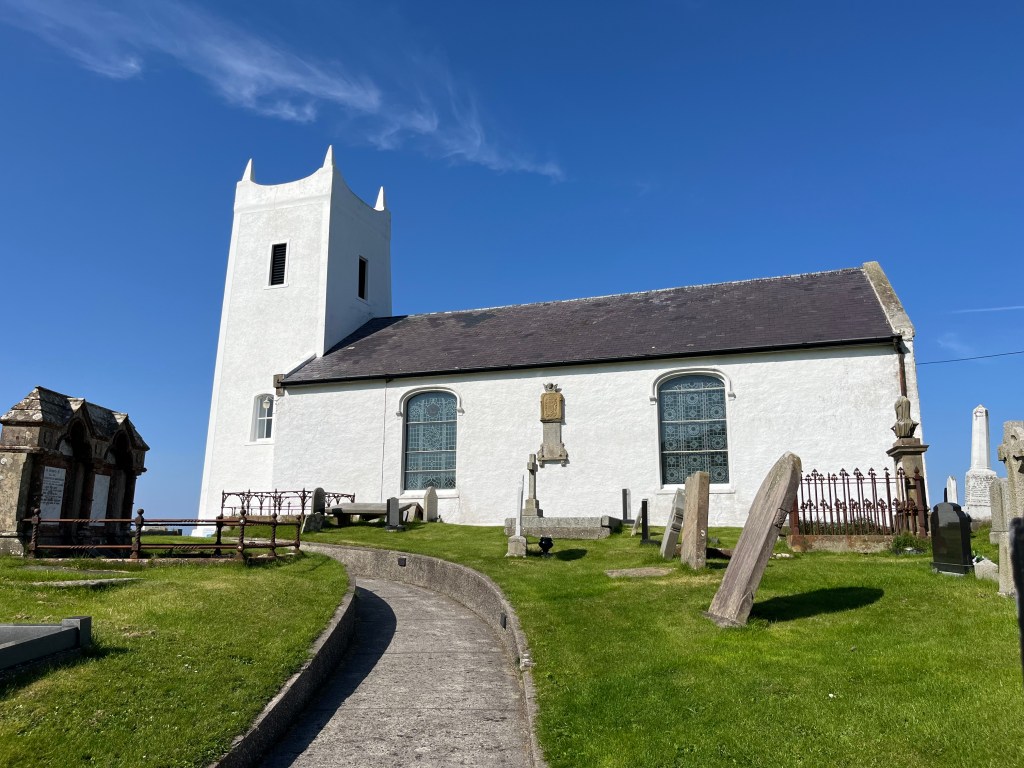
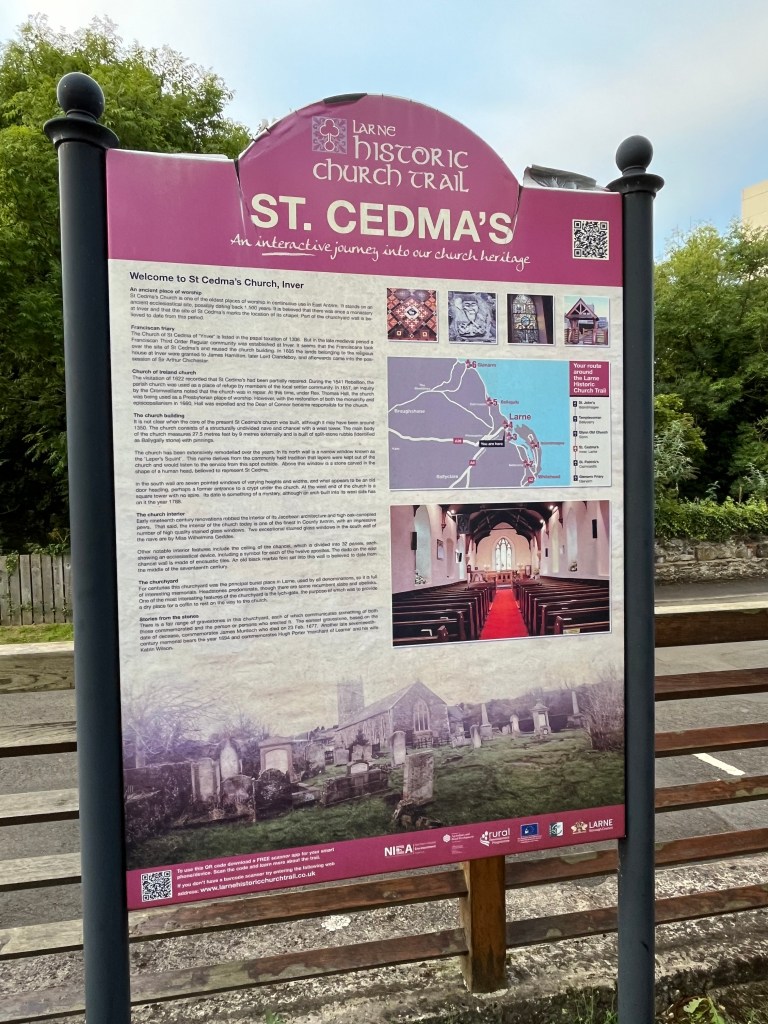
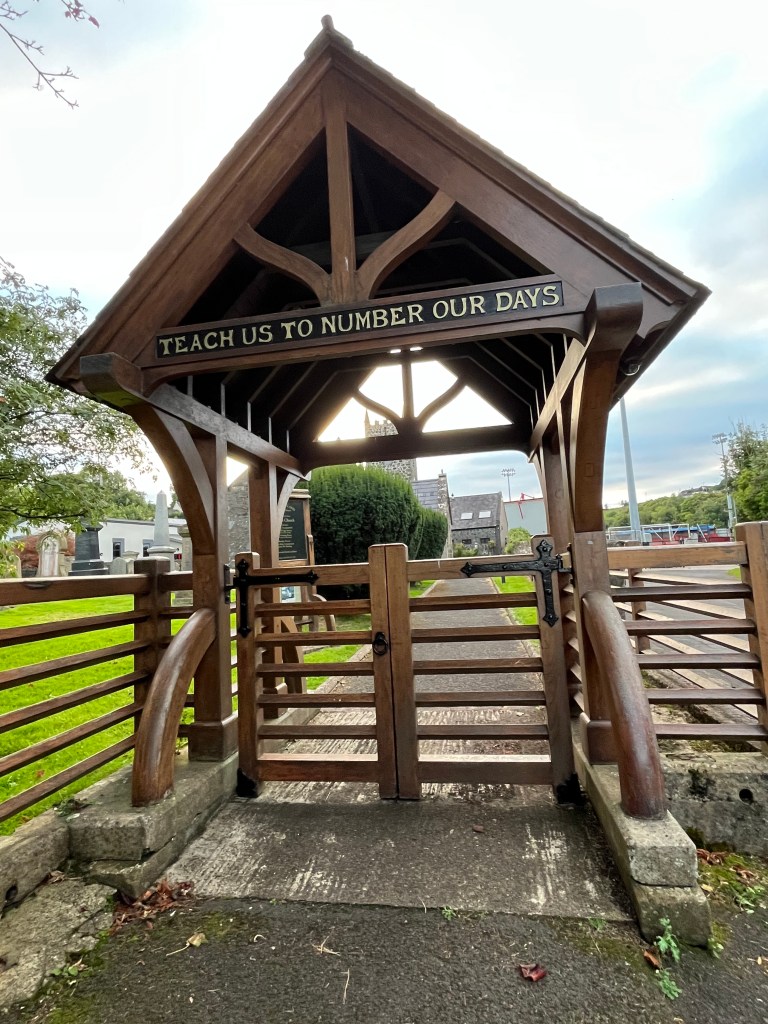
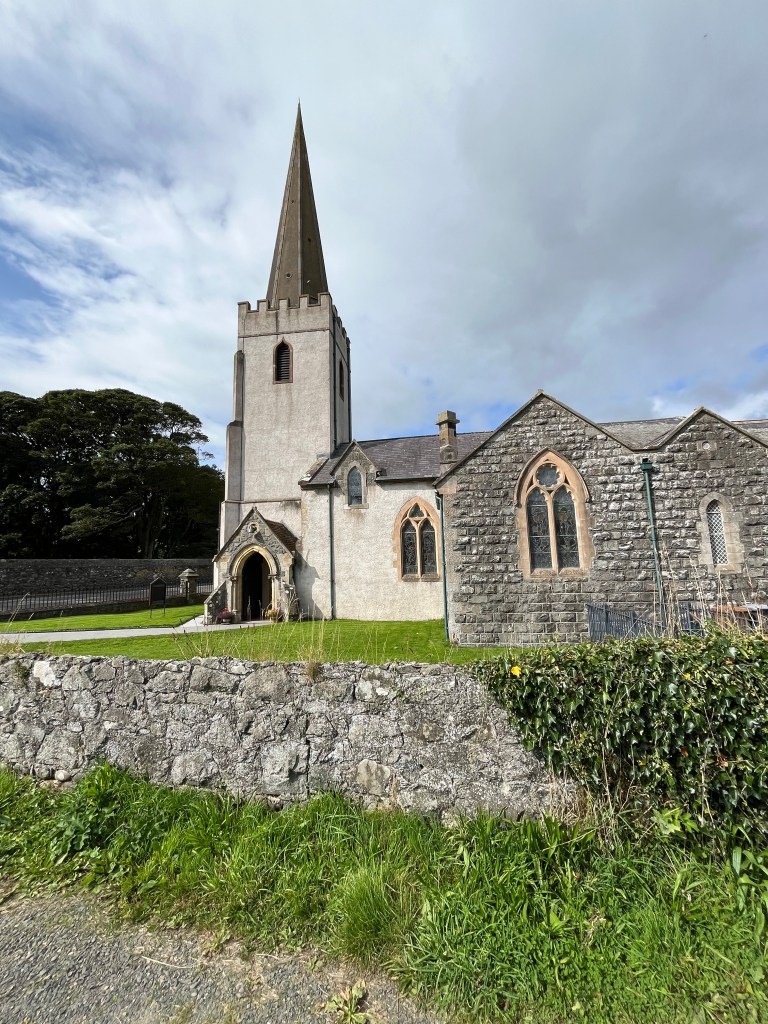
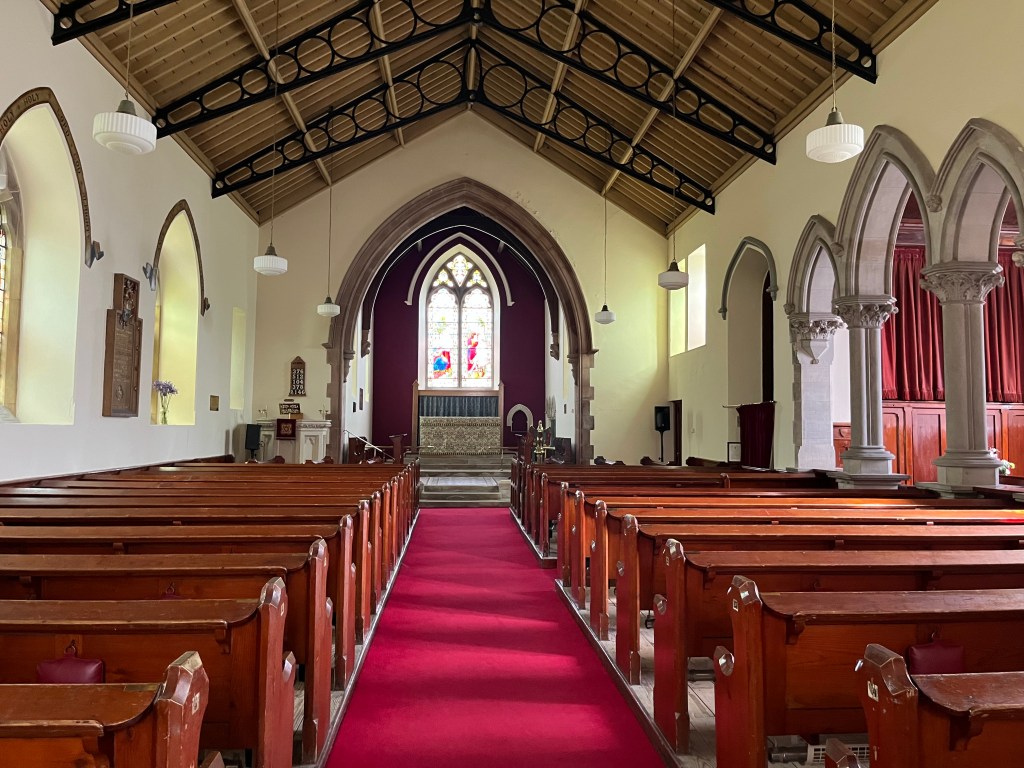
It’s amazing what you can pack into five days, and we were so pleased to have stepped aside from the business of life to see again the wonder of God’s amazing creation. Best of all to spend quality time out, to chat with family and to share life’s experiences and to meet new friends in Church and in the village. I was reminded of the importance of doing this by the words above the entrance to St Cedma’s Church (did you spot them in the photo above?) Teach us to number our days’, or as Psalm 90 v12 says ‘So teach us to number our days, that we may apply our hearts unto wisdom’.
It’s always wise to stop now and then, and take stock of how we are spending our time and ordering our lives. Are there things we need to change, a better use of our time and talents, relationships that need healed or strengthened, and what preparations have we made for the future, our retirement or old age perhaps? However, the text above the entrance to the church most certainly had in mind preparation for our eternal future. People talk casually about heaven, but some years ago I remember a friend asking this question – what makes you think that God will let you into heaven? I thought it sounded a bit cheeky at the time, but on reflection it is a good question to ask ourselves. Here’s a hymn we sung at church on Sunday that I was unfamiliar with, but certainly gives the answer to the question that was asked. Have a listen, it’s evidently quite popular on ‘You-tube’ now by those interested in spiritual songs and music.
Trust this finds you well wherever you are, and I send best wishes and greetings from Scotland.
Matthew
P.S. Not subscribed? Why not hit the subscribe button now?
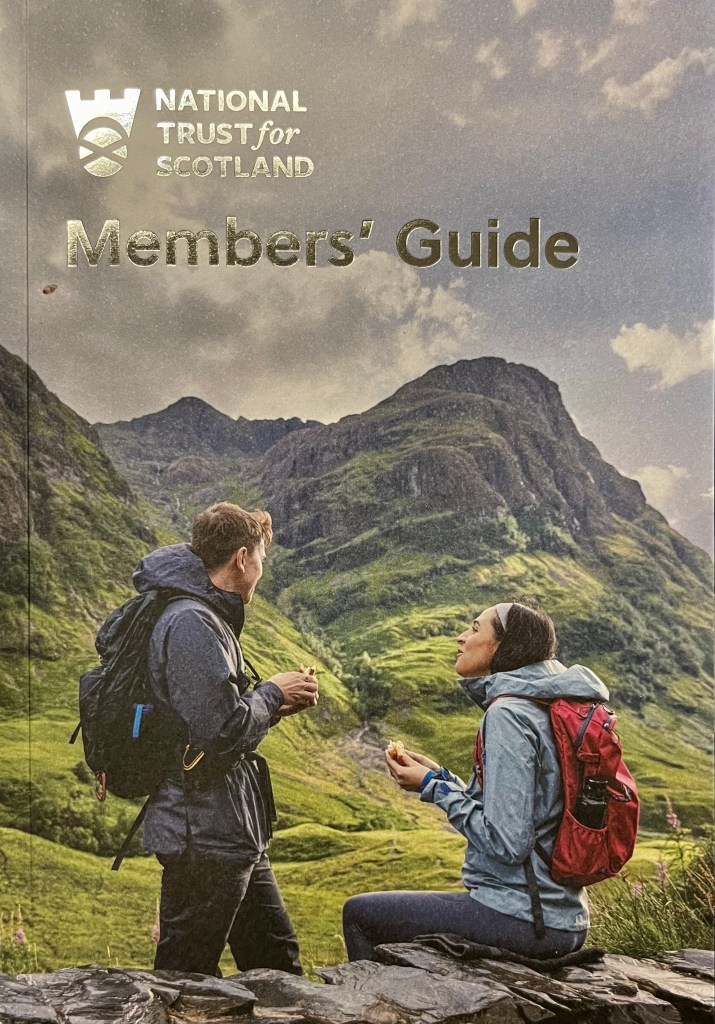
We’ve been looking at houses recently! No, not with a view to moving from our current home, but simply because the postman dropped the ”National Trust for Scotland Members’ Guide’ through our letterbox. We have been members for many years and in the past frequently visited their estates and properties and nature reserves scattered all around Scotland (over 100) which they work hard to preserve for future generations. We are always impressed by the planning and effort that they put into this task.
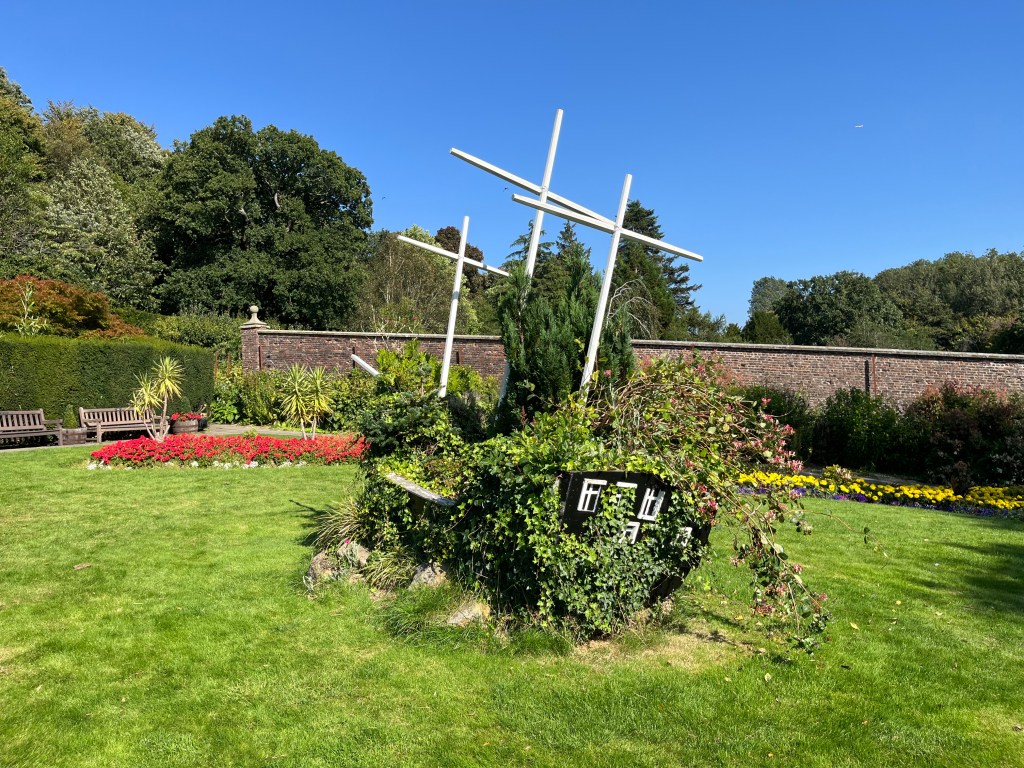
The 2024/25 Members’ Guide
Recently we visited one or two local NTS properties and another not too far away. We always find their staff to be friendly and helpful, and that proved to be the same on our recent visits shown below. AND …. there is usually a well stocked visitors’ shop and tearoom to be enjoyed on your visit.
The last page of the current guide shows a map of Scotland with all their properties marked, and asks the question ‘How many will you visit? So that got us started again!
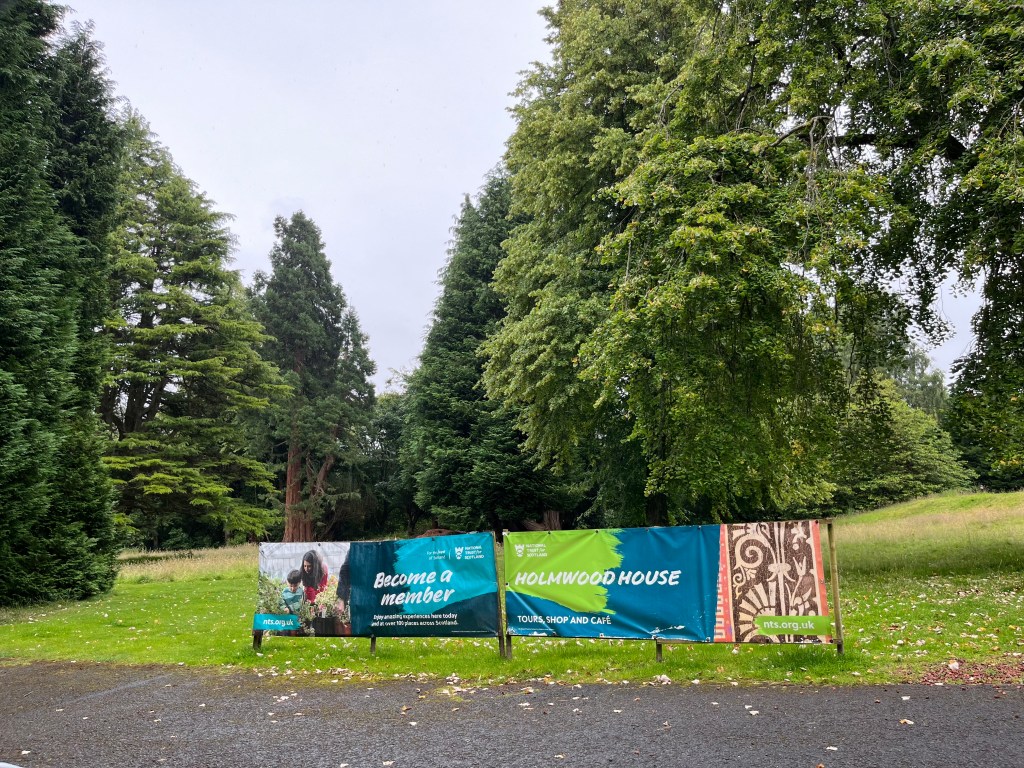
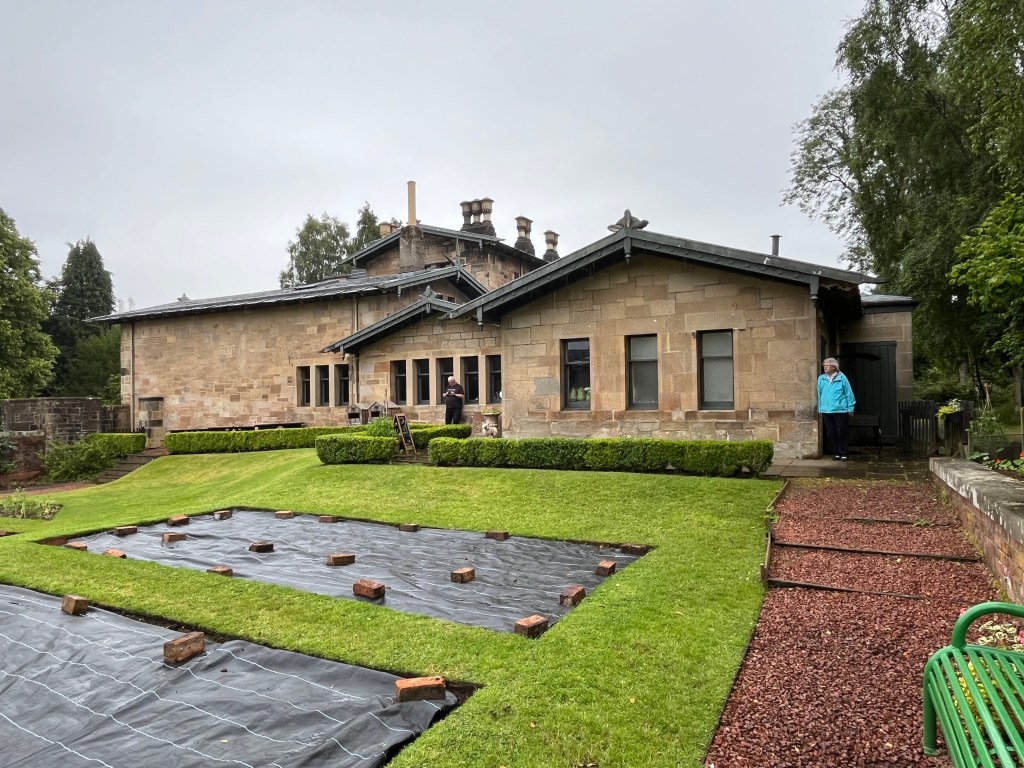
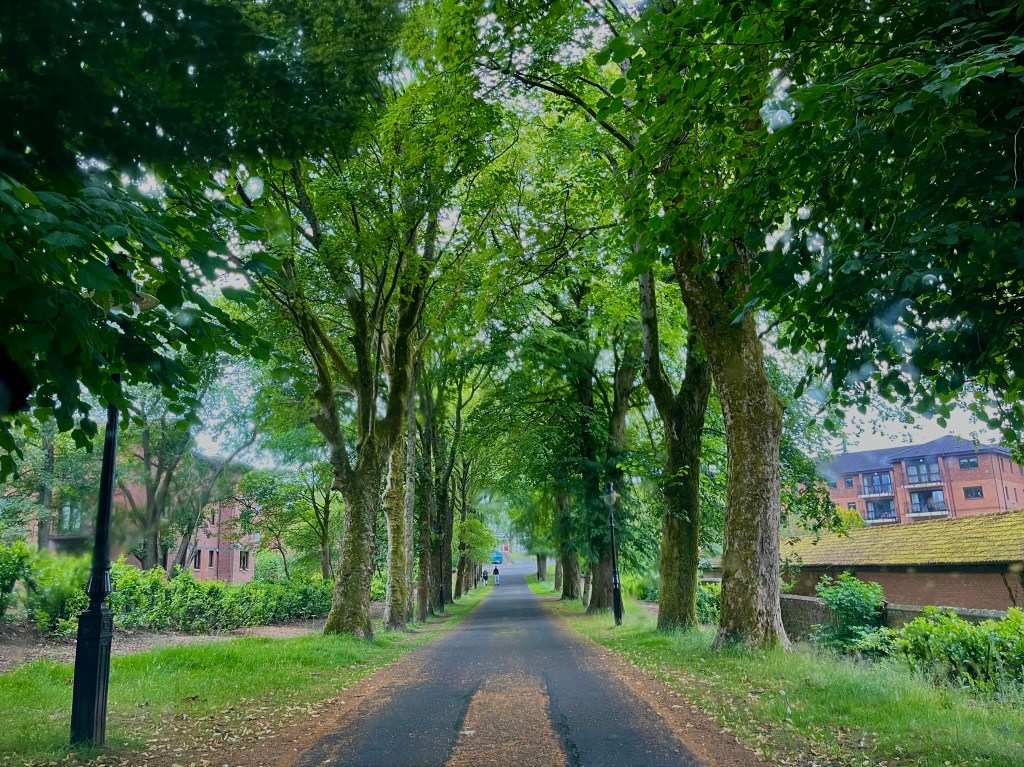
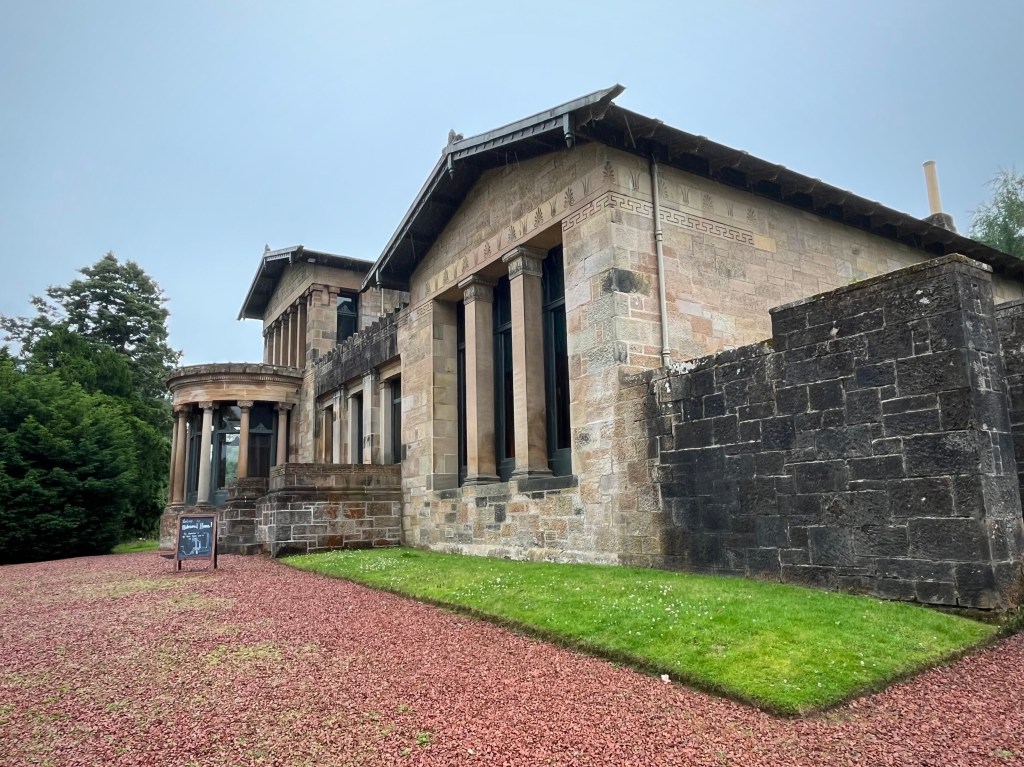
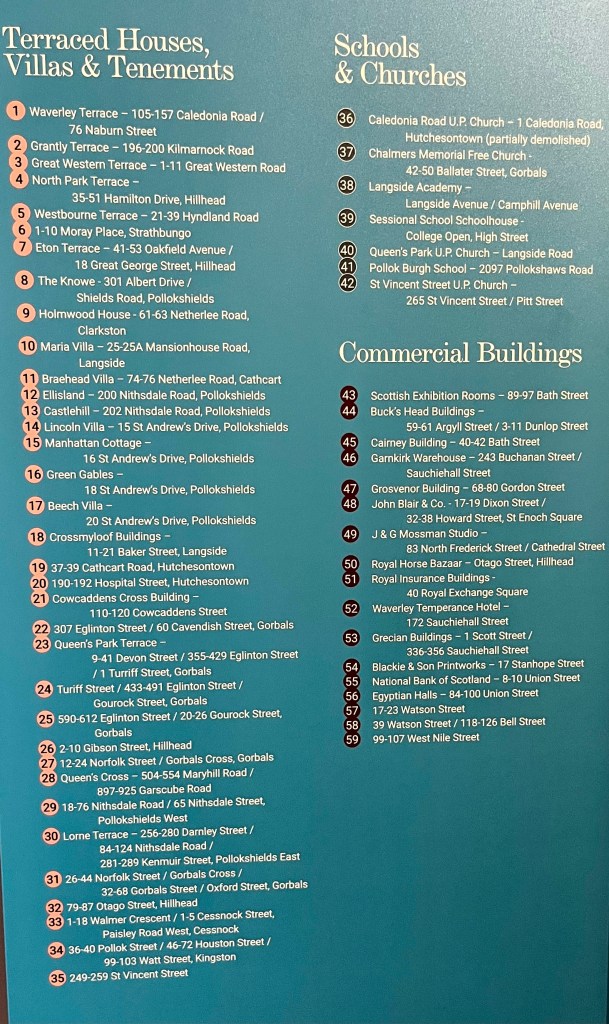
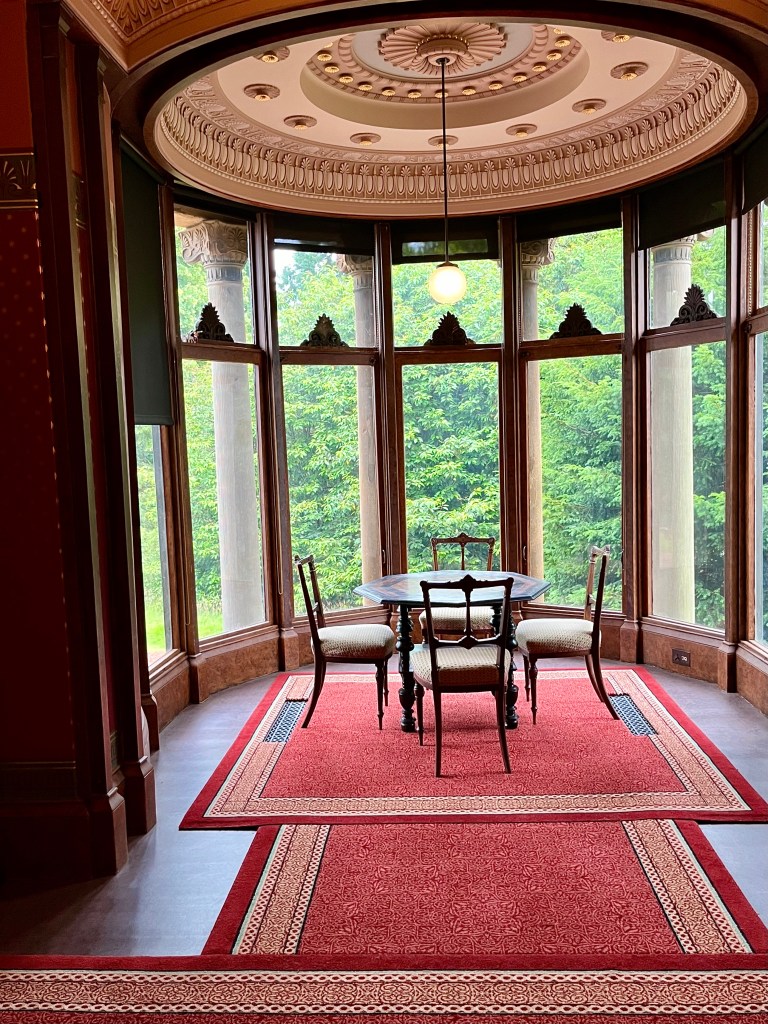
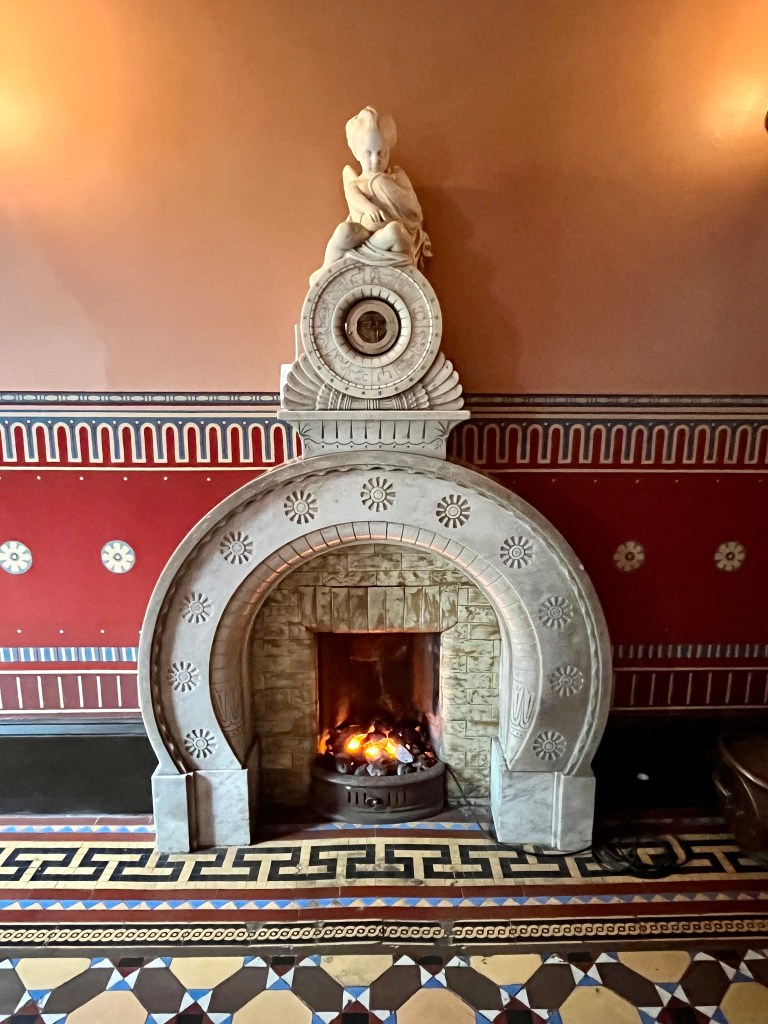
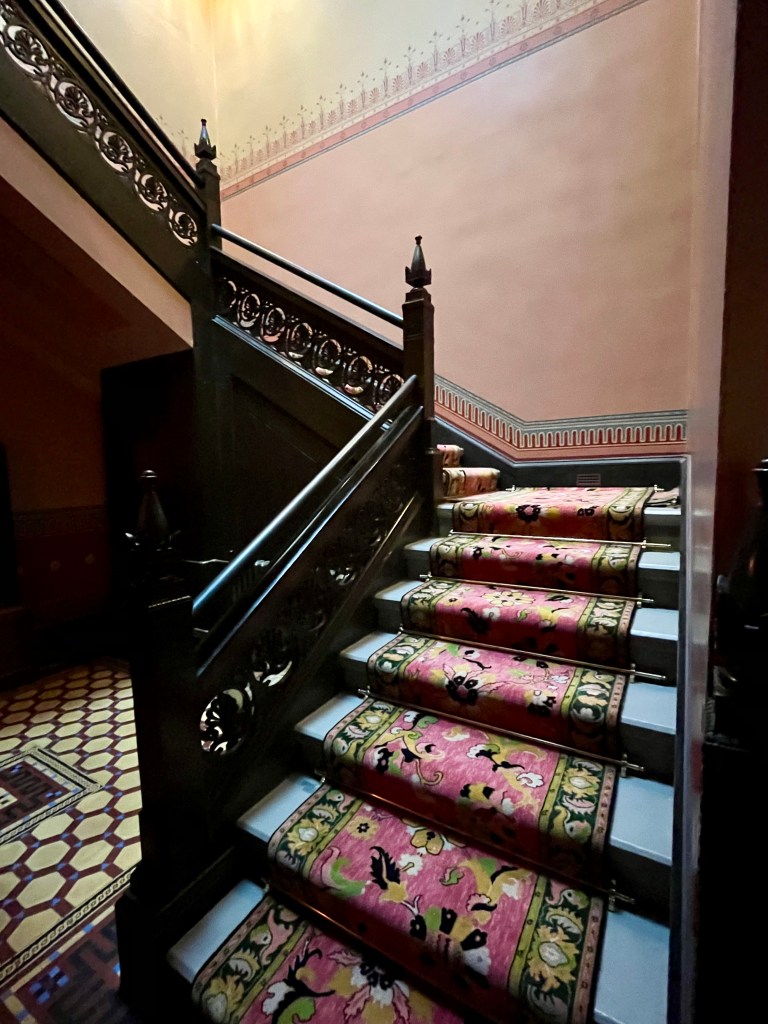
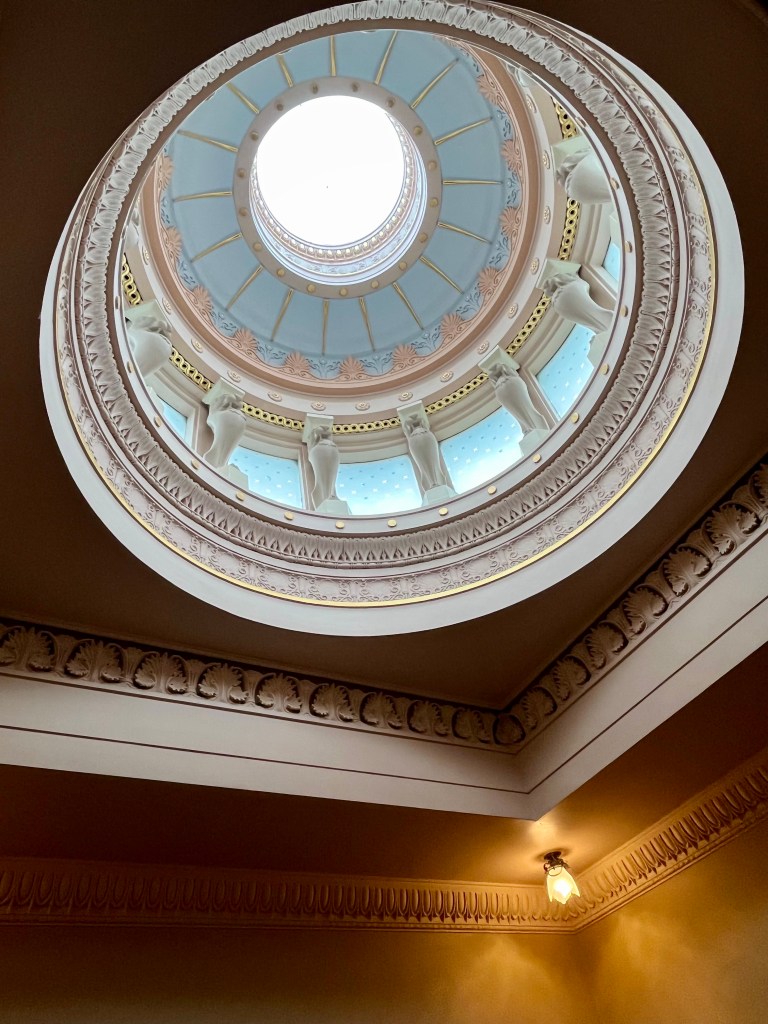
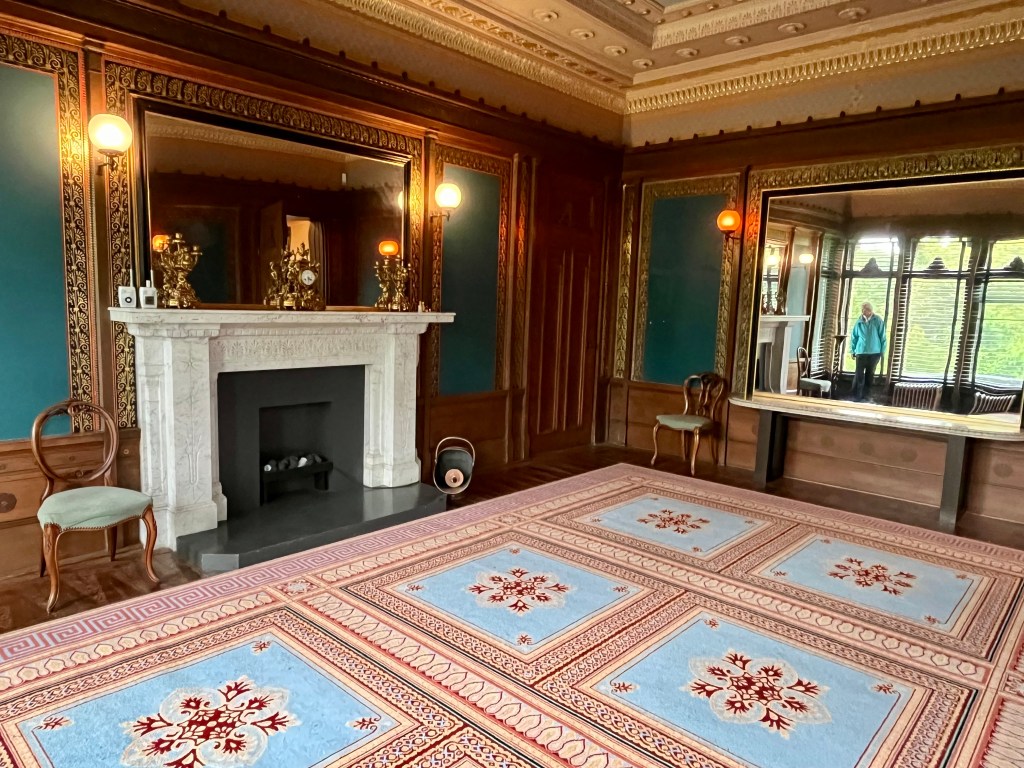
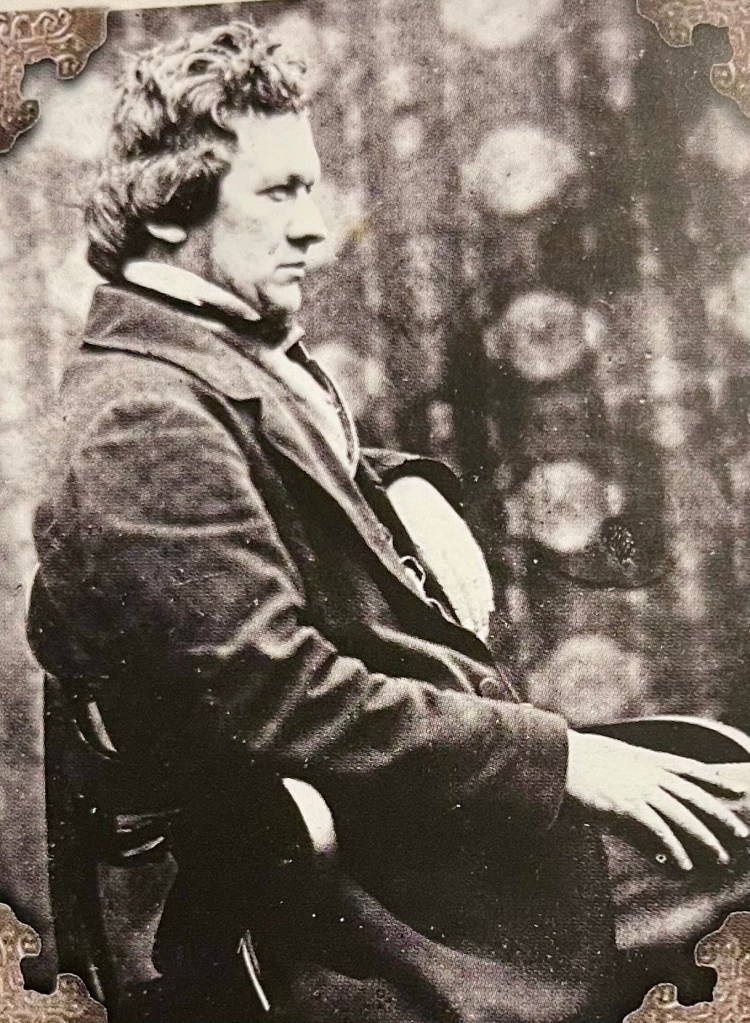
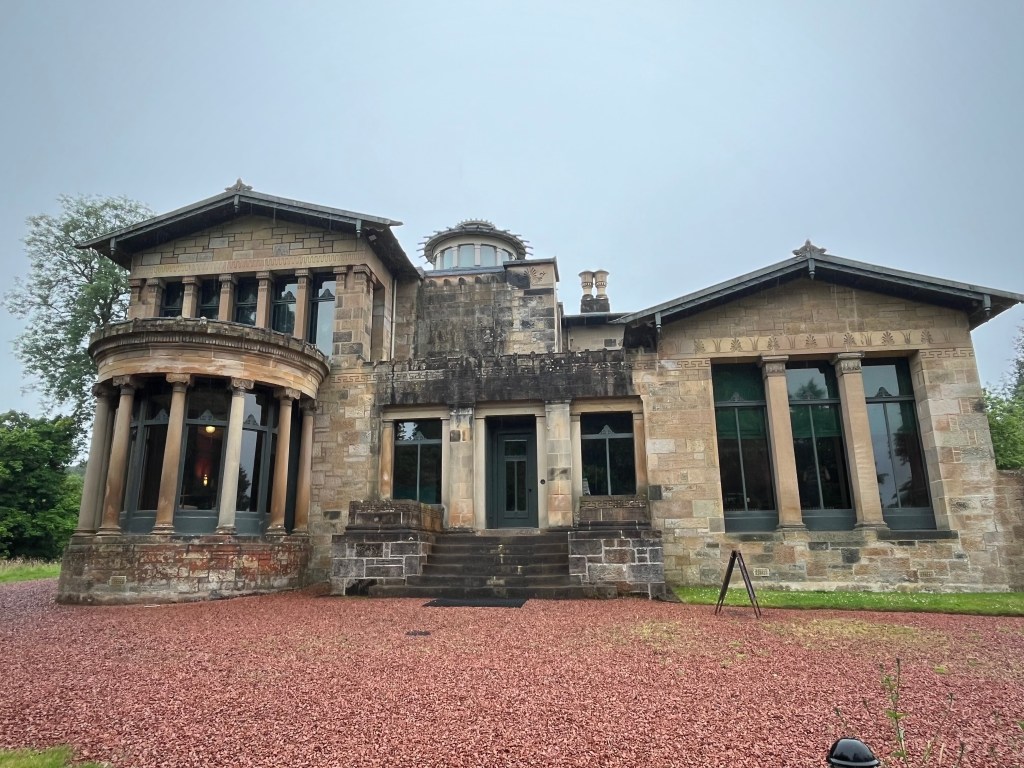
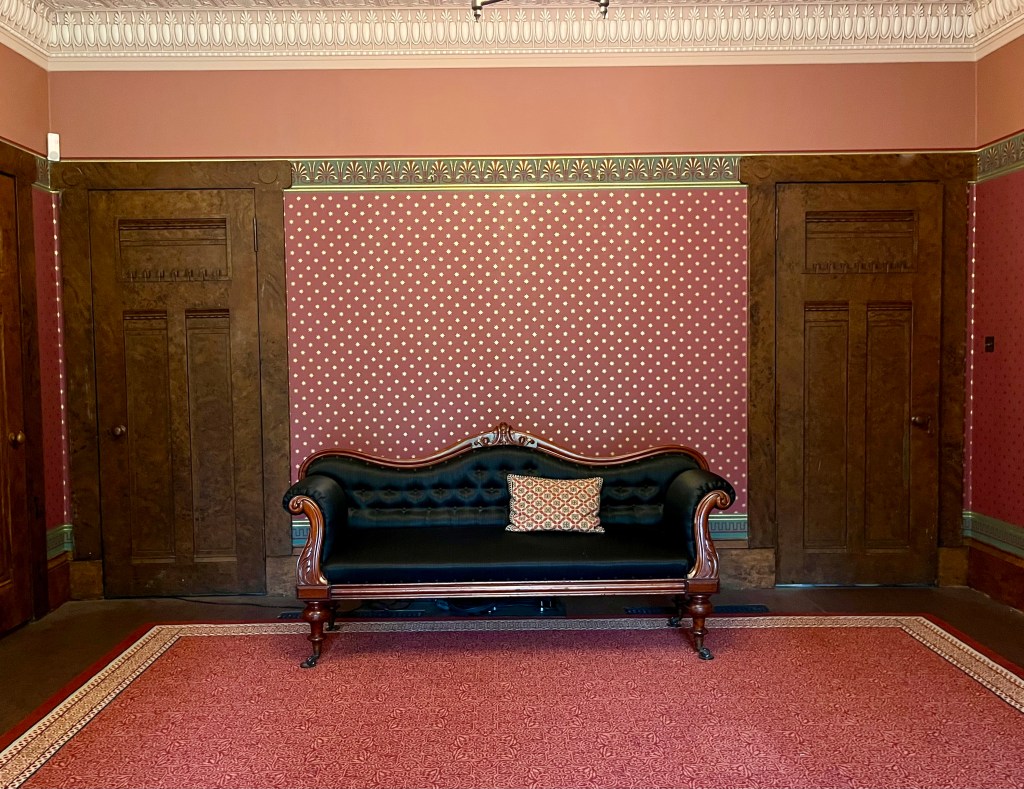
In the southside of Glasgow there is villa called Holmwood House built in 1858, which was designed by architect Alexander ‘Greek’ Thomson (1817-1875) who was reputed world-wide to be one of Scotland’s most talented architects and designers. We recently visited, and were not disappointed. It is beautifully situated on the banks of the White Cart river, amid extensive grounds. Built initially for paper mill owners Robert and James Cooper, whose family occupied it between 1858 – 1909. After this it changed hands many times before it was taken over in 1958 by The Sisters of our Lady of the Mission. The property was used as a chapel and dormitory, and soon the Sisters had established a primary school, and also taught in a local comprehensive school. They were also involved in many other aspects of parish work. By 1994 they had moved to more suitable premises and the building was purchased by NTS, who since then have worked tirelessly to restore its appearance and condition as in 1858. Some very impressive work has been done. Here are some photographs with much more information on-line.
Welcome!House and Vegetable GardenThe DriveThe HouseOther work by Alexander ‘Greek’ ThomsonAlmost circular bay windowMarble Chimney-piece in the HallStaircaseDome above the StaircaseThe Drawing roomAlexander ‘Greek’ ThomsonView of house frontPhotographs of Holmwood House today
We enjoyed our visit to Holmwood and would recommend it to those of you who are near enough to visit.
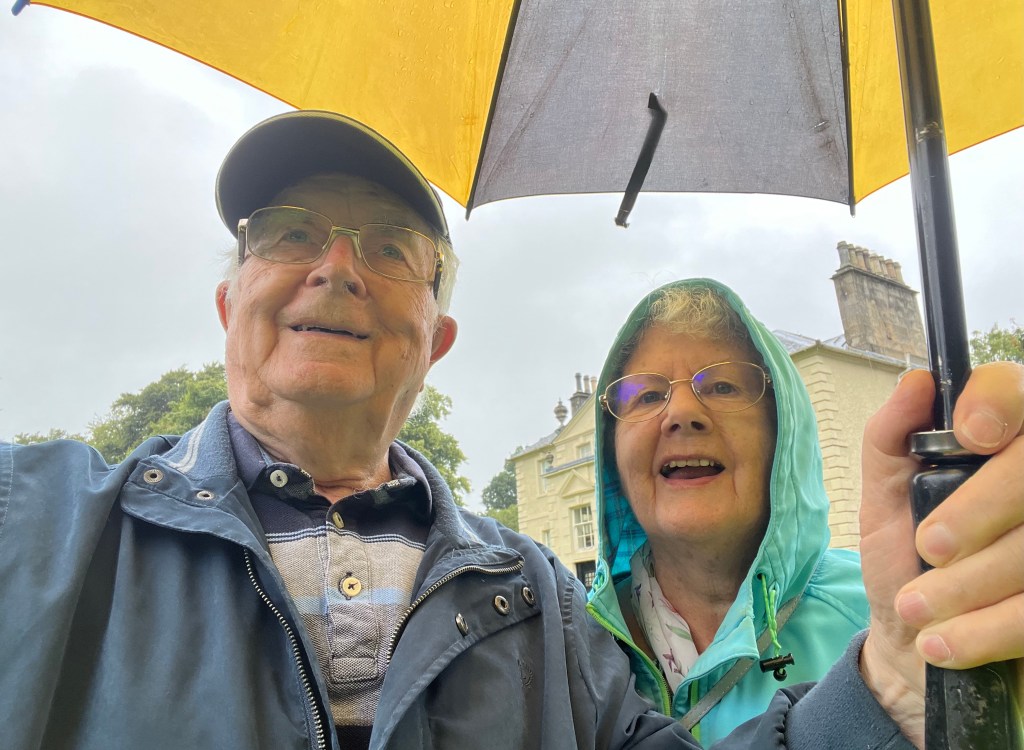
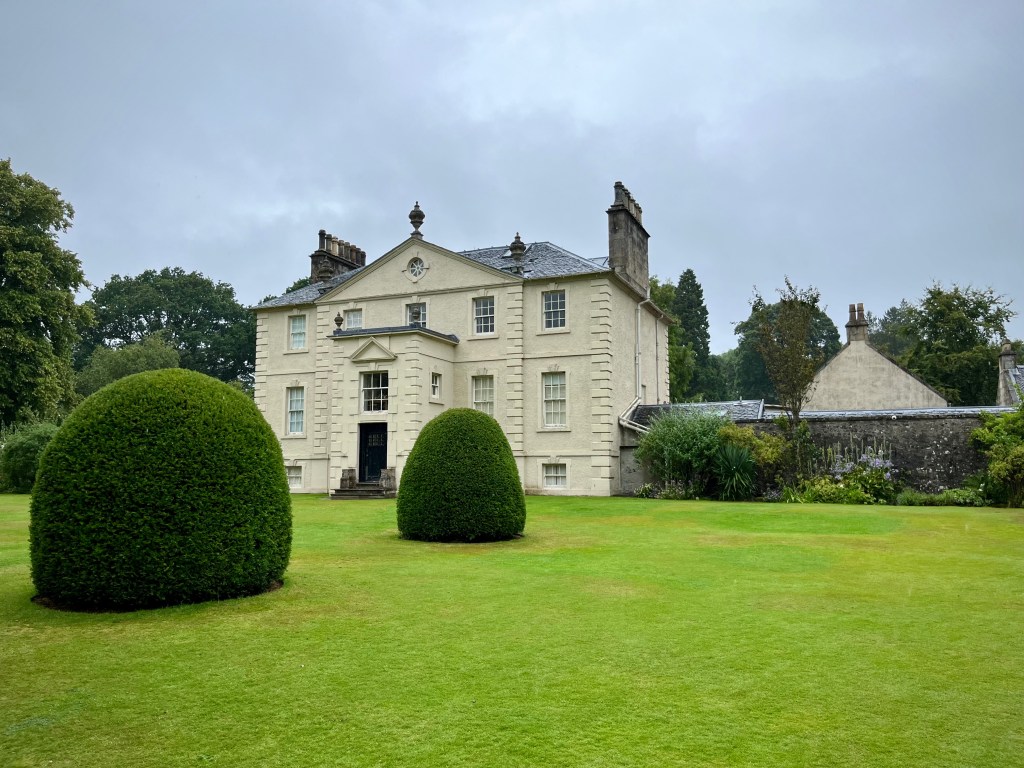
Greenbank Garden is even closer to home and we have visited there many times. On our recent visit the rain came on, so we had an almost empty garden to enjoy. I’ll let the photos speak for themselves this time, but again more information available on line. My photographs :-
Smiling in the rain!Greenbank Garden and House
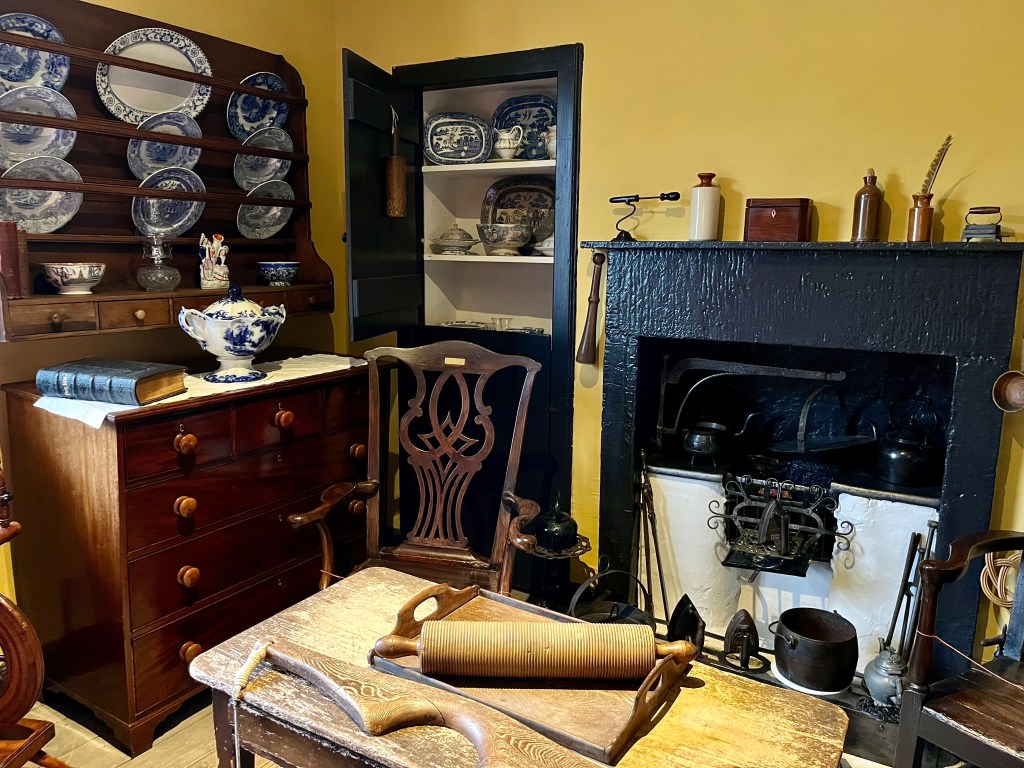
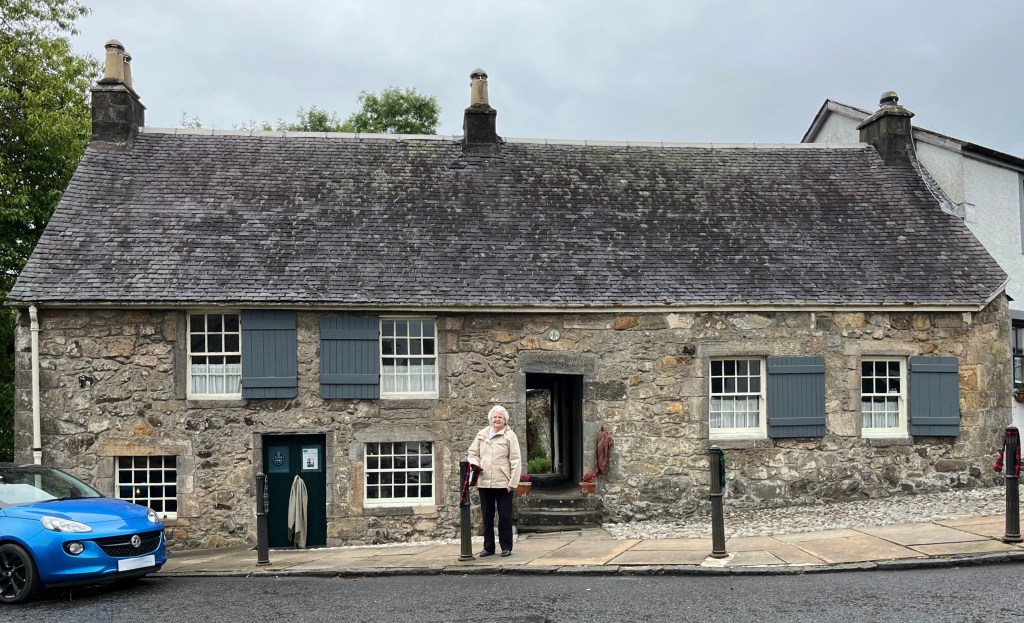
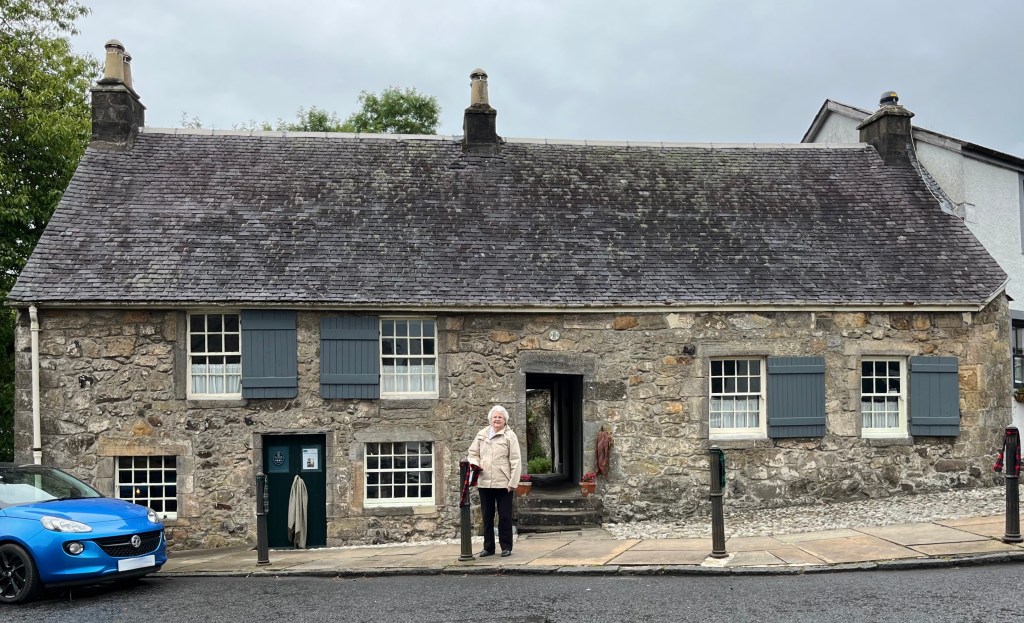
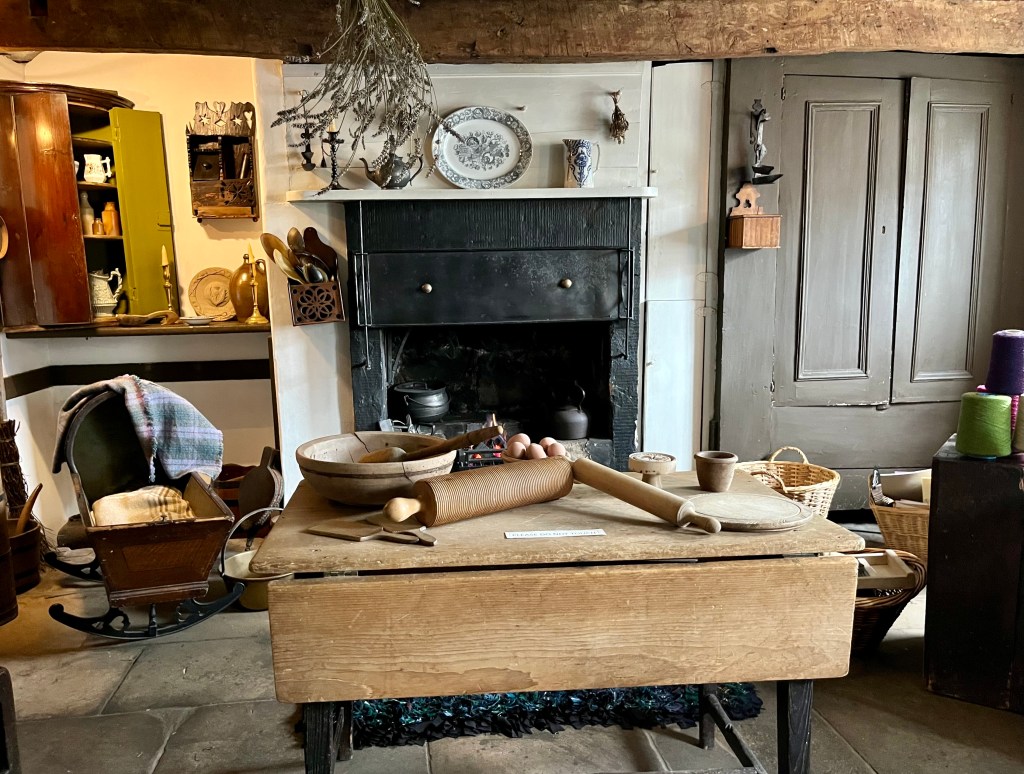
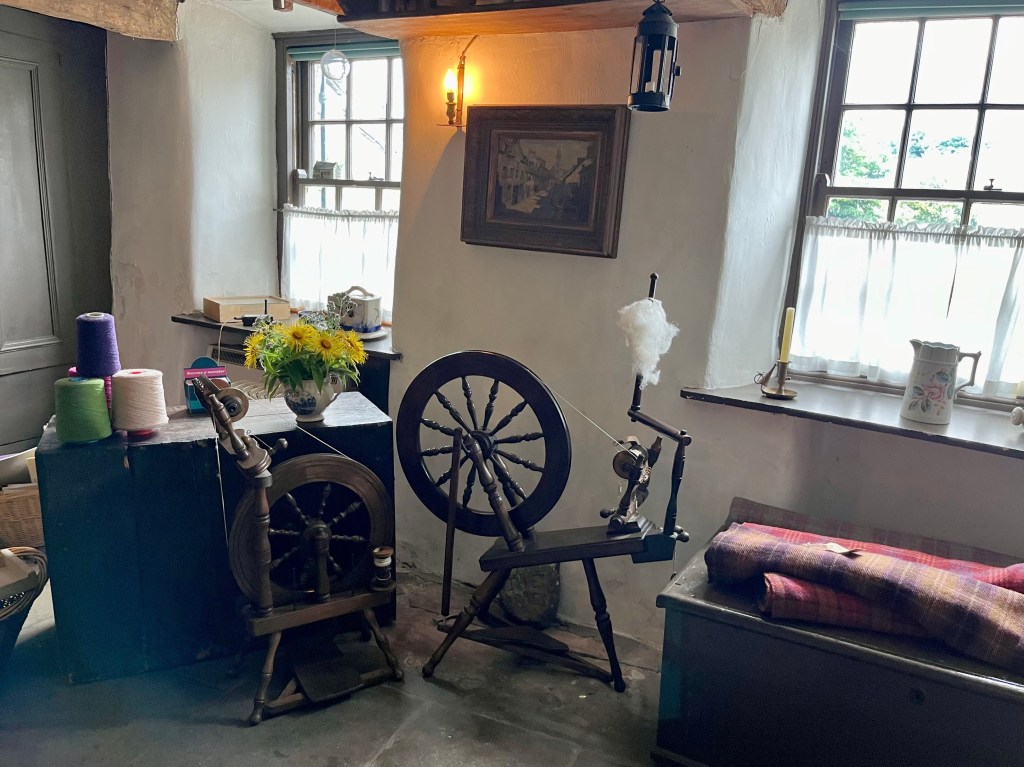
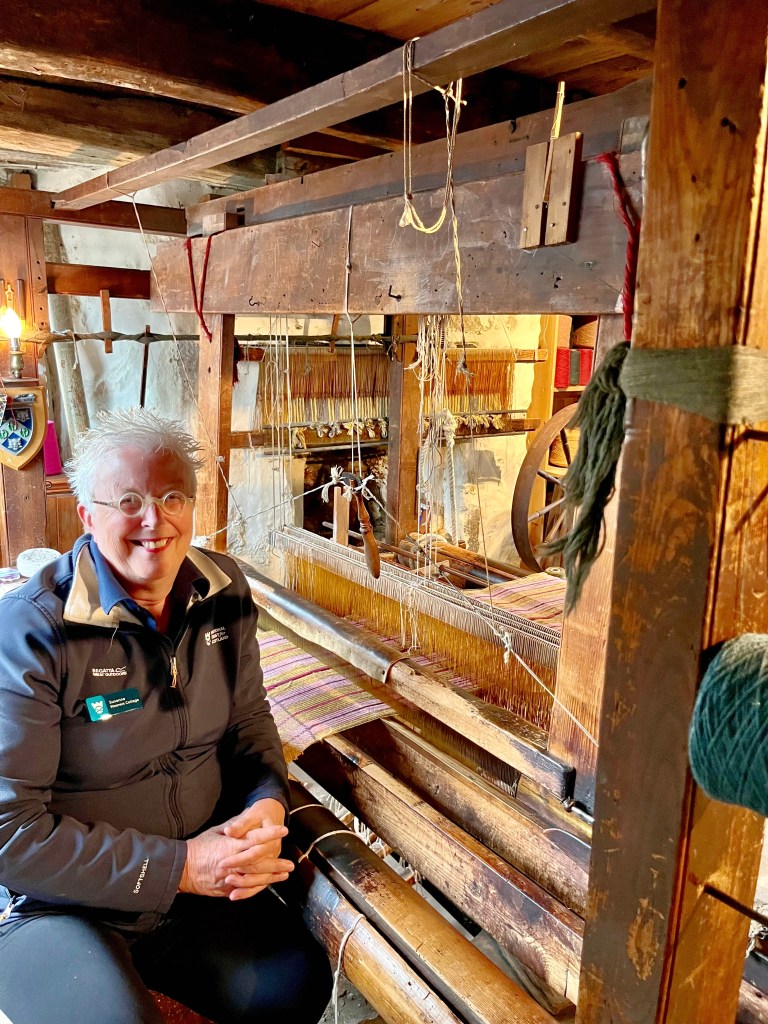
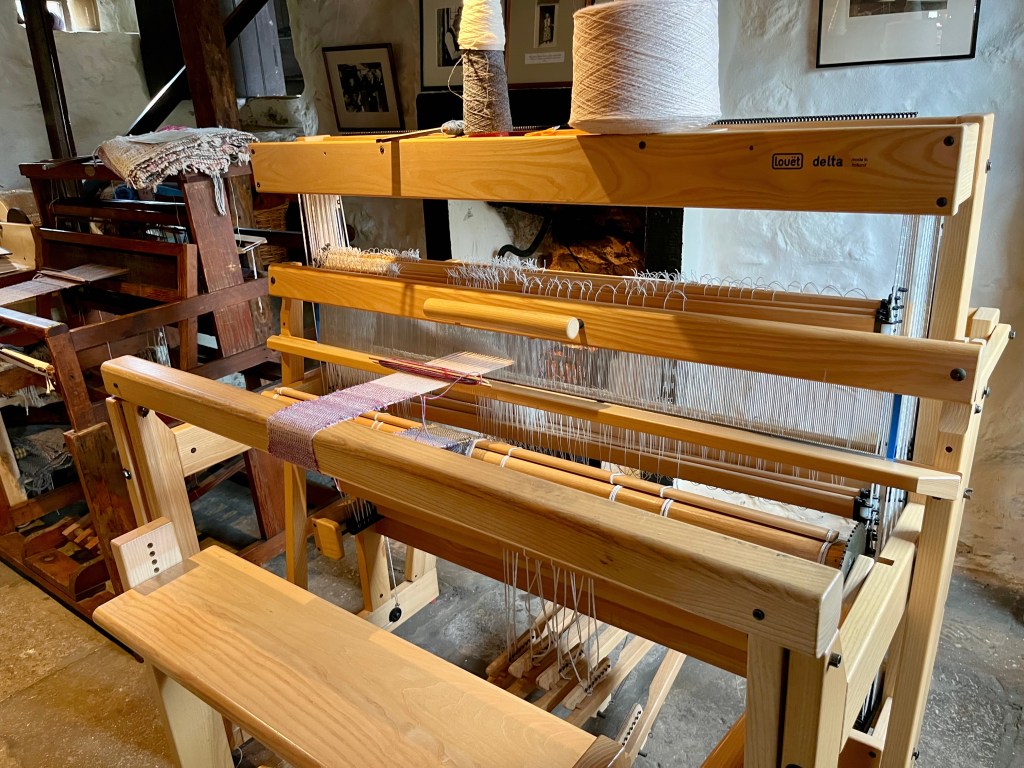
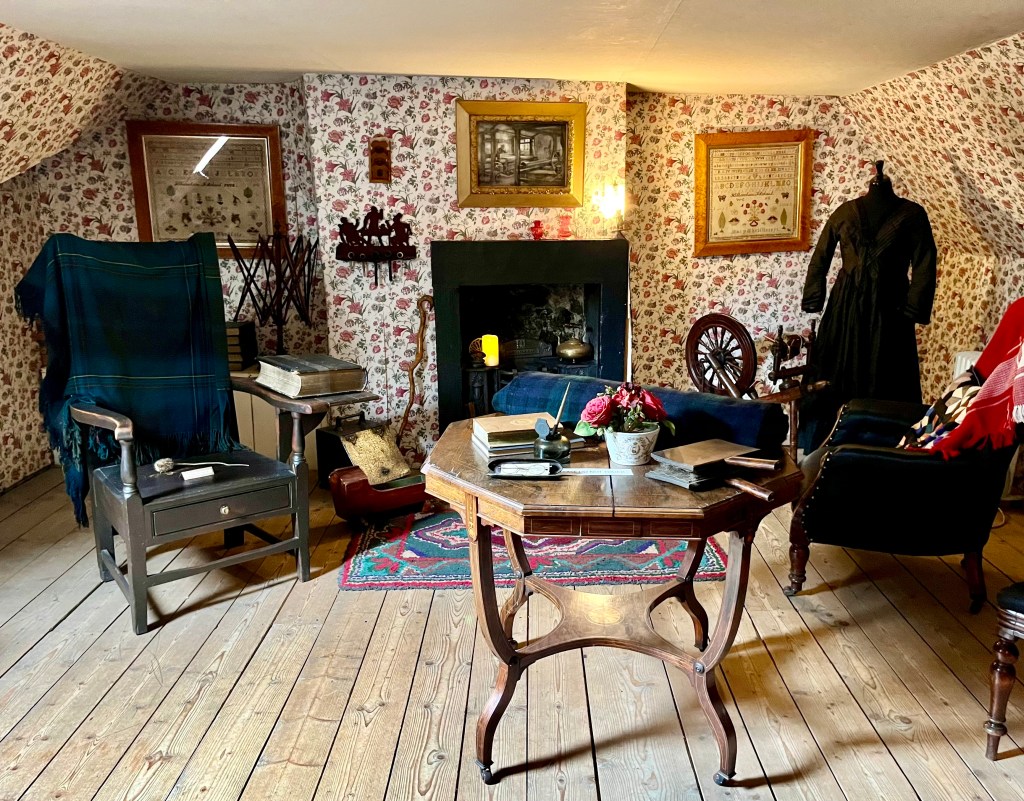
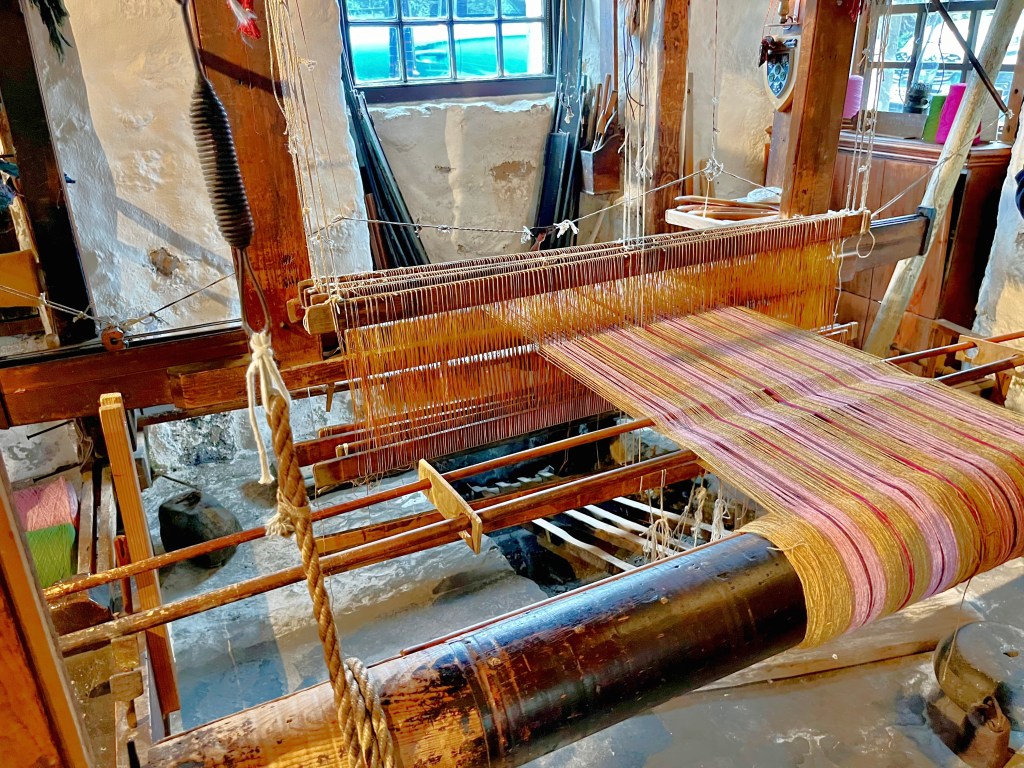
We started our visits last month going to a house built for the rich, and ended it with a visit to a house built for the poor, ‘Weaver’s Cottage’ in Kilbarchan which was built in 1723. Weaving was first recorded in this village in 1695 when there were 30-40 looms. By1838 eight hundred looms were said to be working in the village and local area. My granny was a weaver, so I was fascinated to hear the story of the weaver being recounted and demonstrated by the video being played and by the NTS staff. Everything from the spinning of the yarn to the weaving of a variety of cloths, even intricate clan tartans provided for the Royal Family and others, and to catch something of their life and work away back then.
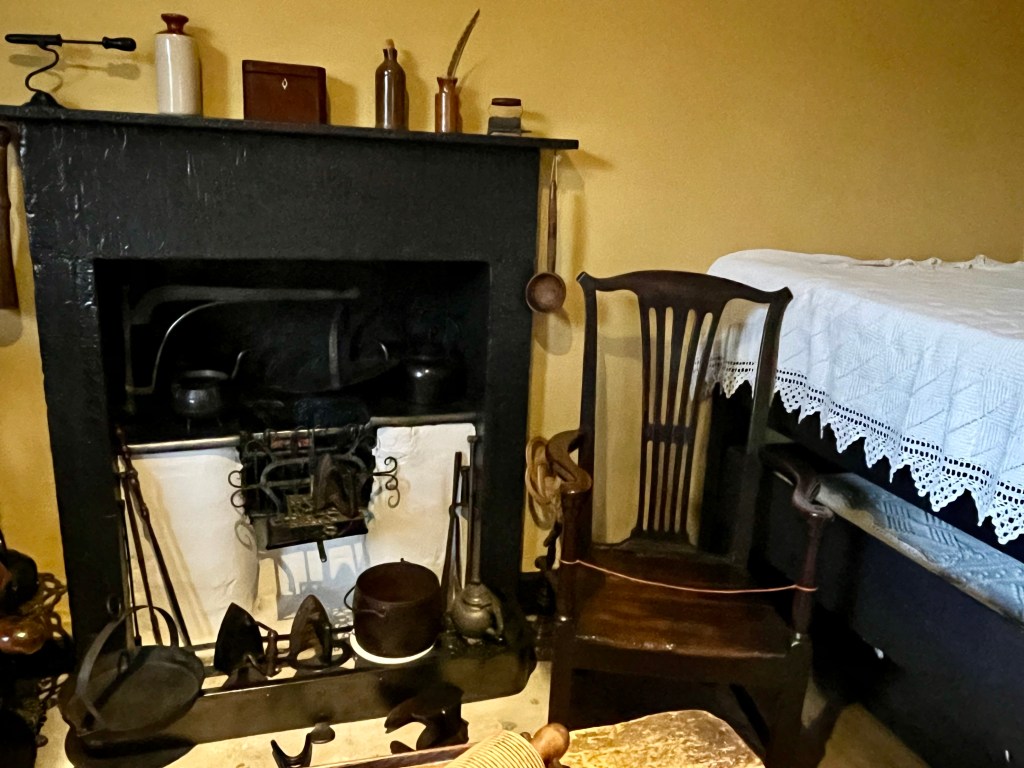
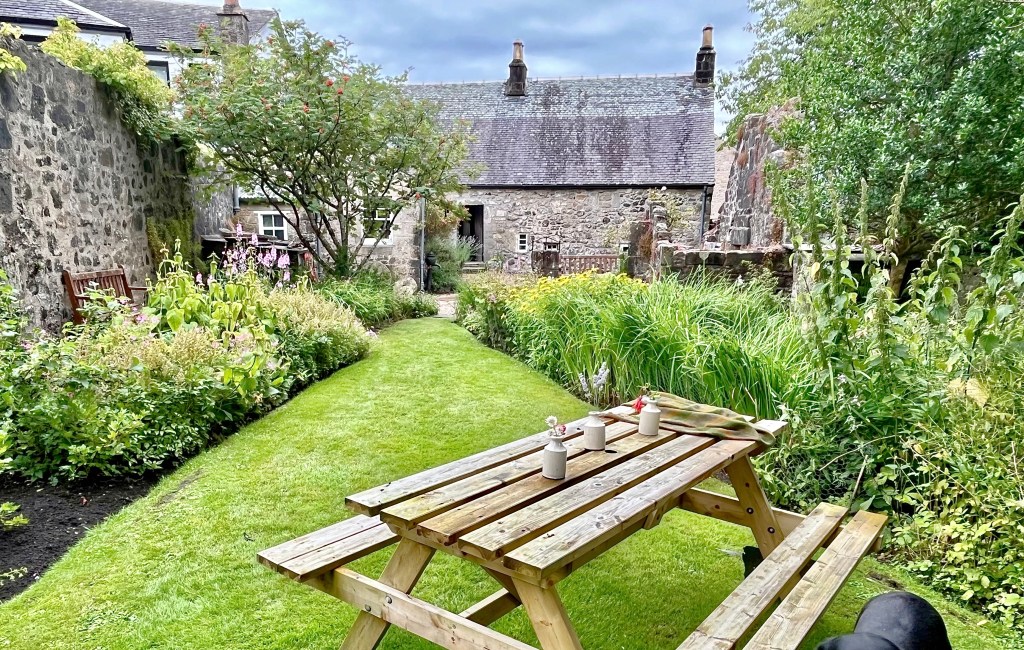
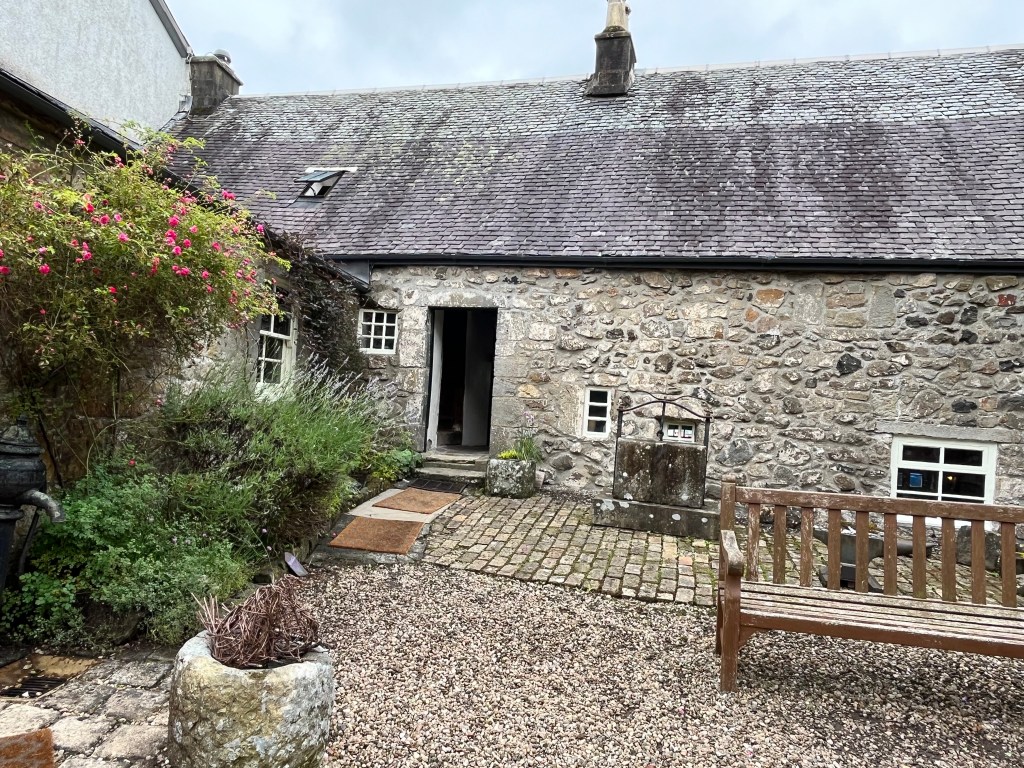
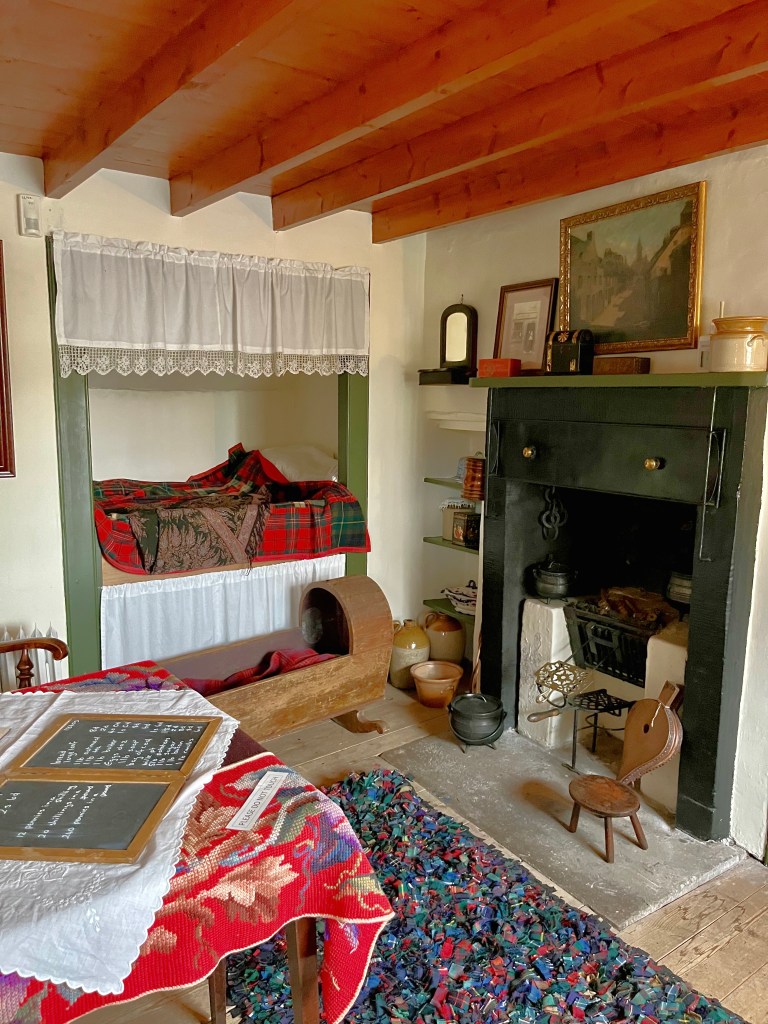
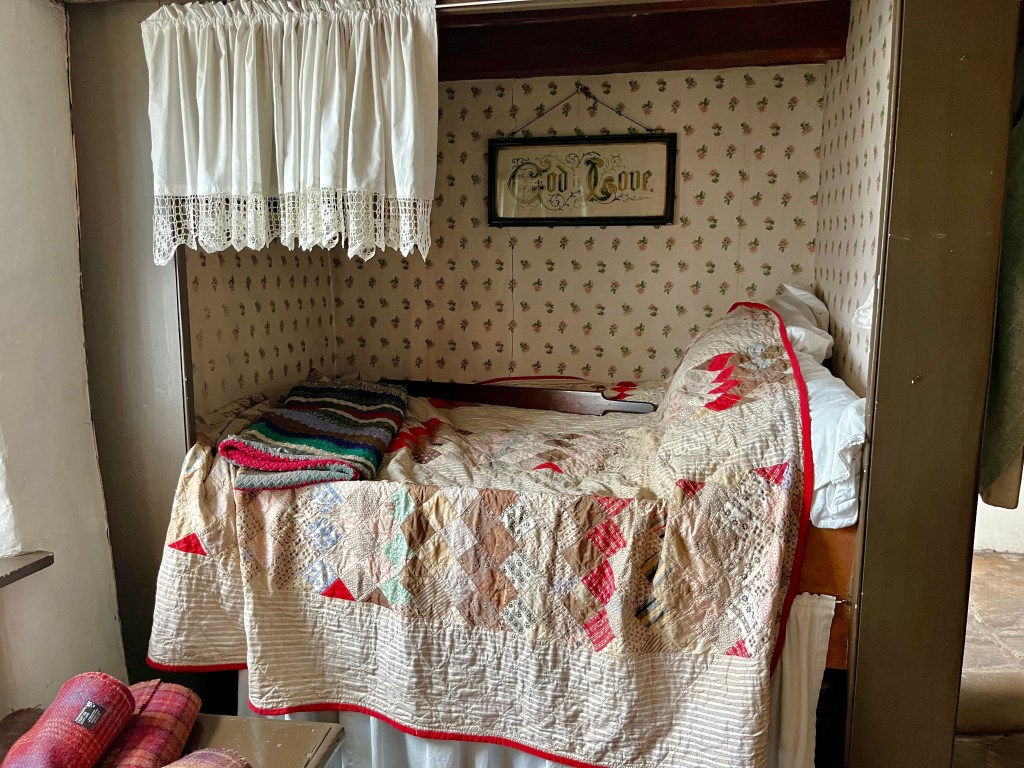
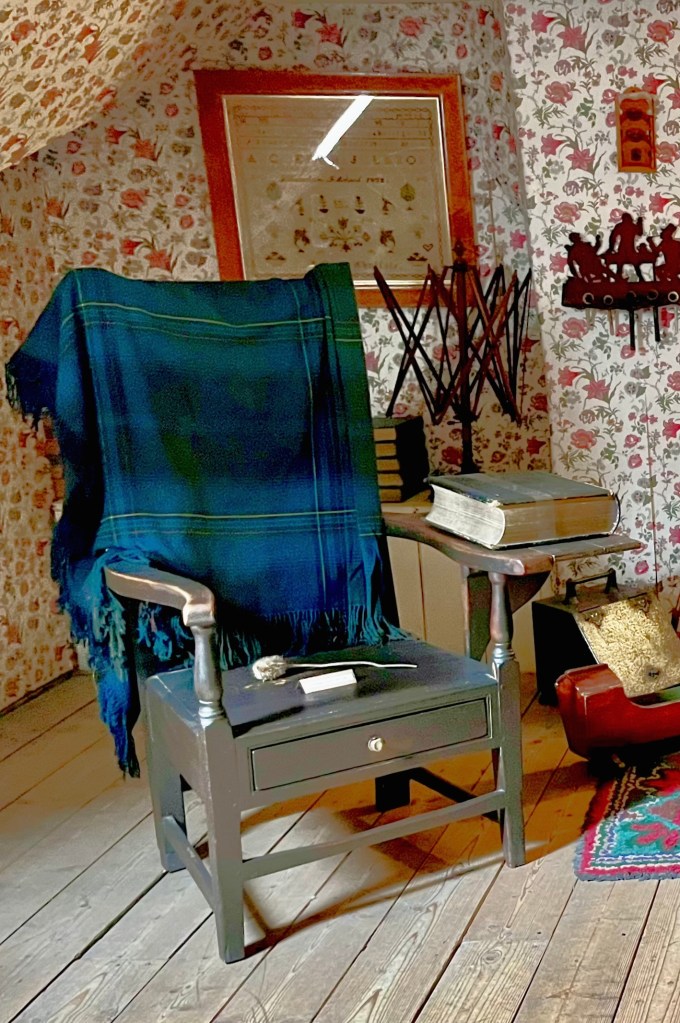
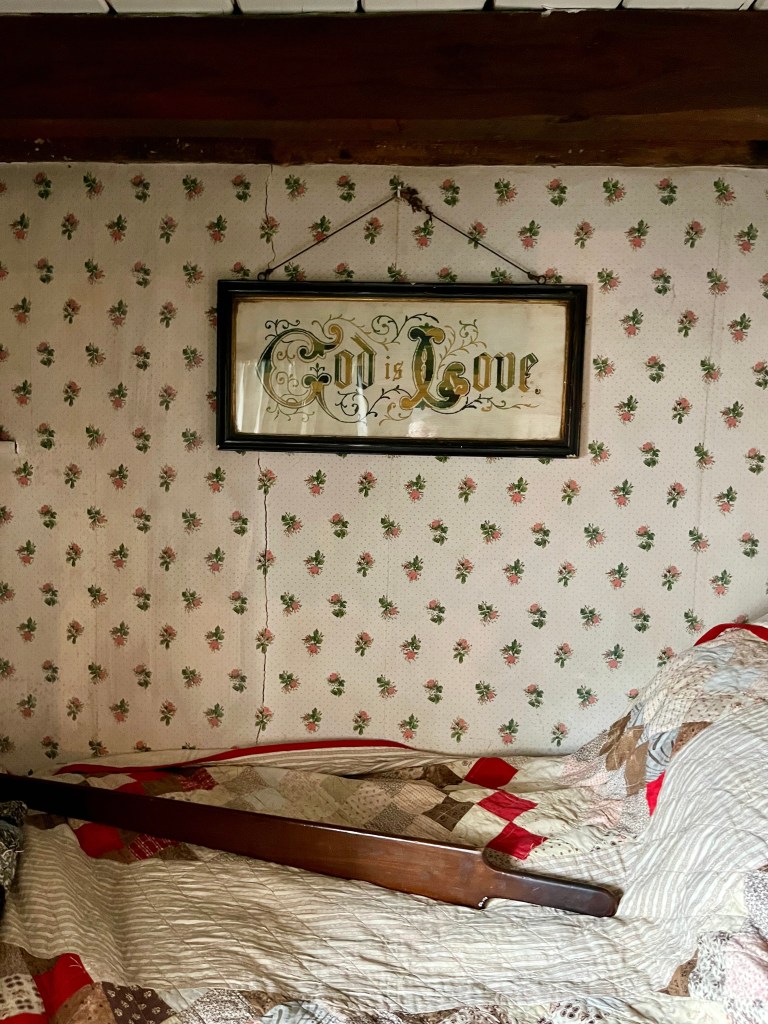
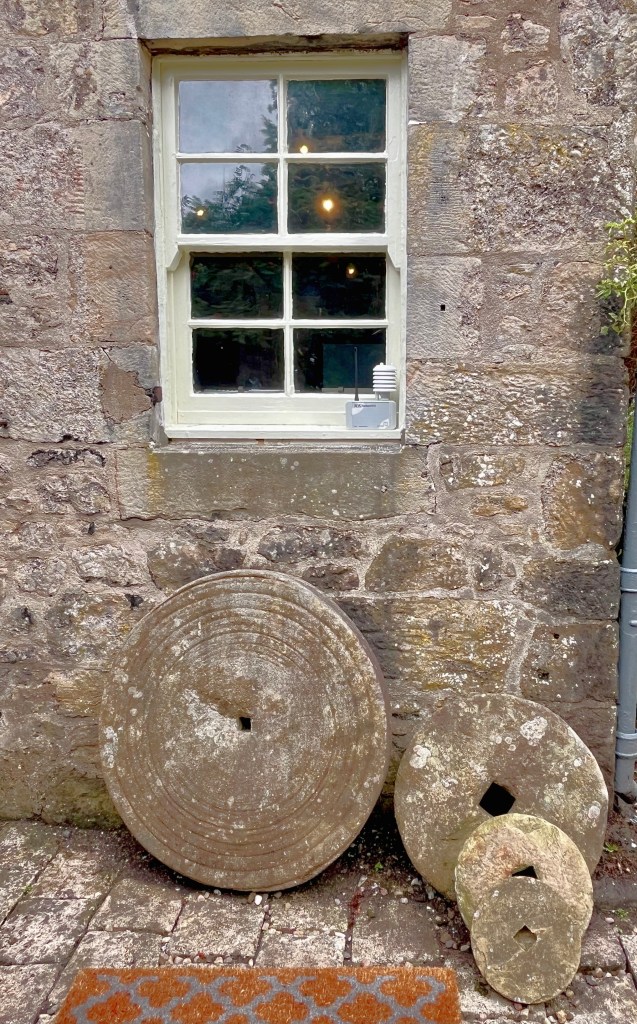
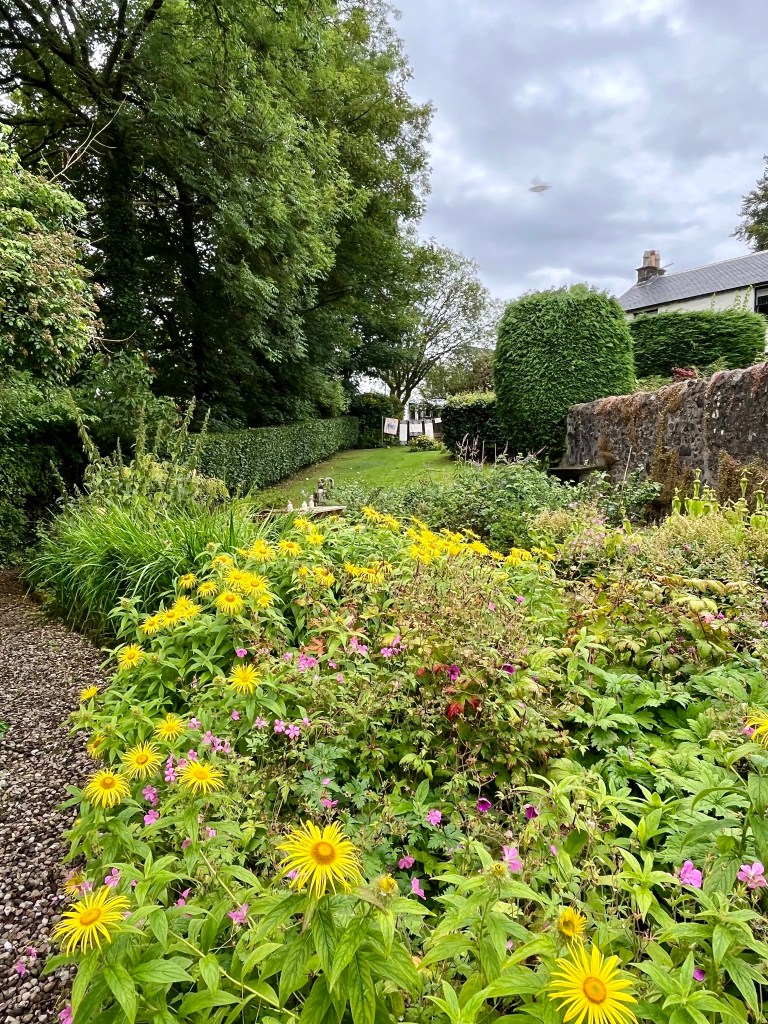
The kitchenSpinning WheelThe ‘inset’ bedAnother ‘inset’ bedthe Loomanother sty;e of loomThe Bible Chair – Bible dated from18th CenturyThe Bible Text above the bedGrinding wheelsBeautiful gardenThe Living RoomA loom typical of those used in the West of Scotland in the eighteenth century
The rooms in the cottage were let out to different families, with varying skills, some relating to the weaving business but others such as shoe making and repairs. It must have been a hive of industry when they were all working. The mechanisation of the weaving business during the Industrial Revolution however, was to bring to an end the huge cottage industry of weaving by hand looms, plus many linked trades, such as spinners, yarn dyers, pirn winders and cloth finishers.
One thing about the Weaver’s Cottage that grabbed our attention was the number of rooms with an ‘inset’ bed. The beds were so short that it would have been impossible for an average adult to lie out on them. This we were told was no problem as the people of the day preferred to sleep in a sitting position! That was the first time I had heard of such a thing.
This blog started with a look at a rich man’s house and has ended with a look at a poor man’s house, the original residents of which have long since passed away. One thing that the visit to the cottage brought home is the brevity of life, for the Bible says ‘my days are swifter than a weavers shuttle” Job 7:5 which we can all relate to. A weaver’s shuttle is incredibly fast, we can vouch for that! It also reminds us that we brought nothing into this world and we can take nothing out! The houses are there, but past resisdents are gone. So we need to weigh up Jesus’ words in Luke’s Gospel
“For whoever wants to save their life will lose it, but whoever loses their life for me will save it. What good is it for someone to gain the whole world, and yet lose or forfeit their very self”?Luke 9:24, 25 or again the words of Jesus – “Those whom I love I rebuke and discipline. So be earnest and repent. Here I am! I stand at the door and knock. If anyone hears my voice and opens the door, I will come in and eat with that person, and they with me”. Revelation 3:19,20
Visits to places like this bring back many memories. As I have said, my granny was a weaver, my mother’s childhood was in a similar small cottage in Fife, not to mention the inset beds, which both our parents would have slept in, tho’ thankfully somewhat larger than those illustrated!
We enjoyed these visits and are grateful for the NTS for the work they do for the nation. These three sites are definitley recommended as places worth a visit. You will find it is cheaper to become a member, as the entrance fee for non members is quite expensive, so after just a few visits as a member you are in credit!
Trust you are well wherever you are, why not take time to consider the words of Jesus? Always glad to hear from you.